Elon Musk’s SpaceX acquired the billionaire’s artificial intelligence startup xAI, according to a Monday statement, consolidating two Musk-owned companies under one roof as xAI looks to build a space-based competitive edge against rivals like OpenAI, Google, Meta and more.
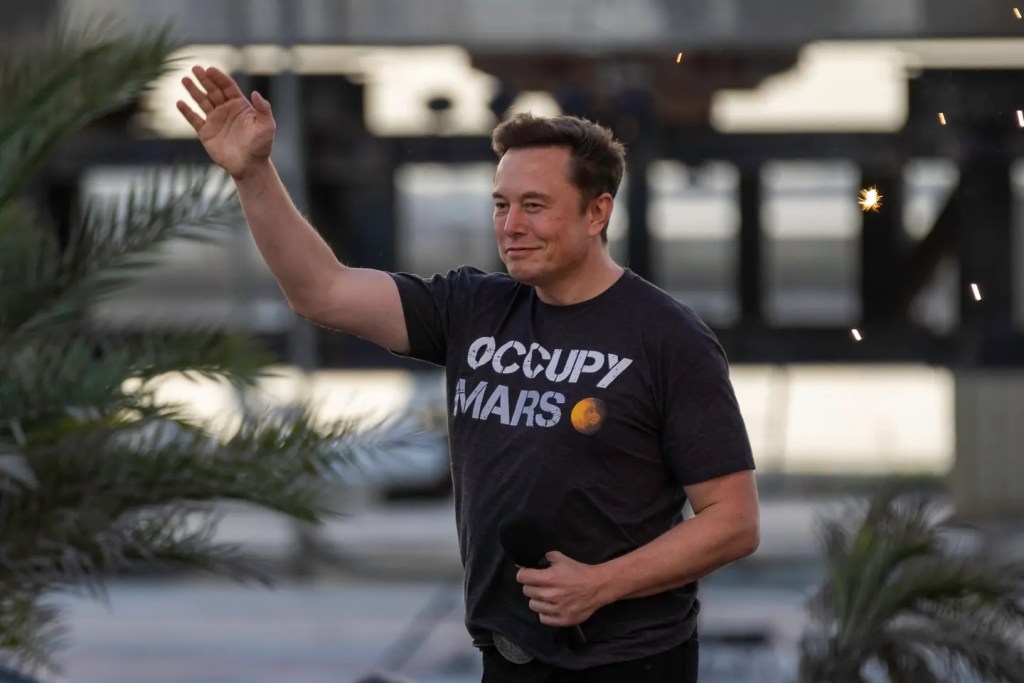
Photo by Michael Gonzalez/Getty Images
Key Takeaways
- Musk said the acquisition would be the first step in bringing data centers, which are needed to train and develop artificial intelligence, to space, saying electricity demand for AI on Earth “cannot be met with terrestrial solutions, even in the near term, without imposing hardship on communities and the environment.”
- The merger brings xAI and its subsidiary social media platform X under the SpaceX banner, with Musk already the CEO of the aerospace firm and AI startup.
- Musk estimated in the next two to three years, the most cost-effective way to build processing power for AI will be in space, claiming the use of near-constant solar power would involve “little operating or maintenance costs.”
- A recent Reuters report noted xAI shares could be exchanged for shares in SpaceX under the deal, adding some xAI executives may have the option to receive cash instead of SpaceX stock.
Big Number
$1.25 trillion. That is the estimated valuation for the combined SpaceX company, according to Bloomberg.
Forbes Valuation
We estimate Musk’s net worth at $768.4 billion, making him the wealthiest person in the world and placing him well ahead of Google cofounders Larry Page ($281.1 billion) and Sergey Brin ($259.3 billion).
Key Background
The merger marks the latest instance of a Musk-controlled company absorbing another firm led by the billionaire. Last March, xAI purchased X in a $33 billion all-stock deal, allowing the two companies to merge their data, AI models, AI hardware and talent. With the latest merger between SpaceX and xAI, the latter company is positioned to be the first AI company to deploy data centers in space, something OpenAI CEO Sam Altman has explored through potentially partnering with or acquiring a rocket company, according to The Wall Street Journal. Musk’s plan to go beyond data centers on Earth is rooted in limited supply for overwhelming demand for the centers. Power demand from AI data centers in the U.S. could grow more than thirtyfold between 2024 and 2035, according to Deloitte, which noted most power capacity development can take longer than building out data centers.
Look back on the week that was with hand-picked articles from Australia and around the world. Sign up to the Forbes Australia newsletter here or become a member here.
This story was originally published on forbes.com and all figures are in USD.