Across two wide-ranging interviews with Forbes, Altman covered more ground than could fit in our cover story. Here are his remarks on everything from vaccine research to critics who argue he backs companies to solve problems he helped create.
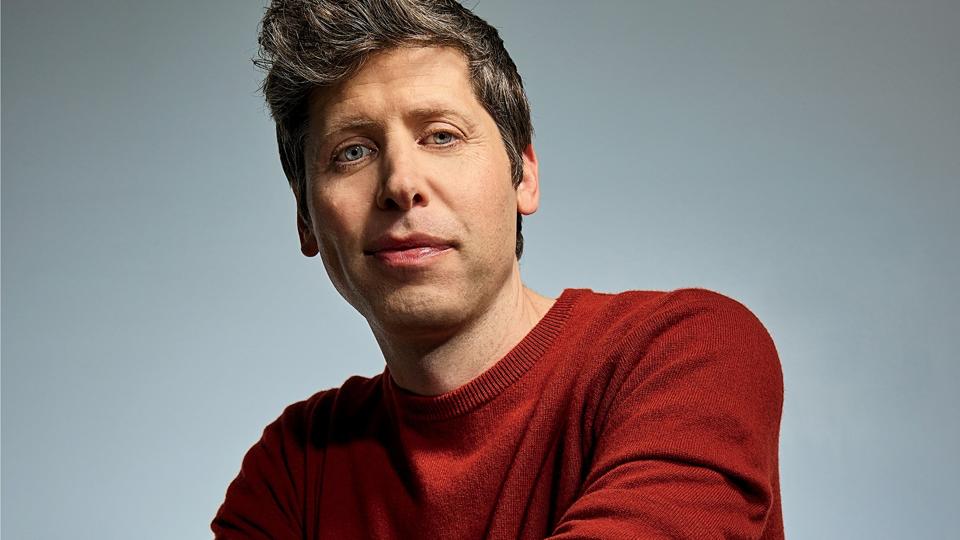
In the three years since ChatGPT changed everything, bringing AI into the mainstream, Sam Altman’s life has changed alongside it.
The 40-year-old CEO of OpenAI, who took the helm of storied tech incubator Y Combinator at 28, is now a new father — with another child on the way later this year, he tells Forbes. He has become AI’s most prominent cheerleader, championing a proposed $1.4 trillion data-center buildout to meet the technology’s enormous energy demands. Along the way, he has emerged as one of the most powerful figures in the world.
For the cover story of our February/March issue, Forbes sat down with Altman for two wide-ranging interviews. Over the course of those conversations, he spoke candidly about OpenAI’s plans for factory robots and AI scientists, working with President Trump, and how fatherhood has shaped his thinking about the future — and his own legacy.
Not everything made it into the profile. Below are some of the most revealing leftovers.
On President Donald Trump:
“First of all, I’ll work with any US president. If you’re working on an important technology in the country, you need to work as hard as you can with the President. And I have found this President to be an easy one to work with on AI. He gets the importance of infrastructure build out in the country, importance of energy, and has done a lot. I think we’ve had very productive conversations about it. I was struck by his understanding of where the roadblocks were, the importance of addressing it quickly, and then this sort of execution, ability to make the changes happen.”
“I certainly agree most on the need to build lots of infrastructure in the US. In the previous administration, we had a very hard time getting data centers built quickly at significant scale, so the stuff that he and the admin have been able to help with has been great.”
“If I had to guess on where we disagree most, I bet there’d be real differences in kind of what the optimal international policy about AI is,” he continues. He says AI should be a “very positive, uplifting force” for the whole world, and not just Americans. He thinks the U.S. should be more internationally-minded when it comes to the “flow of AI infrastructure in general, which is not just tariffs, but export restrictions…whatever the way we think about sharing access to AI with allies in other countries, and where we put data centers, where we don’t put data centers. There’s a lot of debate about that. So really, how we think about how benefits are going to get distributed from these systems. All of those things.”
On Elon Musk:
“I respect that he is building big computers, fast. I think that’s a positive thing. It obviously won’t surprise you that I have a lot of disagreements with the way they’re [xAI, Musk’s AI startup] doing things. I thought the stuff over the weekend about the Grok image generation was really terrible. I don’t think the way that company runs matches the impact of the technology. And I wish they would do things differently.
“It’s crazy to me how much time he spends attacking us. And, you know, ‘Do you care enough about safety?’ and this and that, while their own house is on fire on these things consistently. They love to say, ‘Oh, ChatGPT is suppressing truth seeking’ or whatever. And they’re like writing in, ‘Don’t criticize Elon’ and ‘Talk about the South African genocide this way’ [into Grok’s programming]. And it’s just like, okay.”
Musk did not respond to a request for comment.
On OpenAI’s robotics plans:
It’s not quite the Jetson’s future of lore, but OpenAI CEO Sam Altman envisions a world where robots are doing mundane tasks like plugging cables into sockets at data centers.
A new team at OpenAI is building those kinds of robots, and is in the midst of considering various form factors. While they would likely first be used in warehouses, the aim is for them to be general purpose, an enormous undertaking that puts OpenAI in competition with Tesla’s Optimus and other humanoid robot companies. Eventually, Altman wants to build them for consumers. “If we could automate manufacturing, that would be a transformatively amazing thing to do,” he says.
On funding science:
Altman says that while he’s no longer the prolific an investor as he was once known to be, he remains deeply committed to funding basic science. “If I could wave a magic wand and reallocate societal wealth, I’d put so much into funding science,” he says. Vaccine research is a particular passion. As early as 2016 – long before the Covid pandemic – Altman predicted that a ‘lethal synthetic virus’ could end the world.
“I wish I had funded vaccine research much earlier on. I think that it’s an area where traditional capitalism breaks down; [companies] don’t make much money on vaccines. Also, as we prepare for AI, people are going to be able to use these models to design new pathogens, and I don’t have a better answer than to get much better at vaccines faster.”
On OpenAI’s AI scientist project:
“We are heading towards a system that will be capable of doing innovation on its own, like building this automated researcher that we’ve started talking about. I don’t think most of the world has internalized what that’s going to mean. If we can do 10 years of science, or 100 years of science in one year, if we can run the company at a level of efficiency that no company’s ever run before, I don’t think the world has internalized what that means.”
He says OpenAI eventually wants to connect AI-made scientific discoveries to a wet lab so they can experiment further.
On scaling:
Altman is very big on scaling and scaling immediately. He sees it as core to innovation.
“It is a core belief,” he says. The funny thing is, he’s not quite sure why it works. “I observe that it is true across many different kinds of things, and so I am willing to take it as some fundamental principle. I have a bunch of weakly-held theories about why it seems to apply so well. But it’s odd to me. I don’t have a satisfying distillation kernel of truth to offer you. It was just noticing a pattern again and again across places where I still can’t offer any good explanation, but it keeps happening.”
On criticism that he’s creating or backing companies to solve the problems he’s exacerbated:
There’s a common knock on Altman, and it goes like this: AI guzzles up energy. So Altman-backed Helion and Oklo are working on nuclear energy to generate more power. Or, AI is making deepfakes more common, and World, which Altman cofounded, is creating “ proof of humanness” technology to tell the difference between real people and AI-generated ones. Altman profits along the way.
“That’s so not my worldview. It’s like, all of these things are good to do. You can try to predict how society is going to evolve in this next level of scaffolding. But yes, AI is going to use more energy over time. And also, more cheap, sustainable, safe energy is a really wonderful thing to have no matter what. And I’ve always had the mindset of: Just do all the good things, not create a problem and then solve it. But I have seen this enough times that I believe this is a commonly held criticism.”
On fatherhood:
Having a kid has made Altman more aware of the preciousness of his time. “The baseline that something has to beat for me to be willing to spend time on it is so huge now that most other things fell away,” he says.
Altman says he finds fatherhood to be one of the few “significantly underhyped” life experiences. “It has been my favorite thing ever in life by far,” he said. “And I don’t think I have anything deep or non-cliche to say about it other than, I thought it was going to be great and it’s much better than I thought it was going to be.”
He often thinks about what the world will be like when his son goes to school — a future he’s helping to shape. He doesn’t know the right age kids should start using AI. “Developing brains are fragile and very malleable things,” he says. But when his son is 5, he’ll be able to create software that very few people on earth could create today, Altman says. “He’s just going to grow up never knowing that there was a world, other than studying history, where every computer wasn’t smarter than him,” he says. “People are wonderfully adaptable, so it won’t seem weird. It’ll be very different.”
On his daily routine:
Altman says he used to lead a highly disciplined, ‘quantified self’ life where he would “work out super hard three times a week, meditate super hard three days a week” and get light in the mornings. “Now it has all fallen to crap,” he says. “I’ve just accepted that life is going to be chaotic for a few years.”
His new existence is simple, he says. While he used to fly around the world to meet companies and people, he is now focused on his family and OpenAI. On the weekends, he takes his family to their farm in Napa, where he can go on long hikes with no cell phone service.
On fame:
There are annoying things about the fame that comes with being the CEO of OpenAI. For one, he goes to the park with his son and gets startup pitches. “I end up living in a weirdly isolated world,” Altman says. “I fight that every inch…I think the more you let the world build a bubble around you, the more insane you go.”
It’s even disrupted Altman’s private relationship with his son. Altman says he used to write letters to his son about the various challenges he was facing at work, the big issues du jour. Then it hit him that they could be discoverable in a lawsuit, so he stopped. (About 20 pages of Brockman’s personal diary entries recently became public as part of Musk’s lawsuit.)
On his own legacy:
Eleven years ago, as he was getting ready to turn 30, he wrote a blog post aiming to dispense sage advice, à la Woody Guthrie’s New Year’s Rulin’s. In the essay, titled “The Days Are Long But The Decades Are Short,” Altman wrote: “Do what makes you happy and fulfilled—few people get remembered hundreds of years after they die anyway.” But a lot has changed in those 11 years, and because of his contributions to AI, he will likely end up remembered in textbooks, at the very least. He says he doesn’t care either way. “That’s always been a weird one to me,” he says. “If you’re dead and people remember you, you get zero value out of that.”
Instead, he gets a kick out of building tools that will potentially outlive him. “I get fulfillment, like personal ego gratification, out of the fact that I feel like I am doing something useful, and people will never meet me,” he says. “Maybe they’ll hear about me, maybe they won’t, but I will have done something that improved other people’s lives, and I will have felt useful.”
Look back on the week that was with hand-picked articles from Australia and around the world. Sign up to the Forbes Australia newsletter here or become a member here.
This story was originally published on forbes.com and all figures are in USD.