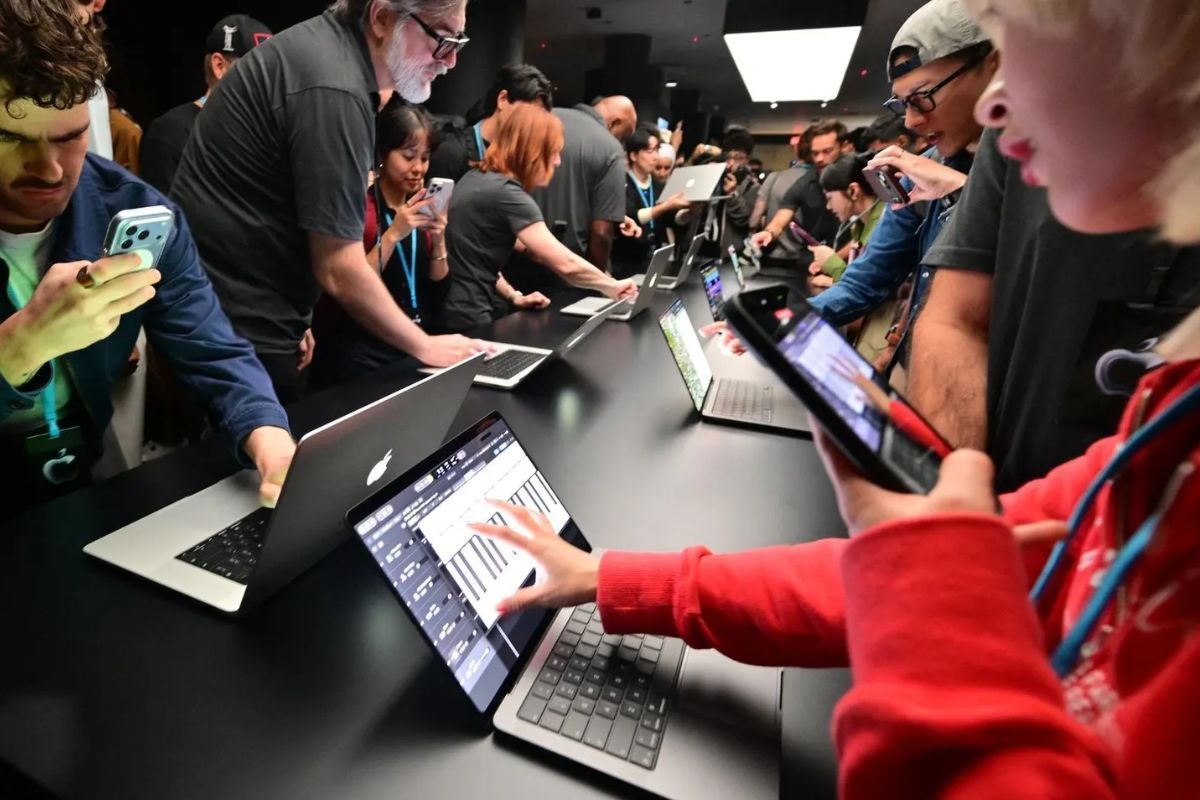
Startups rely on Anthropic to offer the best AI capabilities to their own customers. But they’re often walking a tightrope, wary that the 800-pound gorilla will dictate the terms of million-dollar contracts and could cut into their market with competitive products.
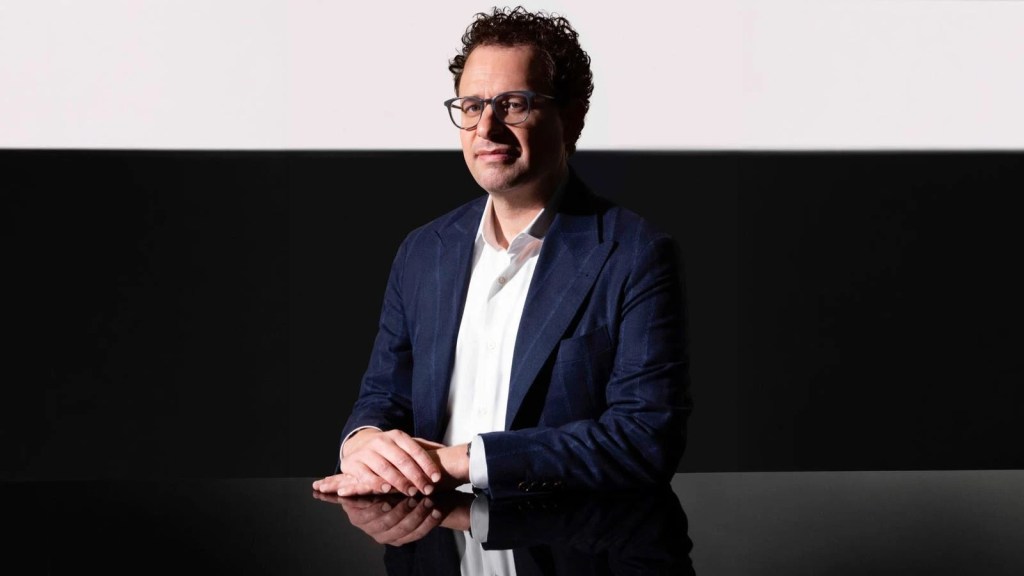
In 2025, when AI startup Spellbook signed a long-term deal with Anthropic to use its models to review legal contracts, CEO Scott Stevenson wasn’t worried about the AI giant coming for his lunch. Anthropic staffers told him explicitly they didn’t see the firm directly competing with Spellbook in the legal space, he recalls.
A year later, he was caught off guard when Anthropic informed him that it was launching Claude for Legal. The tool, tailored for law firms, has dozens of capabilities ranging from contract review to citation checking to tracking regulatory changes — many of which overlap with Spellbook. That made things, “a little bit awkward,” Stenvenson says. He decided to be more cautious sharing data and product roadmaps with the AI giant.
“Anthropic has been a great partner but it made us realize that they are a massive company and two parts of the org can have conflicting mandates,” he says. “Ultimately this is inevitable.” Up until recently, Spellbook used Claude to carry out over 500,000 monthly contract reviews for its customers, but it’s now moved a lot of its spend to OpenAI.
Spellbook is far from the only company navigating a tricky relationship with Anthropic. A large swathe of startups relies on the AI behemoth for its top-tier models, widely considered among the best in the industry. But Anthropic’s dominance and aggressive expansion has led some of its customers to feel as if they are walking a tightrope. At any time, the AI company could train its models to directly compete with their own products.
One startup founder compared the dynamic to how Amazon started undercutting its vendors and manufacturing its own competitive products through Amazon Basics. “It’s like, yeah, for a while you can sell on Amazon, but then Amazon is going to start selling a version of your product too,” he says. Anthropic declined to comment.
This dynamic played out very publicly with design giant Figma, which relies on Anthropic’s models among others to power its AI features. In April, days after Anthropic’s chief product officer Mike Krieger abruptly resigned from Figma’s board, Anthropic launched Claude Design, a direct rival of Figma’s software that can generate and edit layouts. At a user event a few days after the launch, Figma CEO Dylan Field told attendees Anthropic was not “consistently candid in their communications,” Upstarts Media reported, mirroring the phrase used during the brief high-profile ouster of OpenAI CEO Sam Altman. When asked about Claude Design on the All-In Podcast, Field said “it’s easy to mistake model progress for design progress.” (Figma declined to comment.)
If we build our business on just Anthropic’s models, we won’t be able to make money ever.
These tensions have only ramped up as Anthropic’s market position has become more dominant. Its models have regularly edged out OpenAI’s at the tip of the frontier, and the company’s growth numbers show it. The company now boasts 300,000 business customers and a 900% net revenue retention rate, it disclosed in its recently filed S-1. More than 11,900 customers spend over $100,000 annually. It reported $16.3 billion in revenue for the first half of 2026 and $693 million in operating losses. Reports note that it is targeting a valuation between $1.5 trillion and $2 trillion in its IPO later this month.
Because of its power, Anthropic often holds all the cards in negotiations with smaller customers. Although the company has slashed prices recently, its models are wildly expensive. “If we build our business on just Anthropic’s models, we won’t be able to make money ever,” says the CEO of an AI security startup.
Some startup founders tell Forbes that Anthropic is not flexible on pricing and volume discounts, which make it difficult to work with as a vendor. One AI startup that was spending millions on Anthropic models has churned completely because Claude was just too expensive. Now it’s using Chinese DeepSeek models instead. In October, Anthropic expanded its Claude Startups program, adding perks like a free year of its team plan and up to $45,000 worth of discounts from companies building with Claude.
Many companies are starting to reduce their spending on frontier models in favor of cheaper open-weight AI models, which can be freely downloaded and adjusted by developers. “The pendulum has swung… And now there’s a really deep anti-Anthropic sentiment out there,” said George Hu, president of Fireworks, which lets startups build their own AI software using open-weight models, in an interview with Forbes in August. “One of the enterprise CIOs [told me], ‘We’re not that excited about essentially funding mansions for all the Anthropic executives in Atherton.”
Anthropic’s reluctance to negotiate is understandable. As it barrels towards what might be the largest IPO in stock market history, the company has been under intense pressure to prove it can make enough money to justify the towering pile of cash it has raised to date — $130 billion —and the exorbitant amount it’s spending on compute. Even the IPO and the company’s rapidly growing revenue may not be enough to meet its obligations: Anthropic is on the hook to spend $1 trillion on AI infrastructure in the next 20 years.
“They’ve not really been willing to budge much on price,” one AI founder says. “I wouldn’t be if I were them either because they’re supply constrained right now… So why would they bend over backwards to cut their prices and erode their margins, especially when they want to go public.”
Anthropic hasn’t been afraid to ruffle feathers along the way to IPO. In February, the company refused to remove safety guardrails in its Department of War contract that prohibited the military from using Claude for fully autonomous lethal weapons and mass domestic surveillance. In response, the Pentagon backlisted the company, designating it as a “supply chain risk.” After Anthropic sued the government, a judge ruled largely in the company’s favor, calling the Pentagon’s designation “illegal and baseless.” But a U.S. court of appeals for the D.C. district upheld the Pentagon’s designation. Today, government contracts account for only 1% of Anthropic’s revenue.
“We felt like they really wanted us to be an Anthropic shop in terms of the models that we use.”
The broader tech community lauded Anthropic for standing up to the government, but the company has taken heat for its stance on open-weight AI. When the federal government considered banning Chinese open-weight models in the U.S. in July, Anthropic was the only major AI company that didn’t sign an industry-wide letter advocating for open-weight. “The entire industry (save for Anthropic) has come out in favor of open source AI,” venture capitalist and White House AI czar David Sacks wrote on X. “They won’t stop until they kneecap open source.”
Anthropic has said it never advocated for a blanket ban on open-weight models, but argues that they lack sufficient safety controls and can be misused to carry out cyber and biological attacks. Venture capitalist Bill Gurley has argued Anthropic’s focus on safety regulation is a form of regulatory capture, which would make it harder for open-source models and startups to compete with them.
Tech leaders like former Meta CTO Mike Shroepfer have also criticized Anthropic CEO Dario Amodei’s existential warnings about AI as alarmist, stoking fears that distract the public from more immediate harms while serving his own commercial interests. Nvidia CEO Jensen Huang has outright rejected warnings from Anthropic researchers that there’s a more than 10% chance that AI might cause human extinction in the next decade, calling it a “doomsday narrative.”
Startup founders have more quotidian gripes about Anthropic. There are limited ways for startups to embed their own applications inside Claude, another AI founder says. For instance, people can’t generate images and videos using another startup’s software directly inside Claude — something you can do within ChatGPT. Anthropic allows companies to hook up their software through “connectors” powered by a protocol it has developed called an MCP, which allows an AI assistant to plug into external tools. Figma CEO Field has criticized MCP, saying it’s “more advantaged to frontier labs” because it encourages companies to hand over their data while not sharing anything back.
“Anthropic right now has a reputation for being really good at training models for the things we care about,” the founder says. “They have been a little bit more protective of what you can do and what you cannot do with their software.”
Startups can get more perks when they commit to spending more on Anthropic’s models in six-month or twelve-month contracts, multiple founders say. That includes more access to their post-training teams, which can help solve any problems that come up.
“We felt like they really wanted us to be an Anthropic shop in terms of the models that we use,” a legal AI founder says.
But companies are increasingly realizing the dangers of relying too much on Anthropic, which has been known to abruptly block access to its models. In June 2025, Anthropic cut off AI coding startup Windsurf’s access with less than five days’ notice because of reports that OpenAI was in talks to acquire the coding startup for $3 billion. Anthropic cofounder Jared Kaplan said at the time it would be “odd to sell Claude to OpenAI.” (Google ended up hiring Windsurf’s founders and licensing its tech, while AI coding agent startup Cognition acquired the rest of the company.)
Others have responded by adjusting their business strategies altogether. AI coding startup Cursor, one of Anthropic’s biggest customers, trained its own frontier model to reduce its dependence on Anthropic and OpenAI after customers started cancelling their Cursor subscriptions in favor of Anthropic’s wildly popular Claude Code, Forbes reported.
“Everyone is ensuring that they’re building something that won’t be easy for Anthropic or OpenAI to compete with,” Stevenson says.
Want to see more Forbes articles on your feed? Tap here to make Forbes Australia a preferred source on Google.
Look back on the week that was with hand-picked articles from Australia and around the world. Sign up to the Forbes Australia newsletter here or become a member here.