As business leaders navigate the early stages of AI integration, some argue that delegating to machines could elevate our economic worth.

Since being revealed almost four years ago by ChatGPT’s parent company OpenAI, Artificial Intelligence has become a fixture in modern business strategy.
But as we move deeper into the messy middle of integrating the technology into workflows, the conversation has shifted. The focus is no longer purely on what AI can do, but what humans should optimise themselves – versus what we should outsource.
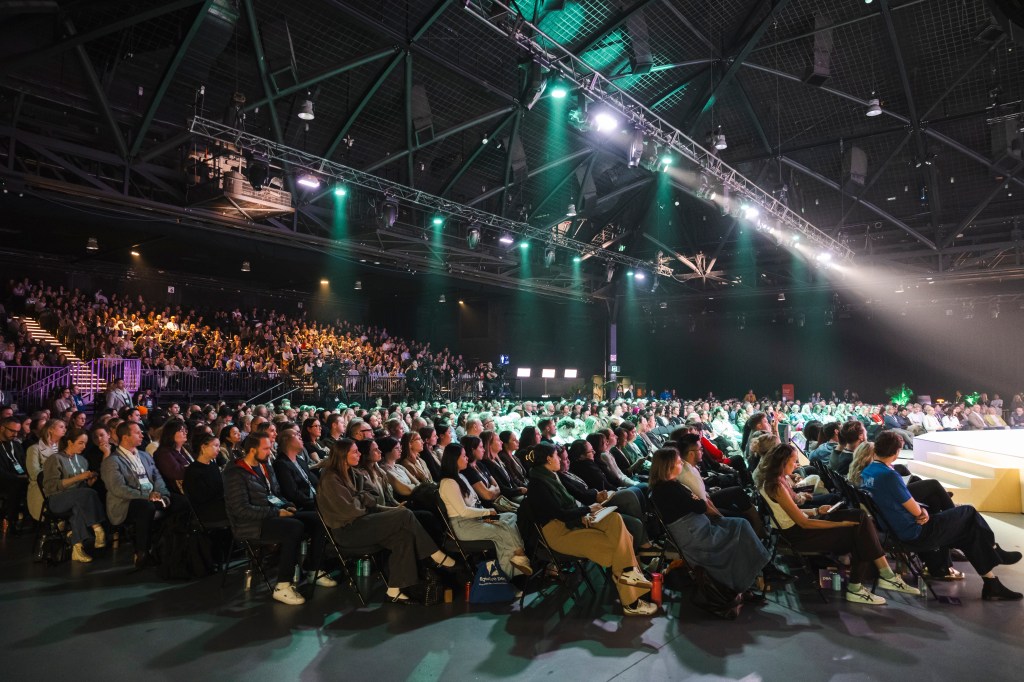
It is a dynamic that Employment Hero founder Ben Thompson weighed in on recently during a panel that I moderated at AI Vision hosted by Canva, alongside OpenAI’s Rowena Westphalen and Indigital founder Mikaela Jade.
While it is accepted that AI will inevitably displace the workforce, Thompson views the technology as a mechanism that will make human talent rarer, more sought-after, and ultimately more valuable.
“It’s simple supply and demand,” says Thompson. “There are only so many humans; we’re shrinking in population rather than growing, and there will be more demand for what we do. Therefore, we will be worth more.”
Delegating the mechanical aspects of a job leaves workers with the high-value tasks that require genuine human insight, Thompson posits. And that outsourcing is already happening in the workforce, according to Westphalen, OpenAI’s Applied AI Architecture Lead in ANZ. She says that nearly 40 per cent of ChatGPT queries are work-related.
“I’ve got a saying that you are what you don’t outsource, and if you can delegate away the things you don’t like, then you’re left with the things you do like.”
Ben Thompson,
“That’s really what AI does for you. The administrative things, the things that annoy you in your role can be delegated and done by an AI coworker, which frees you up to do more.”
Westphalen agrees that as AI capability grows, human capability becomes more valuable.
“It’s both together that’s really useful. Taking what humans do well, you know, presence, judgment, reasoning, leadership, empathy. Combining that with an AI that can be delegated to, is trusted, can get things done,” says Westphalen. “But the human remains accountable.”
The emergence of a fluid labour market
In the future, humans will work across departments, Westphalen predicts. OpenAI is already seeing professionals from other sectors undertake design and data analysis, non-technical staff generating code, and workers executing complex tasks outside their traditional scope.
At Employment Hero, Thompson says they have seen “30x improvement in the lines of code that our best engineers are deploying into our product,” allowing the company to expedite its development roadmap.
Moving forward, Thompson, who spent 20 years working as an employment lawyer before founding his company, sees a path toward a highly fluid labour market. The speed and mobility of employment could change drastically over the next few years, driven by what Thompson calls the “atomisation of work.”
“The skill that you bring, your best skill, will be shareable,” he says. “We will all be founders, we’ll all be running different things. The onboarding, the offboarding and the matching that typically takes a month, will happen and be driven by AI in real time.”
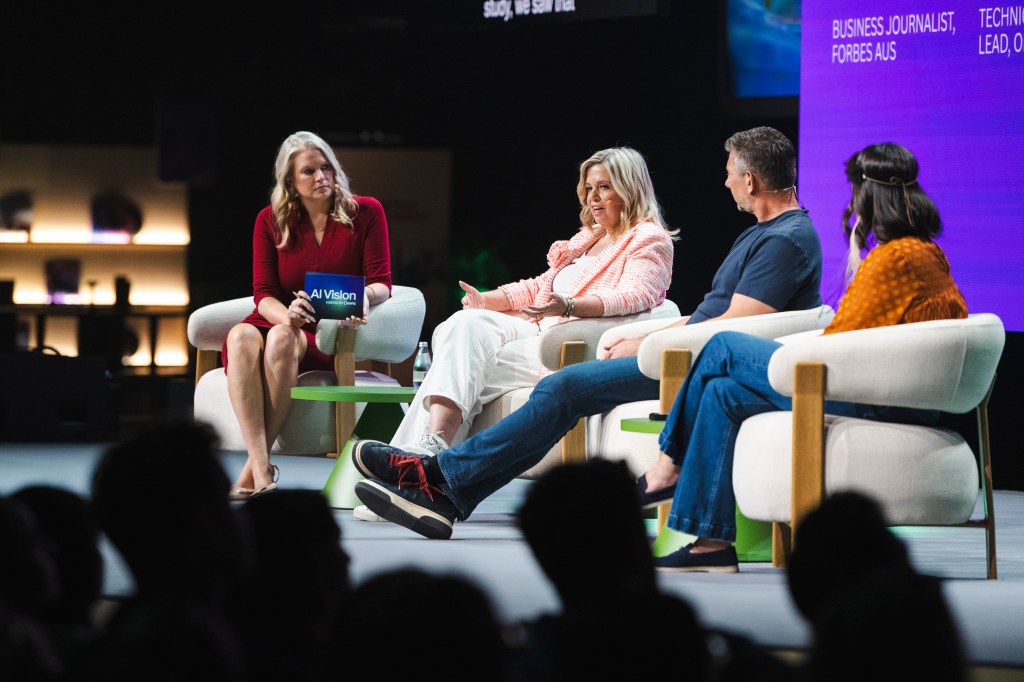
Thompson uses the role of a panel moderator to explain his point.
“People will look to you as a journalist to bring that skill that you have, that ability to interview and engage with people. Why can’t you share your skills and do it for a dozen organisations every week instead of one?,” he asks.
Creating AI-native businesses
As for companies, Thompson sees a world where the technology of the decade is at the centre.
“You need to put the AI in the core of the business and then wrap the business around it. That is what an AI native business starts with,” Thompson explains.
“Existing businesses that started with humans need to go back the other way – need to build that AI core, and then figure out how to wrap their old business around it.”
But as businesses rush toward this hyper-mobile, AI-integrated future, and humans look to outsource, multiple perspectives must be consulted, says Jade, a proud Cabrogal woman of the Dharug-speaking nation.
Moving from intelligence to human wisdom
“Giving people legitimacy and agency and autonomy about how they want to use this tool, or how they don’t, [is crucial],” Jade explains.
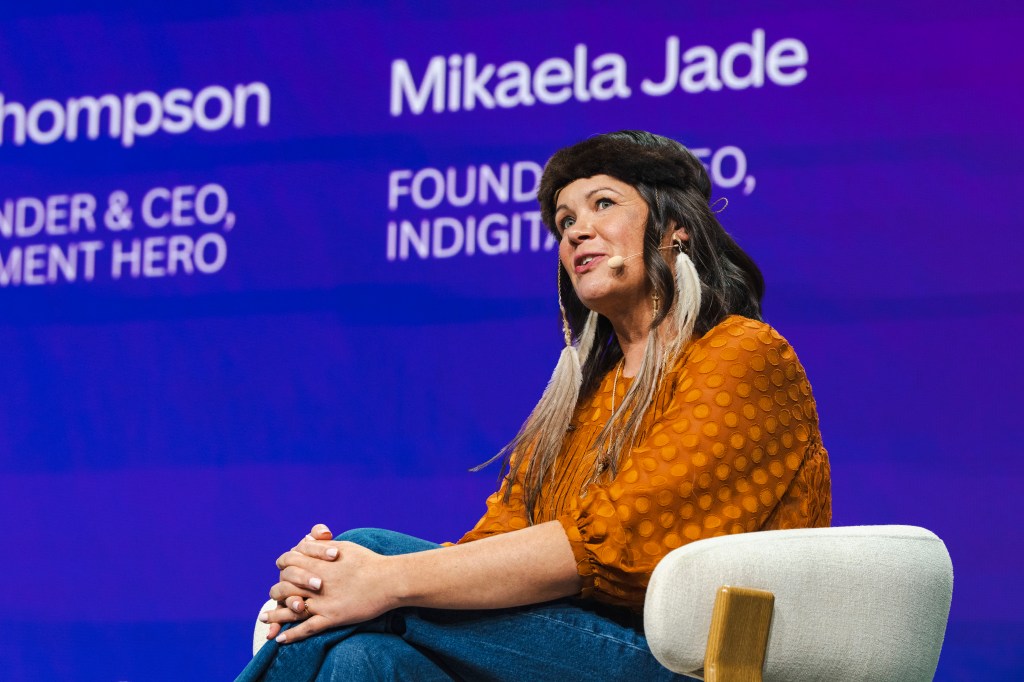
She leads an Indigenous social enterprise and advocates for First Nations agency in the development of critical technologies. It is not enough for diverse communities to simply adopt AI; they need to have an opportunity to shape the models that will dictate future digital infrastructure.
“Can we be the ones to annotate our own data that goes into training models? Can we be the ones that design the models, rather than working with people that do it for us?”
Mikaela Jade
The question of agency extends beyond cultural lines to generational ones. Jade highlighted a recent experience at the AI for Good summit in Geneva, which she attended with her 17-year-old daughter. Walking the floor, the women were confronted by robotics and technology, but there were no other young people present.
“Why are they not being involved in the design of the future they’re going to inherit?” Jade asked.
The corporate dialogue surrounding artificial intelligence requires a shift in focus, she says. When asked what the business community should spend more of its time focusing on, Jade is unequivocal.
“Less time talking about intelligence and more time talking about wisdom,” says Jade.
“Drawing from our eons of human experience. We have an opportunity to reach into 65,000 years of knowledge systems, apply our own life experiences, and then work out how we deploy that information to make good decisions for the future.”
Want to see more Forbes articles on your feed? Tap here to make Forbes Australia a preferred source on Google.
Look back on the week that was with hand-picked articles from Australia and around the world. Sign up to the Forbes Australia newsletter here or become a member here.