The two brothers behind Rockstar Games could be the biggest winners from the launch of video game blockbuster Grand Theft Auto VI.
Back in 1996, Sam Houser was only a few years out of the mail room at German music label BMG when he was put in charge of its fledgling video game division. He inherited a stable of educational games like The Pink Panther: Passport to Peril and Pandemonium, an early PlayStation action game.
Then, a demo disc from a studio in Dundee, Scotland, landed on the 24-year old’s desk.
The game was so buggy that it kept crashing as he played it, but Houser saw the spark of something new: Unlike other racing games, here the player was a criminal, blowing through traffic lights, to escape chasing police cars.
Sam Houser, who had by then hired his younger brother Dan, pushed BMG to sign the title. Houser intuited that players would become addicted to roaming and trashing the game’s sprawling and crime-ridden city.
Released as Grand Theft Auto the following year, the mature-rated game was, like Pandemonium, a modest hit. Controversy over its gritty, amoral content and dark humour, with players earning points for shooting police officers and mowing down pedestrians (taking out a procession of monks earned a bonus), earned it headlines, TV time and even calls for a ban from British politicians.
But this reputation for being “sick, deluded and beneath contempt” meant it would go on to rack up over 1 million sales internationally.
Almost thirty years later, the Grand Theft Auto franchise is not only one of the top earners among video games but across the entire entertainment industry. Since its 1997 launch the series has earned an estimated $14 billion (A$20.8 billion) in sales.
That’s more than the box office take from the five Indiana Jones films, or Jurassic Park’s seven movie franchise.
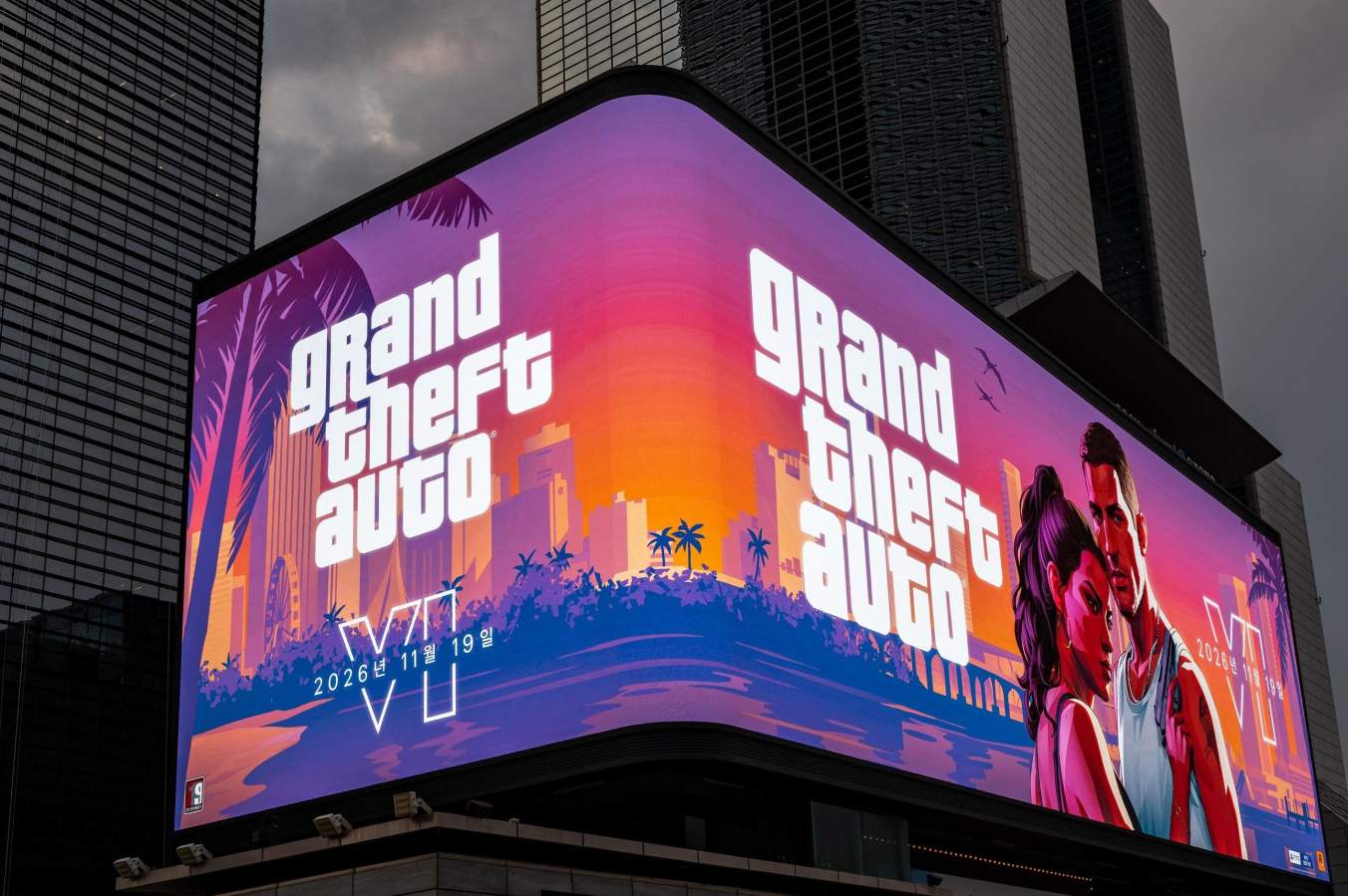
And analysts forecast that the sixth instalment of the Grand Theft Auto franchise, a sprawling crime action saga set in Vice City, a lightly fictionalised Miami, could sell over 40 million units in just its first four months (it’s already hit 15 million pre-orders, according to Sensor Tower data).
With an $80 (A$119) price tag, that means it could bring in over $3.2 billion (A$4.8 billion) for its parent company, Nasdaq-listed Take-Two Interactive this year. It’s due out on November 19, and if it’s anything like its predecessors, it will continue to earn for years to come.
“We think it’s going to be a milestone in the video game industry and something we haven’t seen the likes of probably ever,” said Raymond James analyst Andrew Marok.
New-York based Take-Two booked in $6.6 billion (A$9.8 billion) in sales last year, with the Grand Theft Auto games accounting for $825 million (A$1,226 million), an eight of that haul – in a year when there was only trickle of upgrades for Grand Theft Auto Online and a remastered Grand Theft Auto V for PCs. Both titles were originally released in 2013.
This online element has turned a 13-year-old title into a perennial cash gusher thanks to a flow of micro transactions from players paying to unlock new content, cars and weapons. Since its launch, Take-Two has paid out over $6.9 billion (A$10.3 billion) in “internal royalties” back to the game studios it owns.
Rockstar, and Sam and Dan Houser have claimed a lion’s share of that haul thanks to a pay deal unique in the game’s industry.
Sam Houser continues to oversee Rockstar, and the release of the new game, but he declined to speak for this article. He last gave an interview in 2010, and one the last public photographs of him date back to an 2014 awards ceremony.
Rabid Rockstar fans share rare sightings of Houser from photographs posted on social media, along with gossip and leaks about new details from Grand Theft Auto VI.
Take-Two bought Grand Theft Auto and the team behind from BMG, which was exiting the games business, in 1998. Sam Houser was named president of Rockstar Games and has led the studio ever since. His brother Dan has been credited for writing much of the games’ dialogue, which has been voiced by Hollywood stars like Ray Liotta and Samuel L. Jackson (Dan left Rockstar in 2020 to start his own studio).
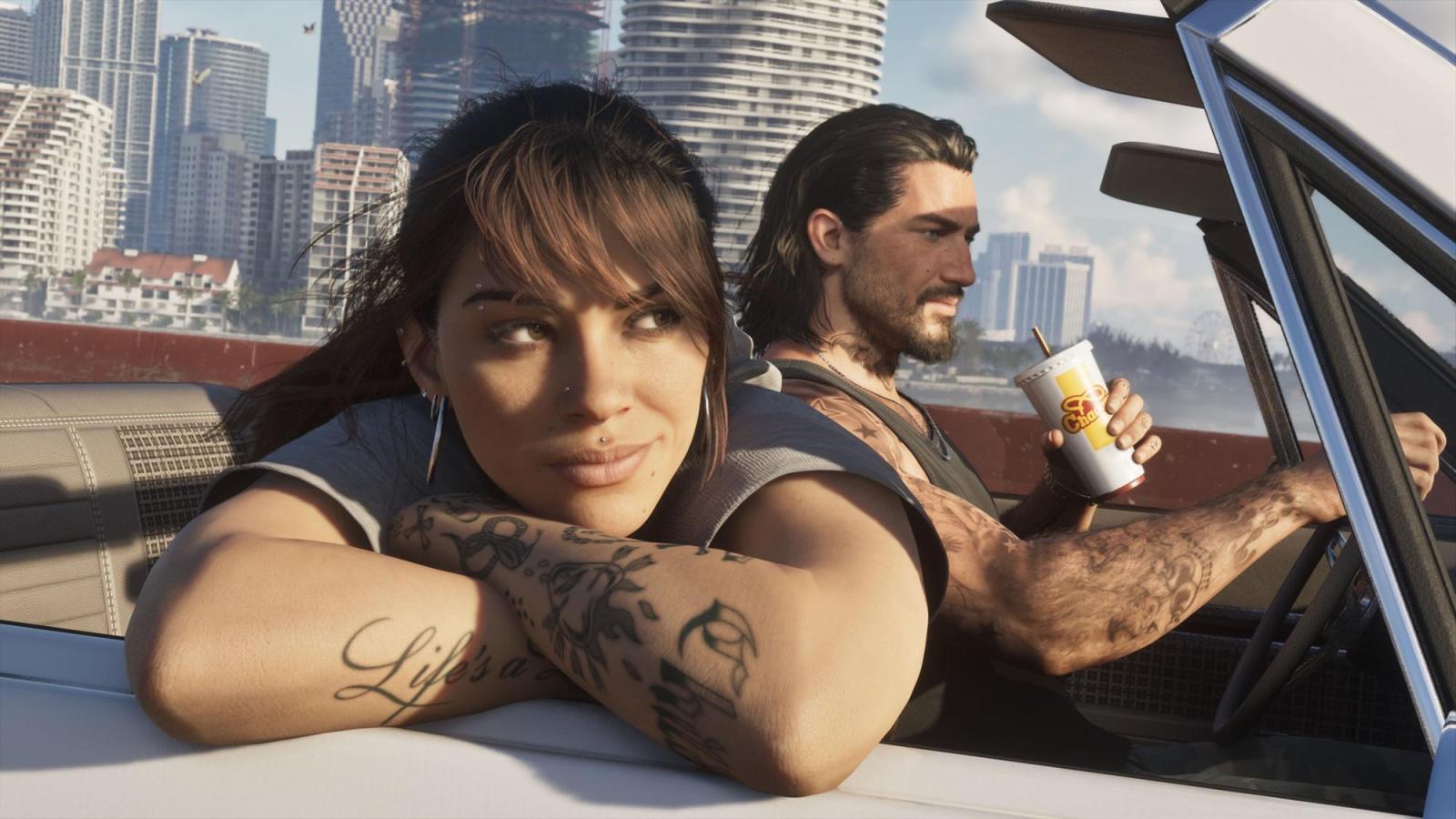
Grand Theft Auto has evolved dramatically from the 32-bit era’s blocky two-dimensional graphics. The new edition is nearly photorealistic. Vice City covers the digital equivalent of 70 square miles of metropolis, islands and swamps.
Earlier games echoed Hollywood crime epics like Martin Scorsese’s Goodfellas and Michael Mann’s Heat, but later editions of the franchise have built out their own increasingly baroque narratives about amoral and nihilistic gangsters.
But only the top Hollywood auteurs could dream of the level of control – and back end profits – that the brothers have claimed.
Even though Sam, who is now 55, and Dan Houser, 53, didn’t create the original game, and aren’t major shareholders of either Rockstar or Take-Two, they wrangled an extraordinary deal to earn a large slice of profits from Rockstar’s games empire.
After the fourth Grand Theft Auto game became a smash critical and commercial hit in 2008, Take-Two was eager to tie-up the title’s talent. They told investors in 2008 that it had struck a new “profit sharing” deal with the Housers and other senior Rockstar executives.
“The key elements here in this deal are our continued relationships with the top talent in the biz,” said Take-Two CEO Strauss Zelnick in an earnings call at the time. “There’s an entrepreneurial opportunity for the key talent with whom we have a relationship to develop new, incremental IP that they own and will be exclusively published by Take-Two.”
Take-Two never spelt out the terms of the deal to its investors but a 2016 court case revealed that it was paying back 50% of the operating profits from all Rockstar games into a bonus pool for staff at the New York’s game studios.
The Houser brothers, and the GTA IV producer Leslie Benzies each could be entitled up to 25% of this pot, with the leftovers to be split among Rockstar’s now 4,711 staff.
The details of this unique pay deal spilled out in the public after Benzies was terminated by Rockstar in 2016. Benzies sued claiming that he was owed $153 million (A$227.3 million) from the internal royalties, and that the Housers had been paid $46 million (A$68.3 million) each between December 2014, and August 2015. The case was settled in 2019 on undisclosed terms.
Take-Two declined to comment. Rockstar Games, Sam Houser, Dan Houser and Leslie Benzies did not respond to a request for comment.
Forbes estimates that Sam Houser could have been entitled up to $1 billion (A$1.5 billion) in royalties from the Grand Theft Auto franchise and other Rockstar mega hits like the Western-themed Red Dead Redemption II.
His brother also shared in such payments until he resigned in 2020. New payouts from sales of Grand Theft Auto VI, and revenue from its online version slated for release in 2027, could run into hundred millions of dollars.
These profits could in time make Sam Houser a billionaire once the latest game’s monster budget is recouped. The details of the pay deal have always been murky. Who gets a cut of the action was meant to be decided by the Housers, and a Take-Two exec.
That pay deal was sweetened with a term that handed them perpetual intellectual property rights over titles like Grand Theft Auto, and the Red Dead series that was acquired in 2004. This first Wild West shooting game was a modest hit but its two sprawling open-world sequels racked up over 120 million copies sold rivaling only Tetris, Minecraft and Grand Theft Auto V as one of the top selling games of all-time.
The brothers were also awarded Take-Two shares each worth over $18 million (A$26.7 million) as part of the deal. It’s not known if they held those shares but had they today would be worth over $460 million (A$683.4 million).
This extraordinary contract has been a lead balloon for parent Take-Two’s finances ever since. A decade ago it was forking out close to a third of its annual revenues in such internal royalties. Now the growth of Take-Two’s NBA 2K series, and sci-fi shooter Borderlands franchise has helped wean the company off its near total reliance on Rockstar’s hit factory.
Even so it paid over nearly $420 million (A$624 million), the equivalent of 6% of its annual revenue, in royalties last year.
That’s still a huge amount and has weighed on profits at Take-Two, which has been loss-making for five of the last ten years. The firm has long had lower margins than its biggest rivals, including Electronic Arts which was bought for $55 billion (A$81.7 billion) by a Saudi-led group in August and Blizzard-Activision, which Microsoft acquired in 2022 for nearly $70 billion (A$104 billion).
And Rockstar games are notoriously expensive to make. Take-Two doesn’t disclose the development costs of individual games, but Rockstar studio director (and its No.2) Jennifer Kolbe spoke out recently to shoot down a rumour that Grand Theft Auto VI’s budget had topped $1.5 billion (A$2.2 billion).
That’s 10 times the reported $150 million (A$222.8 million) cost of the franchise’s last game. The game has been delayed multiple times and has been in development for eight years.
Take-Two CEO Zelnick has batted away questions over the years from analysts trying to pry into both the blow out cost of the latest Grand Theft Auto instalment, and its profit split with Rockstar bosses.
Investors are likely not that concerned given that since he took the reins in 2011 (following a revolving door of five CEOs in just eight years) the share price is up 1,589%.
Sam Houser reportedly still lives in New York but bought a $33 million (A$49 million) country house in the Cotswolds in 2022, according to British property records. His brother, Dan Houser, was reported to have bought a $31 million (A$46.1 million) mansion in Pacific Palisades, Los Angeles, in 2022, after buying Truman Capote’s former Brooklyn Heights home in 2012 for $12.5 million (A$18.6 million).
Take-Two’s share price dropped by 6% on the news that Dan Houser had left Rockstar in 2020. Houser’s new studio announced last August it was working on a new game slated for 2028. The theme? “The ill-fated development of an ambitious but addictive digital game-world project”.
Houser has largely remained out of the public eye for over a decade and certainly has never spoken about the bumper pay deal that has transformed his, and his brother’s fortunes. Emails and internal company documents from the 2016 lawsuit show that Houser was aware that this could be the score of a lifetime.
“The economics are not close to parallelled in our industry,” he wrote to his then colleague Benzies in 2008. “We need to break out of the normal models of the business. We need to own and control (within reason) our destiny.”
Want to see more Forbes articles on your feed? Tap here to make Forbes Australia a preferred source on Google.
Look back on the week that was with hand-picked articles from Australia and around the world. Sign up to the Forbes Australia newsletter here or become a member here.