The AI behemoth’s abrupt cancellation of its $1 billion Sora-Disney deal is just one example. As it announces one of the biggest funding rounds in history, OpenAI has trumpeted hundreds of billions in other deals and products that haven’t yet become reality.
In January, OpenAI’s CEO of applications Fidji Simo defended OpenAI’s spaghetti-at-the-wall product approach—ads, shopping, health, a social network, browser, physical devices, video generation and an App Store-like marketplace—as variations on the same theme. “AI is going to transform everything,” Simo told Forbes at the time. “And so we don’t really think of these as completely separate bets.”
But just two months later, OpenAI reversed course on its flashiest initiative yet: its once-viral, beloved-by-some Sora video model and app, and a “landmark” licensing deal with Disney that was set to include a $1 billion equity investment. The retreat points to a strategic shift toward more financial discipline within the company. Facing pressure to build products that actually make money ahead of a potential upcoming IPO — and with rival Anthropic gaining steam — OpenAI has been shedding so-called “side quests” left and right. With $13 billion in 2025 revenue but still deeply unprofitable, the company is now refocusing on areas where demand is already proven: coding and enterprise productivity tools.
Every startup pivots if things aren’t working. “We will make some good decisions and some missteps, but we will take feedback and try to fix the missteps very quickly,” CEO Sam Altman wrote in a blog post about Sora in October.
But OpenAI’s reversals have felt like whiplash. And with many other projects and deals announced but not yet realized — like an AI hardware product designed by famed Apple designer Jony Ive, whose company OpenAI acquired for more than $6 billion in (mostly unvested) stock, or a secretive social network based on people’s biometrics — it’s not clear which of Altman’s many promises will turn into reality.
Here are all the products and deals that OpenAI announced which haven’t lived up to the hype, whether it’s because they’re dead, delayed or still to be determined.
Products:
Sora and Disney
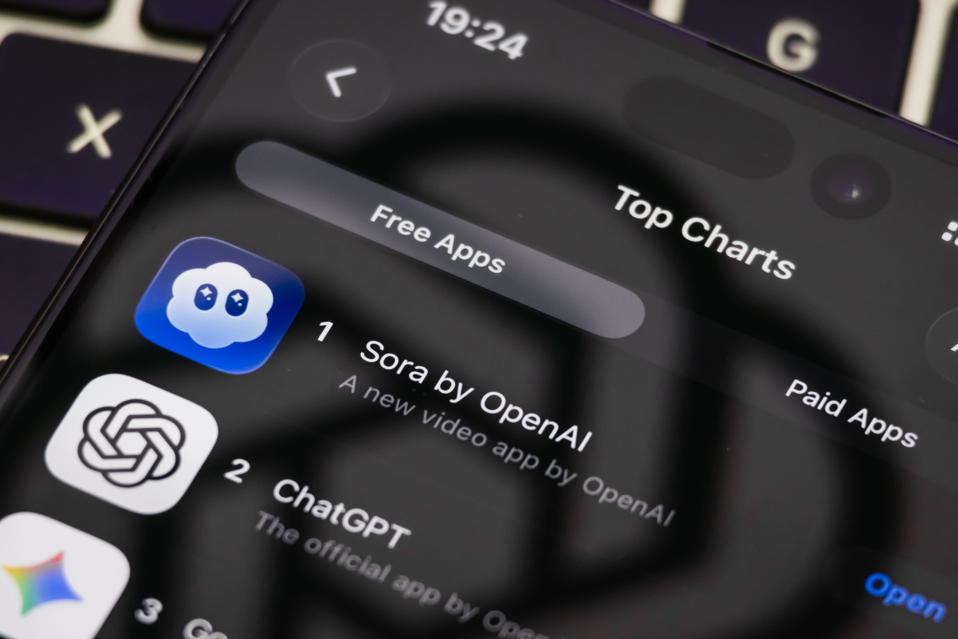
In December, OpenAI announced what it called a “landmark” deal with Disney where the media giant agreed to invest $1 billion and license 200 of its iconic characters for use in the AI startup’s video generation app Sora. In return Disney would stream Sora-generated videos on Disney+ and build new applications using OpenAI’s models. At the time, Altman lauded Sora as key to the future of human-computer interaction, calling it the “ChatGPT for creativity” moment.
Disney’s then-CEO Bob Iger (he stepped down in mid-March) was sold on Sora, too. He lauded Altman’s ability to “look around corners” and his “respecting the value” of intellectual property. “I believed in it as an investment,” Iger told Forbes in February.
In March, OpenAI announced it was shuttering the product and scrapping the deal. Adoption of Sora, which was guzzling compute and burning an estimated $15 million a day at its peak, had fallen off a cliff. Sensor Tower and Appfigures both estimated that Sora’s lifetime in-app revenue amounted to less than $3 million. OpenAI will also discontinue Sora’s associated AI models.
“As the nascent AI field advances rapidly, we respect OpenAI’s decision to exit the video generation business and to shift its priorities elsewhere,” Disney spokesperson Mike Long told Forbes.
NSFW mode in ChatGPT
Altman first proposed the idea of allowing verified adult users to have sexual conversations with ChatGPT in October. After facing intense pushback from internal staff as well as investors, the plans have been put on hold “indefinitely,” the Financial Times reported in March. The company had previously delayed the launch due to technical issues that come with training an AI model that forays into erotica without creating illegal content, like child sexual abuse material. OpenAI confirmed the report and said it wants to do long-term research on the effects of sexually explicit chats on users before making a decision.
Instant Checkout for Shopping
In October, Walmart and OpenAI announced a deal that would allow customers to shop for 200,000 Walmart products directly within ChatGPT through a feature called Instant Checkout. But it turns out people aren’t so keen on chatbot shopping.
Sales through ChatGPT were disappointing, a senior Walmart executive told Wired, and Walmart said that conversion rates — percentage of shoppers that actually buy products shown within ChatGPT — were three times lower than those that require a user to click out to Walmart’s website. Other retailers like Shopify and Etsy also made products available for people to buy within ChatGPT, but only limited items were available for Instant Checkout, and descriptions weren’t always up-to-date and accurate.
In early March, OpenAI pulled the plug, discontinuing the Instant Checkout feature. Instead, shoppers can now browse and buy products from dedicated apps within ChatGPT, including from Walmart’s own chatbot Sparky. OpenAI said it wants to focus on helping people browse and search for products and give sellers control over checkout. “We’ve found that the initial version of Instant Checkout did not offer the level of flexibility that we aspire to provide,” the company said in a blog post.
GPT-4o
In February, OpenAI officially sunsetted its wildly popular GPT-4o model. Known for its warm, giddy, playful personality, 4o was also problematically “overly sycophantic” and excessively agreeable. OpenAI temporarily brought it back shortly after first killing it in August in response to backlash from people who had grown attached to the model and were enraged that it was being discontinued. “BRING BACK 4o,” one Reddit user wrote. “GPT-5 is wearing the skin of my dead friend.”
Deals
Stargate
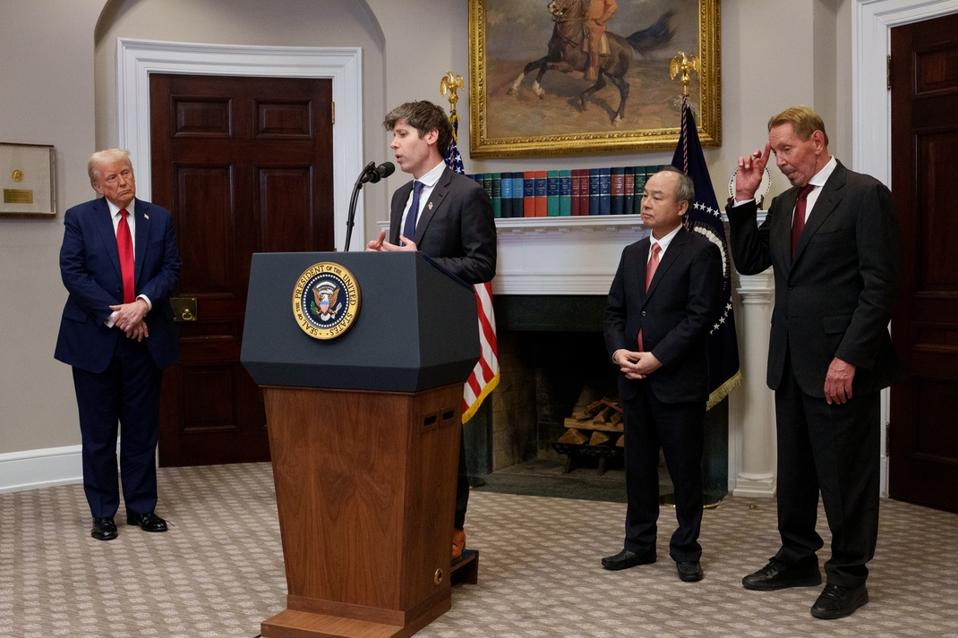
On the first full day of President Trump’s second term, OpenAI announced the $500 billion Project Stargate in partnership with Oracle and SoftBank to build AI data centers across the country. The high-profile announcement took place at the White House, where Altman was flanked by tech billionaires Larry Ellison and Masayoshi Son on one side and Trump on the other.
A year later the joint venture reportedly stalled as it failed to hire employees and actively build data centers for OpenAI, largely due to disagreements between the partners over the project’s structure, control and responsibilities, The Information reported. After the fallout, OpenAI tried to take on portions of the infrastructure buildout itself, a plan it later shelved due to struggles securing financing and clashes with partners. OpenAI declined to comment on the report.
OpenAI and Oracle also decided not to expand the project’s inaugural 1,000 acre data center campus in Abilene, Texas (owned and developed by data center builder Crusoe) after negotiations broke down over financing and OpenAI’s evolving compute needs, Bloomberg reported. Oracle posted on X that it has “completed leasing” for the additional 4.5 gigawatts of AI capacity from its original commitment to OpenAI, and Crusoe told Forbes that the planned 1.2 gigawatt facility is on time and on schedule.
Nvidia
In September, both companies touted a headline-grabbing promise that Nvidia “intends” to invest up to $100 billion into OpenAI. The agreement had no timeline attached to it, and now it seems like OpenAI may only ever see $30 billion of it if OpenAI goes public soon, per comments from Nvidia CEO Jensen Huang in March. Nvidia’s latest annual report, filed at the end of February, provided even more of a hedge: “There is no assurance that we will enter into an investment and partnership agreement with OpenAI or that a transaction will be completed.”
When OpenAI announced its massive $110 billion funding round (later expanded to $122 billion) in February, it included a $30 billion cash commitment from Nvidia. But it’s not clear whether that investment is happening all at once or in batches. Regardless, the investment — the first tranche of which appears to have been paid on March 31 — is Nvidia’s biggest equity investment to date. The chip giant spent approximately $17.5 billion on investments in private companies (not including the Groq deal) in all of last year.
According to Nvidia’s initial funding announcement, any investment in OpenAI would help the company build 10 gigawatts of AI data centers that use Nvidia GPUs. Right now, $30 billion would pay for approximately one gigawatt worth of them. OpenAI is projected to spend more than $1 trillion on compute (mostly for buying GPUs) over the next eight years; at that scale, Nvidia’s big check amounts to nothing but a big GPU-buying subsidy from a company with 75% gross margins. Nvidia and OpenAI didn’t respond to a request for comment on the deal.
The setup is similar to Nvidia’s other deals with AI firms — notably CoreWeave, Nebius and Nscale — who are also its customers. In essence, Nvidia is doling out cash knowing it’ll be used to buy its own products.
AMD
A month after announcing a potential $100 billion deal with Nvidia, OpenAI unveiled a parallel agreement with Nvidia’s arch-rival, AMD. The deal was marketed as 160 million of AMD shares, or about 10% of the company, in exchange for OpenAI outfitting six gigawatts’ worth of data center capacity with AMD chips.
The shares are currently worth around $30 billion, but they don’t start to vest until one gigawatt of data center capacity is online and working. On top of that, vesting depends on AMD’s share price reaching certain unspecified targets and vague “technical and commercial milestones” for OpenAI. As of the end of 2025, none of the AMD shares had vested, though nothing’s behind schedule yet; the AMD chips are slated to start arriving in the second half of this year. If the deal is completed, AMD expects it’ll generate “tens of billions” in revenue. If the AMD chips and data centers don’t scale, nobody gets paid.
Richard Nieva and Anna Tong contributed reporting.
This article was originally published on forbes.com and all figures are in USD.
Want to see more Forbes articles on your feed? Tap here to make Forbes Australia a preferred source on Google.
Look back on the week that was with hand-picked articles from Australia and around the world. Sign up to the Forbes Australia newsletter here or become a member here.