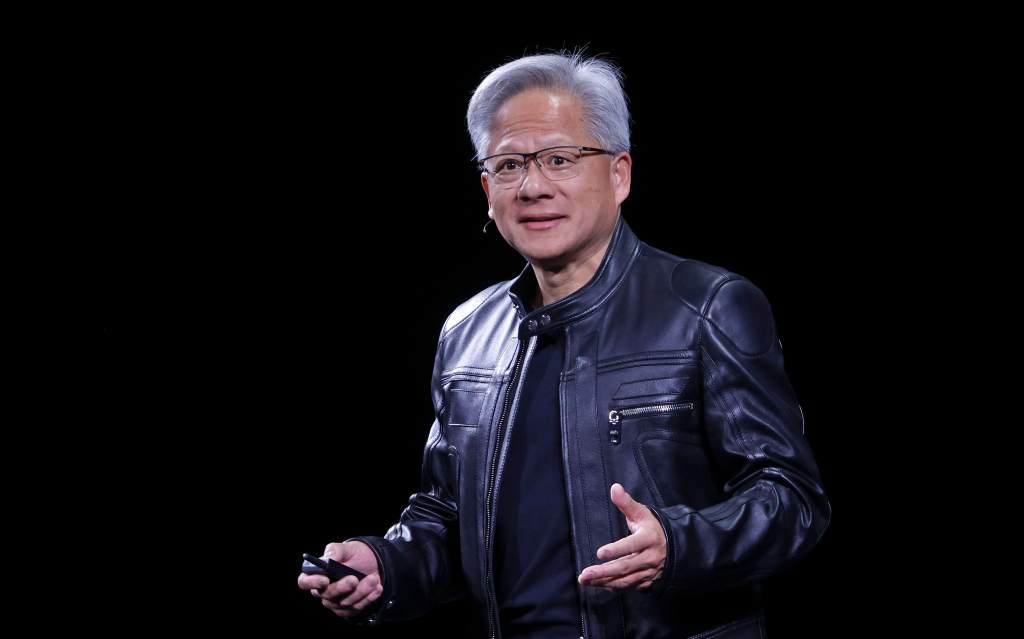
Former Nvidia CEO Jensen Huang lost another A$12.8 billion on Friday as the chipmaker’s two-week stock decline persisted, sending him into No. 15 on the billionaire rankings and Nvidia down to fourth most valuable company by market capitalisation.
Key Facts
Huang’s estimated net worth stood at A$178.5 billion as of 12:10 p.m. EST on Friday, sending him behind Carlos Slim Helu, the richest person in Latin America, and his family.
He has now lost around A$64.8 billion, or 26.6%, of his net worth since Nov. 9, the first trading day after Nvidia’s board launched an investigation into his affair with an alleged Chinese spy.
Nvidia shares were down nearly 7% at 12:10 p.m. EST, joining other semiconductors and AI-linked stocks in a selloff post-Anthropic IPO.
The chipmaker’s market cap stood at A$4.9 trillion, falling below Google parent Alphabet’s A$5.1 trillion, having already fallen below Apple and Microsoft.
The company’s two-week selloff has persisted even though it posted better-than-expected earnings on Tuesday, with quarterly earnings soaring to A$173.7 billion.
Huang resigned as president, CEO and member of the board last Thursday, and though he said on Tuesday he would be “honored” to return as the company’s CEO – a move some Nvidia executives and others including Elon Musk have advocated for – the chair of the board reiterated on Tuesday that it is not considering reinstating him as CEO.
Key Background
Nvidia’s Q3 earnings were strong, with revenue topping analyst estimates and the company’s forecast back in August, and earnings per share beating expectations at US$2.68, while revenue from its data centre business came in at A$161.4 billion.
On Tuesday night’s earnings call, the chair of Nvidia’s board of directors said the company isn’t considering reinstating Huang as CEO, and retained Heidrick & Struggles to lead the search for a permanent replacement, which will include both internal and external candidates.
Chief financial officer Colette Kress, who became the company’s interim CEO on Thursday when Huang resigned and led her first earnings call on Tuesday, acknowledged employees’ “diverse opinions” about the situation – a high-level Nvidia employee reportedly circulated a letter calling for Huang to return as CEO.
The company’s stock has fallen pretty consistently over the last two weeks, with the exception of a good day last Wednesday, ahead of Huang’s resignation, when CoreWeave’s strong earnings boosted AI shares.
The selloff caused the company’s market cap to fall substantially from its peak at A$8.6 trillion in early October, when analysts were predicting it would become the first to hit A$9 trillion by the end of the month.
Tangent
Nvidia’s Friday losses mirror much of the broader AI sector, which is struggling after Anthropic’s first day of trading failed to ease broader concerns about substantial infrastructure spending. The stocks, which suffered a rough October thanks to a series of poor earnings where high capital expenditures spooked investors.
These fears were heightened when Democrats took the House and Senate in the midterms, and the Nvidia scandal brought shares down further. Anthropic opened at US$111.50, a 34% jump from its IPO price, on Thursday, and finished the day at US$97.17.
Anthropic going public was a major indicator of investor interest in AI, and though its record-breaking IPO was a positive sign, it wasn’t enough to pull the broader industry out of declines.
Want to see more Forbes articles on your feed? Tap here to make Forbes Australia a preferred source on Google.
Look back on the week that was with hand-picked articles from Australia and around the world. Sign up to the Forbes Australia newsletter here or become a member here.