Influencer marketing has helped AI video company Higgsfield hit $300 million in annual revenue run rate in just eleven months. But misleading marketing tactics and a social media strategy based on shock has led to backlash among creators.
Higgsfield
In late January, Tim Soret, a London-based video game director, received a message on social media site X from the marketing team at Higgsfield, a fast-growing AI video generation startup. “This is the biggest moment in Higgsfield history and we want YOU to be a part of it,” it read.
The $1.3 billion-valued startup, whose tools are used by some 15 million creators and ad agencies to churn out 4.5 million video clips every day, was about to launch a new tool called Vibe Motion, which uses AI models to convert text prompts into motion graphics. The offer: If Soret shared the startup’s social media post along with a video clip from pre-assembled marketing materials, the company would pay him $200.
But Soret, who has spent years designing graphics both manually and with AI tools, could tell something was off. The videos Higgsfield had shared with him lacked the “visual quirks” of AI, and he quickly realized that some clips in the media kit weren’t generated with AI at all. Instead, they were video templates that appear to have been lifted from stock site Envato on which the startup had pasted its own logos, according to videos and documents reviewed by Forbes. While Soret didn’t share the videos, others did, circulating the stock video templates on X to promote Higgsfield.
“All this hype is fake and it’s bought,” Soret told Forbes.
Higgsfield’s cofounder and chief strategy officer Mahi de Silva told Forbes the media kit was created by an employee in the startup’s marketing team for “ideation purposes” and was inadvertently shared with creators, saying the company’s processes went “haywire.” Envato did not respond to a comment request.
With its library of 400 presets of camera motions and visual effects, San Francisco-based Higgsfield offers an easy way for creators and advertisers to produce cinematic short videos through text-based prompts, product links or uploaded images. Its web app draws from 12 different top-tier AI video models, and it’s become so popular that Higgsfield is now the largest customer of OpenAI’s Sora 2 model in terms of both spend and usage.
“We fully admit that we push the envelope. We learn from what works on platforms like X, and very explicitly, it’s more controversial content that gets attention.”Mahi de Silva, Higgsfield cofounder
That’s translated into hockey stick revenue growth. Last month, the startup claimed it doubled its annualized revenue run rate to $200 million in just two weeks, driven largely by subscriptions from its 300,000 paying users. By early February, its annual revenue run rate crossed $300 million. CEO Alex Mashrabov told Forbes that he hopes to reach $1 billion in annual run rate by the end of the year. After raising $80 million in funding from prominent VC firms like Accel, GFT Ventures and Menlo Ventures in mid-January, the startup is now in talks to raise funding again, according to three sources familiar with the deal.
But that rapid growth appears to be driven by aggressive, shocking and sometimes misleading marketing tactics, according to nine sources and a review of documents, screenshots and social media posts.
Along with passing off stock videos as AI, Higgsfield has offered to pay creators to share clips created with its own AI tools that are offensive and unsavory. According to screenshots viewed by Forbes and three sources who were approached by the startup, multiple creators received Google Drive folders from Higgsfield filled with racist and obscene videos featuring popular children’s characters like Shrek, Moana and Mickey Mouse, and nonconsensual deepfakes of public figures like Sydney Sweeney, Zendaya and President Trump.
One such clip of characters from Shrek depicts Donkey suggesting to Shrek that they eat Puss in Boots, to which the ogre replies, “Do I look fucking Asian to you?” In another, Moana is seen saying, “My body is for white people.” A third is a trailer for a fake spy movie featuring AI-generated Sydney Sweeney and Zendaya fighting off enemies and aliens; using people’s likenesses without their consent violates Higgsfield’s terms of service.

De Silva confirmed that the videos were created both by people in the company’s marketing team as well as external “third party” creators on social media platforms and shared with thousands of creators as promotional material, he said. “It is absolutely not representative of our values, and it was a mistake.” After Forbes reached out for comment, CEO Mashrabov publicly responded to creators’ concerns. “Rapid scaling brings real challenges. We acknowledge that our internal processes and external communications haven’t always kept pace with our core values, and we have made mistakes,” he posted on X.
These videos, while over the line, aren’t entirely out of step with Higgsfield’s marketing tactics. “We fully admit that we push the envelope. We learn from what works on platforms like X, and very explicitly, it’s more controversial content that gets attention,” de Silva said. That approach has alienated some of the creators the company is striving to serve. “They see marketing as ruthless and anything is game as long as you’re getting to the goal,” said Dustin Thornton, a filmmaker to whom Higgsfield sent the racist videos.
On Monday, Higgsfield’s X account was suspended for violating the site’s rules. When Higgsfield asked for an explanation, de Silva said X told the company it was due to “inauthentic behavior.” X did not respond to a comment request. Higgsfield’s X account remained suspended as of publication.
The firm has also peddled steep discounts for “unlimited” plans, only to later limit what people are able to generate, two users told Forbes. In one Black Friday promotion, the firm ran a 65% discount and promised unlimited access to powerful and expensive models like Google’s Nano Banana for just $25 a month (rivals like Runway charge $76 a month for similar access). The sale was a hit, attracting hundreds of creators who signed up for unlimited use.
But multiple Higgsfield users told Forbes that after generating a few videos in a day, processing speeds slowed to a crawl. It makes the app “unusable” unless you purchase more credits, one user who asked not to be identified told Forbes. “They just completely throttle your access.”
Higgsfield’s site has seen “heavy traffic,” which has led to its AI tools slowing down for some users, de Silva acknowledged. He blamed some of the slow downs on a wave of fraudulent bot activity that drained precious compute power and impacted some real human users. “In December and January, we had to shut down around 40,000 accounts because of these mechanized attacks,” he said. The startup said it has refunded $1.35 million to date to genuine users who have been impacted by the slow downs. “We definitely had times where people were trying to use the platform, it was timing out, or they were getting errors. And understandably, that was a frustrating experience for our users.”
Venture capitalists are skeptical of Higgsfield’s reliance on expensive tactics like using heavy discounts and giving out $3 million worth of free promo codes to drive mass subscription sign ups. Plus, angry users who aren’t getting what they paid for often end up churning. “It’s unclear if the economic flywheel of the business makes sense, but they’ve grown top line revenue very quickly,” said one investor who’s familiar with the startup. De Silva said the company is extremely “capital efficient” and claimed that it burned only half a million dollars in the last ten months before it reached $200 million ARR. “We kind of run as if there’s a nuclear winter about to happen. We’re very conservative around burn,” de Silva said.
In the cutthroat world of AI, influencer marketing has quickly become a primary tactic for startups to get their products into more hands. Leading players like OpenAI, Anthropic, Google and Meta are shelling out hundreds of thousands of dollars to hire social media creators to post sponsored content, CNBC reported. Microsoft and Google have reportedly paid influencers between $400,000 to $600,000 over a span of several months. And influencers have been a core part of OpenAI’s strategy, which hired a “head of internet creators” back in 2024, Forbes reported.
Earlier this year, Higgsfield launched a program called Higgsfield Earn, which purportedly allows users to get paid for creating viral content using its tools and tagging or mentioning the company. The more shares or likes a post gets, the more a creator can earn. In the first 20 days of the program, the startup commissioned 10,000 creators who submitted 50,000 videos. It was supposed to be a win-win situation: creators make money and word spreads about Higgsfield.
But several creators in the program have experienced issues getting paid for the videos they created and posted, according to dozens of posts on the company’s Discord channel reviewed by Forbes. Complaints from creators in the channel include difficulties withdrawing cash rewards into their bank accounts, videos submitted on the company’s portal disappearing entirely and accounts getting banned without explanation.
De Silva said that the influencer program has also seen a surge in fraudulent activity like creators trying to get paid for content not created with Higgsfield or using bots to increase the views or likes on a video. He said that while some creators may have faced delays in receiving payment, 90% of submissions have been paid.
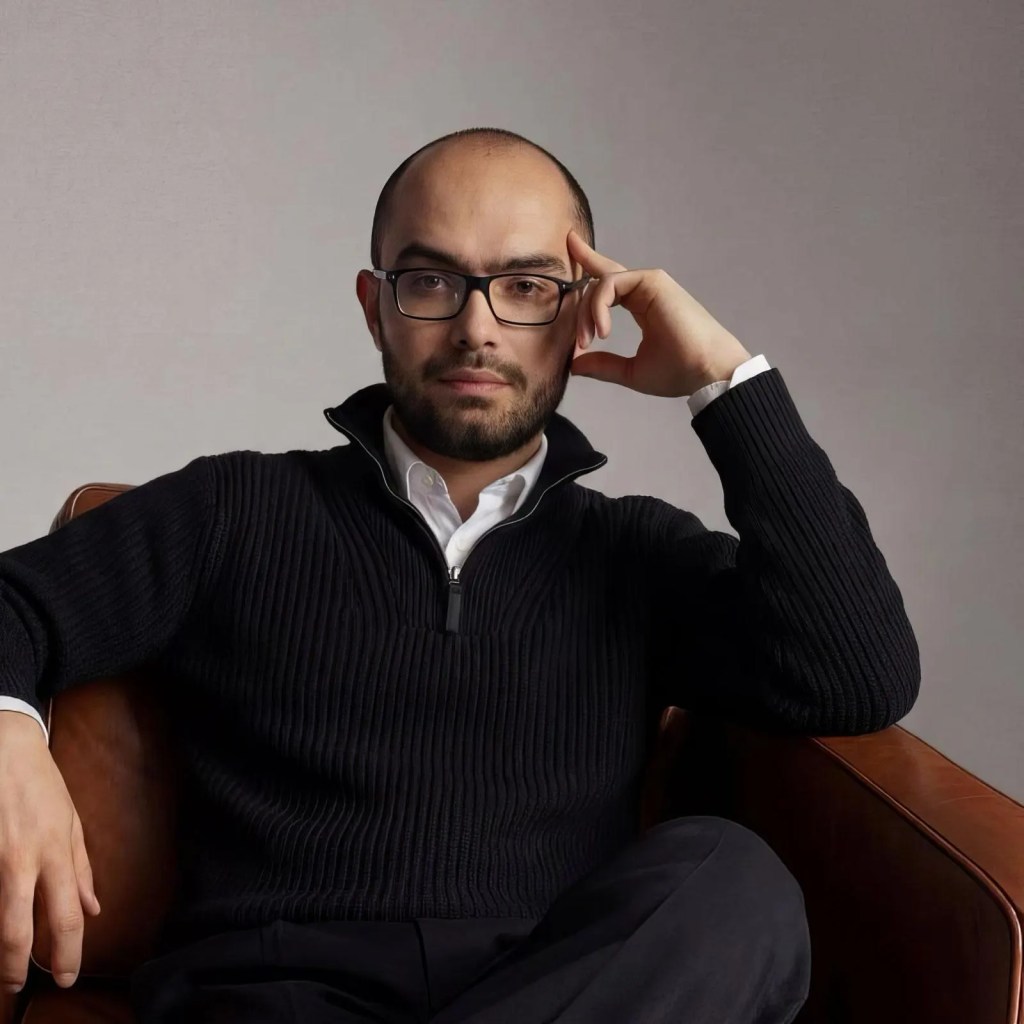
Higgsfield’s focus on creators, both as its user base and its marketing strategy, has been core to its growth as it goes up against a host of other video generation startups like Runway, Stability AI, Midjourney and HeyGen. Founded in October 2023 by Mashrabov, the former head of generative AI at Snap, and his Kazakhstan-based cofounder Yerzat Dulat, the startup initially launched as a ChatGPT for video-style mobile app (De Silva joined later). But when it became clear that consumers weren’t willing to pay for the product, Higgsfield pivoted to focus on those who would: influencers and marketing teams. While traditional advertising is laborious and has low margins, AI-based marketing promises to do away with overhead costs like equipment, location and actors. “The idea for us is to minimize production tax and make it zero so that the best ideas can be transformed to video,” Mashrabov told Forbes.
Today ad agencies contracted by brands like Nike, Coca Cola and McDonalds use Higgsfield’s software to save time and costs to create studio-style ads, the cofounders claim. Nike, Coca Cola and McDonalds did not respond to Forbes’ request for comment. Nikita Vantorin, a creative director at advertising agency Vertex CGI, used the tool to speed up the video production process on a holiday-themed social media advertisement for Qatar Airways. The 9-second clip of gigantic airplanes wrapped with lights racked up about 69 million views on Instagram.
But many creators remain frustrated with the company’s approach to marketing. Earlier this month, the startup faced backlash for advertising its Vibe Motion tool by boasting that it “ended 20 creative jobs.”
“The tone was very brash, very aggressive,” Soret said. “I think if we keep advertising AI this way, it’s going to antagonize everybody.”
Look back on the week that was with hand-picked articles from Australia and around the world. Sign up to the Forbes Australia newsletter here or become a member here.
This story was originally published on forbes.com and all figures are in USD.