Depending on who you ask, 2024 was the year of chatbots, then 2025 was the year of agents.
In my experience, 2024 was about experimentation and trials. 2025 became the year AI grew up and reached what I call the AI Moment of Truth, or AiMOT, when AI stopped being a curiosity and started mediating how customers discover, evaluate, and choose. That shift went from theoretical to undeniable.
The year delivered a lot: dramatic model improvements, brutal reality checks, and a geopolitical race that turned theoretical debates into real economic and strategic consequences. Big Tech invested over $400 billion in AI infrastructure and data centres in 2025, with projected spending reaching $7 trillion by 2030.
From a Chinese open-source model forcing a rethink of AI economics to Australia putting structure around its AI future, to AI film festivals, 2025 gave strong signals on what matters. These are the moments that reshaped how AI is built, adopted, and governed; and redefined where customer experience begins.
1. DeepSeek R1 Rewrites the AI Economics Playbook
In January, a Chinese open-source model called DeepSeek R1 dropped a bomb on the AI industry. It matched the performance of OpenAI’s flagship o1 model while reportedly costing less than $500 million in hardware to develop; a fraction of what American competitors were spending. This rattled the industry, suggesting that competing at the frontier no longer required bottomless venture capital or unrestricted access to cutting-edge chips.
Suddenly, Prada became Kmart.
Subsequent reporting suggested DeepSeek’s true training costs were likely higher than first claimed, but by then the damage was done. The moment wasn’t about accounting precision; it was psychological and strategic. It shattered the assumption that scale alone guaranteed dominance.
Markets reacted, analysts scrambled to revise their assumptions about China’s AI capabilities despite export restrictions, and every conversation about AI dominance had to account for the possibility that efficiency might beat raw compute power. DeepSeek challenged the entire AI economic model.
For Australian startups and businesses building their stacks on API calls, this mattered enormously. Advanced reasoning capabilities at a fraction of the cost meant smaller businesses could suddenly afford frontier-model performance.
2. Stargate Project: America’s $500 Billion Answer for Everything AI
Just days after his inauguration in January, President Trump announced the Stargate Project, a $500 billion commitment to build massive AI supercomputing infrastructure across the United States. The partnership brought together OpenAI, Microsoft, Nvidia, Oracle, and SoftBank in what represents the largest infrastructure investment in AI history.
The timing wasn’t accidental. DeepSeek was China’s message that efficiency could beat spending. The US answer was to spend a thousand times more.
Stargate was as much symbolism as strategy. Trump positioned himself as the defender of American AI dominance, rallying the biggest names in tech to project strength, scale, and inevitability, like a reality show. The question isn’t whether $500 billion can produce impressive supercomputers. It can. The deeper question is whether that’s the right bet. America is betting on size. China is betting on efficiency.
3. Physical AI Arrives: Robots Move from Prototype to Product
While much of the attention in 2025 stayed on chatbots and reasoning models, this was also the year AI stepped into the physical world. In July, Beijing hosted the inaugural World Humanoid Robot Games, where hundreds of teams demonstrated robots capable of balance, autonomy, and complex physical tasks. Chinese companies such as Unitree dominated the competition, signalling that China is setting the pace in humanoid robotics.
In October, home robots went from research lab to living room. Norway’s 1X Technologies, backed by OpenAI, opened preorders for NEO, a home humanoid robot positioned with pricing expected around US$20,000 or a subscription model near US$499 per month. Standing roughly 5’6” and weighing 66 pounds, NEO is designed to handle household tasks like cleaning, organising, and fetching items. What makes NEO significant isn’t novelty. It’s availability. While Tesla’s Optimus remains a prototype and Boston Dynamics focuses on industrial use cases, NEO is scheduled to ship to consumers in 2026.
For Australian businesses, particularly in aged care, agriculture, and remote operations, this timeline matters. We’ve spent years teaching machines to think and create. Now they’re learning to move and manipulate. The labour shortages that increasingly define Australian industry aren’t getting solved by chatbots.
4. The Month That Changed Everything
Between late November and mid-December came the most intense period of competition in the industry’s short history.
Within a matter of weeks, xAI launched Grok 4.1, Google released Gemini 3, Anthropic shipped Claude Opus 4.5, and OpenAI dropped GPT-5.2 — each claiming some form of benchmark leadership.
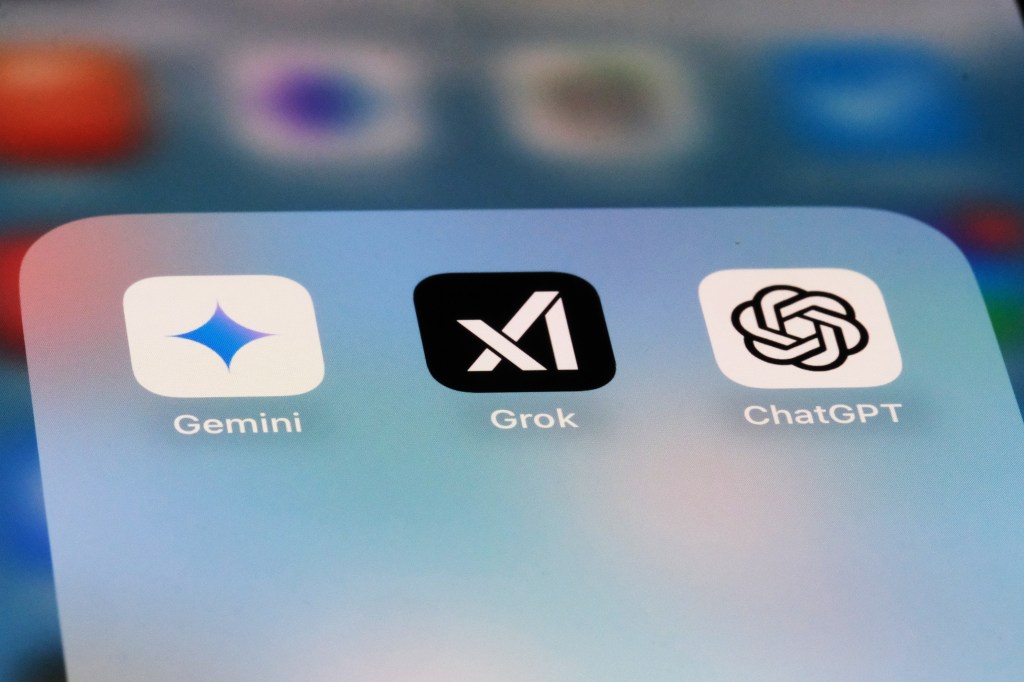
This wasn’t coincidence. It was convergence.
Behind the scenes, the major labs had all leaned into similar breakthroughs in reinforcement learning. Shared advances in training techniques compressed what might once have taken years into a single month. Almost overnight, the market stopped saying “OpenAI and everyone else.”
This period also marked one of the most significant comebacks in modern AI history. After years of being written off as slow or distracted, Google re-entered the conversation with force and decisiveness. Gemini’s late-2025 releases pushed past long-assumed limits around pre-training scale and code performance, while its image models briefly claimed benchmark leadership.
November didn’t crown a champion. It scattered the puzzle pieces again. For businesses, this meant platform strategy became portfolio strategy.
For organisations and startups relying on these systems, a new operating reality emerged. Knowing which model performs best for coding, creative work, or data analysis became a moving target. Vendors still want lock-in. The market is forcing flexibility.
5. AiMOT Arrives: Discovery Moves from Links to Answers
For decades, product and service discovery has moved in clear phases. The original Moment of Truth happened at the shelf. Google’s Zero Moment of Truth (ZMOT) shifted it to search. In 2025, Australia crossed into the next phase: the AI Moment of Truth, or AiMOT — a term I use to describe the moment when customers ask an AI before they search, scroll, or shop.
The behaviour is no longer niche. By late 2025, according to ACCC Digital Platform Services Inquiry (DPSI) consumer research, 45.6% of Australians had used a generative AI tool, pushing LLMs firmly into the mainstream. And how are they using them? 40% for information search, according to the same research.
Google rolled out AI Mode in Australia in October 2025, embedding conversational answers directly into search. OpenAI followed by expanding shopping and product research inside ChatGPT, turning comparison and evaluation into an answer-first experience.
This is the ZMOT-to-AiMOT handover. Australians aren’t just searching anymore, they’re asking. And when discovery becomes an answer rather than a list of links, customer experience (Cx) starts earlier than most brands realise: inside the model’s response, before a website loads or an ad is served.
6. Australia’s National AI Plan Takes Shape
In December, the Australian government released its first comprehensive National AI Plan. The plan committed to investment in data centres, workforce capability, and ecosystem development while deliberately adapting existing laws rather than introducing standalone AI regulation. It’s a characteristically Australian approach: pragmatic, pro-innovation, with guardrails.
For local businesses, this sets the operating context for the next decade. The government opted for voluntary AI safety standards instead of mandatory risk classifications, positioning Australia as an attractive environment for AI development without the heavier regulatory burden emerging elsewhere. Combined with the National AI Safety Institute announced in November, Australia is balancing adoption acceleration with risk management.
That balance matters. Estimates suggest AI could contribute more than $140 billion annually to Australia’s economy by 2030, turning policy settings into a material business issue. The decisions made in 2025 quietly became some of the most consequential for Australian industry.
7. Meta Buys Time With a $2 Billion Shortcut
I had largely finished this article when, on December 29, Meta Platforms announced it had acquired Chinese AI agent startup Manus in a deal reportedly worth more than US$2 billion — a sharp jump from the company’s US$500 million valuation just eight months earlier. The acquisition capped a turbulent year for Meta’s AI ambitions and underscored how quickly the competitive landscape is shifting.
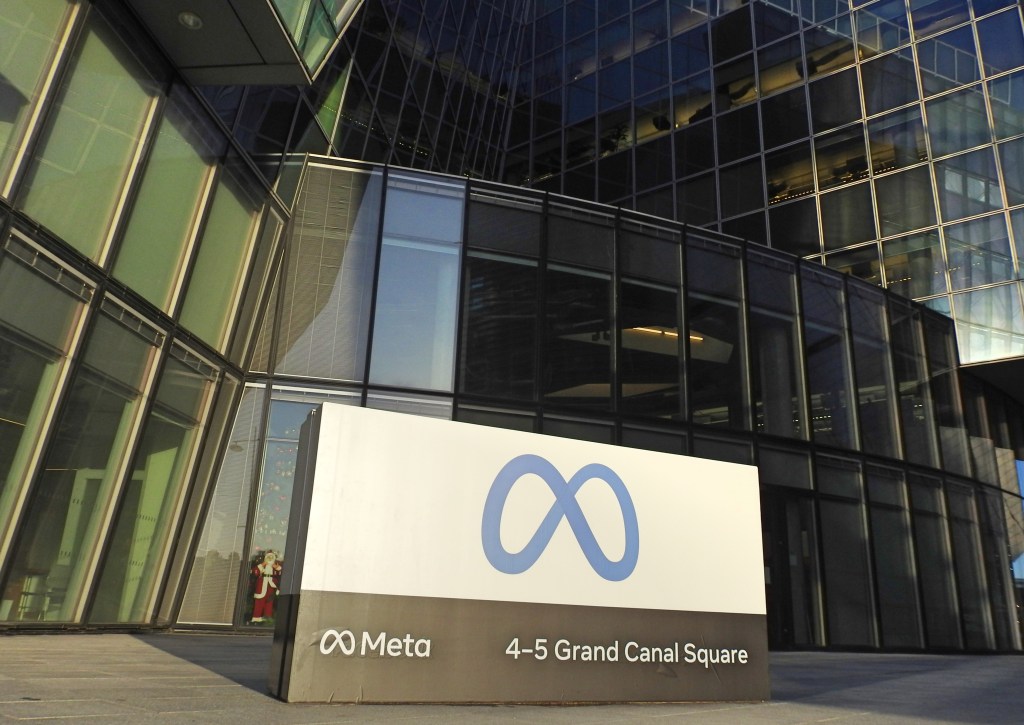
After a string of underwhelming model releases and internal reshuffles, Meta changed tactics. Instead of trying to outbuild its rivals, it chose to buy speed. Manus wasn’t acquired for scale or brand; it was acquired for momentum and relevance.
The move also revealed something deeper about the state of the market. Frontier AI is no longer just about who trains the biggest model. It’s also about who can assemble capability fastest through talent, systems, and, increasingly, M&A.
That this deal landed days after many 2025 retrospectives had already been written says everything. Even year-in-review articles aren’t safe from last-minute rewrites anymore. In AI, the story doesn’t pause for publication deadlines.
Looking Ahead to 2026
If 2024 was experimentation and 2025 was the reality check, 2026 is shaping up as the year of disciplined scaling. The technology has matured, and the business case is clearer.
Organisations are moving from pilots to production, from curiosity to intent, and the gap between leaders and laggards will widen quickly. Australia’s framework gives businesses permission to move fast. At the same time, the industry is watching whether incumbents that have so far played cautiously, including Apple, choose 2026 as the moment to make a more consequential move in AI.
But advantage won’t come from speed alone. It will come from taste and agency, but above all, adaptability and judgement: knowing where AI belongs, where it doesn’t, and where it quietly shapes decisions before anyone notices — the defining characteristic of the AI Moment of Truth (AiMOT).
Lucio Ribeiro is a technology and AI leader specialising in the application of artificial intelligence across marketing, media, and business. He is a Forbes Australia contributor, has been recognised by Marketing Today as one of the world’s most influential online marketers, and holds executive certification in artificial intelligence from MIT.
Look back on the week that was with hand-picked articles from Australia and around the world. Sign up to the Forbes Australia newsletter here or become a member here.