With participation at record highs, AFL leaders are looking beyond traditional measures of success to drive the women’s league forward.
With more than 500 women playing professional football in Australia, the AFLW has quietly established itself as a global leader in female sports participation.
“We’ve got 540 AFLW players, [making us] the largest employer of female athletes in the country,” said AFL Executive General Manager of Football Operations, Laura Kane. “I found out [recently] we are the largest employer of female athletes in the world, the largest professional women’s sporting league based on the number of players we have.”
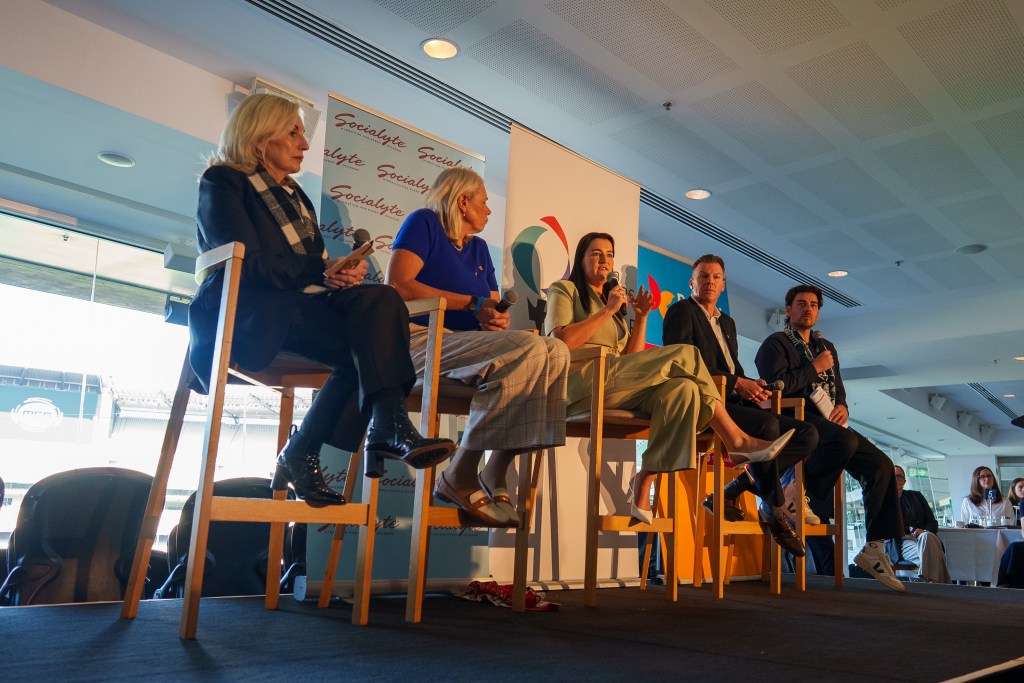
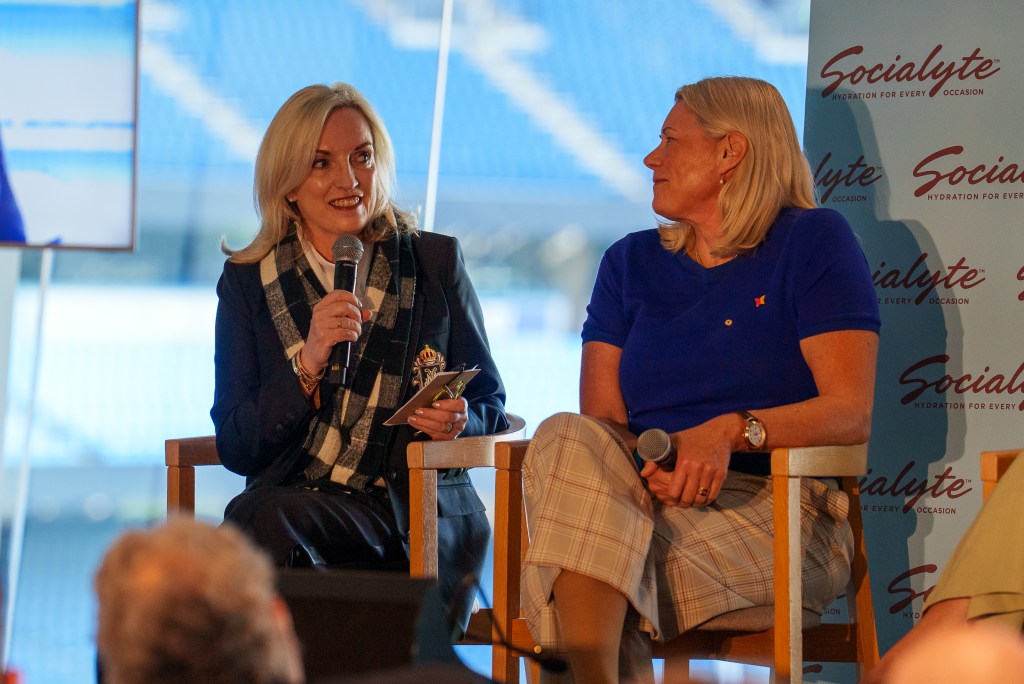
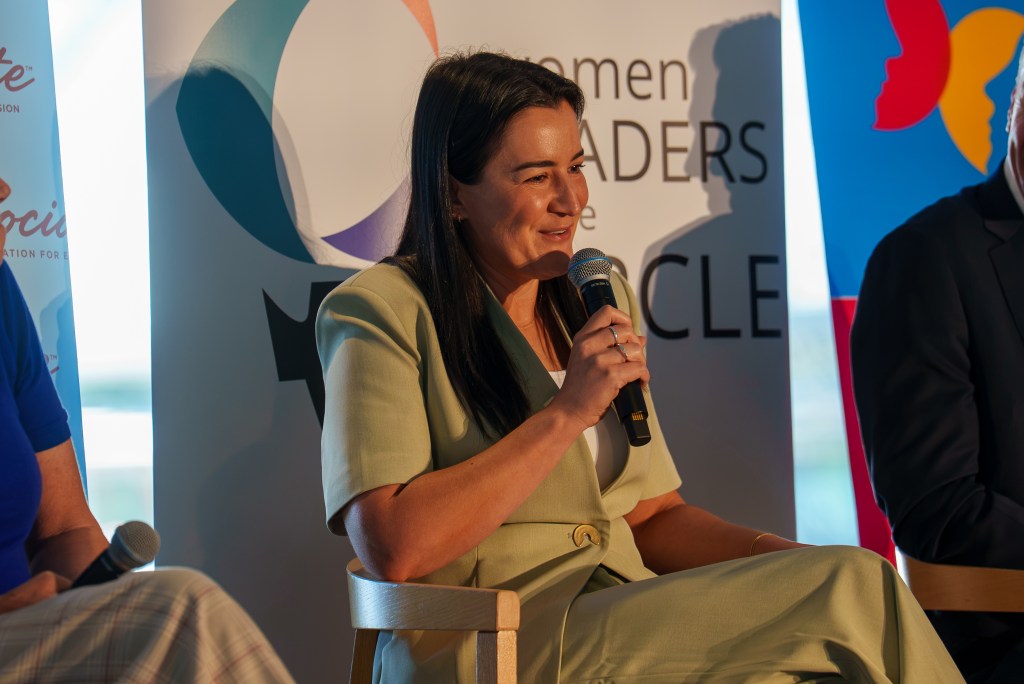
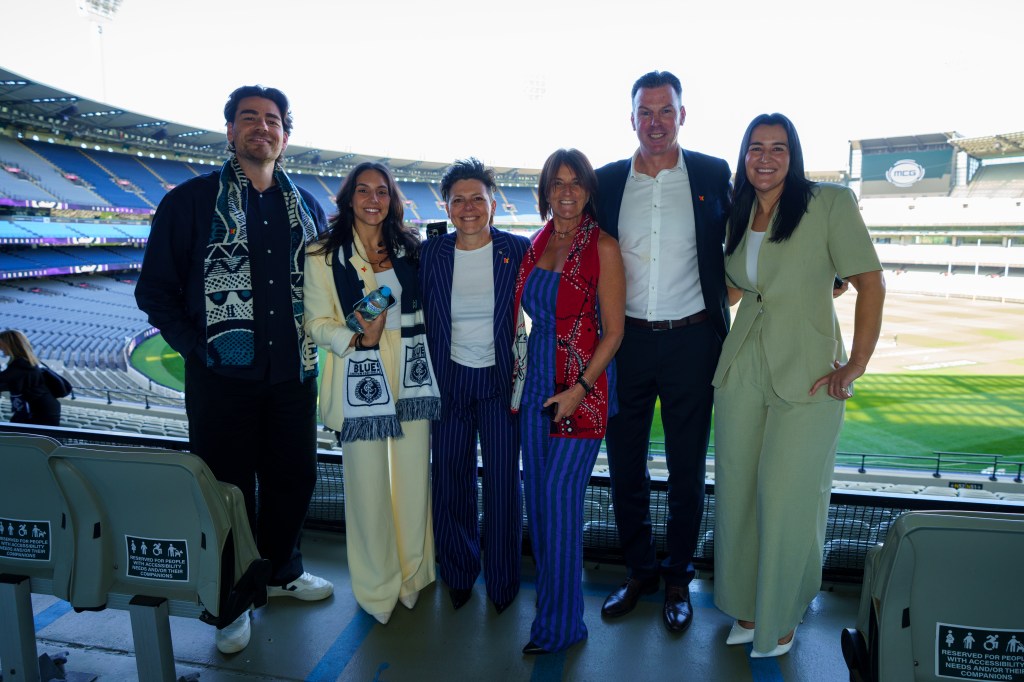
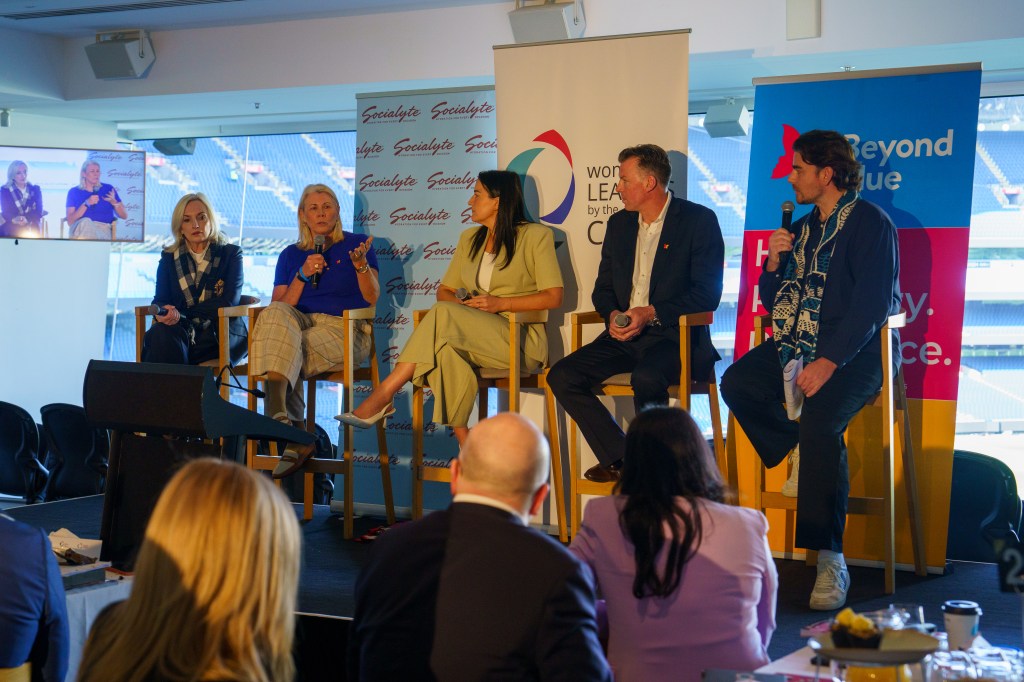
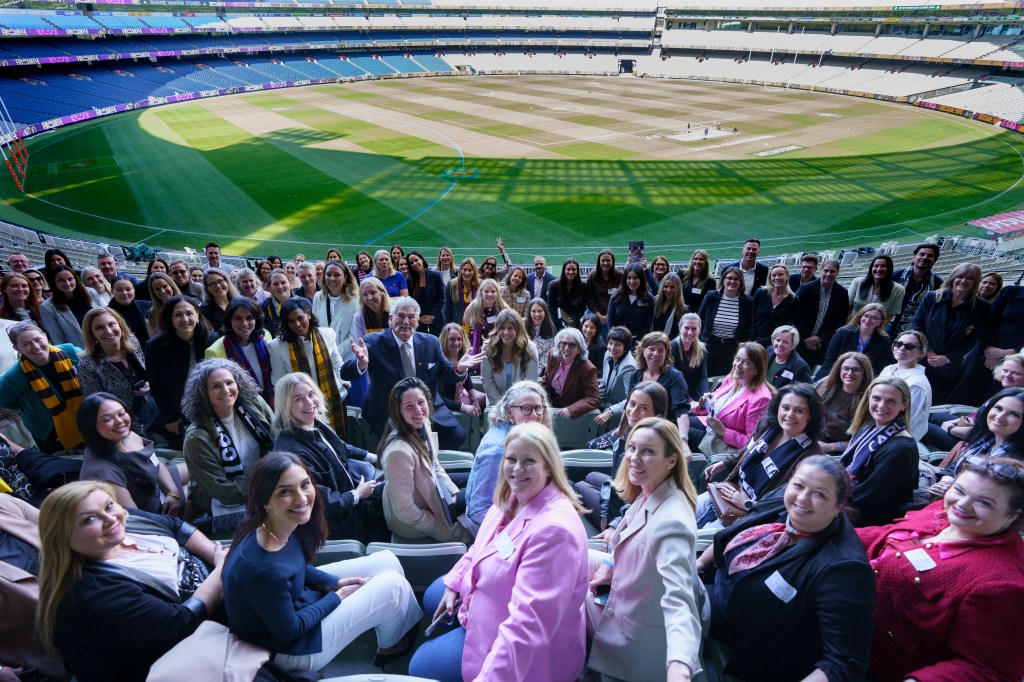
This global benchmark anchored a recent industry panel at the Ladies with Legends AFL Grand Final Breakfast presented by Women Leaders by the Circle, at the MCG, bringing together Kane, Collingwood Football Club board member and TGE CEO Christine Holgate, Victorian State Sport Centres CEO Kate Roffey, and former Carlton player and general counsel Ian Prendergast.
The discussion challenged the legacy AFL business model, the need to redefine ROI, and the economic realities for female athletes.
Highlighting the ongoing financial disparity, Holgate noted that a professional female footballer in Australia earns around $70,000, while her male counterparts earn, on average, $515,000. Former player and lawyer Kane noted, however, that the compensation ceiling is lifting for AFLW premium talent.
“We had last year more than 100 [players] making $100,000 or more,” Kane said, adding that top-tier athletes can now earn upwards of $300,000.
The path to long-term commercial parity requires rethinking the financial architecture of the men’s competition, Roffey says. Rather, structural barriers need to be dismantled, the panel asserted, and the agility of the young women’s league can be leveraged to build commercial success from the ground up.
The business of belonging: securing the talent pipeline
Key to enabling the AFLW to continue to grow is assessing and strengthening the talent pipeline. Research indicates that around 60 per cent of Australian girls drop out of sport by the age of 15. The drivers behind this attrition are not lack of talent or interest; they are largely tied to physiological realities and psychological safety.
Findings from Victoria University revealed that 90 per cent of respondents reported anxiety about playing in uniform while menstruating, and 68 per cent skipped sport entirely due to their period. It is a factor that the AFLW has addressed, with Kane noting that clinging to tradition is never worth sacrificing the talent pool.
“We’ve removed white shorts from AFLW, post-research around women feeling anxious about wearing white shorts,” Kane said on the panel.
“We stuck to our guns, and we got rid of the white shorts because we know it’s important for female athletes.”
Laura Kane
A United Nations report highlighted by the panel presented another concerning facet to women’s participation in sports: globally, 21 per cent of surveyed women cited experiences of sexual harassment as a contributing factor to stepping away from sporting activities.
This data speaks to the necessity for psychological safety in high-performance environments. “Male athletes need to play well to feel like they belong, and female athletes need to feel like they belong to play well,” Kane noted, quoting former GWS Giants AFLW coach Al McConnell.
Roffey echoed this sentiment, stressing that the corporate and sporting worlds must stop treating female biology as a boardroom taboo. Retaining athletic talent means openly accommodating physiological realities, rather than forcing female athletes to adapt to operational norms originally designed for men.
Holgate pointed to Spain as a global benchmark for structural equality, noting that their success stems from treating female athletes with the exact same professional standards as the men. “They have access to the same coaches. Not a different coach, not ‘oh, we’ve got the junior coach.’ It’s the same coaches, the same gym, the same health equipment, the same doctors,” Holgate stated.
Redefining ROI: digital agility over legacy metrics
Sports executive Ian Prendergast, who led early union efforts at the AFLPA and RLPA to bring female athletes into collective bargaining, said that true progress also requires leaders to rethink traditional financial frameworks.
“The conversation has shifted. It is no longer around what fundamentally needs to be done, but how we challenge ourselves to do it differently and invest in growth. Male leaders need to step up, listen, and challenge their bias around how things have been done previously,” Prendergast said.
“You can’t look at it through the lens of direct return on investment. It’s a much broader investment in society, in leadership, and in visibility.”
Ian Prendergast
For decades, women’s sports have been measured against the legacy metrics of men’s leagues: primarily television broadcast ratings and weekend attendance. Sharing an insight from a recent meeting with executives at the WNBA’s Indiana Fever – a team that has exploded in popularity in recent years due to sensations Caitlin Clarke and Sophie Cunningham – Kane highlighted the alternative metrics that are proving more valuable to modern franchises.
“If we mark ourselves on viewership and attendance, which are traditional metrics that men’s sport is marked on, we may never get there,” Kane noted.
Instead, Fever’s focus is to cultivate a massive digital footprint and merchandise presence, and use the metrics of engagement, conversion rates, and global digital reach to measure success.
Corporate sponsors are catching on to this shift and reimagining their partnership models. Kane pointed to Sephora’s sponsorship of the WNBA tunnel walk as a prime example of strategic alignment. Rather than pushing stereotypically female products like blush or lipstick, Sephora discovered that the number-one product driven through the campaign was men’s fragrances.
The beauty retailer capitalised on the behavioural economic reality that women are the primary purchasers of men’s cologne, and that the authenticity of female athletes may have a halo effect to drive sales amongst fans.
Holgate weighed in with statistics evidencing the explosive ROI of female athlete endorsement worldwide.
“The average woman player earns one 80th, one 80th of a male player. And yet, the NBL know that a woman athlete is three times more likely as an ambassador to a product to sell that product than any male. Fifteen per cent more social media engagement than any male athlete,” Holgate stated.
“We have to measure things differently. And then we have to reward.”
Christine Holgate
The AFLW is working to adopt this agile approach to intellectual property and athlete branding.
“We got permission for 18 of our AFLW players this year to use live broadcast vision on their own channels however they want. We’ve never done that in the men’s game ever,” Kane explained.
This broadcast rights concession is designed specifically to help female athletes build independent revenue streams and expand the league’s digital footprint.
“We can’t expect our AFLW players to return revenue in the same way that the men’s do,” Kane stated. “So we must change the structure to enable that. Now what we need is for you all to watch it. Follow them all and go to the games.”
The infrastructure gap and shifting the cultural default
Where those games take place also needs to be addressed, according to Roffey. The field of many suburban community grounds is not up to scratch, Roffey said, affecting player safety and the perception of the league.
To combat this, the AFLW recently hosted multiple games in one day at Marvel Stadium, placing the women’s game in a top-tier venue and resulting in a 45 per cent increase in crowd attendance.
Beyond game-day logistics, the panelists urge the business sector to recognise the unique intellectual capital female athletes bring to leadership and the boardroom.
“I encourage corporates in Australia to reimagine what it looks like to engage in women’s sport because our athletes are unbelievable,” Kane noted.
“They can provide so much insight to corporate Australia [about] dealing with high-pressure environments that need high resilience.”
Laura Kane
For Kane, this operational shift is built on a philosophy passed down early in her career by mentor and former AFL executive Brian Walsh, now the Executive Director of Foxtel, who was also in attendance at the breakfast.
“He said to me, this industry… is a ‘yes’ industry,” Kane recalled. “So don’t worry about your gender. Just keep asking questions and keep pushing for things, and people mostly say yes.”
“Everyone asks us, how do we do more about women’s sport? You do more by buying a membership and you go to the games. Everyone has to pull their weight.”
Kate Roffey
Kane also championed the power of “micro-feminist moments” in everyday social and corporate interactions, with a view to dismantling the cultural assumption that the word “footy” refers to the men’s competition.
“We have to change the default setting always being men,” Kane says. “When your colleague or your friend says, ‘I’m going to the footy’… just say, ‘Oh, which one, the men’s or the women’s?’ Just make sure you challenge everyone’s default setting.”
It is a simple conversational pivot designed to reshape the cultural lexicon. According to Kane, the shift is already materialising in the next demographic of consumers. She shared an anecdote about her eight-year-old nephew, Lewis. When she mentioned she was heading to the footy, his response was simply, ‘Which team?’
“He doesn’t know that there’s a difference. He doesn’t know men’s or women’s, and he collects the footy cards and mixes them all together,” Kane said. “The generations coming after us will change it, but in the meantime, I think we can keep going with those little micro moments.”
Want to see more Forbes articles on your feed? Tap here to make Forbes Australia a preferred source on Google.
Look back on the week that was with hand-picked articles from Australia and around the world. Sign up to the Forbes Australia newsletter here or become a member here.