From the high-stakes 107-day sprint for the presidency to the personal toll of breaking barriers, the former VP’s conversation at the Women Unlimited summit in Sydney highlights the realities of being a pioneer.

“Your Secret Service code name is Pioneer,” Kamala Harris’ post-election memoir begins.
“You are the first woman in history to be elected Vice President of the United States. On July 21, 2024, your running mate announces he will not seek re-election. You have exactly 107 days.”
Kamala Harris reflects on her moniker – Pioneer – extensively throughout her book 107 days, wearing the term as a badge of honour. It is an apt description – historically, a pioneer is tasked with navigating a landscape that hasn’t yet been mapped, often while the eyes of the world are waiting for the ship to falter.
Those themes were centre stage during Harris’ recent presentation at the Women Unlimited Leadership Summit in Sydney. Harris openly addressed the weight and consequences of campaigning to be the first woman President in U.S. history, and while the former VP did not use the term ‘glass cliff’ on stage, she has done so previously.
Fittingly, the glass cliff concept has Australian roots. The term was coined by Canberra-born academic Professor Michelle Ryan, who now serves as the Director of the Julia Gillard-founded Global Institute for Women’s Leadership. Dr Ryan’s research reveals that “a female candidate is much more likely to be chosen when things are going badly,” a scenario that fits Biden’s last-minute withdrawal from the federal election and Harris’ hurried ascension to the top of the ticket.
Thought leaders posited in post-election analysis that the Harris glass-cliff-shoe fit. The former VP had little time to mount ‘an eleventh-hour rescue mission for the Democrats,’ according to Foreign Relations Council academic Linda Robinson. “It was a classic case of a woman leader being thrust into a glass cliff situation [whereby] a highly qualified woman is tapped to rescue a situation that might well be unsalvageable,” says Robinson.
Balancing the scales
In Sydney, Harris appealed for the Summit attendees to be clear-eyed about the political shifts taking place beneath them, and courageously redefine the future ahead.
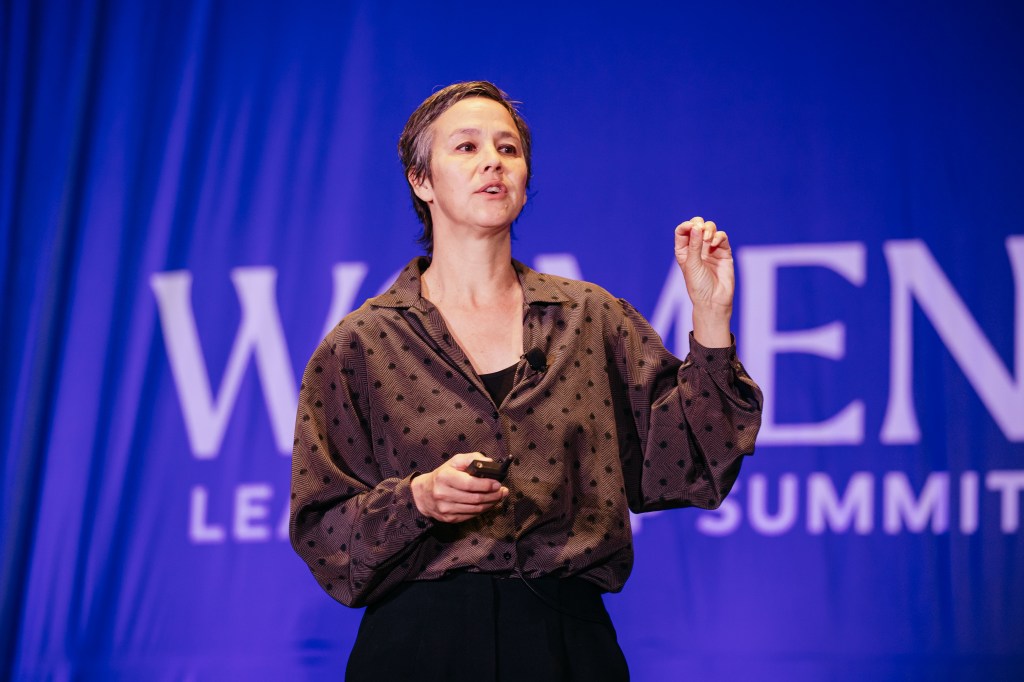
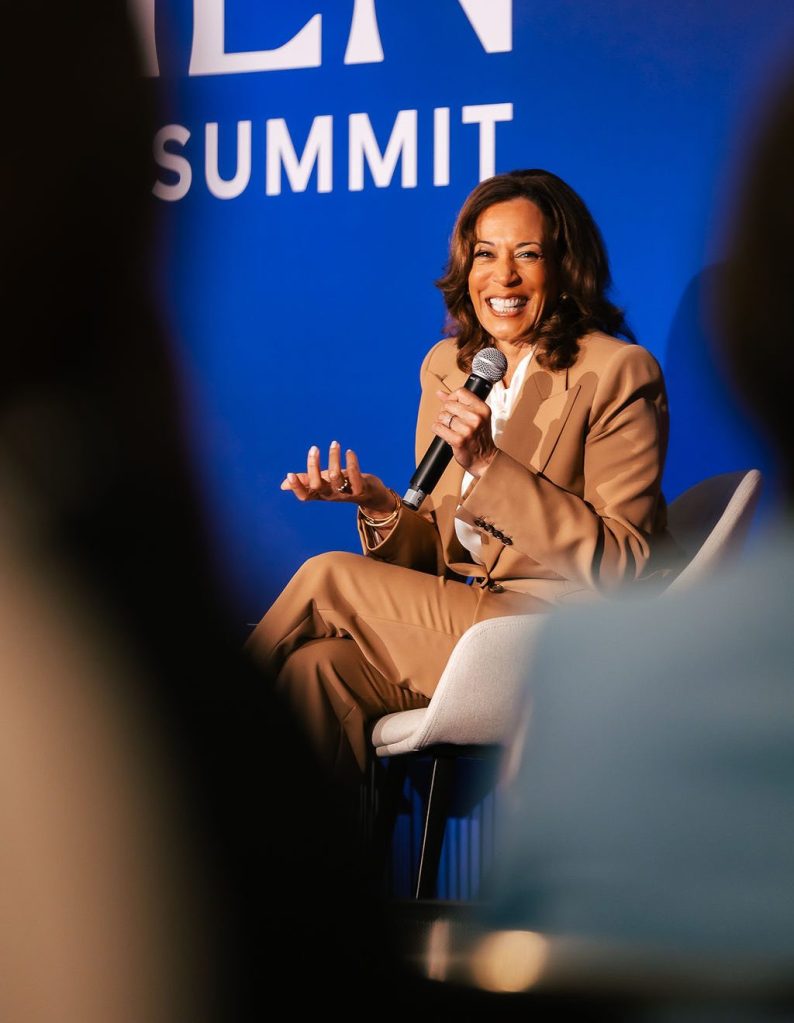
Harris also espoused the value of trust and called for a fundamental shift away from “transactional” leadership – where politicians trade policy promises for votes.
She is putting this theory into practice herself, she says, through a series of community-level engagements, moving away from traditional top-down political messaging in favour of a neighbour-to-neighbour ‘listening tour.’
“At this moment in time, based on what’s happening in our country and the world, I decided… I needed to stop for a minute. And listen. And I didn’t want to do it in a way that was transactional, where I’m asking people for a vote,” Harris told the audience.
“I’ve been travelling my country and listening, not having the press present, and just convening small groups of people.”
Kamala Harris
By intentionally embedding herself in communities that have long felt overlooked – including stops in Republican strongholds like Jackson, Mississippi, and Montgomery, Alabama – Harris is working to take the temperature of the people, and to build trust.
While a 2028 political run remains a subject of speculation, Harris has been clear that she is not stepping away from public service. The topic was not approached during her conversation with Leigh Sales at the Women Unlimited event, but she told the BBC recently, “I am not done,” potentially leaving the door open for a future campaign.
Finding common ground and processing the trauma of loss
One topic that was discussed in Sydney, was the former Vice President’s strategy for bridging divides. She looks for the narrow slivers of overlap – where the desires and fears of opposing groups intersect, such as in a Venn diagram. By focusing on these shared interests, Harris believes leaders can find a path forward, even in a polarised environment.
“Those 3 circles, there’s going to be some overlap. My mission is always figure out where there’s some intersection of desires, of needs, of fears, of dreams, and then figure out how we can expand it,” Harris told the audience over lunch.
The cost of pushing boundaries is often high, the Northern-California native says.
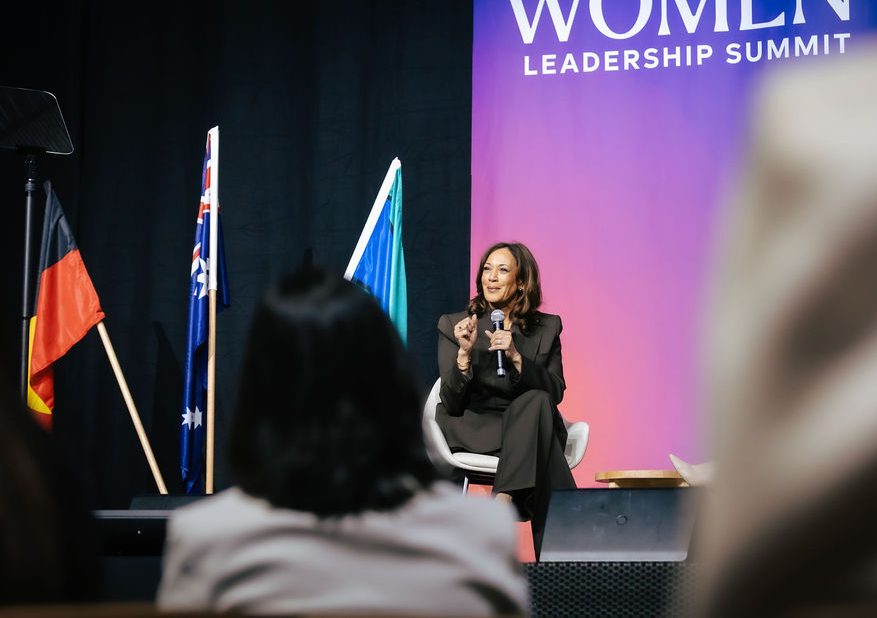
“You think breaking barriers means you start on one side and you just end up on the other side? No. There’s breaking involved. And when you break things, you may get cut, and you may bleed,” Harris says emphatically.
Nonetheless, the 61-year-old says those repercussions are worth it.
She calls the ‘breaking’ that took place on election night 2023 traumatic. It was an experience so intense that she and her husband, Doug Emhoff, did not discuss the particulars of what happened on November 5 for months, until Harris was forced to confront those memories for her memoir.
“Writing about election night was the most difficult chapter by far.”
Kamala Harris
“It is often the case that when you’ve experienced something that is traumatic – it takes a minute before you can actually talk about it,” she says.
Harris reminded the audience that while fear can be contagious, “courage is contagious also,” and that there is great value in fighting tough fights even when they are “awful to experience.”
Want to see more Forbes articles on your feed? Tap here to make Forbes Australia a preferred source on Google.
Look back on the week that was with hand-picked articles from Australia and around the world. Sign up to the Forbes Australia newsletter here or become a member here.