Forget leaderboards; a Melbourne unicorn and a world-renowned therapist want you to play cards to fix social atrophy and maximise relational intelligence in the workplace.

In 1973, workplace gamification was introduced as a productivity technique designed to pit employees against one another to increase output. For decades, it remained a tool for competition, keeping staff focused on leaderboards and metrics. But 53 years later, the intersection between gamification and the workplace has a new face.
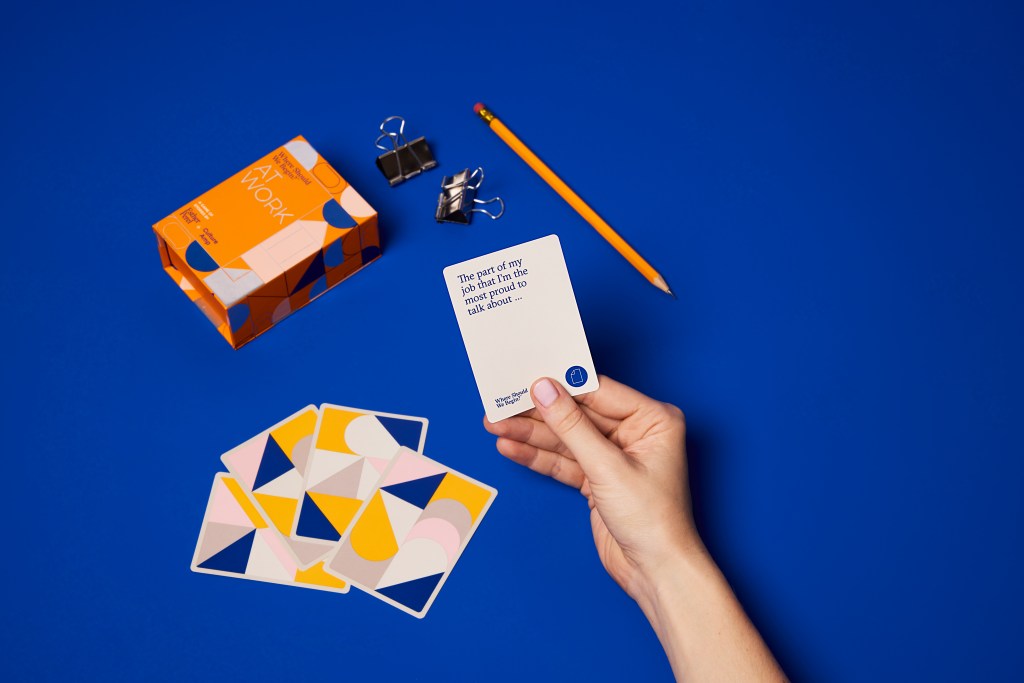
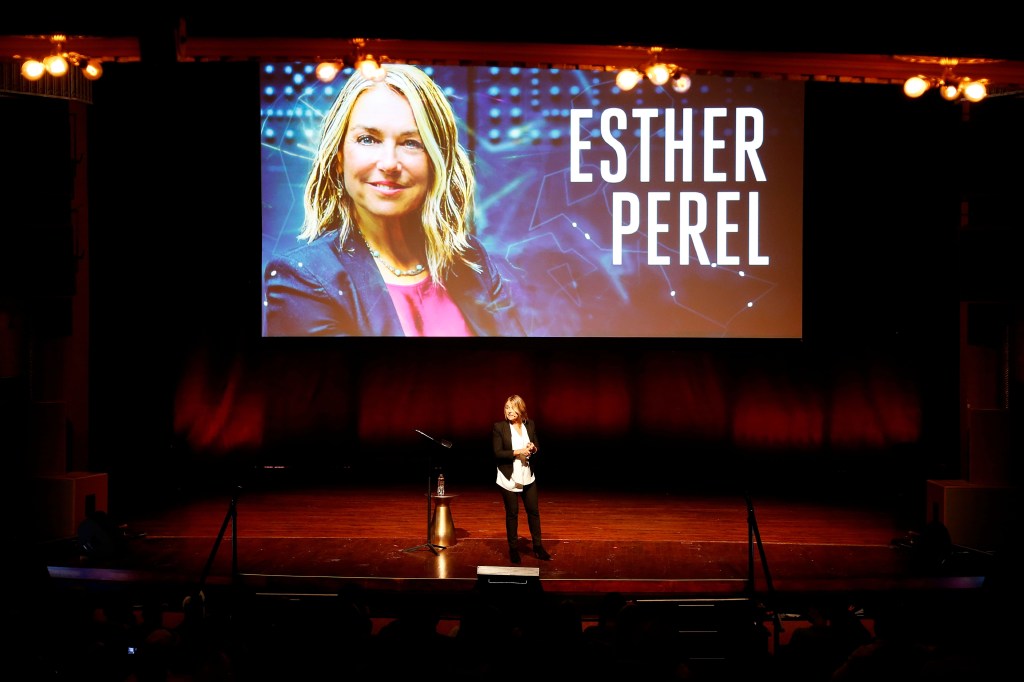
That face is on a deck of cards. “Where should we begin? – At work” is a game for professionals launched by Esther Perel in conjunction with Melbourne-founded firm Culture Amp. Perel tells Forbes Australia in an exclusive interview that the workplace tool is a deliberate intervention against the contactless office. Rather than ranking people, these cards are designed to rebuild the social negotiation and human connection that screens have stripped away.
Perel is perhaps best known for her work on modern love and the concept of “erotic intelligence.” Born in Belgium and now living in New York City, Perel has increasingly turned her focus from the bedroom to the boardroom. She argues that while the contexts are different, the need for relational intelligence is the same in both arenas: the ability to connect, navigate conflict, and build trust with the people around you.
The power of play and storytelling
“Play is a ground for experimentation. Everybody understands that. Play is fun,” says Perel, sitting in a quiet corner of Melbourne’s 1 Hotel, sipping a cup of tea. “In play, you can take risks that you wouldn’t take in a formal meeting.”
It is this sense of play that opens the door for meaningful learning, says Perel. By engaging in social play, employees can test boundaries and interact without the rigid constraints of typical professional roles. Perel views these moments of play as a necessary counterbalance to a workplace that is increasingly driven by technology, allowing people to become curious again rather than relying on stale assumptions about their colleagues.
Perel is also an advocate of storytelling within a work environment. She believes that stories are what team members truly learn from and remember about one another, moving beyond cold exchanges to allow colleagues to see the human behind the job title.
“Stories are bridges for connection,” says Perel. By sharing a narrative rather than a status update, employees can engage in the kind of experimentation and social play that builds genuine trust.
Relational intelligence and the four pillars
Perel’s “Where should we begin? – At work” is a deck of 100 question cards designed for the boardroom as well as the breakroom. Each card contains a prompt that facilitates the honest sharing of personal experiences, pushing colleagues to move beyond standard office small talk.
“The cards are a bridge,” Perel explains. “They give you a reason to ask the questions you are already thinking.” By using these prompts, players engage in stories and reflections they wouldn’t normally share in a meeting, which Perel argues is the only way to build relational intelligence.
This isn’t just a fun exercise; it is backed by Culture Amp’s People Science research. Their data shows that strong team relationships boost high performance by 39%, and employees who feel valued by their managers are 74% more likely to be high performers. In this high-stakes environment, Perel notes that “relational intelligence is the new bottom line.” The game uses specific prompts to tap into the four core pillars Culture Amp identified as essential for a healthy workplace:
- Trust: A constant process of building and repairing connections. The game builds this through vulnerability with prompts like: “A work habit I’m trying to break is…” or “The feedback I wish I had heard earlier in my career…”
- Belonging: Ensuring employees feel like participants in a mission, not just units of labour. This is addressed through questions like: “A first impression I had of a colleague that has changed…” or “The company value I connect the most with is … because…”

- Recognition: Acknowledging the actual human being behind the professional output. The deck facilitates this with cards that ask: “What is a skill you have that goes unnoticed here?” or “I’ll never forget my manager who…”
- Collective resilience: The capacity to keep a team functional when the market turns volatile. The game tests this by asking players to reflect on challenges, such as: “A professional failure that changed how I work is…” or “An idea/approach I would love to try…”
Beyond the cards: the problem of social atrophy
The transition from a deck of cards to a high-performing team isn’t just about play; it is a response to a growing deficit in the modern office, Perel argues. The shift toward a digital-first, “frictionless” workplace – driven by the increasing number of people working from home – has come at a significant cost: social atrophy.
When people are no longer physically in the office, they miss out on the spontaneous, unscripted interactions that build social competence. By working in isolation or behind screens, employees frequently avoid the messiness of human life and the vital practice of social negotiation. This comfort is a trap for those looking to advance; the ability to navigate real-world interactions is a muscle that weakens when we are no longer in the room to practice it.
This is why the game doesn’t stick to “nice” questions. It is designed to create what Perel calls productive friction. A healthy workplace is not defined by an absence of conflict, but by how that conflict is managed. By answering challenging prompts, employees learn to navigate disagreements in a controlled environment, turning potential tension into a creative force rather than a reason to disengage.
Ultimately, Perel is pushing for a reclassification of workplace value. She argues that “soft skills” is a misnomer for what are actually the hardest skills to master. In an economy where technical tasks are increasingly automated, relational intelligence is the primary driver of professional longevity.
Reflecting on the shift from her upbringing in Belgium to her current life in New York, Perel describes the city as a “lonely crowd,” a place where you are surrounded by millions of people but can still feel entirely isolated. “The loneliness epidemic isn’t about being alone; it’s about being surrounded by people and still feeling unseen,” she notes. “We are increasingly in a contactless world, and the office has become a contactless place.”
Recent research also suggests that the “frictionless” office has backfired, creating environments where people are technically connected but relationally distant.
Launching the game is an effort to close this relational gap. As we move through 2026, the data from Culture Amp highlights the problem it seeks to solve. Current benchmarks indicate that disengagement is at a critical level, with a significant percentage of the workforce reporting a sense of isolation.
This, relational intelligence and communal play are no longer secondary traits; they are the ‘hardest’ soft skills required for modern leadership. Now, they can be developed with a deck of cards.
Want to see more Forbes articles on your feed? Tap here to make Forbes Australia a preferred source on Google.
Look back on the week that was with hand-picked articles from Australia and around the world. Sign up to the Forbes Australia newsletter here or become a member here.