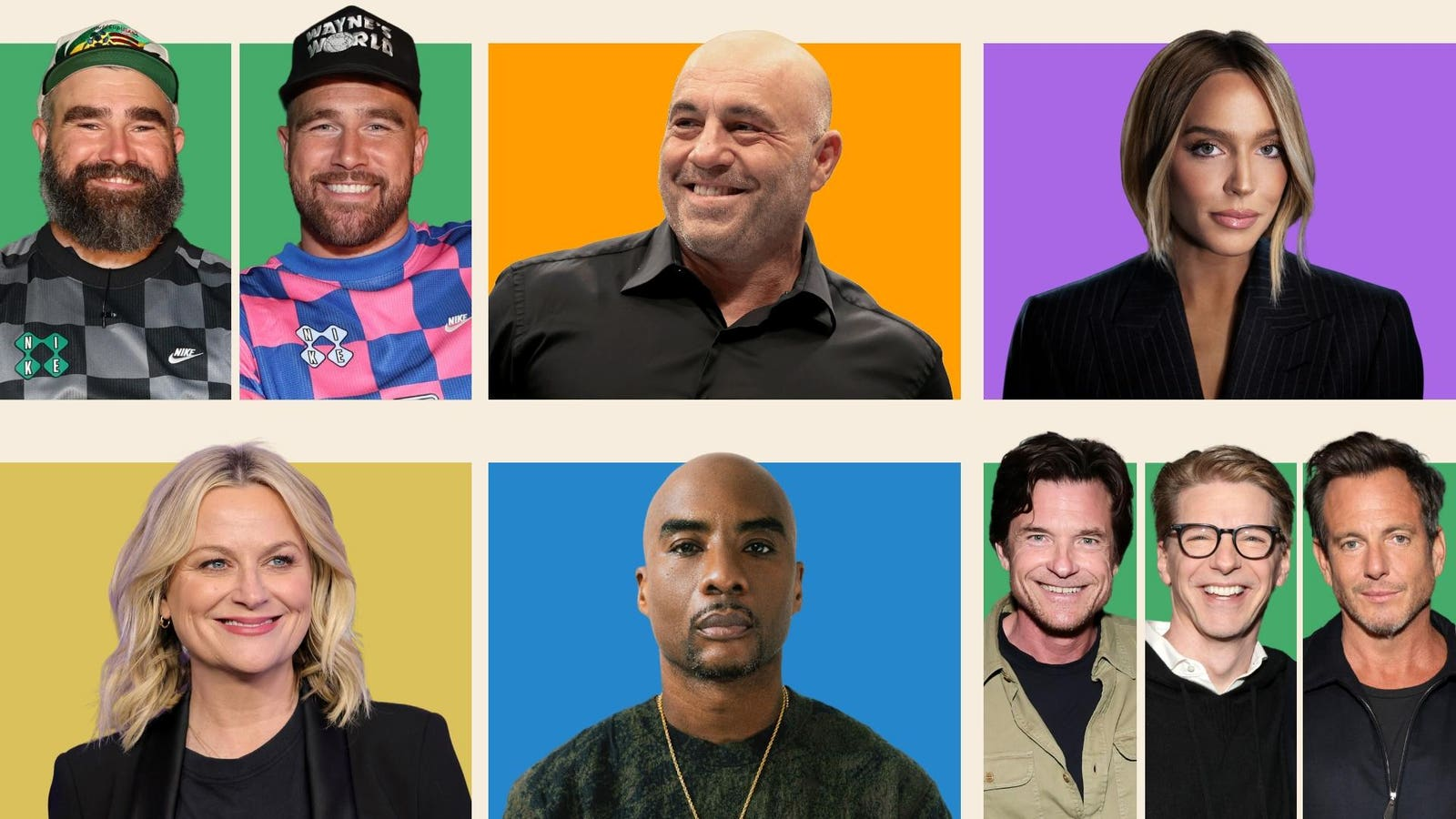
Casino influencers like Lady Luck, Mr. Hand Pay and other high-stakes players make millions filming themselves betting thousands in Sin City. Meet gambling’s high-risk, high-reward creators who win even when they lose.
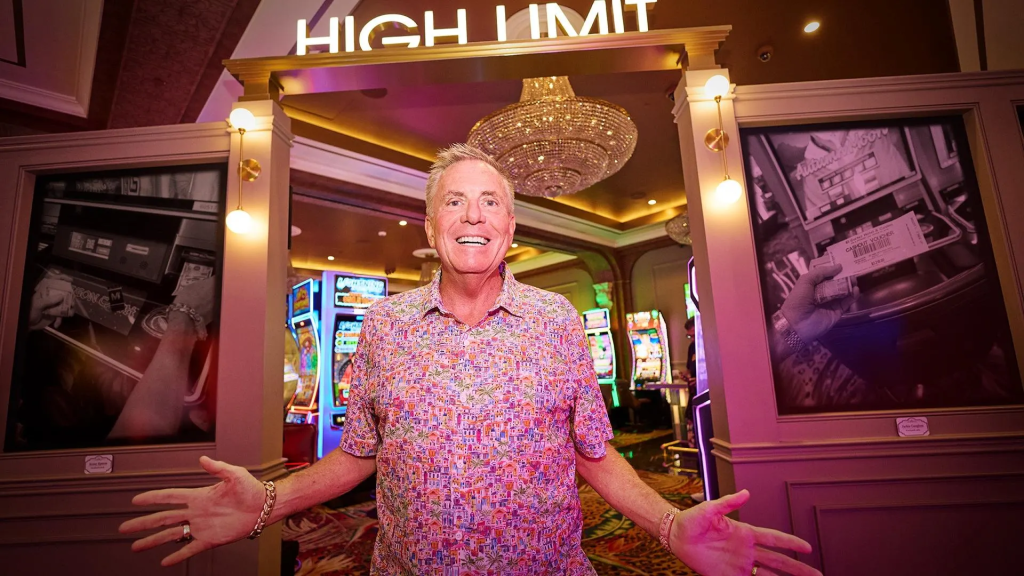
Stephen Mathew Morrow, better known by his nom de casino, Vegas Matt, looks like a caricature of a high-stakes gambler. A large, one-pound gold chain hangs around his neck with a matching bracelet on his right wrist, a Rolex SkyDweller on his left, and a Rolls-Royce Cullinan parked outside the El Cortez Hotel and Casino in Downtown Las Vegas.
As he walks the casino floor on a Tuesday afternoon in September, fans flock around him every few feet, asking for a photo, telling him how much they love him and his video content. The 62-year-old Morrow posts stories every day to his 5 million followers, including 1.7 million on YouTube and 2 million on Instagram. Two middle-aged sisters are giddy when they spot him and one says: “I go to bed with you every night.” Vegas Matt responds with quick wit: “My superpower is putting women to sleep.”
Inside the El Cortez’s high limit slot parlor, he says hello to vice president and general manager Adam Wiesberg, who acts like a shepherd for the flock of influencers who are filming every day at his casino. Vegas Matt pulls out his money clip with about $6,700 in one-hundred-dollar bills, peels one off and feeds it into an Ultimate X video poker machine at the bar, his favorite.
“Gambling is dumb,” says Morrow, who was retired and living in Las Vegas before he became the gambling world’s top creator. “These casinos don’t build themselves. Mathematically, you have to know you’re losing.”
And while he finishes most years down (or at best flat, gambling-wise), Vegas Matt and the other “spinfluencers”—who go by Vegas-worthy monikers like Lady Luck, Dude Luck, Brettski, On Tilt Nick, MrHandPay—have figured out how to win even when they lose. The key is millions of dollars in ad revenue from social media platforms and a roster of partnerships from licensed and unlicensed casinos, including FanDuel, Punt, and SpinQuest. Like other high rollers—or “whales” as they are known in casino parlance—these creators also receive millions of dollars in free play each year.
“We understand how the games work, we understand the math, but that’s not our business,” says Morrow, admitting he is not an advantage gambler. “Our business is social media.”
And business has been good for Vegas Matt. Since posting his first video on YouTube in 2023, Morrow, his 32-year-old son EJ, 57-year-old gambling buddy Robert Goldfarb (who goes by WBG, or World’s Biggest Gambler) and another gambler John Pollak, better known as W2Jesus (named for the tax form, W2G, gamblers receive when they win over $1,200) have generated $10.3 million just from YouTube, which accounts for 60% of their revenue stream. Forbes estimates that Vegas Matt’s empire has generated a total of about $20 million over the last three years, the rest coming from Facebook, merchandise sales, hosting four cruises a year, sponsorships with FanDuel and Punt, and a contract with the Fontainebleau hotel in Las Vegas.
What started as a side hustle in the hopes of making a couple thousand bucks a month, is now a full-time job. Vegas Matt and his crew film themselves gambling seven days a week. They have uploaded a 45-minute video every day for the last 1,160 days and counting. Now, they make $330,000 a month from YouTube alone.
Later that night in the Fontainebleau high limit room, Morrow, EJ and WBG feed $300—a modest amount—into an Autumn Moon slot machine. Within a minute or so of $25 spins, they hit a mini bonus for $4,000. “This is sweet!” Vegas Matt says as a casino employee comes over for a hand-pay. He tips her $100. “Between hand pays, valets and dealers, I tipped out about $200,000 last year,” he says, explaining how he thinks of his lavish spending at casinos as a degenerate version of a country club.
The crew then heads over to a high-limit blackjack table to record a short video. Morrow bets $5,000 and busts. The three men toss $10,000 on the felt. They get 17, but the dealer gets 18 and their money goes to the house.
“That was silly,” Vegas Matt says, sounding like a casino version of Smokey Bear. “Gambling is like playing with matches; don’t do it.”
For decades, Sin City lived by its ad campaign axiom: What happens in Vegas, stays in Vegas. Which is one of the many reasons casinos had a strict but simple rule: no photography or videography allowed. But casinos also understand the power of celebrity—from entertainers to chefs to athletes—to bring people, and their money, in the door.
Jonathan Jossel, CEO of The Plaza, a Downtown Las Vegas casino, claims to be the first chief executive to allow spinfluencers to record inside a Vegas casino ten years ago with Brian Christopher, the godfather of the genre who goes by BCSlots. He says there is a direct connection between allowing influencers do their thing on his gaming floor and gaming revenue.
“When they are here, it feels like the Rolling Stones are on the property,” he says.
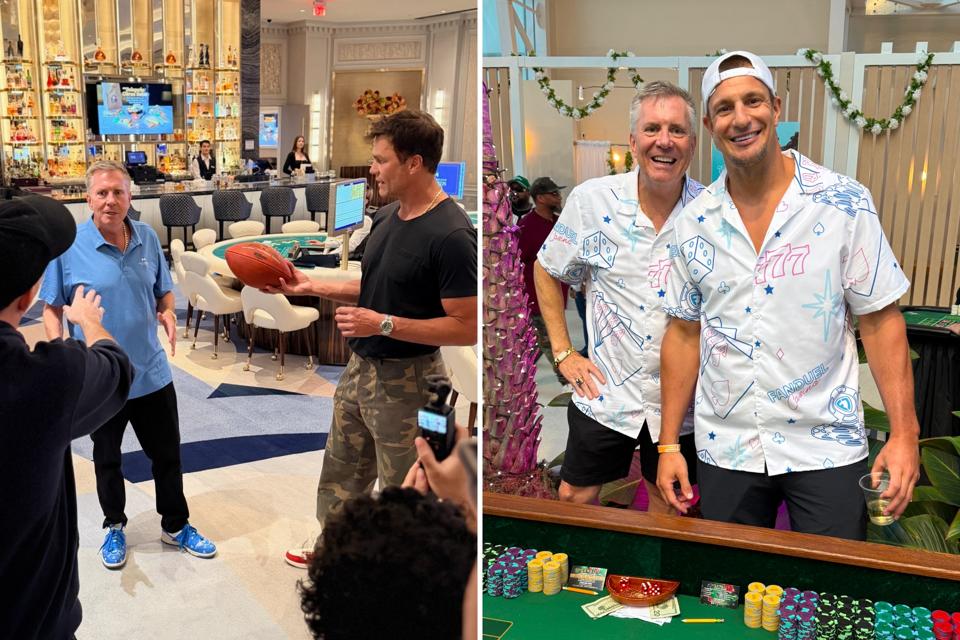
By allowing influencers with big online followings record their gambling sessions, casinos also get the most effective and targeted marketing they could ask for. The result is a flood of customers—many of them new to casinos—looking to gamble alongside their favorite personalities. And occasionally an actual celebrity. (Vegas Matt’s “Tom Brady Threw Me A $12,000 Pass” has more than 1.7 million views on YouTube.) The main reason casinos have embraced creators is that the house benefits from the onslaught of content—Vegas Matt recently surpassed 1.5 billion views—showcasing the excitement of winning and the misery of losing, directly to gamblers. It’s not free marketing for the casinos, they do give extra free play— about $10,000 a day for a creator with a big enough audience—which is more than they normally would give to a whale. And some even pay influencers to host events, such as ribbon cuttings on new machines and other promotions.
“It’s a mutually beneficial relationship,” says Kevin Sweet, the senior vice president of slot marketing and operations at the Fontainebleau. “He’s a celebrity. People come in asking, ‘Where’s Vegas Matt?’ He’s the world’s biggest and best gaming influencer. People watch Josh Allen play football; people watch Vegas Matt gamble.”
In January, Sweet inked a deal with Vegas Matt to make the Fontainebleau his exclusive Strip property. (According to two CEOs of competing casinos, the deal was for $1 million, but Sweet and Morrow would not confirm the details.) In April, they held their first event with Morrow—a weekend package that came with a hotel room, a slot machine tournament and an event with Vegas Matt, during which former NFL star Rob Gronkowski made an impromptu appearance, and some acrobats on stage at the BleauLive Theater—about 1,000 people showed up, ready to gamble.
“It rivaled New Year’s Eve weekend,” says Sweet. “It was a top, top gaming day for us.”
El Cortez, which used to be a sleepy casino on Fremont Street, is now busy all the time thanks to the influx of spinfluencers. Wiesberg makes sure there are two armed security guards in the High Limit slot room to protect creators—they are always carrying large amounts of cash—but he has good reason to give everything he can to attract and keep influencers happy.
“Influencers changed my life and El Cortez,” he says. It’s been “tremendous; use any word you like” for how it has improved foot traffic, revenue and EBIDTA.
In 2021, before Morrow became Vegas Matt, he was retired, living in Las Vegas and keeping to a budget. “I did whatever my guy at Merrill Lynch told me I could spend,” he says. His father was an insurance broker, and he grew up in the San Francisco Bay Area. After graduating UC Santa Barbara, he worked at a bank, became an associate producer in Hollywood, and then started working in the multi-level marketing industry, selling vitamins, leggings, energy drinks, wine, you name it. “I enjoyed it, I was good at it and good at sales,” he says. He even worked for Tony Robbins, selling the eight-week course “Power to Influence” about how to harness psychology to make a sale. Eventually, Morrow got into real estate and started buying properties in Costa Rica, Arizona, Arkansas, California, Minnesota and Nevada. By 2012, when Morrow was 48 with a couple million dollars in the bank and a real estate portfolio, he moved to Las Vegas.
Then one night in April 2021, Morrow, EJ and some friends were at a local Henderson casino playing a Ultimate X poker machine. He pulled a royal flush and hit a jackpot of $16,000. EJ happened to record it, thinking it might go viral. They quickly came up with the name “Vegas Matt” and posted the video online. A few hours later it racked up 40,000 views. They soon started streaming their gambling sessions on Twitch, then moved to longform videos on YouTube, which is where most of the money is thanks to casinos regularly advertising on the platform.
But it’s a precarious balancing act. Vegas Matt and his crew, who pool their money together, started with an $800,000 bank roll when they began uploading to YouTube three years ago. Sure, they’ve made millions of dollars in profits—but their “merse,” the name they gave to their purse, has just $160,000 left. Meaning they spend about $200,000 a year on gambling despite their many wins.
After all as every gambler knows, the house always wins over time and the math always catches up. He won $1.4 million once, and then during another gambling session lost $1.3 million. Vegas Matt says he is up $100,000 for the year but was down $300,000 in 2025.
“Gambling is perfectly scalable,” says Goldfarb, who was a professional poker player before meeting Morrow and is the gambling brains of their operation, “it can take all your money.”
Back at El Cortez, Francine and Miran Maric, who go by Lady Luck and Dude Luck 23, are filming a video at the Fo’ Mo’ Mummy slot machine. They were just at The Venetian on The Strip filming Francine playing the same game, but she lost $15,000. Now they’re trying their luck Downtown. Within three minutes she wins $26,522 on a bonus and Wiesberg brings her an oversize novelty check before a dealer gives her piles of cash, which she stashes in her purse. Two armed guards flank each side of her.
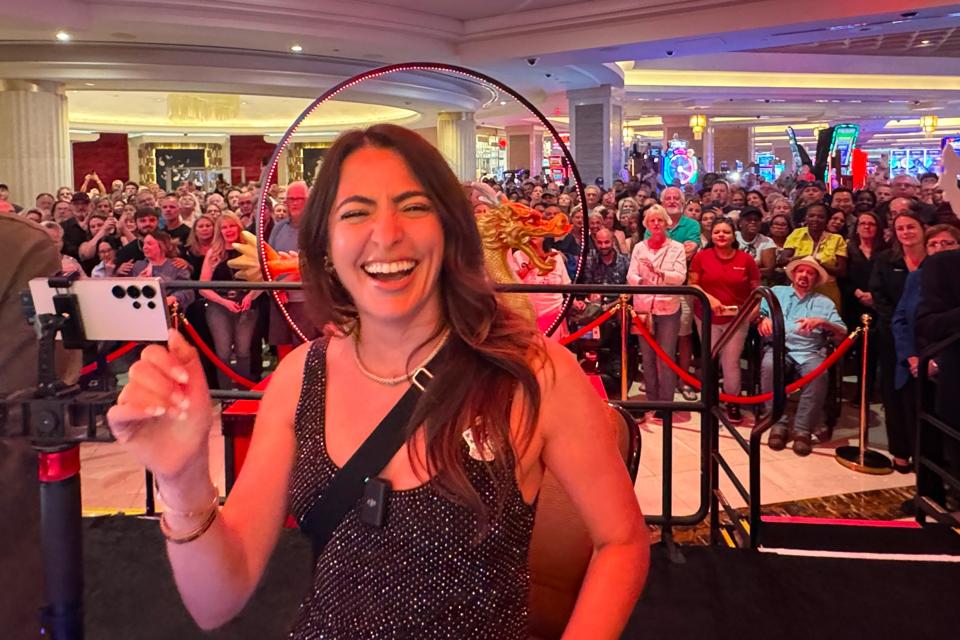
To make enough money on the video, Maric, who left his seven-figure corporate job to help Lady Luck build her business, explains they need to gamble for a total of 45 minutes so they can produce a longform video. They now need 39 minutes more and start recording again with $7,600 in the machine, at $250 a spin. Three minutes later, it’s gone.
“It’s so expensive to make content, we’re gamblers first and it’s hard to separate from being a creator,” says Francine. Maric adds: “June we lost $375,000 gambling, our worst month by far.”
But as with many spinfluencers they are comfortably in the black. While their costs are high—they budget $300,000 a month to make 30 videos—the pair has made $6 million over the last three years from YouTube alone, plus appearance fees and revenue from sponsorships with FanDuel and SpinQuest.
Brett Stern, a 28-year-old who goes by “Brettski” and has about 1.3 million followers across all platforms, walks into the Park MGM at about 9 p.m. with two friends and starts filming content. Stern starts feeding a wad of about $11,000 it into a machine, $400 at a time, as he spins a digital wheel with betting directions from his fans. He loses $4,000 in an hour. Like the other influencers, Stern posts videos every day and says he makes a few million dollars a year off YouTube and sponsorships.
Before becoming a spinfluencer, he sold washing machines. “It sucked,” he says, explaining that now he lives in Boston but travels to Vegas once a month, takes out $100,000 in cash and gets to work shooting 30 videos over the course of a week. “Most of the time, my life feels like a dream,” he says.
Over at the Fontainebleau, Vegas Matt’s dream continues. At around 1 p.m. on a Monopoly slot machine, he wins about $13,000 on a bonus after 35 minutes. He and his team immediately run to a baccarat table, betting $5,000 on one hand and lose. They double down and lose another $10,000. At the Hot Hot Flaming Pots Mr. Lee machine, he wins another $13,000 and then gives back $4,500 at nearby roulette wheel in one spin.
This goes on and on for five hours, feeding cash into slots, winning, laying it out on the felt of a table game, and losing. When he finally stops for the day, Vegas Matt is only down $1,800 but he has enough material for two longform videos and a bunch of shorts.
EJ suggests they do one more video, a short in which Vegas Matt tries to see how much money he can win at blackjack in three minutes by betting $8,300 across a few hands. He loses it all.
“That’s fantastic,” says Vegas Matt, but it’s hard to tell if he’s being serious or facetious.
“It’ll make a good video,” EJ says. “We’ll probably make $25,000 from today.”
Want to see more Forbes articles on your feed? Tap here to make Forbes Australia a preferred source on Google.
Look back on the week that was with hand-picked articles from Australia and around the world. Sign up to the Forbes Australia newsletter here or become a member here.