Tiley has been at the helm of Tennis Australia for 13 years. In this 3-part series, the South African-born CEO sits down with Forbes Australia for an exclusive chat about delivering exceptional experience for the players, where he looks for inspiration, and putting change at the core of his leadership philosophy.
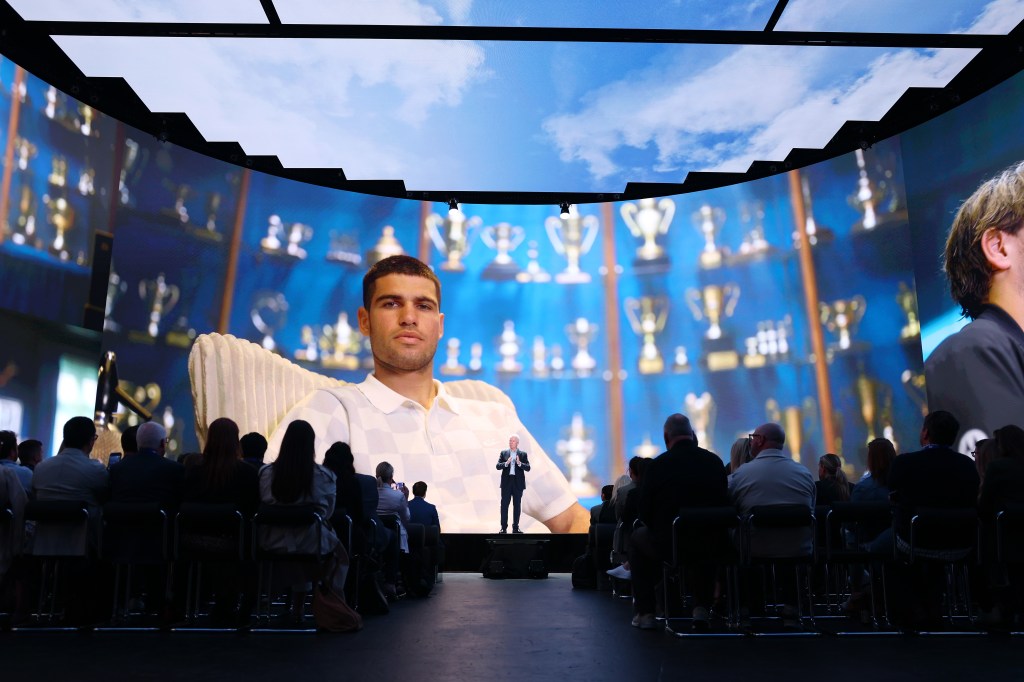
Craig Tiley has reinvigorated the AO over the last two decades. Looking forward, the 64-year-old believes automation will continue to drive change. Additionally, he would like to see a translucent climate-controlled cover on the AO precinct, as well as a state-of-the-art experiential stadium. In the second of this three-part series, Tiley chatted to Shivaune Field about his vision for the Happy Slam.
What would you like to see implemented at the AO over the next five years?
If I was sitting here enjoying this event in 5 years’ time, I would want to have a completely seamless and personalised experience. I’d want to know the AO knows what I like – like catching a tram or a driverless car to the event, or I may like reading a hard copy program, or I may prefer a digital device. What kinds of food I like so I can be prompted and it can be brought to me, or I can go and get it, and it’s ready, and I’m not waiting in any queues.
All the old-fashioned things you see today, I want to be easier. People will form different habits and different experiences. From a fan point of view, it should be absolutely seamless. I think that gap is going to close because of technology and AI.
Attendance has more than doubled since you have been running the AO. What do you attribute that to?
Year on year, we’ve had an average 15% annual event growth, I don’t think any other company in Australia has had 15% annual growth rate during that time. Sometimes it’s higher, and in other years it has dropped to 13 or 14%. We have achieved a surplus every year. We’ve invested more in the players every year. We’ve increased prize money over the last 5 years by 77%, because the business is also successful. Some ideas we have cost us more money than we make on them. But it’s the right thing to do.
Can you provide some examples?
We rolled out music, that’s a lot more costly than we make from it. But that’s part of the experience. We are investing in the experience. We have built structures and restaurants that didn’t make the return that we expected them to. But the restaurant next to it made a massive return, which kind of covered it. The vision, for me, is what’s still possible. I still see all the opportunity here.
To innovate, the question I ask is: how do I make that redundant? From a creativity and from an innovation point of view, how can retractable roofs be made redundant, how can transport to the precinct be made redundant. Ticketing booths should be made redundant, so when you’ve bought a ticket, everyone knows who you are already.

Would that be through iris scanning or something like that?
Yeah, something like that. Security should be just to make sure you’re not carrying anything on you. I think heat and rain impact should be redundant. Experiencing signage should be redundant, because it can be personalised digitally. That’s kind of how I look at everything – how do you take what’s here now and make it not here, in 5 years’ time?
What changes did you implement for attendees this year?
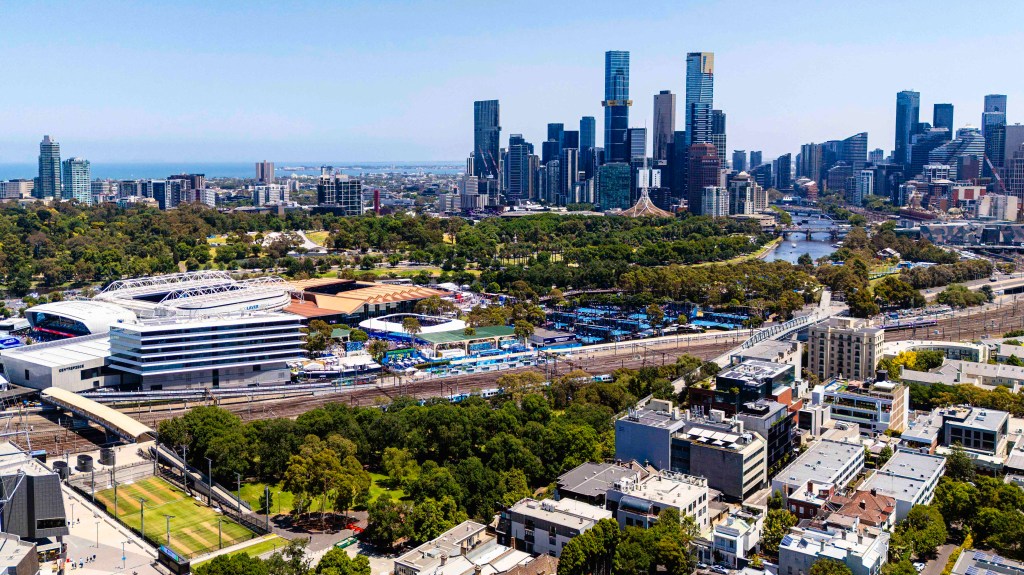
I’m sensitive to having too many people in sight, and sensitive to not having a good enough time because you’re trying to cram things in. So I 100% want to avoid that. The theme this year was – how do we counter that? We’re going to shut the ticket sales down. We don’t need more people on site. So how are we going to really make a difference? We can go up. We took all of our structures, our temporary infrastructure, up. The Mecca experience is 3 stories. Half of the food and eating experiences have a 2nd level. On the western side of the precinct, you can view tennis on the 2nd level. We’ve got the fans right close up to the court and gone up.
The second one is to go out, to extend the experience for our fans. During opening week there has been a whole lot more music, more food, more events every night. The charity match is the best players playing against each other, filling the stadium. As a consequence, we’ll end up with a record-breaking event again this year. What overlaps with all of that is making the AO accessible. It has to be inclusive, and it has to be diverse. The accessibility is in the price. Kids come for free in the first week. They pay $20 in the second week. The price of the grounds pass hasn’t changed in 10 years – it’s a great buy, a full day of entertainment. Regarding inclusivity and diversity, we’re open, and we encourage, support, and provide opportunities for every community. I want to make sure that when you look around, it looks like it’s a diverse, young, vibrant, fun-loving group of people that are just loving being here.
What opportunities do you see for the AO in the longer term?
We’ve got to be climatically smart. I’d like to see the entire precinct covered in a translucent cover – when you look up, you see the sky, you see the sun, but you don’t feel the rain, and you don’t feel the radiant heat, and you don’t have to worry about protecting yourself. That will exist and there will be no worry about any weather conditions impacting the experience at all. Poles would hold up the translucent roof, and it captures solar that powers the entire precinct.

Would that structure be in place permanently or is it something that could be dismantled after the AO?
It would probably have to be year-round. Those kinds of translucent roofs exist, where you can see up through it, so it doesn’t feel like it’s a cover. They just haven’t been made big enough yet. Retractable roofs will become redundant.
I would also like to see a state-of-the-art experiential stadium that has pod-style seating. So you go with your friends, and you’re not sitting in a row. Sitting in a row in stadiums is very old-fashioned, in my view. Twenty people have to stand up for you to walk to your seat. I hate that. So I think pod seating in a stadium, you go in and out of your seat easily, and you sit with your group of 6 friends or 8 friends, or 10 friends, in a little pod. I think we can have a 20,000 seat stadium like that pretty easily.
I’d like to see the precinct here much bigger, reaching across Olympic Boulevard, up to the MCG. We’ve got a beautiful precinct here that’s not quite connected yet, but it’s a lot of money to connect it, right? I think in the future, in the next 20 years, it would be completely connected, is my view. And it will be focused on a seamless fan/player experience.
Where do you look for that kind of big-thinking innovation, what are you inspired by?
Some of the ideas come from our team, having crazy conversations about innovating. I challenge the team that the AO has to be 50% different year on year. Also observing what other people do, reading a lot, but I get inspired by not just necessarily people that deliver sporting events, I get inspired by people that are trying to go to space and people that are trying to change the way you use technology on your phone, and trying to use AI to change the way we consume. I get inspired by reading and listening to that change.

And I sit on a technology startup board in Australia – listening to conversations about how those engineers think and market is a great learning experience for me. I get exposed to a different industry, and how people think differently. You’ve got to push the bar and challenge the status quo and be creative. And at the same time, you have to deliver. It is not a good idea unless the proof is there and the team has delivered it. You can have thousands of ideas, but you have to execute them flawlessly for them to be a winner.
Speaking of someone who is known to execute, who focuses on space, is a big-thinker, and has a similar accent to yours… have you ever sat with Elon Musk and picked his brain? Or that of other technocrats in California?
No, I haven’t picked his brain. I’ve picked what he’s written and what he says. I sit on a board with Robyn Denholm. She’s a great person and a very great leader. I have spent some time at Tesla. I read the autobiographies of people, and the stories of their lives. That’s the kind of thinking that I get inspired by.
Why is change and innovation so important to you?
From a personal point of view, I never like repeating the same things, generally in life. And I have a great team of people that embrace change and get ready for it and know that’s kind of how we operate. The other reason is that we have a lot of people from Melbourne and Victoria who come to the Australian Open – 60% of attendees every year. We keep offering a different product and a different experience, so that they say, I’m really looking forward to the tournament next year.
Great leadership is never sitting still. And always being curious. In our case, it’s curiosity about what fans really love. Fans need and want change, their likes and dislikes change. So, you need to have a little bit of data going in, to understand it from a fan engagement point of view. And then you make some calculated guesses and sometimes you just go for it and it works out – and sometimes it doesn’t work out. When it doesn’t work out, say, sorry, we had a good go. When it does work out, everyone’s a winner. And you just hope you have more of those than you do on the other side.
Look back on the week that was with hand-picked articles from Australia and around the world. Sign up to the Forbes Australia newsletter here or become a member here.