LIV Golf, backed by Saudi Arabia’s hefty Public Investment Fund, has paid out more than $3 billion to its players in tournament winnings, salaries and bonuses since its first tournament in 2022, according to calculations by Forbes, and that all seems about to come to an abrupt end.
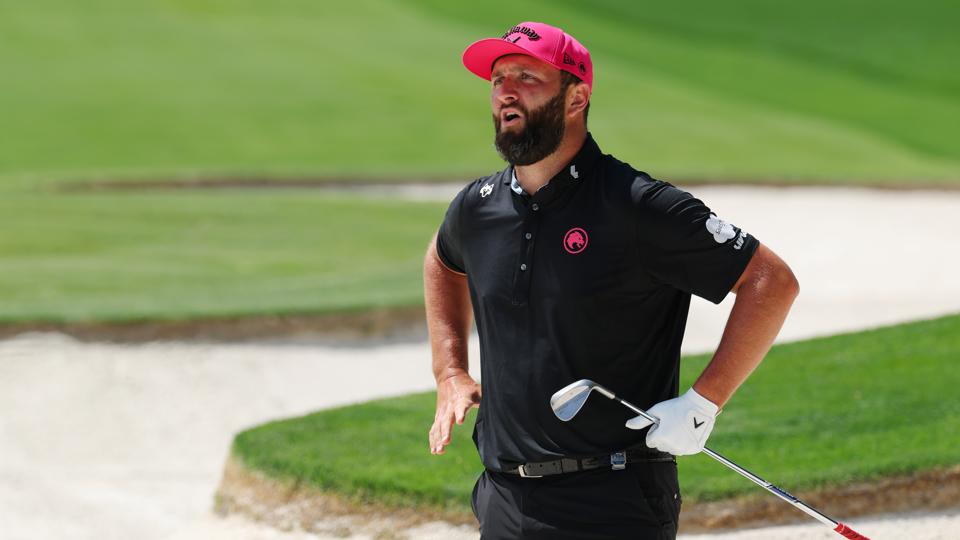
Jon Rahm at Quail Hollow Country Club on May 18, 2025 in Charlotte, North Carolina.
Getty Images
Key Takeaways
- LIV has paid out nearly $1.36 billion in prize money and championship bonuses, after netting out the 60% share of team prize money that is retained to cover team operating expenses, and at least $1.6 billion in guarantees and signing bonuses, according to Forbes estimates.
- By the end of this season, if it is played out as originally scheduled, the total prize money pool will hit $1.59 billion and the total doled out will exceed $3.2 billion.
- LIV spent lavishly at its inception on signing bonuses to lure several top golfers away from the PGA Tour, including reported estimates of $300 million for Spanish golfer Jon Rahm, $200 million for Phil Mickelson and $100 million for Brooks Koepka.
- It also immediately started offering the largest tournament purses in golf history, setting a new standard with $25 million per event (and one $50 million event in the first year), which grew to $30 million in 2026.
- Saudi Arabia’s Public Investment Fund is estimated to have poured $5 billion into LIV Golf since its inception but will no longer bankroll the circuit after the current season, which has seven more tournaments scheduled through the end of August.
- The league on Thursday announced several new board appointments and said it is focused on securing new investors, but sports analysts largely cast doubt on LIV Golf’s ability to survive without its Saudi founders.
What To Watch For
How LIV golfers are welcomed back. LIV’s massive signing deals quickly lured away some of the top stars on the PGA Tour, which drew a quick line in the sand, and suspended or told more than a dozen players who participated in LIV’s first tournament they were ineligible to compete in future PGA events.
Top stars Brooks Koepka and Patrick Reed have returned to the PGA Tour from LIV Golf, but they faced big penalties to do it—including having to pay a $5 million donation to charity, a five-year forfeiture of player equity shares and ineligibility for the 2026 FedEx Cup bonus program for Koepka, which off-set the reported nine-figure signing bonus he received from LIV. Reed’s situation was a little different, he resigned his PGA membership before competing for LIV, meaning he didn’t violate his PGA contract, and has been allowed to try to re-join the tour after serving a suspension and forfeiting player equity until 2030. PGA players who joined LIV in violation of their PGA contracts are unlikely to be welcomed back without penalty.
Crucial Quote
“There were rules, and they were broken. With rules comes accountability.” PGA Tour chief executive Brian Rolapp said this week. “We’re interested in having the best players who can help our tour. Not every player can do that.”
Key Background
LIV Golf was launched in 2021 under former golf No. 1 Greg Norman, who left his role of CEO after his contract expired in 2025. Lured by the promise of big purses at tournaments around the world, Norman said 19 of the top 100 players in the world had signed up to play LIV Golf’s first event in 2022. Seventeen of those players, the ones with PGA Tour affiliation, were then suspended or told they were ineligible to compete in future PGA Tour events.
PGA officials spent the next year warning players to distance themselves from the Saudi league, while top players who moved to LIV—headlined by Phil Mickelson—filed a lawsuit against the PGA, accusing it of violating antitrust law. The competing tours then stunned the golf world by announcing they would merge to create a new, for-profit entity. The two still haven’t combined, and PGA golfer Rory McIlroy last spring said the merger “doesn’t feel” any closer to becoming reality.
The announcement that Saudi Arabia would no longer bankroll the league it created didn’t come as a shock—the country’s Public Investment Fund did not mention the league in the five-year plan it laid out last month. Unnamed people familiar with the matter reportedly told the Wall Street Journal the league “was no longer consistent with the new phase of PIF’s investment strategy.” LIV is estimated to have lost $1.4 billion in its first three and a half years of operation, according to The Athletic.
Want to see more Forbes articles on your feed? Tap here to make Forbes Australia a preferred source on Google.
Look back on the week that was with hand-picked articles from Australia and around the world. Sign up to the Forbes Australia newsletter here or become a member here.