The 2026 Winter Olympics in Milano Cortina will bring together more than 2,900 athletes competing over 17 days in 116 medal events beginning Friday. The Paralympic Winter Games will follow March 6–15 with 79 events.
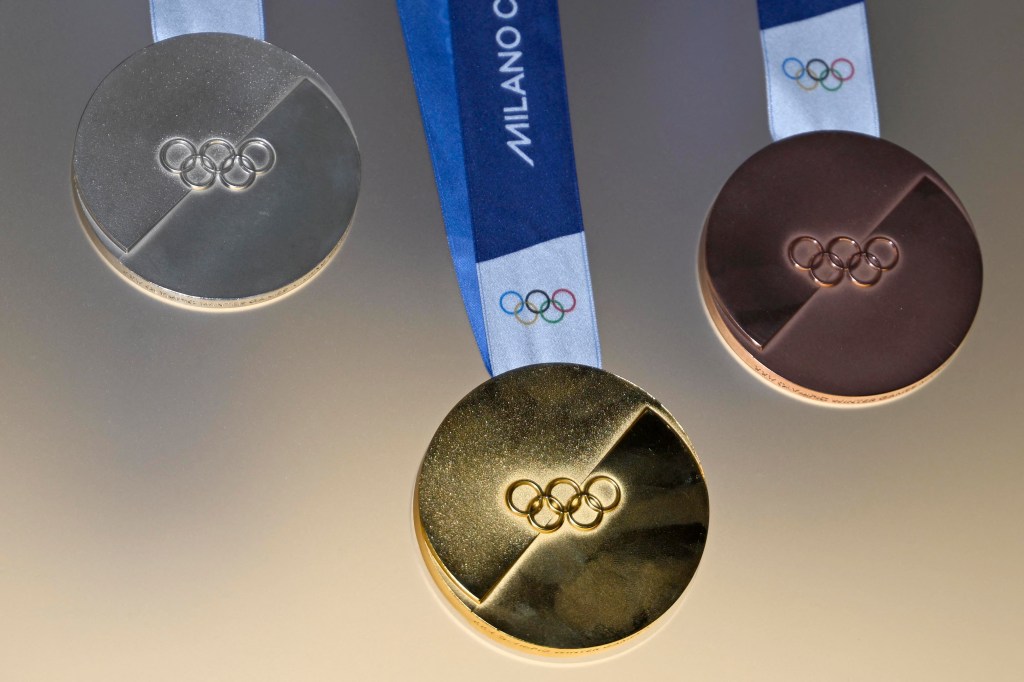
In total, 245 gold, 245 silver and 245 bronze medals will be awarded at the Olympic Games, while the Paralympics will present 137 medals of each type. Altogether, 1,146 medals will be handed out.
To the athletes who earn them, those medals are priceless—the culmination of years of dedication, sacrifice and singular focus. Yet beyond their emotional and symbolic importance, the medals also carry real intrinsic value, often called “podium value.” And thanks to the dramatic rise in precious-metal prices over the past year, that value has never been higher.
Over the last 12 months, the price of gold has climbed 67.02 percent, while silver has surged an extraordinary 109.07% percent as of February 5. Those gains have pushed the material value of the Milano Cortina medals to record levels.
The Intrinsic Value of the Gold Medal
Despite its name, an Olympic gold medal is not made entirely of gold. Each medal weighs 500 grams but contains only six grams of pure gold. The remaining 494 grams are sterling silver.
As precious-metal prices fluctuate, so does the value of the medals. Based on market prices on February 5—approximately $4,815 per troy ounce for gold and $77.25 per troy ounce for silver—the intrinsic value of a Milano Cortina gold medal is currently about $2,170.
The silver medal, which also weighs 500 grams and is made entirely of silver, carries an intrinsic value of approximately $1,240 at current prices.
By comparison, the gold medal at the 2024 Paris Summer Olympics was estimated to be worth about $950 at the time. Even allowing for fluctuations in metal markets, the Milano Cortina gold medal is easily the most valuable in Olympic history.
If the 2026 gold medal were made entirely of gold instead of mostly silver, its material value would be roughly $77,000 at today’s prices.
The bronze medal, by contrast, is composed of approximately 420 grams of copper. Based on a copper price near $5.90 per pound, its intrinsic value is only about $5 to $6.
Of course, the true worth of an Olympic medal often far exceeds its podium value. Provenance, athletic achievement and historical importance can transform medals into priceless artifacts. The most expensive Olympic medal ever sold was Jesse Owens’ 1936 Berlin gold medal, which fetched more than $1.4 million at auction in 2013. Owens won four gold medals at those Games, famously undermining Adolf Hitler’s attempt to showcase Aryan supremacy.
A Unifying Design
The Milano Cortina 2026 medals feature a distinctive design composed of two interlocking halves. According to Raffaella Paniè, director of Brand, Identity and Look of the Games, the concept symbolizes both the culmination of an athlete’s journey and the network of people who helped make that journey possible.
The medals represent “the determination and passion of the world’s greatest athletes, but also the Olympic and Paralympic spirit,” Paniè said.
They were produced by the Italian State Mint and Polygraphic Institute (IPZS) using recycled metal recovered from its own production processes. The medals were cast in induction furnaces powered entirely by renewable energy and are presented in eco-friendly packaging made with FSC-certified materials and minimal plastic, according to the organizing committee.
“Each one is a unique piece, the result of craftsmanship and innovation,” said Paolo Perrone, president of IPZS. He added that the medals “place the athlete at the center of the story, expressing the universality of sport, the struggle, and the emotion of victory.”
“With our medals, we celebrate the strength found in difference: two unique halves that join through the Olympic and Paralympic symbols to deliver a bold and unified message,” Paniè said. “This concept is also reflected in the surfaces of the medals, where two textures meet and begin a story written not only by the athletes, but also by those who supported them—coaches, teammates, family members, and fans.”
Versalis (Eni), a chemical company focused on sustainable and circular solutions, produced the official box and tray for the medals.
Look back on the week that was with hand-picked articles from Australia and around the world. Sign up to the Forbes Australia newsletter here or become a member here.
This story was originally published on forbes.com and all figures are in USD.