About 150 people are still onboard a cruise ship in the Atlantic Ocean, after three people died from what appears to be hantavirus—a rare type of zoonotic virus carried by rodents—as the World Health Organization works to evacuate two symptomatic crew members still on board.
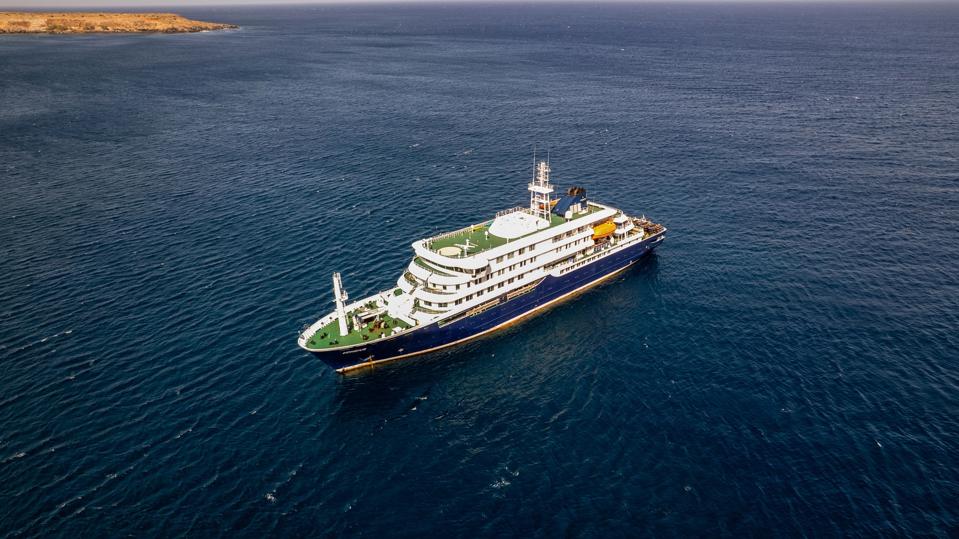
This aerial picture shows a general view of the cruise ship MV Hondius stationary off the port of Praia, the capital of Cape Verde.
AFP via Getty Images
Key Takeaways
- A total of 149 people from 23 countries, including passengers and crew members, are stuck onboard the MV Hondius, a Dutch-flagged cruise ship that sailed from Argentina.
- The ship is currently stationary off the coast of Cape Verde, an island nation in the Atlantic off the coast of West Africa—although public health authorities have not given it permission to dock or evacuate the two sick crew members.
- Three people have died since the suspected outbreak began, but only one patient has tested positive for hantavirus so far, Reuters reported later on Monday.
- Three more people on board have become sick with symptoms of the virus, including one British passenger who was evacuated to South Africa and has since tested positive for a hantavirus variant.
- The other two sick individuals on board are both crew members with “acute respiratory symptoms,” cruise operator Oceanwide Expeditions said on Monday, and both require “urgent medical care.”
- In a later update, the cruise ship operator said it was considering sailing to Las Palmas or Tenerife, both in Spain’s Canary Islands, where “further medical screening and handling could take place.”
What Do We Know About The Victims?
The first death happened on April 11, Oceanwide Expeditions confirmed in a statement and timeline released on Monday afternoon. According to South African health officials, this was a 70-year-old Dutch man whose body was repatriated from the ship on April 27 on Saint Helena, a British territory in the South Atlantic. The man’s 69-year-old wife, also a Dutch national, left with him and later died in a hospital in South Africa. Another patient, a 69-year-old British national, became sick the same day and is currently being treated at an intensive care unit in Johannesburg, South Africa. On May 2, a third passenger, identified as a German national by Oceanwide Expeditions, died on board, although his cause of death has not yet been determined. The Dutch woman tested positive for hantavirus after her death, Reuters later reported citing anonymous sources familiar with the matter, and it is currently unconfirmed if the other deaths are attributable to the rare virus. The British passenger evacuated to South Africa also tested positive for a variant of hantavirus, according to the cruise ship company, while health authorities are conducting lab tests and epidemiological investigations on the others.
What Has The Who Said About The Hantavirus Outbreak?
In a statement issued on social media, the World Health Organization said it is aware of the outbreak, noting that “detailed investigations are ongoing, including further laboratory testing, and epidemiological investigations.” The agency noted that hantavirus infections are usually tied to environmental exposure, and in rare cases, the virus may spread from person to person. WHO Director-General Tedros Adhanom Ghebreyesus said in a statement that the UN body is “facilitating medical evacuation of two symptomatic passengers, conducting a full risk assessment, and supporting affected people onboard.”
What Has The Cruise Ship Operator Said?
Oceanwide Expeditions said the ship is currently located off the coast of the West African island nation of Cape Verde. The country has not yet granted the ship authorization to “disembark guests requiring medical care or to support with medical screening.” However, local health officials have visited the ship to assess the condition of the two symptomatic crew members on board. The company said its priority is to ensure that the two symptomatic persons receive “adequate and expedited medical care.” The statement said Dutch authorities are leading an effort to help repatriate the two symptomatic individuals.
What Do We Know About Hantaviruses?
Hantaviruses are a family of zoonotic viruses mainly carried by rodents such as rats and mice. Humans may contract the virus if they are exposed to rodent droppings, urine or saliva. According to the Centers for Disease Control and Prevention, in rare instances, the virus can also spread through rodent bites or scratches. The WHO noted that hantavirus spreading between humans is also rare. It is unclear how the people on board the ship contracted the virus. The virus can trigger Hantavirus Pulmonary Syndrome, a form of severe respiratory illness that has a high mortality rate of around 38% according to the CDC.
Want to see more Forbes articles on your feed? Tap here to make Forbes Australia a preferred source on Google.
Look back on the week that was with hand-picked articles from Australia and around the world. Sign up to the Forbes Australia newsletter here or become a member here.