Travellers stranded in the United Arab Emirates after missile and drone attacks from Iran forced the closure of the Dubai airport are paying upwards of US$140,000 for flights on private jets and driving more than 10 hours to open airports in attempts to leave the region as war breaks out.
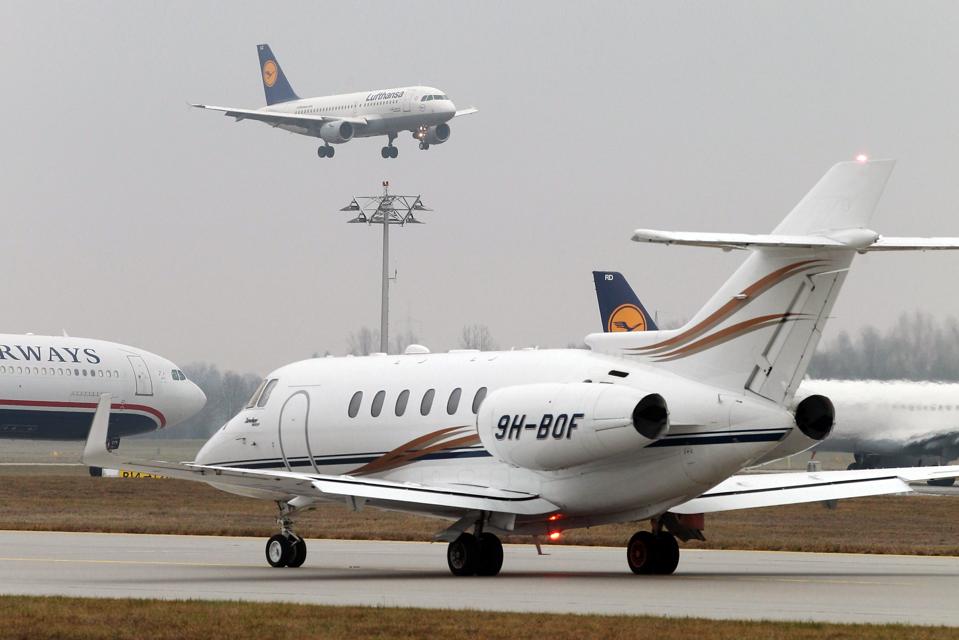
Demand for private jets out of the Middle East are surging as the wealthy look to escape the Middle East.
Key Takeaways
- The Dubai airport, a global hub and connection point for major air routes across the world, has been closed since Saturday, when nearly 300 flights were canceled and thousands of passengers were left stranded.
- While limited operations are expected to resume later Monday, there’s no estimate as to when the airport will fully reopen, and rich travelers have been fleeing for airports in Oman and Saudi Arabia to circumvent the closure.
- Altay Kula, a spokesperson for private jet brokerage JetVIP, said demand for private jets has surged sharply while the number of operators willing to fly in the region has plummeted.
- James Leach of Air Charter Service said many local aircraft that would usually be used for private flights in the region are stuck at closed airports, meaning planes are coming in from much farther away to pick up passengers, increasing average prices.
- Airports in Muscat, Oman, and—to a lesser extent due to visa restrictions—Riyadh, Saudi Arabia, have become travel hubs, both spokespeople said, and Semafor reported that private security companies have booked fleets of SUVs to ferry clients to open airports where they can catch private flights.
- Those evacuating include senior executives at global finance firms and wealthy travelers in the region for business or vacation, Semafor reported.
- A majority of evacuation flights are headed toward Istanbul, London or Rome, Kula said, with light flight jet trips from Muscat to Istanbul selling for more than $93,000, about twice the usual rate, and rates for heavy jets making the same trip are reaching up to $140,000.
Big Number
Five hours. That’s the drive time from Dubai to Muscat, excluding time at the border crossing in Hatta, which added three to four hours for travelers as of Sunday, Leach said. Excluding the Al Batha Border Crossing, the drive from Dubai to Riyadh is roughly 11 hours.
Key Background
The Middle East was thrust into war Saturday after U.S. and Israeli strikes on Iran killed the country’s supreme leader. More than 2,000 targets in Iran have been struck by the U.S. and Israel since, according to the New York Times. Iran has responded with drones and missile attacks on U.S. assets and allies across the region. At least four American service members have been killed and deaths have also been reported in Dubai, Bahrain, Oman and Kuwait. A top Iranian official has said Tehran “will not negotiate” with the U.S., and President Donald Trump on Monday said the “big wave” hasn’t happened yet. “We haven’t even started hitting them hard,” Trump said.
Tangent
Airline stocks fell sharply Monday morning as hundreds of flights were grounded and oil prices surged. Brent, the international oil benchmark, surged almost 8% on Monday to the highest level since January 2025. Prices reached nearly $79 per barrel and several oil analysts said it could trade at or above $100 per barrel if the war drags on. The higher oil prices mean more expensive jet fuel for planes, and the violence in the region will likely mean a surge in trip cancellations.
This article was originally published on forbes.com and all figures are in USD.
Want to see more Forbes articles on your feed? Tap here to make Forbes Australia a preferred source on Google.
Look back on the week that was with hand-picked articles from Australia and around the world. Sign up to the Forbes Australia newsletter here or become a member here.