Last year, TikTok’s executives quietly defanged its advertising rules, opening the floodgates to fraudsters that target American users with fake sales of products that never arrive. Sources told Forbes the change was understood internally as a way to make more money.

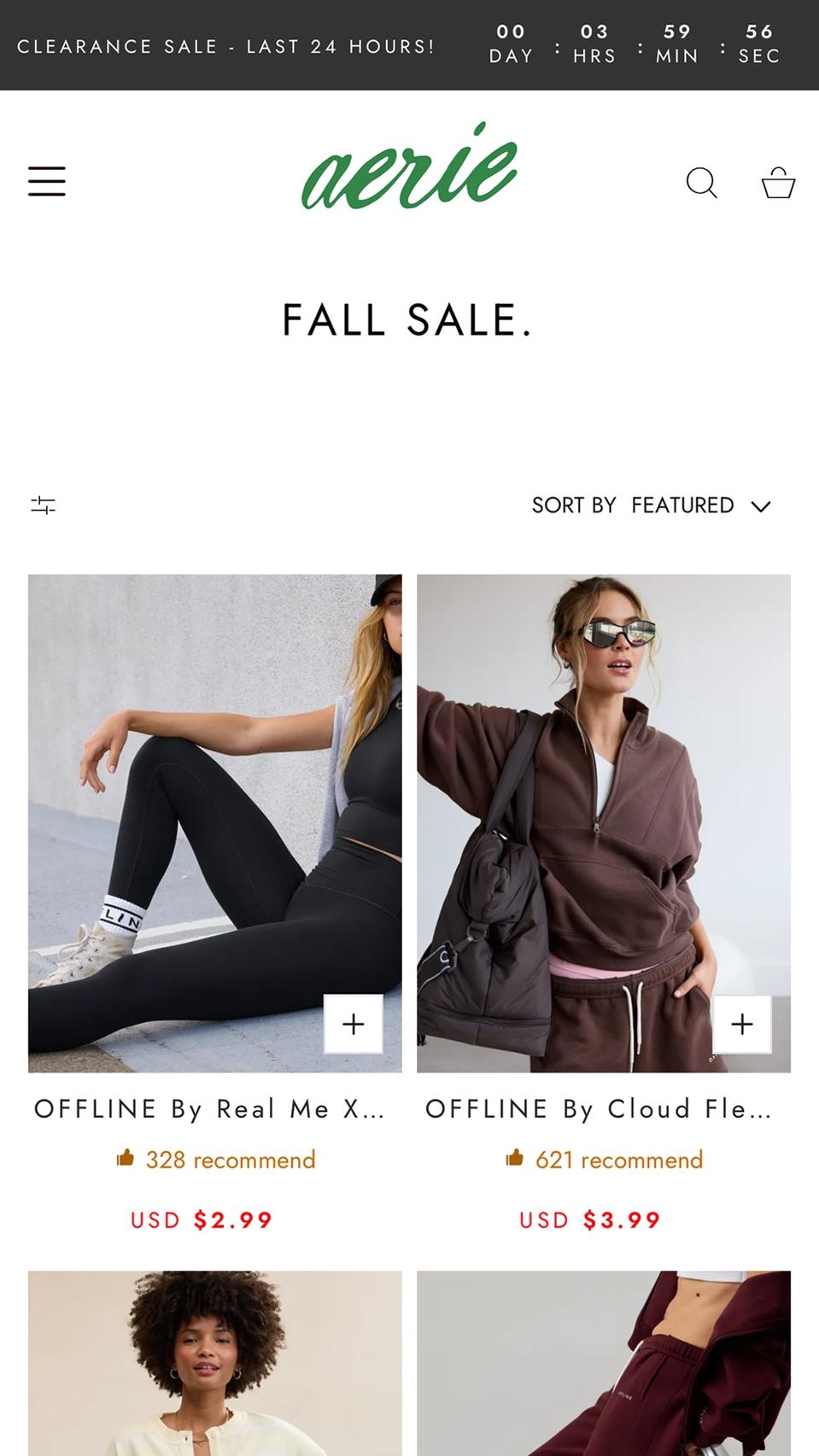
Lottie Weaver was scrolling on TikTok in fall of 2025 when an ad stopped her cold. Aerie, the underwear brand whose pajamas she loved, appeared to be offering a massive sale, with PJs that normally cost upwards of $80 marked down to just $6. Weaver decided to get an early start on her Christmas shopping and bought $40 of discounted pajamas. She was so excited about the deal that she reposted the link to the sale site to her 700,000 Instagram followers.
Then she waited.

A month or so passed, and nothing showed up at her home in Queen Creek, Arizona. Weaver, who has more than 3 million TikTok followers, checked her credit card. She hadn’t bought anything from Aerie at all. Instead, she’d been duped by a popular scam on TikTok.
Later that year, she picked up a $400 Ralph Lauren “Polo Bear” sweater for just $40 via another TikTok ad. It never arrived either. And she’s not alone.
“When I posted my video on TikTok, everyone was like, ‘That happened to me!’,” Weaver, 32, told Forbes. “Or it wasn’t Aerie, but it was another brand. They’re going around scamming all kinds of people.”
The scheme is simple: Ads impersonate popular brands, route shoppers to slick external sites, take their money and never deliver.
Until recently, running scams like these was enough to get an advertiser permanently banned from TikTok. Not anymore. Last fall, around the same time that Weaver was duped, the Chinese-run social media giant quietly gutted the rules it used to police advertisers, according to four TikTok insiders and internal documents viewed by Forbes.
Executives slashed the number of violations for which a TikTok advertiser could be immediately banned by more than half, from 37 down to 13, according to policy documents detailing this change. Running so-called “non delivery” scams like the one that Weaver fell for is no longer considered severe enough to merit a suspension. Neither is selling weapons, sketchy financial investments, weight-loss miracle products, fake GLP-1 drugs and pro-eating disorder material. The documents showed a vast relaxing of policy that for years had protected consumers from fraud and harm.
The change left TikTok staffers charged with keeping harmful content off the platform hamstrung. Soon after, internal data showed a massive spike in fraudulent and forbidden sexual content, like prostitution and explicit imagery, on the site. Upwards of 100,000 new advertisers a day that previously would have been immediately banned were instead allowed to remain.
Moderators can take action if users report financial fraud, like pig butchering or investment scams. But non-delivery scams aren’t included in the company’s anti-fraud policies, per the documents and one source.
“We can’t do anything about it. We have to idly sit by and continue to watch people get scammed and get their money stolen,” said one of the TikTok insiders.
The fastest means of enforcement is brand impersonation. If the bogus account is masquerading as a major company, there’s a clear basis to act. The problem is, enforcement appears to be lax.
Advertisers are only removed if they are found to violate one of the few remaining zero-tolerance policies — like child sexual abuse material, promotion of terrorism or narcotics. Even so, Forbes reported in August that TikTok had allowed dozens of ads pushing street drugs and illegal prescription medications to run in Europe.
“We could not take it down because they want to make money off of it.”
A TikTok source
“These false allegations misrepresent TikTok’s commitment to advertiser safety, platform integrity, and enforcement,” said TikTok spokesperson Jessica Casano-Antonellis in a statement. “TikTok strictly prohibits fraudulent and deceptive advertising, and we have continuously strengthened our policies and enforcement systems to address evolving risks and safeguard our community and partners.” She did not answer a detailed list of questions about why TikTok changed its policies and how much money it makes off scam ads.
The ad policy changes were relaxed as TikTok was navigating intense U.S. scrutiny and a deal with the Trump administration, which created a U.S. joint venture meant to safeguard American user data and content. ByteDance remains responsible for TikTok’s commercial operations, including advertising. “After the joint venture, there’s a crazy level of impunity and disregard for public good,” one said. Casano-Antonellis did not answer any questions about the role of the U.S. joint venture in writing, revising or vetoing advertiser policies.
Among staff, TikTok’s more permissive approach toward ads was understood as a revenue grab, multiple sources told Forbes. Internally, executives argued the company’s older, stricter policies were sweeping up too many legitimate advertisers. But the newly implemented changes opened the floodgates to a surge of garbage and scams. Of course, that meant an increase in associated ad spend. In the first half of 2026, ByteDance, TikTok’s parent company, reportedly raked in $120 billion in revenue, about a 30% increase year-over-year; in 2025, it made about $200 billion total. Advertising is its core business. It’s not clear how much money the company has made from selling ads to fraudsters.
“It was very clear that it was revenue,” one source said. “We could not take it down because they want to make money off of it.”
When one TikTok employee alerted executives to this surge in fraudulent content, they said they were told to focus instead on opening up new markets for the company. Weight-loss drugs, peptides, counterfeit goods and gambling were considered major opportunities, the source said. “They just say, stop raising your concerns and focus on unlocking new revenue.”
“After the joint venture, there’s a crazy level of impunity and disregard for public good.”
A TikTok source
That approach has already drawn scrutiny from at least one government. Singapore flagged an increase in fraud and scams directly to the company, according to two sources familiar with the situation. They said TikTok itself paid to directly refund at least one Singaporean victim who was scammed by advertisers active on the app. TikTok CEO Shou Zi Chew is based there. TikTok did not answer questions about its policies for refunding people who are scammed on the app.
In August, the Singapore Police Force issued a new set of regulatory guidelines related to scams, requiring that social media sites like TikTok prevent and promptly remove any ads suspected of furthering a scam and verify advertisers’ identities. It will go into effect by the end of January 2027. This month, the Singaporean police also warned citizens about phishing scams involving fake e-commerce stores across social media, including TikTok. The advisory says the police have received 246 reports of this scam since July, with at least $1.1 million USD in losses.
A review of TikTok’s ad library, a searchable index of advertisements running in Europe, reveals multiple examples of ads that look very likely to lead to non-delivery scams, like a $165 Ralph Lauren cable-knit sweater for just $2.14, or a professional barber kit that runs $250 on Amazon for just $37.15. Both ads are run by agencies based in Hong Kong. As of publication, the Ralph Lauren ad was still running. The barber kit ad had been removed for “suspicious or unusual activity,” according to the ad library, and the advertiser had disappeared.
Because the supposed discounts are so big, the size of any purchases tends to be small. But the scale at which these scams operate means huge profits. The nonprofit Consumer Federation of America estimated that Americans lost a total of $5.6 billion to non-delivery and non-payment scams across the internet in 2024. The FBI reported that in 2025, more than 56,000 people submitted complaints related to this category of scam, losing a collective $500 million — the third most common cyber-enabled crime that year.
For advertisers, there’s little friction on social media sites like TikTok. “Ads run immediately. It doesn’t matter if you’re a legit company, a convicted felon, or if the website you’re pointing people to is real,” said Paul DelPonte, executive director of the National Crime Prevention Council. TikTok told the NCPC it took down the fake Aerie ads the nonprofit had flagged to the company in late October 2025, according to emails seen by Forbes. Still, between November and February 2026, more than 30 people reported to the Better Business Bureau that they’d bought off a fake Aerie site after seeing it on TikTok.
Scams in which fraudsters use fake e-commerce websites to dupe victims who pay for goods that never arrive are some of the most prevalent on the site, multiple TikTok insiders said. Internal data viewed by Forbes showed that after the policy change last fall, more than 20,000 American users reported just a single network of Asia-based advertising accounts pushing one such scam on TikTok, impersonating brands like Nike (which did not respond to a comment request). The true scale is likely far larger.
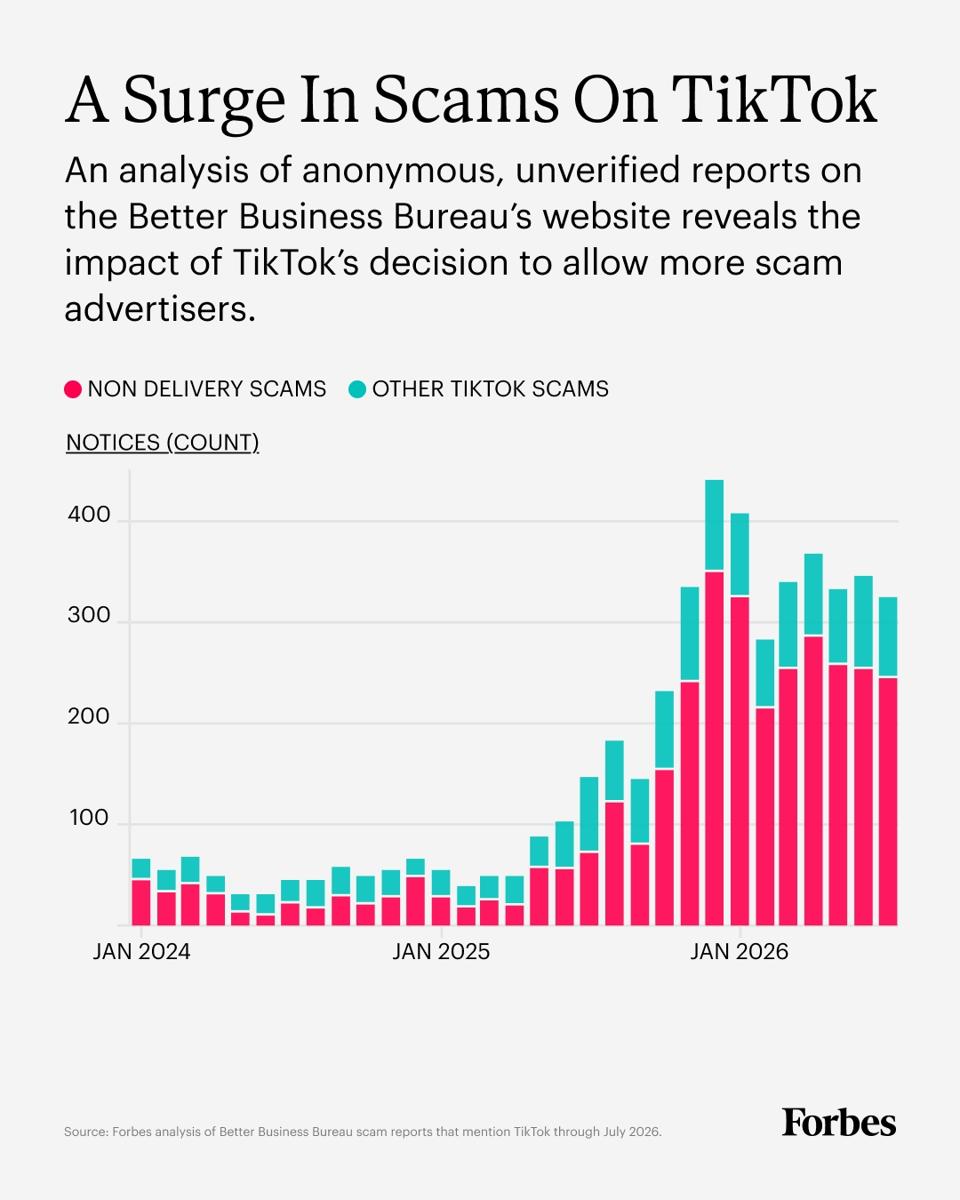
Forbes used a combination of AI, machine learning and human review to analyze more than 5,500 anonymous, unverified complaints about such TikTok scams posted to the Better Business Bureau’s website before and after the company’s ad policy change at the beginning of November 2025. In the six months before and after the policy change, all scam reports on the BBB website increased by 59%. But during the same six-month periods, scam reports that mentioned TikTok in any capacity surged 142%. Reports that specifically detailed a non-delivery scam spiked by more than 200% — more than triple. Thousands reported buying heavily discounted products that never arrived, often from sellers impersonating brands like Aerie, Hey Dude and Figs.
Both Hey Dude and Figs said they were aware of these TikTok scams and encouraged customers to buy directly from their websites. Aerie did not respond to a comment request.
“You owe it to your customers and users that the ad you just made money on is from a legitimate enterprise at a very minimum,” DelPonte said.
TikTok’s automated review system may remove individual ads, but multiple sources said it does little to stop repeat offenders because the platform lacks an escalating advertiser-violation system. “Even though we know it’s a scam, if we don’t have proof enough to say it’s a scam, we let it live on the platform,” said one of the sources.
One of the sources said there are clear ways for TikTok to address this problem. “If you had strict and tight policy, and you really trained human moderators, it wouldn’t happen,” they said. But TikTok has lately been downsizing teams focused on advertiser policy and response, including layoffs in Brazil and Texas, while reposting some roles in San Jose with Mandarin fluency requirements.
This week — almost a full year after she had been victim of multiple non-delivery scams on TikTok — Weaver received yet another ad for what looked like deeply discounted athleisure on Aerie’s website, with leggings for just $2.99.
This time, she knew better than to buy.
Want to see more Forbes articles on your feed? Tap here to make Forbes Australia a preferred source on Google.
Look back on the week that was with hand-picked articles from Australia and around the world. Sign up to the Forbes Australia newsletter here or become a member here.