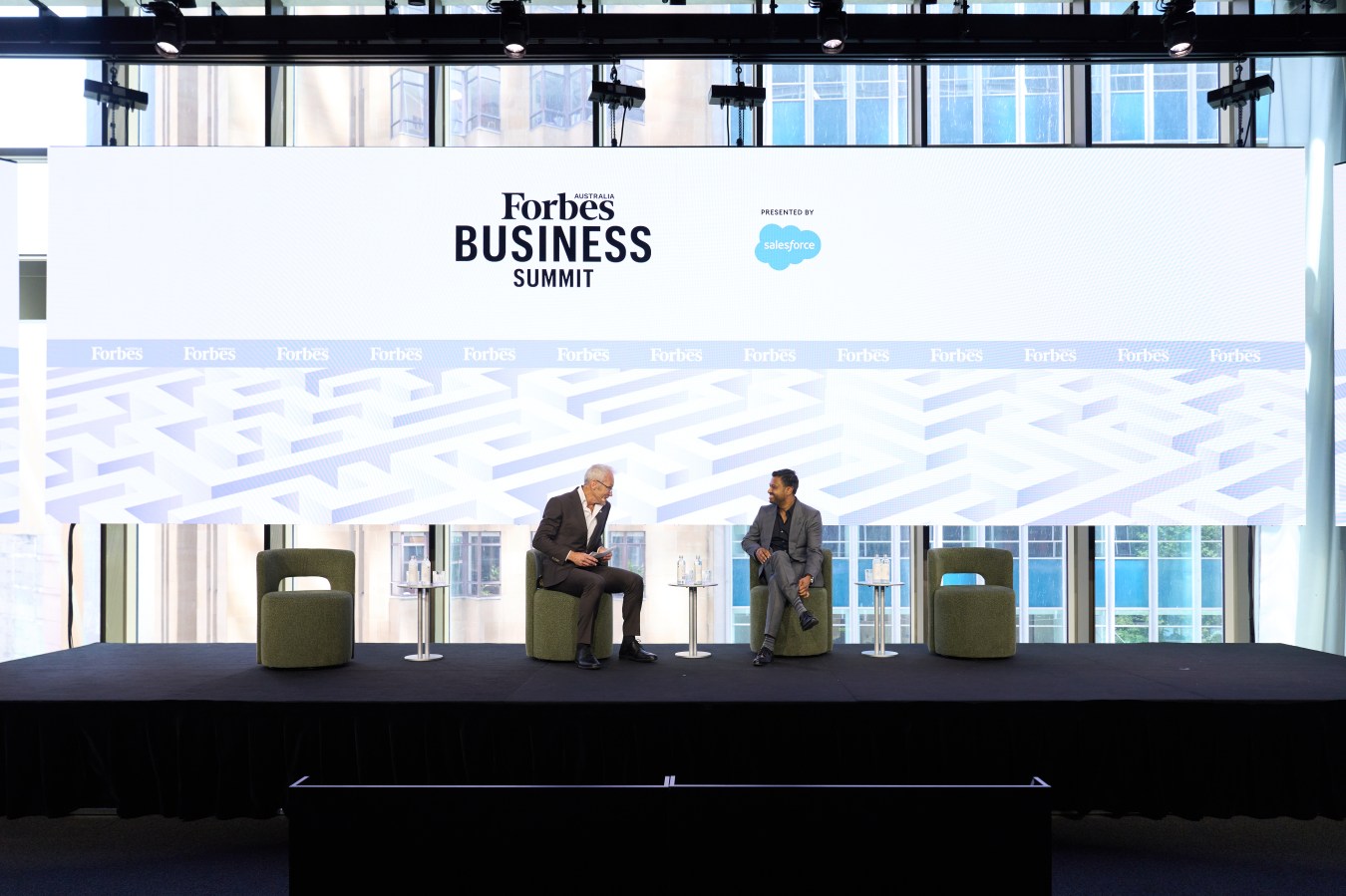
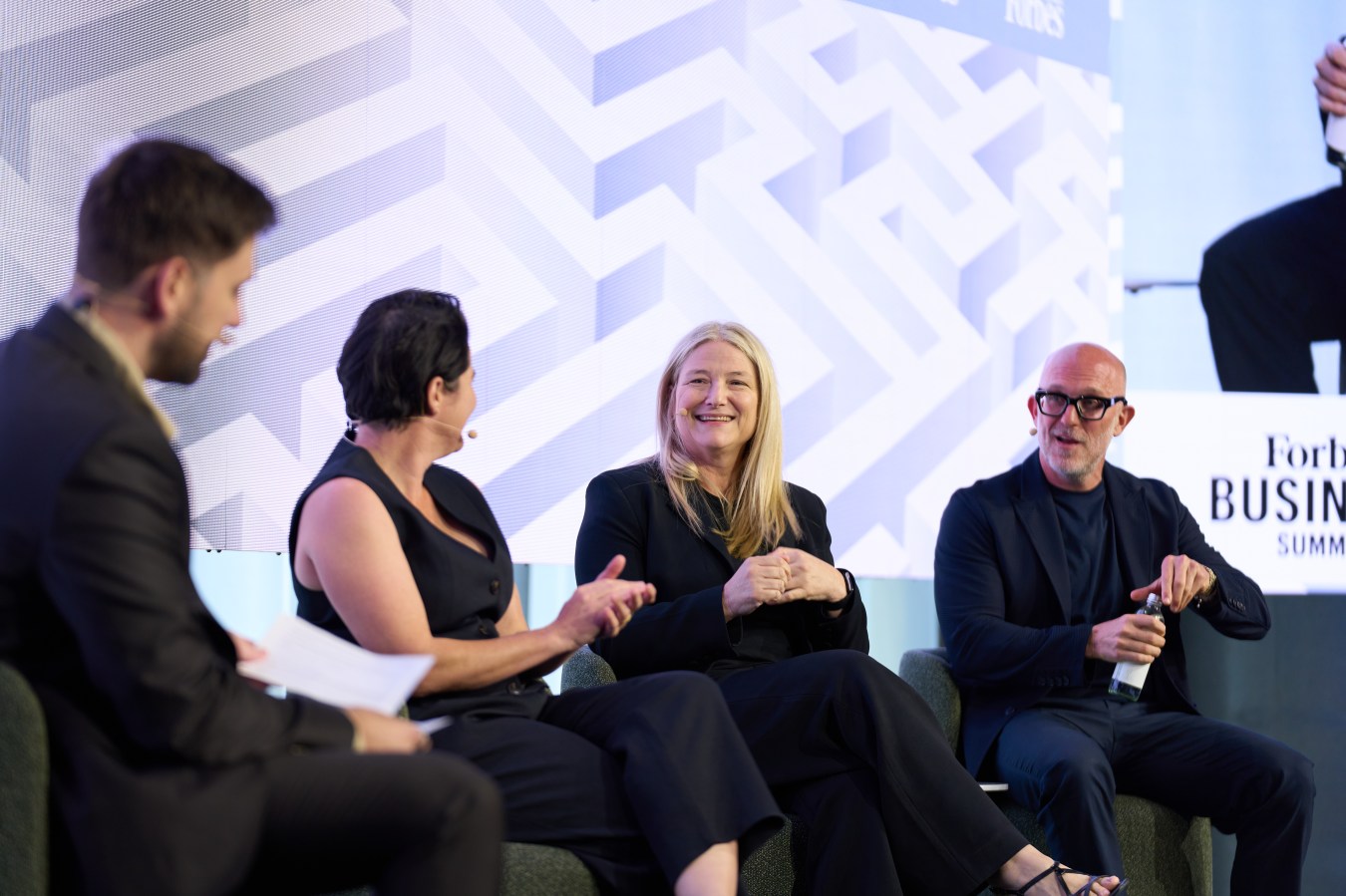
As AI knocks out tasks that used to clog up the day, the speakers at the Forbes Australia Business Summit pointed to the need for another shift: allocating freed time to human connection.
In a world being rapidly reshaped by AI, automation, and accelerated change, the question for every CEO and organisational leader is no longer if technology will disrupt their business, but how to harness it while preserving the human element that drives real innovation.
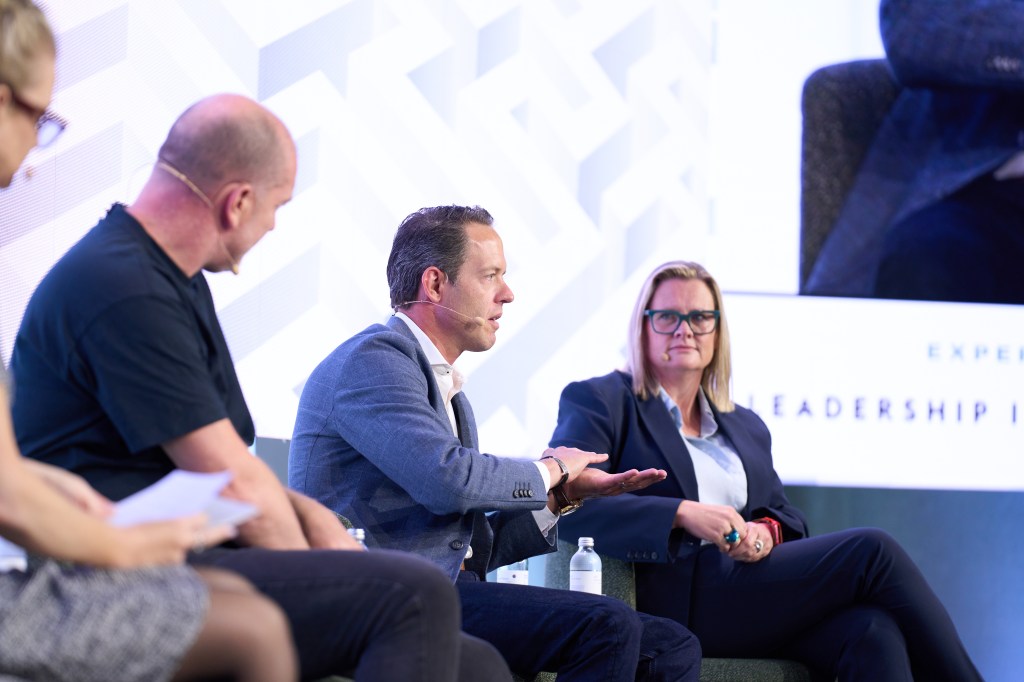
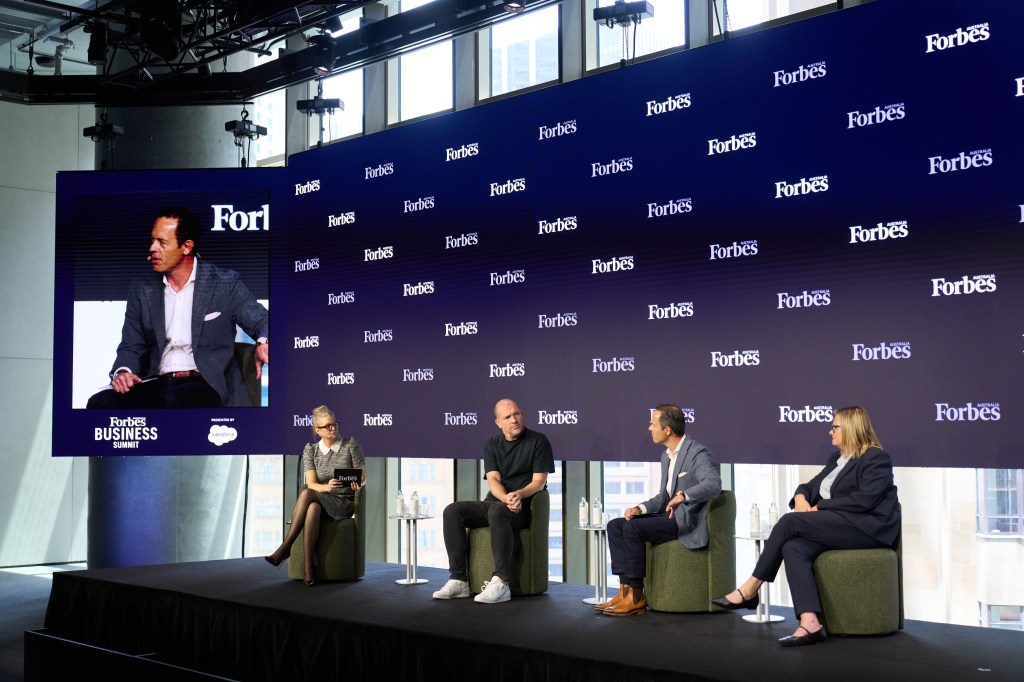
This imperative was the focus of the “Leadership in the Age of AI” panel at the recent Forbes Australia Business Summit.
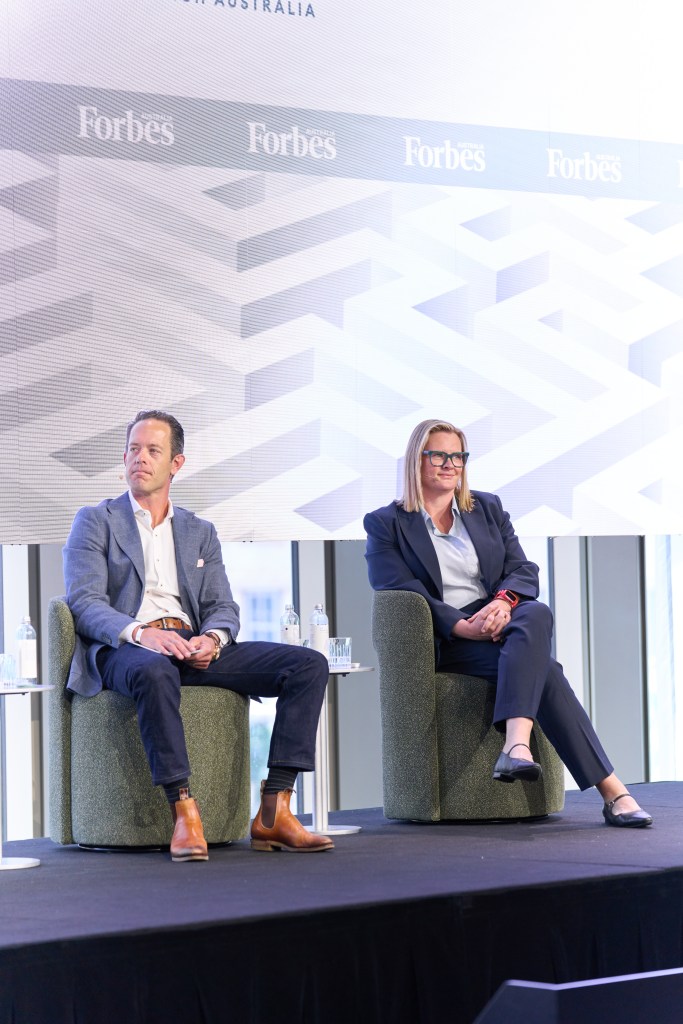
The discussion featured three leading voices on the future of work and leadership: Dominic Price (Work Futurist), Frank Fillmann (EVP & GM, Salesforce Australia/New Zealand), and Jacqui Lennon (Chief Technology and Transformation Officer, Zurich Australia). The aim was to explore how effective leaders are adapting in real-time to build organisations that are more resilient, agile, and, crucially, more human-centred.
The conversation covered the efficiency gains and productivity boosts that AI is delivering – including Salesforce’s recent $2.5 billion investment in Australia – and soon turned to a powerful paradox: Automation is not eliminating the need for human connection; it is elevating it to the single most valuable leadership currency.
The ultimate challenge for tomorrow’s leaders is mastering a blend of technological proficiency and creating space for vulnerability, trust, and high-context communication.
The AI imperative – from efficiency to employee experience
The panellists are on the same page that the successful deployment of AI goes beyond cost reduction and needs to improve the employee and customer experience.
Salesforce’s Fillmann explained that while many companies initially seek productivity gains, the real success stories also integrate growth and a better employee experience.
“We did a survey of people using agents and AI across Australia and New Zealand. There was a lift in productivity, and we sort of expected that. What surprised us was finding an 80 per cent lift in employee satisfaction,” says Fillmann.
“Think about the challenges that ANZ is facing right now – tight labour market, flat productivity and rising customer expectations. We’ve already got too many burned-out employees. So we’re saying, if we put humanity back into work and allow it to be more meaningful with less of the stuff that no one wants to do, that creates that meaningful connection.”
For Zurich CTO Lennon, whose work in the insurance industry requires providing ‘assurance and stability during uncertain times,’ AI presents an enormous opportunity to interpret data.
“Insurance fundamentally is about dealing with uncertainty. Whether it’s your life insurance or your car insurance or your travel insurance, we get a lot of information in, and we make a lot of decisions based on that – whether to offer your policy, whether to pay the claims. For us, there’s a huge amount of opportunity with AI.”
Jacqui Lennon
She stressed that AI must serve two functions: driving efficiency in the short term, and creating new opportunities in the long term, such as using data to “help people avoid claims” and “create new products.”
That data needs to be accessible to more people than just the IT department, Lennon notes, in order to drive efficiency.
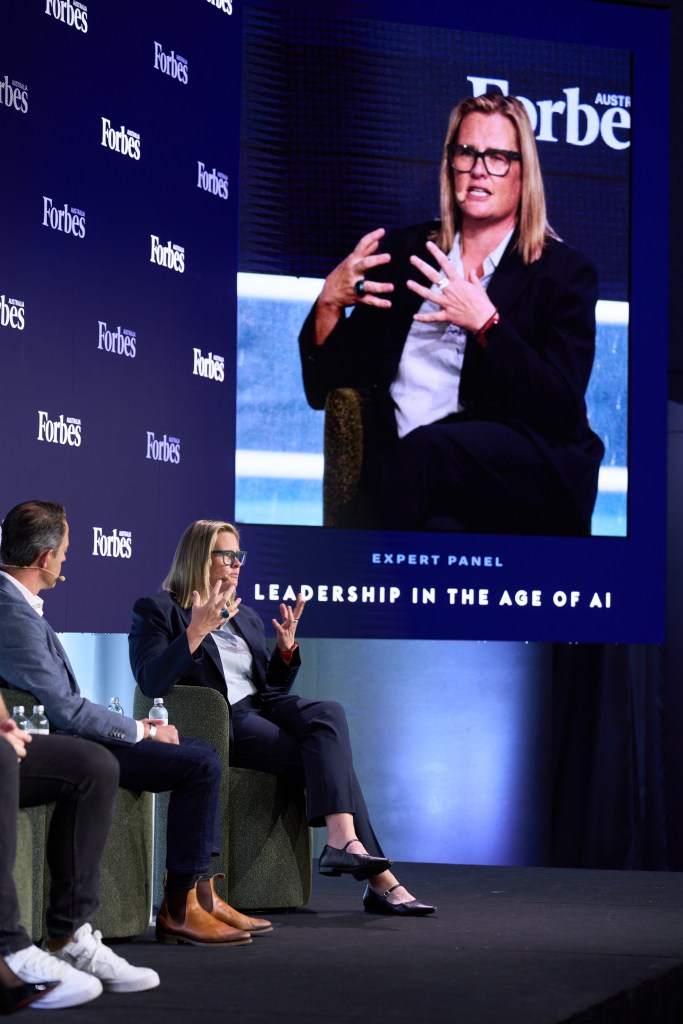
“The other thing we’ve done is to democratise our data, because AI technology without access to good data is not useful. Democratising it allows leaders across the organisation to get better, faster insights, to think about how to serve customers better, and look at emerging trends.”
Leadership reimagined – the power of humility and trust
When AI is handling the operational busywork, the role of the modern leader can pivot to one of culture architect and ‘chief humanist.’ According to Price, who spent more than a decade working with Atlassian, this necessitates trading positional authority for genuine vulnerability.
He challenges the traditional, top-down leadership model and advocates for leaders to work alongside their teams.
“The best leaders I’m working with are rolling their sleeves up, sitting with their team and saying… ‘I don’t know how to do this. However, we’re going to solve this together.’ Their humility is clear,” says Price.
Price reminded the audience that vulnerability is highly valuable in leaders – the willingness to say “I don’t know, but we will figure it out together” helps teams feel a part of the solution.
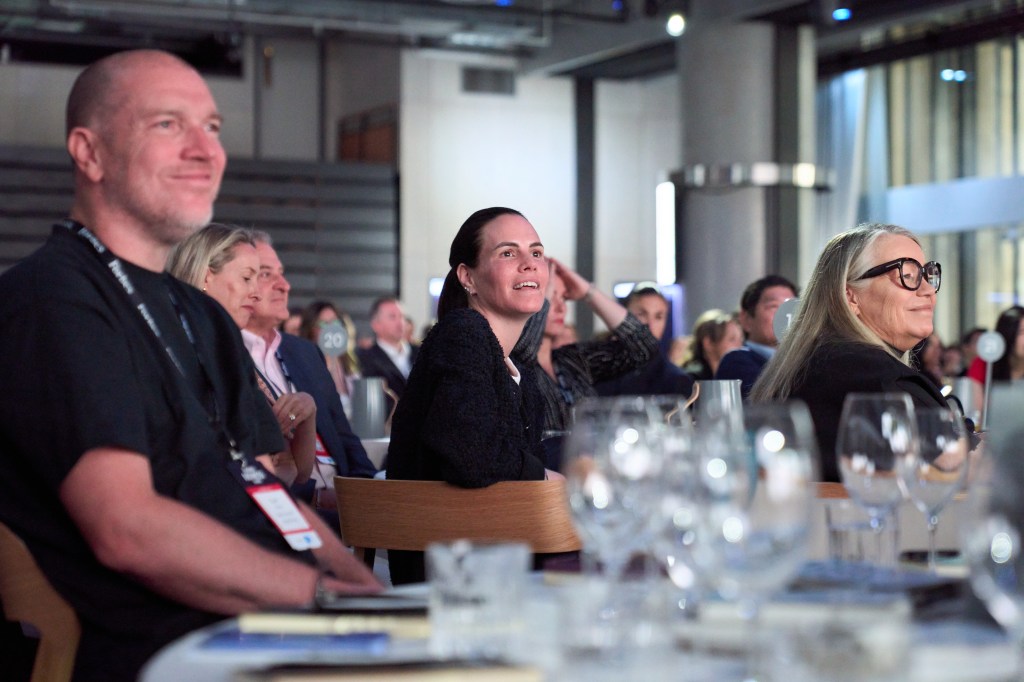
Lennon’s strategy at Zurich echoes this, focusing on empowering employees by removing the fear of the unknown. She highlighted the importance of democratising access to AI by encouraging play and experimentation, rather than centralised control.
“Great leadership requires vision, innovation, preparation, humanity and authenticity. So I think we will have leaders using AI, but AI will not be our leaders,” says Lennon.
The scarcest resource: high-context human connection
The panel unanimously agreed that AI provides the capacity for more human connection by removing the drudgery that leads to burnout. Achieving that connection will require intentional reallocation of time to human-centred tasks.
“We’ve got a lot of tools that have freed up leaders’ time, to read your emails and those type things. How do you use that time more effectively to connect with the people?,” is a question posited by Lennon.
Price reiterated that we have big societal questions to answer going forward.
“If the 40-hour working week changes, we may have more leisure time, right? We have to decide whether to reinvest time into society and connection. Or do we invest time into creating more productive businesses that benefit shareholders?”
High-context human interaction can also pertain to allocating human employees to the most pressing tasks, and outsourcing what can be solved quickly to an AI agent, says Fillmann. He uses Salesforce’s work with Scape, an academic institution, as an example of agents being able to solve problems.
“A student may have a problem with the air conditioner overnight and log a ticket, but in a normal environment that doesn’t get seen for 12 hours. Agentforce can reduce the number of support cases and half the average handle time. So in the morning, the human employee who logs in – instead of having a dozen priority cases to solve, there are only a few left, because the agents have solved them overnight,” says Fillmann.
The benefit of that scenario also extends to the student who was suffering without air conditioning, Fillmann notes.
“To make that a little bit more human, the student gets to go to sleep,” he notes, because Salesforce’s Agentforce has expeditiously responded to the problem.
Actionable strategy for the AI age
To close the session, the panelists offered clear, actionable steps for leaders to master the AI paradox. Experimentation, building trust, and prioritising disconnection were three takeaways.
Lennon encourages all leaders to do play around with AI and assess its capabilities.

“Use whatever tools you can to play with the technology and see what’s out there, understand what it can do,” the CTO advises.
As vital as it is to experiment with AI, the panel also advises to lean in to connection and life experiences in the absence of technology.
“We sit down as family, every single day without fail, with no devices, no TV, no music, and we reflect. It’s become my highlight of the day,” says Price.
The panel concluded with a final question: “The best leaders of tomorrow will be masters of…”
Jacqui Lennon believes curiosity, authenticity, and ‘catching people up’ will be the most valuable skills. Frank Fillmann answered, “Teaching, training, supporting and showing up for people.” For Dominic Price, the best leaders of tomorrow will embody integrity.
Look back on the week that was with hand-picked articles from Australia and around the world. Sign up to the Forbes Australia newsletter here or become a member here.