Ben Dawson believes the best ideas are usually held by people on his team and has developed a strategy to get them comfortable enough to speak up. It forms a part of what he calls vulnerable leadership, which he says is now more important than ever.

The office kitchen is rarely the site of corporate strategy, but for one of Cisco’s most senior executives, it is a critical hub for global intelligence.
Australian Ben Dawson is President of Sales at Cisco in Asia Pacific, Japan, and China. When he is visiting an office in any of those regions he doesn’t occupy a private office. Instead, he makes a point of settling near the kitchen. This deliberate choice is a visual representation of his leadership philosophy: to reject hierarchy, do things differently, and assume the most valuable ideas are held by someone else.
It is a style rooted in what he calls “vulnerable leadership” – a concept that developed over years of working in corporate environments in Australia, Asia and the US.
“I think most of the best ideas are held by people other than me, and I need to make sure that I’m able to get those ideas on the table,” Dawson tells Forbes Australia.
Key to extracting those good ideas, is developing relationships and connecting his team on a human level, Dawson says. He spent six years living in the US, and initially, his Aussie demeanour was confusing to his new colleagues.
“I would walk into meetings and be self-deprecating. I’d make a joke about my lack of experience in the region, or my lack of technical depth or whatever, and it wasn’t sort of landing,” Dawson recalls. “I pulled one guy aside and asked, ‘What am I getting wrong here?’ and he said, ‘Well, you’re the boss. You’re supposed to have all the answers.'”
The executive recalls thinking: “If you are relying on my answers, we’re all in trouble. That’s not my style.”
Leading flat, rather than hierarchical
For this executive, ‘leading flat’ is only possible because he operates on one core rule: trust your team’s intent.
“My people go around me all the time,” he says, viewing that as a sign of empowerment, not disrespect. “It is about intent. If somebody is calling my boss or my boss’s boss because they’re trying to get an outcome for their team, or for a customer, then I have no issue.”
Conversely, he sees a leader who gets annoyed by being bypassed as the one failing.
“To me, that is more of a reflection of the leader that they went around, than the individual,” he says.
This culture of openness relies on a leader’s ability to provide their team with “air cover.” He credits an early manager and mentor in Melbourne with teaching him the critical importance of protecting your team when they fall.
“You’d swear that everything that went wrong in that company was his fault,” Dawson laughs. “He would deal with the issues and he would own them, providing ‘air cover’ for others. And it just created this sense that you could be really open.”
A culture of transparency means that issues come to the surface quicker and the company can solve them faster.
“I’ve never found a problem we can’t solve, if i know what the problem is. When people are willing to be vulnerable, then they need protection,” he says.
Culture: Why the office needs to be a magnet
These principles of vulnerable leadership are reflected in Cisco’s flexible approach to work-life balance, which was in place long before the pandemic.
“If people don’t want to come and spend time with each other, I see that as a failure of leadership,” says Dawson.
Rather than issuing mandates, he works to create a compelling reason – a “magnet” – to get people into the office. Part of the solution is redesigning the office for collaboration, not quiet work, which could be done at home.
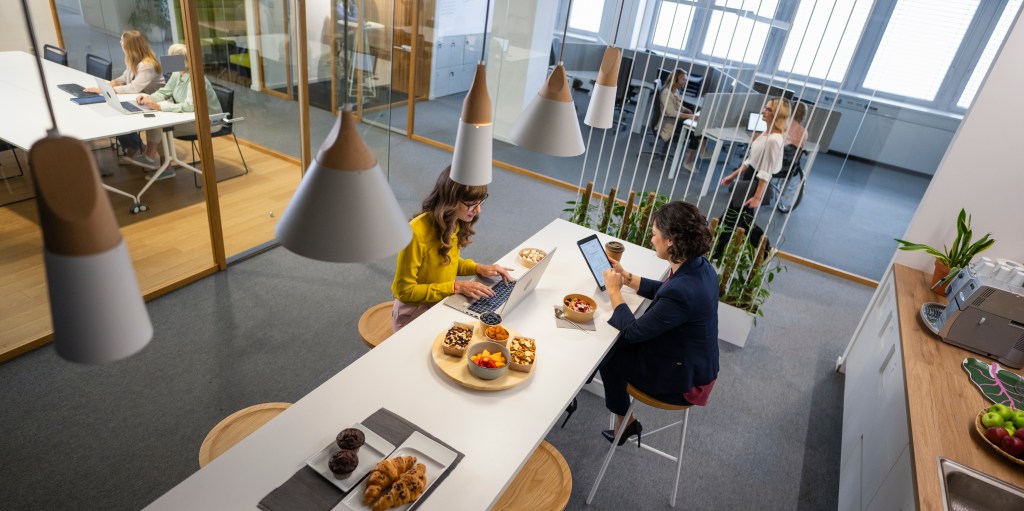
Another component is leading by example, which brings Dawson back to the kitchen.
“Throughout the course of my day, people invariably will make a coffee at some point, so sitting near the kitchen gives me a chance to have those two or five-minute interactions with people.”
This informal approach bypasses the need for employees to request meetings, creating accessible leadership.
Innovation: Australia’s AI challenge
While the executive champions the Australian spirit of ingenuity, he voices concern about the country’s current posture toward the biggest technology transition of the decade.
“The AI revolution is happening now. Australia can be slow. And we’re sceptical,” says Dawson. Historically, he notes, we have been world leaders in tech adoption and at Cisco the Australian market is consistently number one or two in market penetration for new technology.
But AI is different. Australian organisations are waiting to “see which models prevail, and then, be a fast follower of it,” he says. Meanwhile, the US is actively investing to be at the forefront, and countries in Southeast Asia are using it as a chance to “leapfrog” over other technologies.
“I do worry that we’re sitting on the sidelines and will be behind, which is not what we’ve done in the past,” he says.
The opportunity in application
The true opportunity for Australia is not in core research and development, but in application – using existing tech to solve real-world problems – Dawson notes.
“We’re very, very good at taking existing technology, and doing different things with it,” he says.
The challenge is balancing innovation with security and ethics. He advocates for threading the needle between the largely unregulated US market and the highly-regulated European approach.

“We can’t put digital shutters up around the island. We can’t regulate in a way that’s unique to Australia, because then we cut ourselves off from the innovation,” he says.
Having said that, Dawson believes having some guardrails “around data security, cyber security, and some of the fundamentals,” are necessary.
Singapore-bound
Now, Dawson is setting up shop at Cisco in Singapore, and leading not just the Australian team but all of Asia Pacific, Japan, and China.
Relocating from Singapore requires translating his flat leadership style to a region with deep, hierarchical cultural differences, making the “vulnerable” approach even more unusual.
“You can ask a question in a room in Asia Pacific and either not get an answer or get an answer that’s not the real answer,” he observes.
To counteract the risk of the “highest paid person’s opinion” dominating, Dawson’s strategy is deep cultural immersion, seeking side conversations and social time to ensure “all the right opinions come out.”
To make sure that happens, while visiting remote offices, he will take a seat not in a corner office, but close to the action and voices of those with the ideas – in a cubicle by the kitchen.
Look back on the week that was with hand-picked articles from Australia and around the world. Sign up to the Forbes Australia newsletter here or become a member here.