Advancements in machine learning and other technologies have helped Seeing Machines develop new safety solutions for drivers, including intoxication detection, 3D cabin perception mapping, and a new rear-view mirror solution.
Once known for televisions and gadgets, the Consumer Electronics Show has become a pivotal launch platform for automotive and mobility technology in recent years.
Held in Nevada each January, CES is now a staple for technocrats and everyday innovation buffs alike, who want to be the first to see how our lives will transform over the coming years.
Among the central themes at CES this year, are mobility, robotics, and healthcare. A key player in the mobility sector develops some of the world’s most advanced driver monitoring systems, and is headquartered right here in Australia.
Canberra-headquartered Seeing Machines was spun out of ANU in 2000 and has since integrated its technology into more than 3 million Mercedes Benz, Ford, General Motors and BMW vehicles. Its mandate, according to co-founder Tim Edwards, is to “get everyone home safe.”
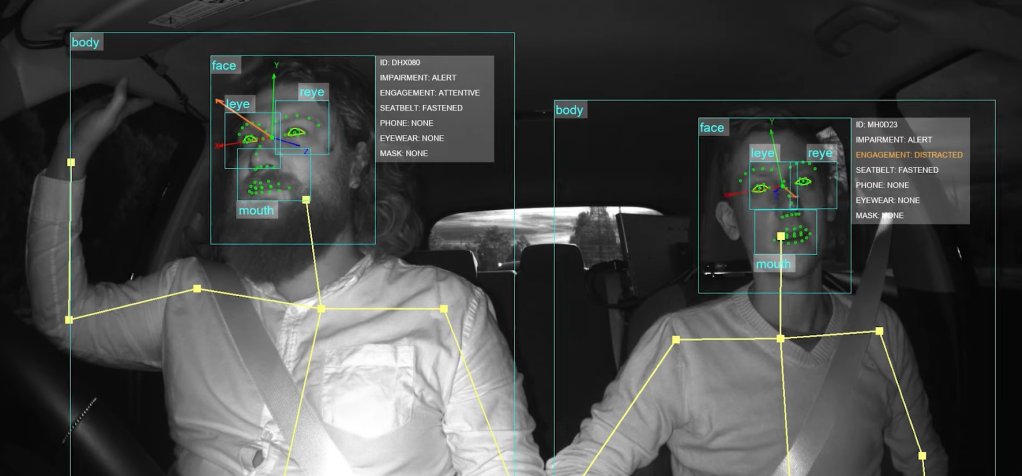
It does that by monitoring the behaviour of people inside the vehicle, before and while they are doing something potentially dangerous.
“As our technology has become more able to detect and track humans, so has our understanding of behaviours that indicate potential safety risks,” says Edwards.
Over the last decade, advancements in machine learning and other technologies have helped Seeing Machines develop new safety solutions, including intoxication detection, 3D cabin perception mapping, and a new rear-view mirror solution.
Detecting intoxicated driving
At CES 2026, Seeing Machines is showcasing a product that can be integrated into vehicles to detect intoxicated driving and make safety recommendations to the driver. Much like a traffic light, the ‘intoxicated driver’ alert system in the dashboard of the car moves from green (no risk) to yellow (slight risk has been detected) to red (intervention is necessary.)
Reaching the red stage means a driver is showing impairment equivalent to a blood alcohol level of 0.05 – the legal limit in many countries. An AI agent then asks the driver if they are ok and can navigate the vehicle to a rest station. If the intoxicated driver resists that suggestion, stronger interventions can be programmed, such as limitating the infotainment in the car, and an audio prompt suggesting they call an uber.
Preventing ‘shared attention’
“When driving, attention is everything,” the company states. “Even momentary lapses in focus can increase the risk of an incident – and not all distractions look the same. While some involve a single, long glance away from the road, others are more subtle but equally risky: drivers repeatedly shifting their gaze between the road and another object.”
To avoid drivers “sharing their attention,” Seeing Machines technology monitors not just what is happening inside the vehicle, but also outside.
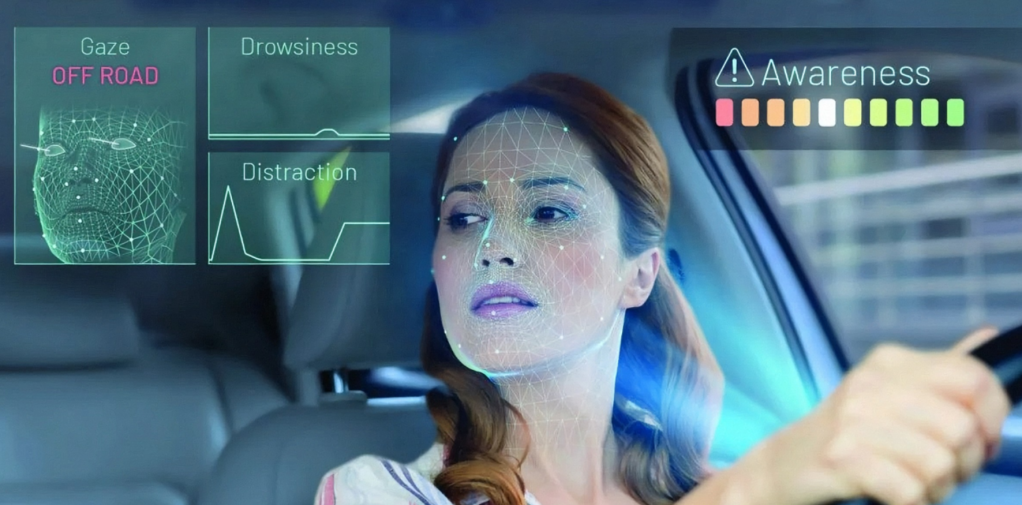
“This integrated approach enables vehicles to respond intelligently to both complex road conditions and evolving in-cabin dynamics, supporting safer, more adaptive and increasingly automated driving experiences,” the company states.
Gaze-based alerts, helmet detection and 3D cabin perception
Seeing Machines has partnered with Valeo to advance an in-cabin monitoring solution. What sets the new technology apart from predecessors is gaze tracking that can ‘determine whether the driver has identified a detected hazard, as well as helmet-wearing detection for two-wheelers.’
The Aussie innovator is also unveiling its 3D cabin perception mapping solution which it calls a major advancement in in-cabin intelligence.
“The potential of 3D sensing to improve in-cabin monitoring systems has been recognised for many years, but high costs have restricted adoption of 3D to just premium vehicles,” says Edwards.
New safety standards in Europe may mandate increased protections, however. To prepare for those regulatory changes, Seeing Machines partnered with Airy3D to bring a ‘uniquely low cost low friction solution to automakers, that utilises a “diffractive optical element” on top of an existing 2D image sensor.
Look back on the week that was with hand-picked articles from Australia and around the world. Sign up to the Forbes Australia newsletter here or become a member here.