
Telepathic Instruments could have marketed Orchid as “the Tame Impala synth.” Instead, Parker chose mystery over mass appeal – and built a $12-million business by making it harder, not easier, to get one.
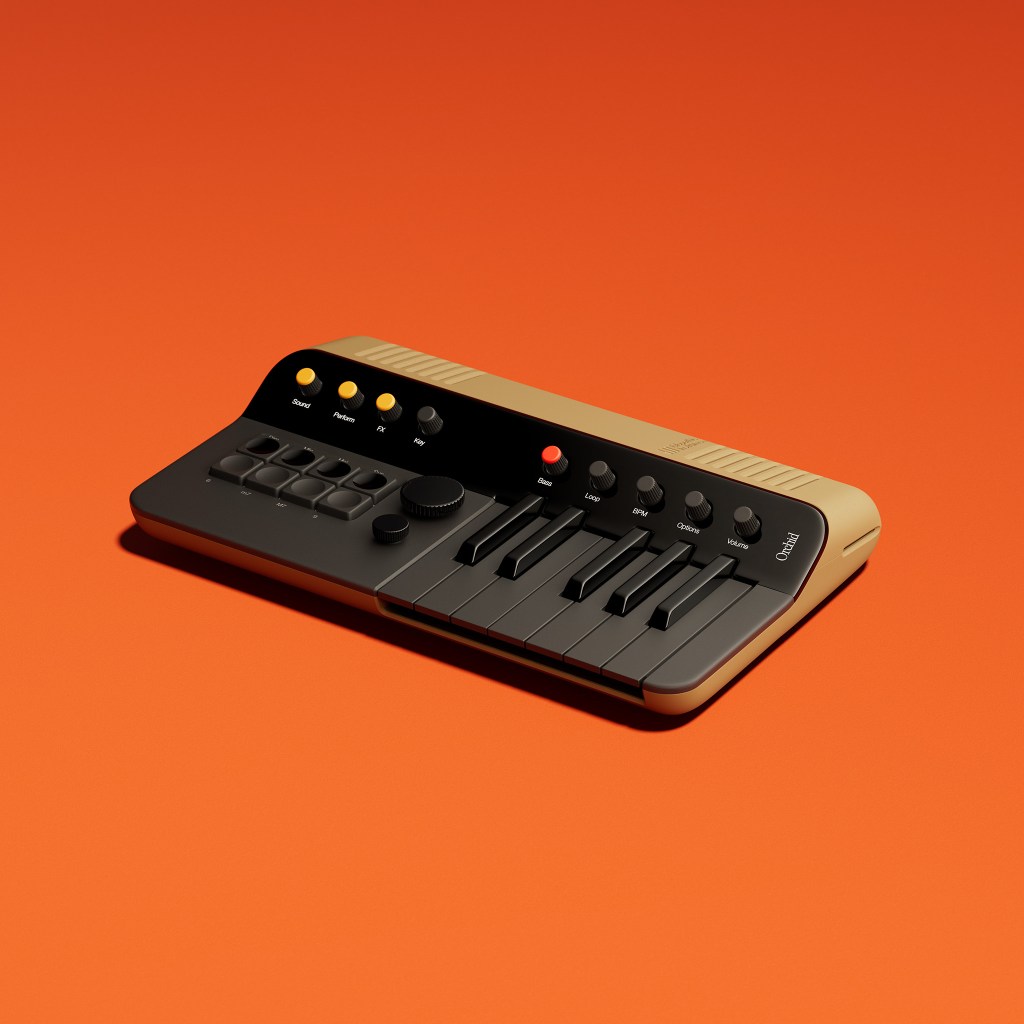
Kevin Parker won’t say which parts of his Tame Impala song, End Of Summer, that won a Grammy Award yesterday came out of the synthesizer that he invented.
The guy who started his career playing psychedelic guitar, invented the Orchid synthesizer to plug holes in his lack of ability as a keyboard player after he started experimenting with electronic music, he tells Forbes Australia.
And he won’t explicitly say that he even uses it.
“I don’t like to tell people what music I’ve written on the Orchid, but, you know, if I didn’t use the thing that I’d been longing for so much and put so much time and effort and money into creating, it would have been kind of a failure,” Parker says in an interview shortly before winning the Grammy for Best Dance/Electronic Recording.
“But anyone with a keen ear should be able to hear it.”
The first batch of 1,000 Orchids in December 2024 sold out in three minutes. The official launch came in October 2025 and his company, Telepathic Instruments, claims sales of $12 million from more than 10,000 units sold across 60 countries.
The Orchid has been adopted by a roll call of influential musicians, including Travis Scott, Fred Again, Benny Blanco, Dua Lipa, Gracie Abrams, Diplo, Don Toliver, Ed O’Brien (Radiohead), Crowded House, Childish Gambino, Janelle Monáe, Mark Hoppus and Ryan Tedder.
Parker insists he never tried to push it on any of the artists with whom he’s collaborated. “I like to stay somewhat mysterious about it … I didn’t want to cross pollinate between the whole Tame Impala thing and the Orchid/Telepathic thing. I thought that mixing the two, openly, would cheapen each one.
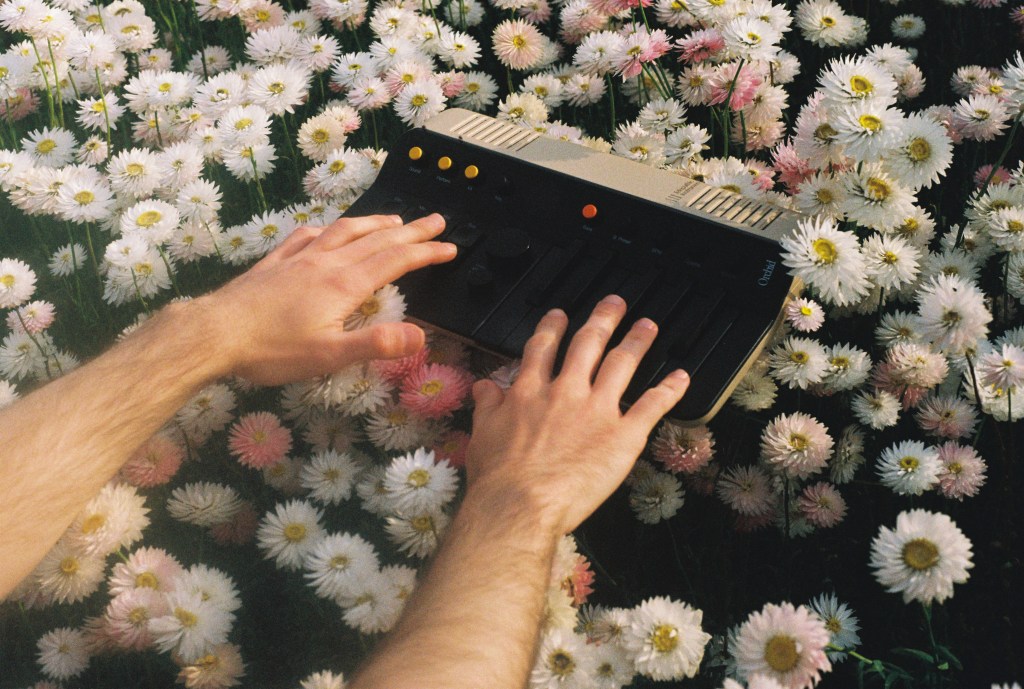
“I don’t want people to think of the Orchid as the Tame Impala synth. When we first launched, there was quite a lot of that, but that’s quickly washed out.”
This is only the second interview he’s given on the subject.
“I gave one to my friend, Sarah Aarons. The first time she played it, I just heard her do this sort of evil laugh.”
Telepathic Instruments CEO and co-founder, Charl Laubscher, says Parker’s decision to distance Orchid from Tame Impala took the easy marketing options off the table.
“I remember saying to Kevin once, ‘At some point we’re going to have to address the elephant in the room.’ And he said, ‘Well, I think the coolest way to deal with that is just go, ‘Oh yeah, there’s an elephant over there. It’s named Leslie’, then just get on with it.”
The Dream
The idea for the Orchid goes back 15 years, Parker says. “I was always making music by myself … And I make pretty spaced-out, psychedelic music, so I’m constantly looking for things to expand my sound. And it was just a matter of time until I came across synthesizers. Anyone who’s a synth nerd knows that it’s just a giant ocean … you kind of get lost in it, which is exactly what I did.
“But I didn’t have a lot of money then. So it was whatever I could get my hands on. I wasn’t fussy … Whether it was a synth that I bought off eBay or using my manager’s laptop and the GarageBand built-in synth and tapping on the computer keys to make it work. Honestly, I didn’t care.”
But the one-handed piano player in him knew his physical abilities weren’t able to bring the ideas in his head to life.
“I thought it was my duty to be the dream crusher. ‘If we want to get it out, just do less.’”
“I was always dreaming of something that enabled me to play the chords and the music that I wanted to, mentally. So that rather than playing the individual parts of a chord, as in the individual notes, you tell it what sort of chord you want it to play, and you tell it what the root note is, and it forms the chord for you.”
He had a little Casio keyboard that did something similar, but not in the way he wanted. Computer software did it, but no keyboard synthesizers were doing it.
“I’ve been baffled that something hasn’t come out like that. I thought maybe I was the only one that needed it. So that’s why, when I started making it, I honestly just wanted to make one. I knew if I could have something like that, my songwriting would explode.”
But he was too busy to do anything about it. Then came the pandemic. While other people were learning how to bake sourdough, the Tame Impala lead was reaching out to a New Zealander, Tom Cosm, whose YouTube tutorials on electronic music Parker used to follow.
“I just reached out to him. We weren’t even friends at that point.
“We’re both sort of like weird sonic-explorer nerds. We just started talking and connecting on that level.”
Parker’s idea for a chord-generating synthesizer came up, and they agreed to have a go at building one – just one – for Parker. “We were probably a little bit delusional as to what actually went into it,” says Parker.
“The first prototype … Tom got a sheet of aluminium and bent it to make a box shape. And we stuck a miniature consumer computer inside. It looks and operates nothing like how it does now.”
It sounded like an 80s arcade game. But it was proof of concept. They still have it as a museum piece. “Every few months we bust it out and have a little moment,” says Parker. “It’s the emblem of our beginnings.”
Love & Money
They started to think about producing more than one. But the momentum to forming a startup came when Parker’s wife, Sophie Lawrence, recommended they get in touch with a company who’d helped her ice cream company, Denada Co, with marketing and branding.
“It was when we contacted Love & Money, Charl and his cohorts, that things instantly levelled up,” says Parker.

Love & Money CEO Charl Laubscher saw their huge ambitions. “I thought it was my duty to be the dream crusher. ‘If we want to get it out, just do less.’ And luckily, Kev and then Ignacio [Germade, formerly at Polaroid] the chief design officers we brought on board, very much stuck to their guns.
“We kept all the difficult stuff, like the battery and the speakers and the OLED display, but we still managed to get to market within 18 months, which is just unheard of.”
Parker says it was only his eternal optimism that allowed him to defy the experts and keep it complicated, stupid. “We might as well just try.”
Through all that, he continued making music. “I’m the kind of person who doesn’t like to take time off. Holidays kind of frighten me. And the other thing is that it quickly got to a point where the bulk of the work that went into it, technically, was beyond me. I can program the synth, but I’m not doing any coding. We’d have meetings and little workshops. But that was the extent of my nuts-and-bolts work.”
Without Parker’s pop star leverage, Laubscher had to figure out a different way to get the product out there. “We wanted to build mystery and get people talking,” says Laubscher. “I’m a big fan of the Thousand True Fans theory.”
They knew there would be bugs that needed tweaking, so they went looking for 1,000 synth fans who could give it a workout.
“Then it was about figuring out, counterintuitively, how to put hurdles up for people to climb over to prove that they really were interested in this thing,” says Laubscher. “We didn’t give them too much information. We let them speculate. We needed to create a safe space on the internet where people could sign up, which stopped the anonymous trolls on Reddit just tearing it down.
“It created a bit of a walled garden for us. That had a really amazing kind of positive feedback effect … where people were exciting each other about the thing.”
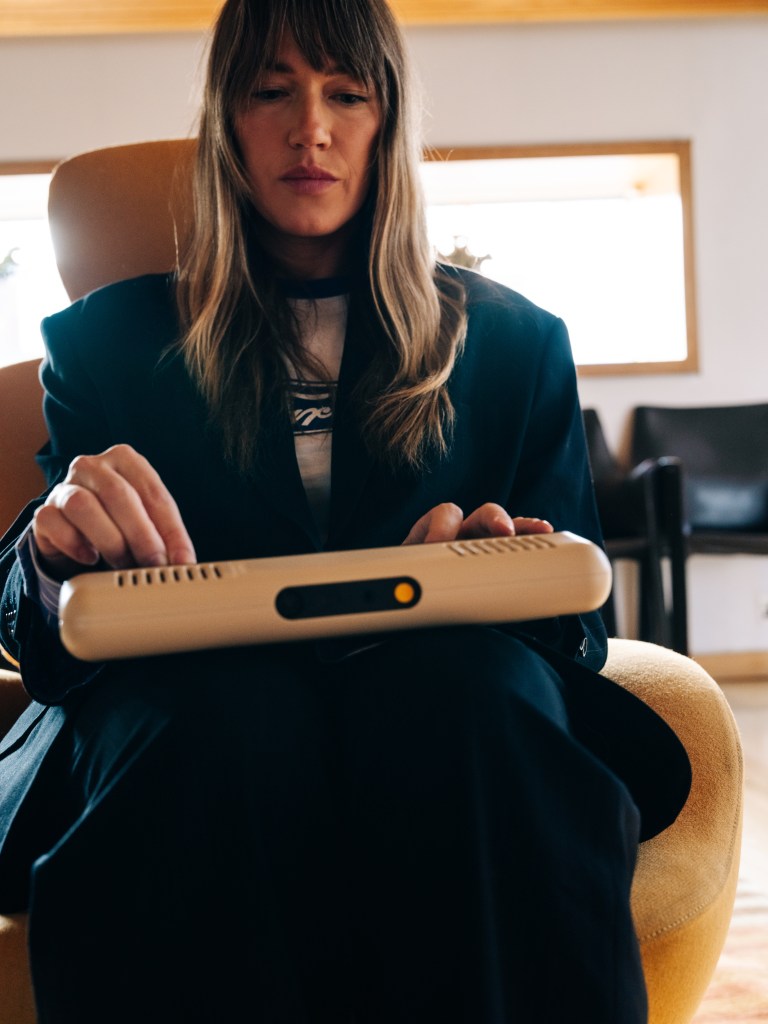
While he didn’t want to overtly market it, just being Kevin Parker had its advantages. “I’ve got a couple of friends who are songwriters that do tons of sessions in the LA artist circuit,” Parker says. “I gave one [Orchid] to my friend, Sarah Aarons. The first time she played it – and this is quite a common occurrence – I just heard her do this sort of evil laugh.
“She’s a songwriter. She’s got a million melodies in her head, a million ideas for songs. But chords take longer than most of us would like. She’d just discovered her new secret weapon.
“Then she’s taken it around to a bunch of sessions and I think that’s probably accounted for a lot of experienced songwriters and producers reaching out to us and asking for them.”
Aarons’ evil laugh and the expression on people’s faces when they first try it are what convinced the Telepathic team they had what the business types would call “product-market fit”.
“It can be an experienced songwriter. It can be a child. Tom [Cosm] is always talking about it. Some people get emotional. It’s a two-step thing where their eyebrows shoot up, like, Wow! And then they kind of go down and get quite focused. And almost universally, within I’d say three minutes of playing an Orchid, they’ve written a little song.”
Telepathic is starting a capital raise. And that’s part of the reason that Parker has come out talking. They have been bootstrapped to date, and Laubscher says most of the money will got to R&D and product development.
They have a patent pending on a key part of the chord-making tech.
Look back on the week that was with hand-picked articles from Australia and around the world. Sign up to the Forbes Australia newsletter here or become a member here.