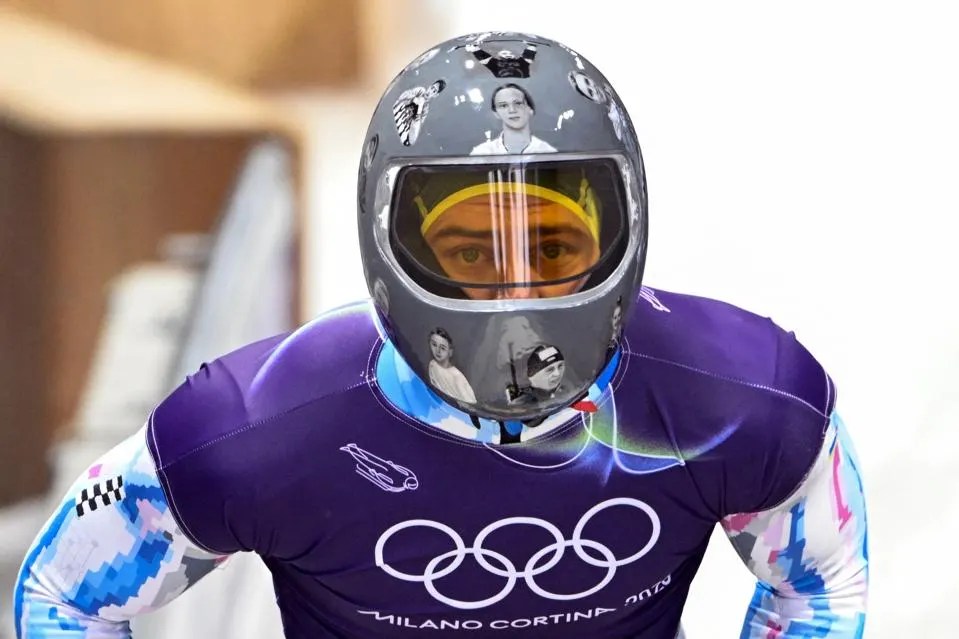
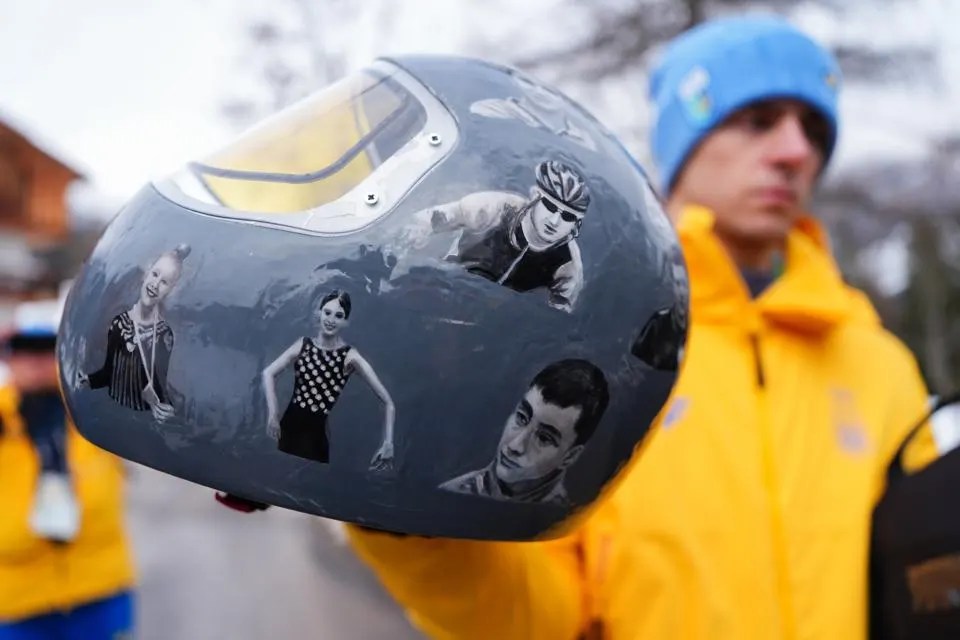
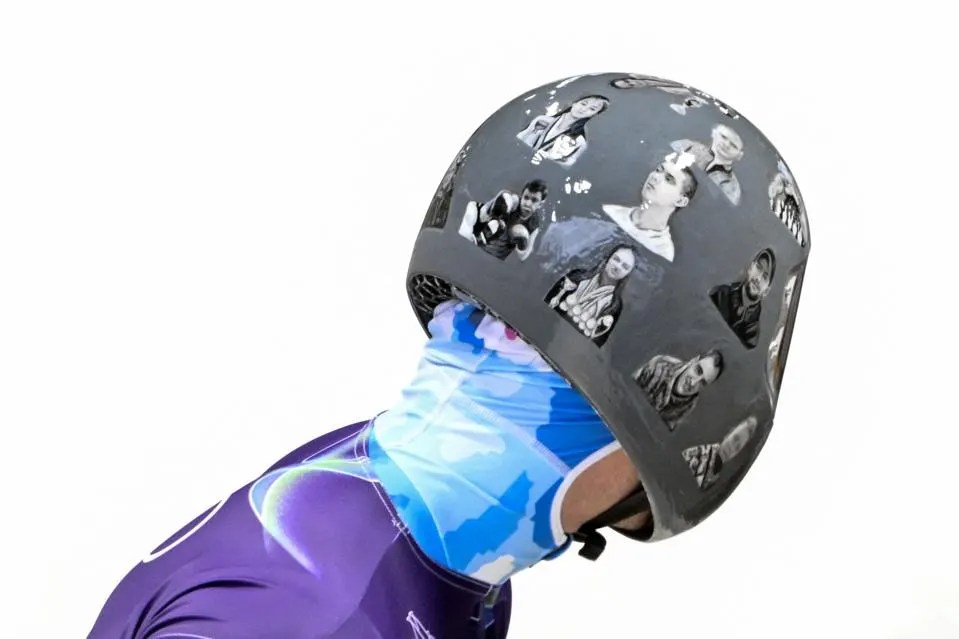
Ukrainian athlete Vladyslav Heraskevych was banned from competing in the Winter Olympics’ Skeleton event after the games organizers rejected his bid to participate in the competition while wearing a helmet depicting 20 athletes and coaches from his country killed in the ongoing war against Russia.
AFP via Getty Images
Key Takeaways
- Heraskevych did not participate in the first round of the Skeleton competition on Thursday morning, with the official Olympics website listing him as disqualified.
- In a statement on social media, the National Olympic Committee of Ukraine said Heraskevych—who was considered a serious medal contender—was disqualified before the first race took place.
- The statement added that Heraskevych was “supposed to start in a ‘memorial helmet’—as a sign of respect for the fallen Ukrainian athletes and all our heroes.”
- The International Olympic Committee said it had granted Heraskevych “one final opportunity” to participate in the race, but he refused to “adhere to the IOC athlete expression guidelines,” and therefore had to be disqualified.
- The Olympic Charter bans athletes from displaying political, religious and racial propaganda on the field of play and during medal ceremonies.
What Did The Ioc Say About Disqualifying Heraskevych?
The IOC said it regretted withdrawing Heraskevych’s accreditation for the Milano Cortina 2026 Games, but it made the call only after holding multiple conversations with him about his participation. The sports body said the talks included a Thursday-morning meeting with IOC President Kirsty Coventry, but the Ukrainian athlete refused to “consider any form of compromise.” The statement added the IOC was keen to see Heraskevych compete and was looking for the “most respectful way to address his desire to remember his fellow athletes who have lost their lives following Russia’s invasion of Ukraine. The essence of this case is not about the message; it is about where he wanted to express it.”
Crucial Quote
“Today, Vladislav did not start, but he was not alone — all of Ukraine was, is, and will be with him. Because when an athlete stands up for truth, honor, and memory, that is already a victory,” the Ukrainian committee’s statement added.
PA Images via Getty Images
AFP via Getty Images
Look back on the week that was with hand-picked articles from Australia and around the world. Sign up to the Forbes Australia newsletter here or become a member here.
This story was originally published on forbes.com and all figures are in USD.