
Bullo River Station, a 400,000-acre Northern Territory pastoral property, serves as a global benchmark for the integration of high-end hospitality and large-scale conservation. While its homestead undergoes a major redevelopment, the Landsmith Collection’s flagship property continues to push boundaries.
This story features in Issue 22 – out now. Tap here to secure your copy.
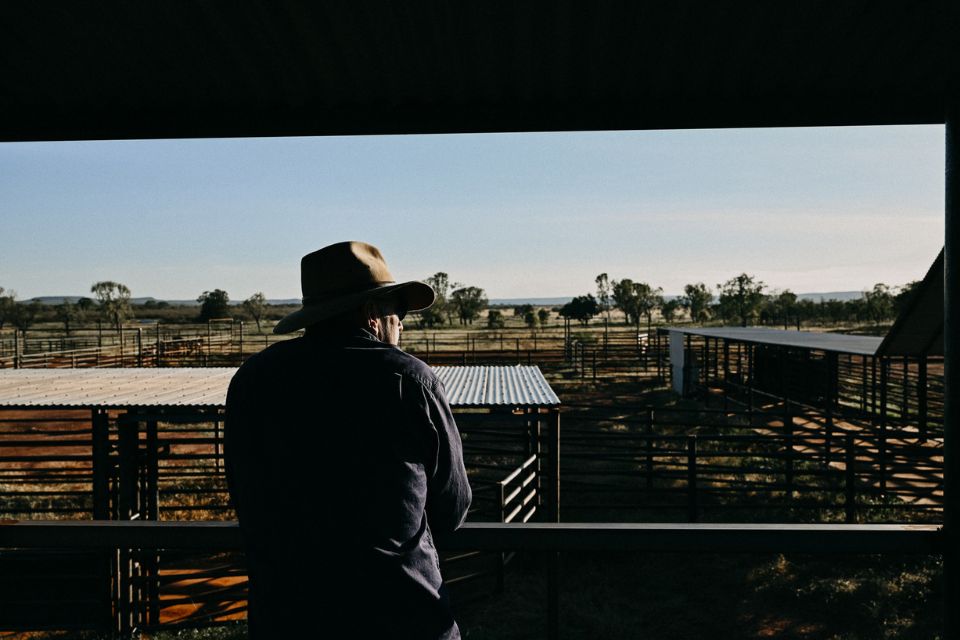
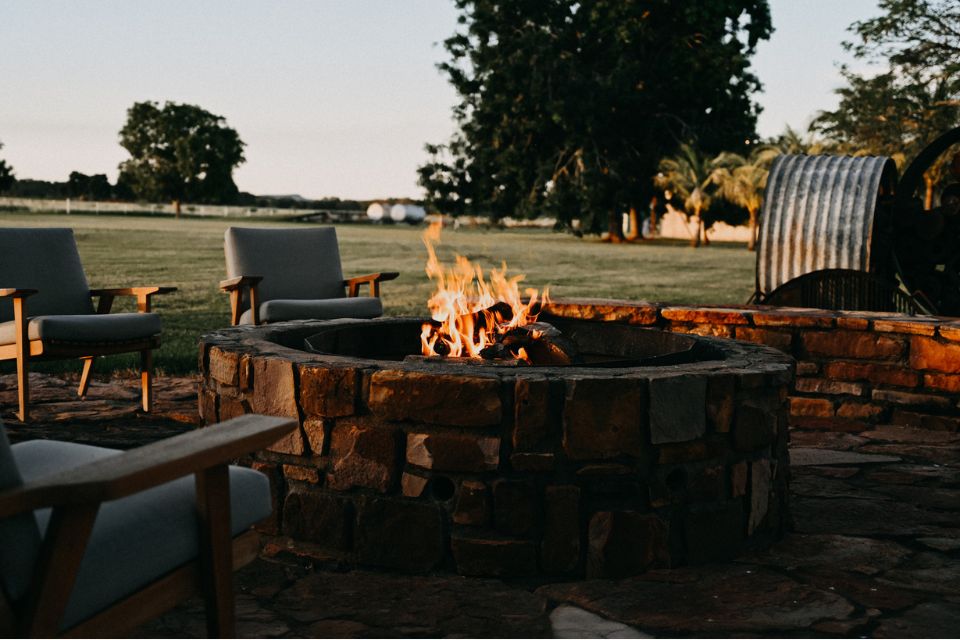
It is 16 degrees at 6am, and I’m about to experience ANZAC Day at the Bullo River Station. I join 22 workers standing solemnly in a circle as a dancing fire in the centre devours snappy gum branches.
‘We Are Australia’ plays from a speaker as a waning crescent moon, and Saturn, brighten the Top End sky. The music ceases, a minute of silence is declared, and a crowing rooster in a far-flung coop fills the acoustic void.
Soon, Reveille bugles its way from the speaker, concluding the 60-second mark of respect and remembrance for veterans. The men and women standing to my left, all of whom work at the Station, cast long shadows toward the cascading native Boab tree behind us.
‘Advance Australia Fair’ concludes the service, and the group breaks. Some linger around the fire as hints of a pink sunrise illuminate the dark frames of trees in the distance.
Others take to their utes, keen to get a jump on the day’s work, and to the gunfire breakfast that awaits them in the staff quarters. I make my way back to the homestead and marvel in the fog that rolls off the Bullo River, casting a glow metres above the landscape.
The legacy of the land
Sara Henderson was the custodian of this land until 2001. Her hair-raising romance with Bullo began in 1963, with her husband, Charles, and ended in 2001, when Marlee, one of the three daughters the Hendersons raised on the station, took over.
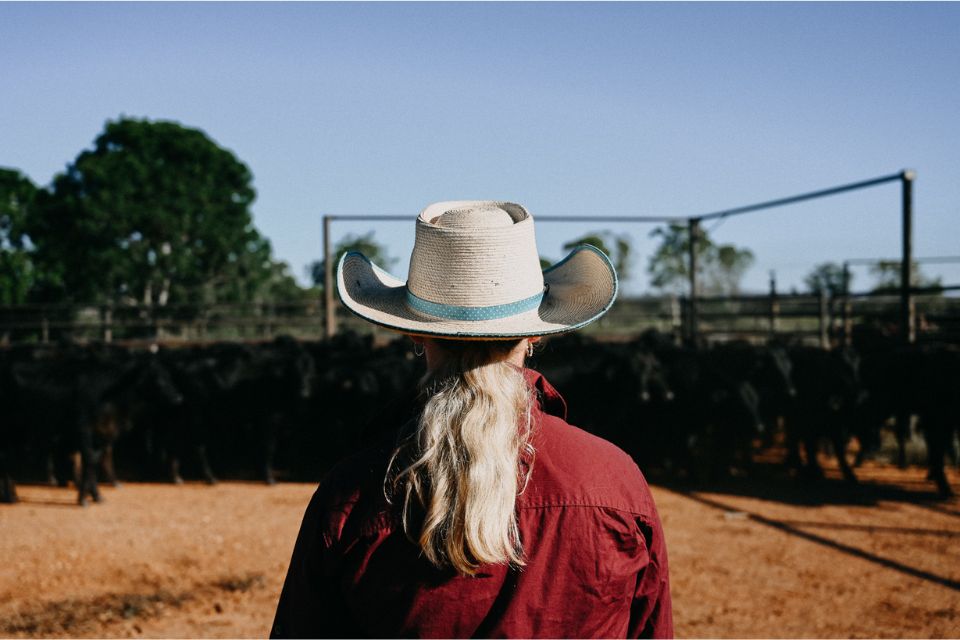
Sara’s autobiography, ‘From Strength to Strength’ was published in 1993 and chronicled the passing of her husband in the 1980s, and the subsequent transformation of Bullo from a debt-ridden property into a viable Northern Territory cattle station. Henderson became a household name, revered for her tenacity and resilience working the land.
These days, Bullo is in the hands of another iconic Australian family.
Julian and Alexandra Burt, the granddaughter of Peter Wright of Hancock and Wright mining fame, bought the property in 2017. Almost a decade later, the Burts are investing further in Bullo through the Landsmith Collection, their high-end exclusive hospitality and tourism consortium.
A model for modern conservation
The Burts signed a 10-year conservation agreement with the Australian Wildlife Conservancy (AWC), protecting 142,000 hectares of Bullo’s land in 2019. The partnership promises to deliver scientific biodiversity monitoring, research, weed control, planned burning and feral herbivore management.
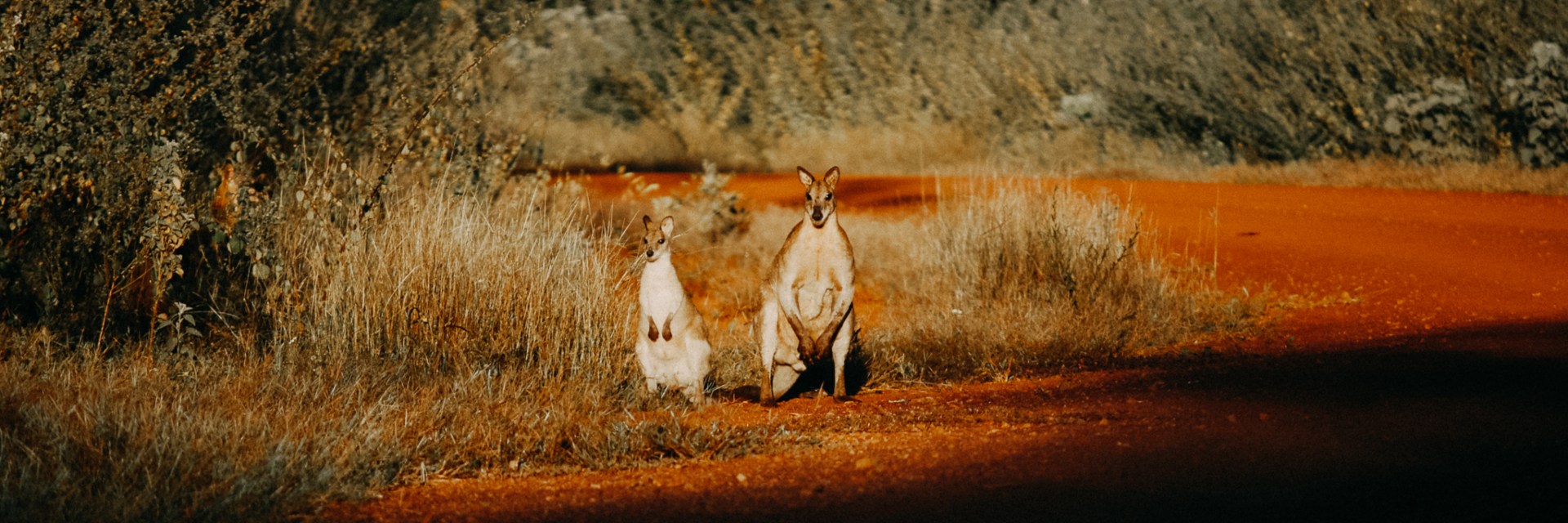
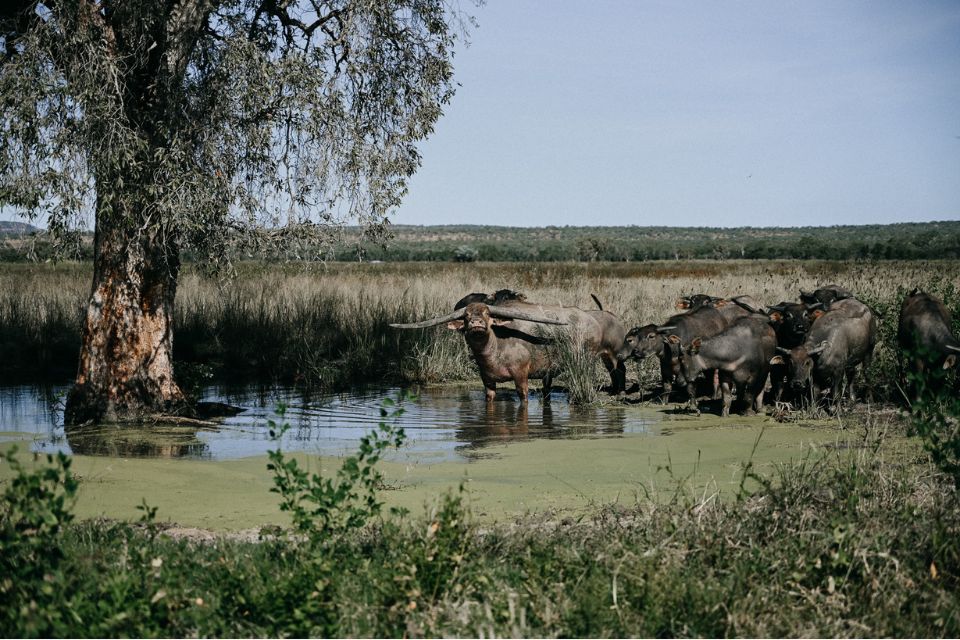
The remaining acres are used for cattle and hospitality purposes and are home to around 2,500 head of Brahman-cross cows. These exist alongside wild buffalo, wallabies, dingoes, spectacular birdlife, and the Northern Territory’s notorious apex predator – the saltwater croc.
Station managers Joe and Catherine Atkins run the property meticulously. Handwritten notes outlining the day’s options and itinerary accompany a homegrown breakfast of chutney-topped poached eggs, chilled papaya, cantaloupe, watermelon, and strawberries adorned by fresh mint, and fresh-squeezed, replenishing orange juice.
A breakfast of champions is needed to prepare for the day’s exhilarating activities in the Katherine heat, which frequently reaches the late 30s and early 40s during the dry tourist season.
On today’s agenda is an electric motorboat ride to the mangrove and cliff-lined Bullo River Gorge for catch-and-release Barramundi fishing, then a helicopter journey to a lunch lookout that precipitously hovers above a lake, followed by a waterfall-adjacent swimming hole chopper landing that has to be seen to be believed, and a buggy tour to the cattle yards to get up close with the Brahman.
Stewarding the next generation
Over sundowner cocktails and a balmy outdoor dinner, I pick the brain of the American couple staying in the room a few doors down from me.
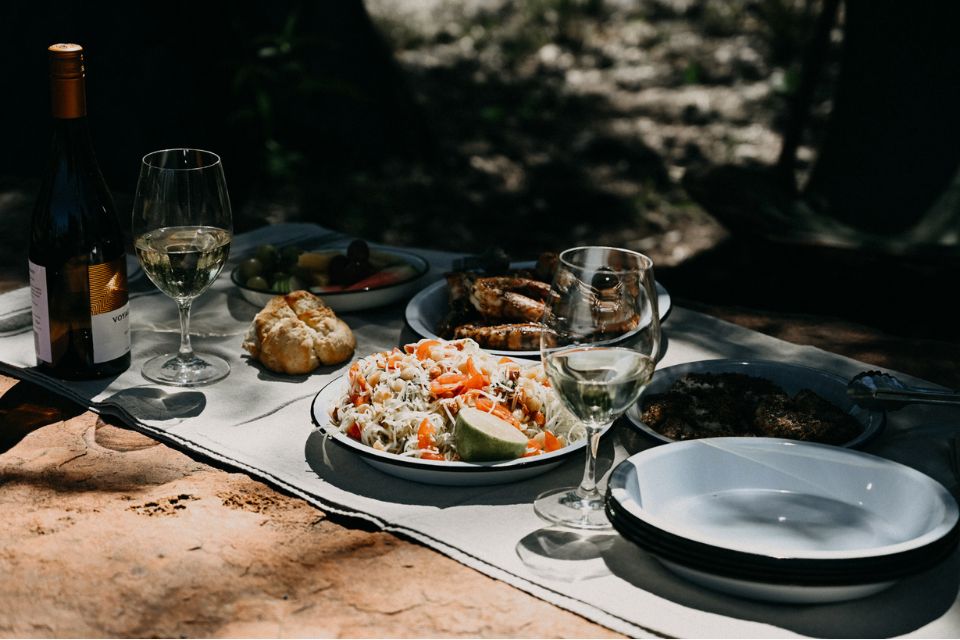
At a hand-carved wooden table lit by candles, we feast on sweet potatoes, broccolini, and fresh-caught Barramundi, accompanied by South Australian and Tasmanian wines. The couple are in their mid-60s and arrived from South Dakota a few days prior. They rave about the authenticity of this Australiana experience, delighted with the spectacular beauty of the landscape and lodgings, and the lack of pretentiousness in the people and their purpose.
According to Catherine Atkins, the philosophy that drives the Burts is the restoration and improvement of their properties, which also include Margaret River’s Wallcliffe House and the Voyager Estate. Alexandra and Julian live in WA but visit Bullo a few times each year to meet the seasonal workers who tend to the land day-to-day.
“Alex always comes up and does the employee induction, and that helps the whole team understand their philosophy and what they want to see throughout the whole company, which is restoring the land and looking out for the next generation,” says Atkins.
Conscientiously managing Bullo’s 400,000 acres is also beneficial in drawing patrons to the station, she says, and in retaining and attracting employees.
“We have guests who come to see what’s happening and have an interest in AWC. And some of the team work here specifically because of the conservation and the holistic
approach,” says Atkins.
Transporting guests and supplies
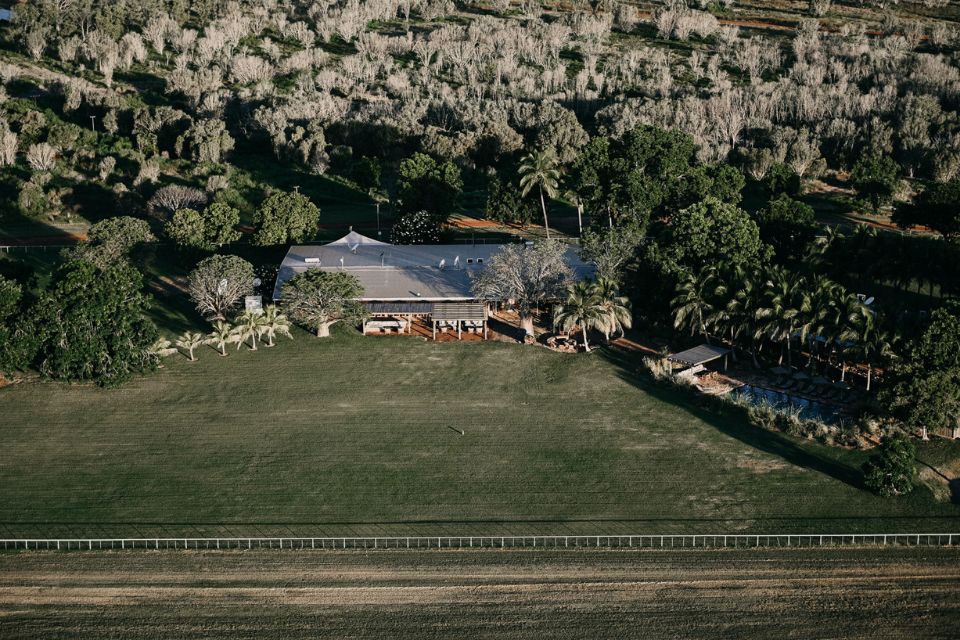
Driving from the ‘entrance’ of Bullo’s 1,600 square kilometre footprint to the homestead takes more than an hour.
For this reason, most guests arrive by air. Bullo is located 771 kilometres from Darwin Airport.
The alternative is a helicopter from the smaller, closer Kununurra airport, which offers a breathtaking journey over Katherine’s Bungle Bungles in just 30 minutes. It lands steps from the Bullo River Station homestead, where the Atkins and a jug of iced tea will greet you.
Running a luxury operation around 800 kilometres from a capital city is a lesson in precision logistics, however. While guests delight at the damper and open-flame-cooked stew, the operational reality of feeding them involves a complex supply chain that relies on small-batch procurement and, when necessary, expensive aerial transport.
The station’s transition to a solar-diesel hybrid grid, which now supplies 55 per cent of the property’s electricity, is not just an environmental choice but a strategic business necessity. By reducing reliance on long-haul fuel deliveries, the station is insulating its margins from the volatility of energy prices while simultaneously appealing to the carbon-conscious traveller.
A regional luxury corridor
The acquisition of Bullo River Station was a pivotal move for the sustainability focused Landsmith Collection, positioning the Burts as players in the Australian ultra-luxury market. By grouping Bullo with the historic Wallcliffe House and the celebrated Voyager Estate in Margaret River, founded by Alexandra’s father Michael Wright, the Burts can facilitate an interstate itinerary for the well-heeled traveller.
This ‘Landsmith loop’ allows visitors to experience WA’s refined viticulture before being whisked into the rugged, prehistoric landscape of the East Kimberley. From a business perspective, this diversification allows the group to capture a larger share of the slow travel market, where guests spend two to three weeks within a single luxury ecosystem.
It is a strategy that moves away from the high-volume model of traditional tourism, focusing instead on high-yield, low-impact stays that prioritise privacy and exclusivity.
The impact of sustainably stewarding the land is becoming evident, Atkins says. Monitoring has already identified 395 distinct species across the property, including 47 mammals and 222 bird species.
“Many things can take a lifetime of work before you start seeing results, but already we’ve had a massive reduction in pigs and buffaloes from the aerial and ground culls that we do. Pigs were rooting up the wetlands and killing aquatic plants. That causes evaporation, and the wetlands dry up quicker,” Atkins explains.
“Now, there are lots of lilies and plants growing, and it is beautiful, and there is more bird life, which supports the fish.”
Bullo’s cattle are also reaping the benefits of more water supply.
Beyond cattle and rooms, the Burts can also tap into the emerging economy of biodiversity credits. The scientific Eco-Health monitoring conducted with the AWC provides a data-rich foundation that could allow the station to monetise its conservation successes under the new Nature Repair Market.
By proving a measurable increase in native species and a reduction in land degradation through their 10-year Land Management Plan, Bullo can become a pioneer in natural capital. This shift reflects a broader trend in Australian pastoralism, where the value of the land is no longer measured solely by the weight of the beef it produces, but by the health of the carbon-sequestering soil and the variety of the life it supports.
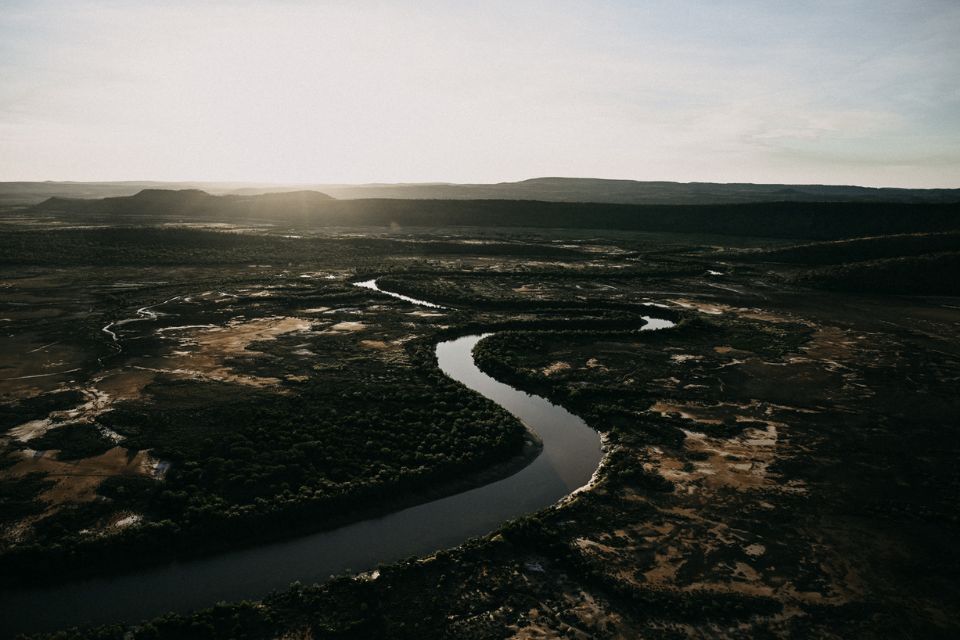
Ultimately, the goal is what the Landsmith Collection calls generational sustainability. This involves a commitment to preserving the property’s rich treasure trove of nature for generations to come.
The vision for 2027
This year, the guest quarters are undergoing a revamp, and the push into sustainability continues with increased solar power generation and water capture.
“After several years of major investment in the pastoral infrastructure and in the significant conservation work undertaken with our conservation partner, we are now embarking on a redevelopment of the homestead and guest wing, the heart of the property,” Alexandra and Julian Burt announced in a statement.
Fast facts Bullo River Station
Location
Victoria River District, Northern Territory.
Total Area
400,000 acres (approx. 162,000 ha).
Conservation Area 350,000 acres managed with AWC.
Species Count
395 (47 mammals, 222 birds, 93 reptiles, 33 frogs).
Current Status
Closed for redevelopment throughout 2026. Reopening Date May 2027.
Accommodation
12 guest rooms and a new two-bedroom suite. 2025 Cost: $1350 per night, inclusive
of meals.
Want to see more Forbes articles on your feed? Tap here to make Forbes Australia a preferred source on Google.
Look back on the week that was with hand-picked articles from Australia and around the world. Sign up to the Forbes Australia newsletter here or become a member here.