Exclusive: As Microsoft CEO Satya Nadella visits Australia this week, new ANZ managing director Jane Livesey says she is aligned with his values-driven, human-in-the-loop approach to AI. Here’s how she is rolling it out on our shores.
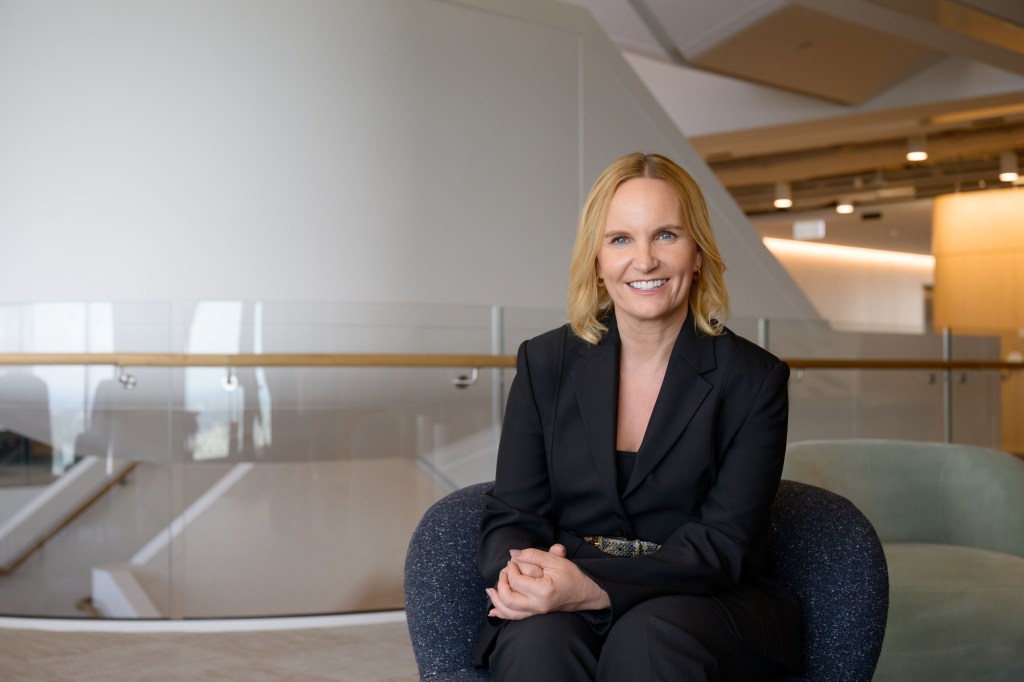
The most frequent question Microsoft ANZ Managing Director Jane Livesey gets asked at dinner parties isn’t about the Windows operating system. It is about the curriculum.
“What should our children study, and what jobs will even exist?” Livesey says she is often quizzed about. Her thesis: in the AI age, the premium on “knowledge” is declining, and the value of critical thinking is skyrocketing.
“Access to knowledge is going to be available for all. Many talk about AI being the ‘great leveller,'” Livesey tells Forbes Australia in an exclusive interview. “Instead, our children will learn how to apply strong decision-making. Which is exactly what we need from our leaders today.”
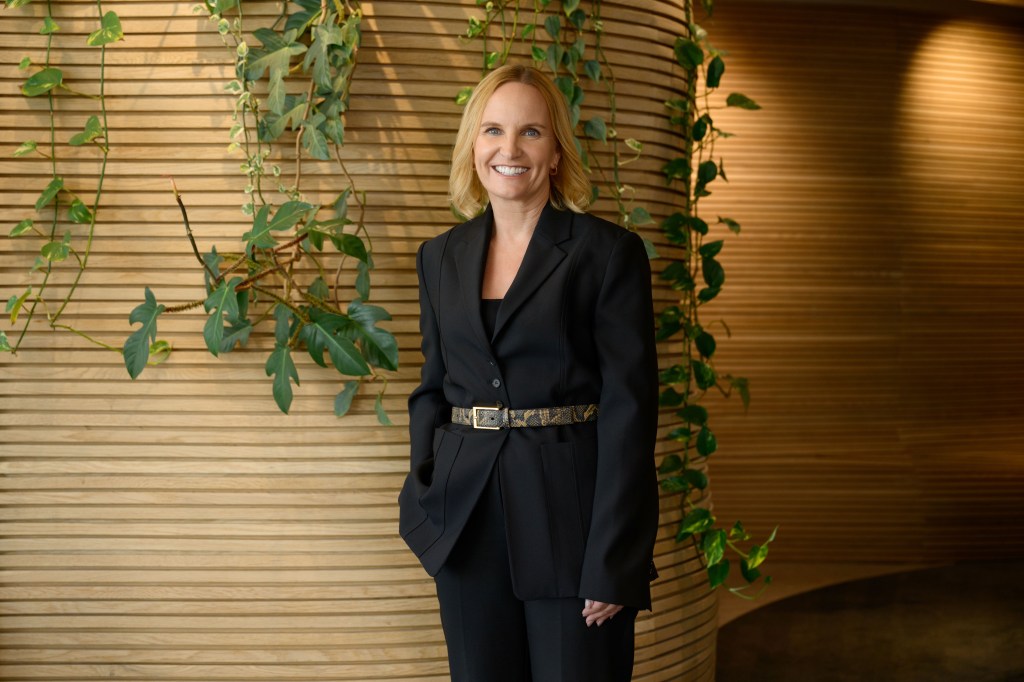
Livesey was announced as Microsoft ANZ’s MD in August last year. Her mandate is to lead the 2,000 strong local employees through a global inflection point, and position the region as a hub for engineering talent and secure innovation.
The Kiwi-born executive’s appointment was made 8-months before Microsoft announced its commitment to train three million Australians with workforce-ready AI skills in two years. The Paul Allen and Bill Gates’-founded company also announced a $25 billion investment into the ANZ tech ecosystem this week.
This latest round of funding comes on the heels of multiple rounds of layoffs last year, and a $5 billion commitment from Seattle’s head office in 2023, earmarked to grow the Australian data centre footprint from 20 to 29 sites.
Australia’s secret weapon
While many executives view regulation as a hurdle, Livesey frames Australia’s strict environment as a source of market stability. “Regulation is going to help us in this period of time,” she notes. “It’s going to give us the guardrails to help us navigate through this with safety and humanity at the forefront.”
Recent research supports the assertion that governance is a priority in Australia. According to the 2026 KPMG Global AI Pulse survey, Australian businesses are significantly more focused on trust and governance than their international peers. While only 26 per cent of global firms prioritise AI governance adoption, the figure rises to 31 per cent in Australia.
Livesey also points to our “geographic sovereignty” as a strategic moat. As a “landlocked island,” Australia has a unique ability to protect its national interests and data integrity. The stakes are immense: according to a 2025 EY-Parthenon Economic and Social Impact Report, Microsoft’s combined direct and indirect economic impact was $36 billion AUD during the financial year 2024 – 2025.
The governance of trust and the value of human judgement
As AI agents move toward greater autonomy, Livesey is focused on judgement. Specifically, when and how to bring a human into-the-AI-loop.
“What is going to test leaders, and individuals, is constantly using your judgement, and to bring humans into the loop at the right point. I think that is actually the most valuable decision that we need to make.”
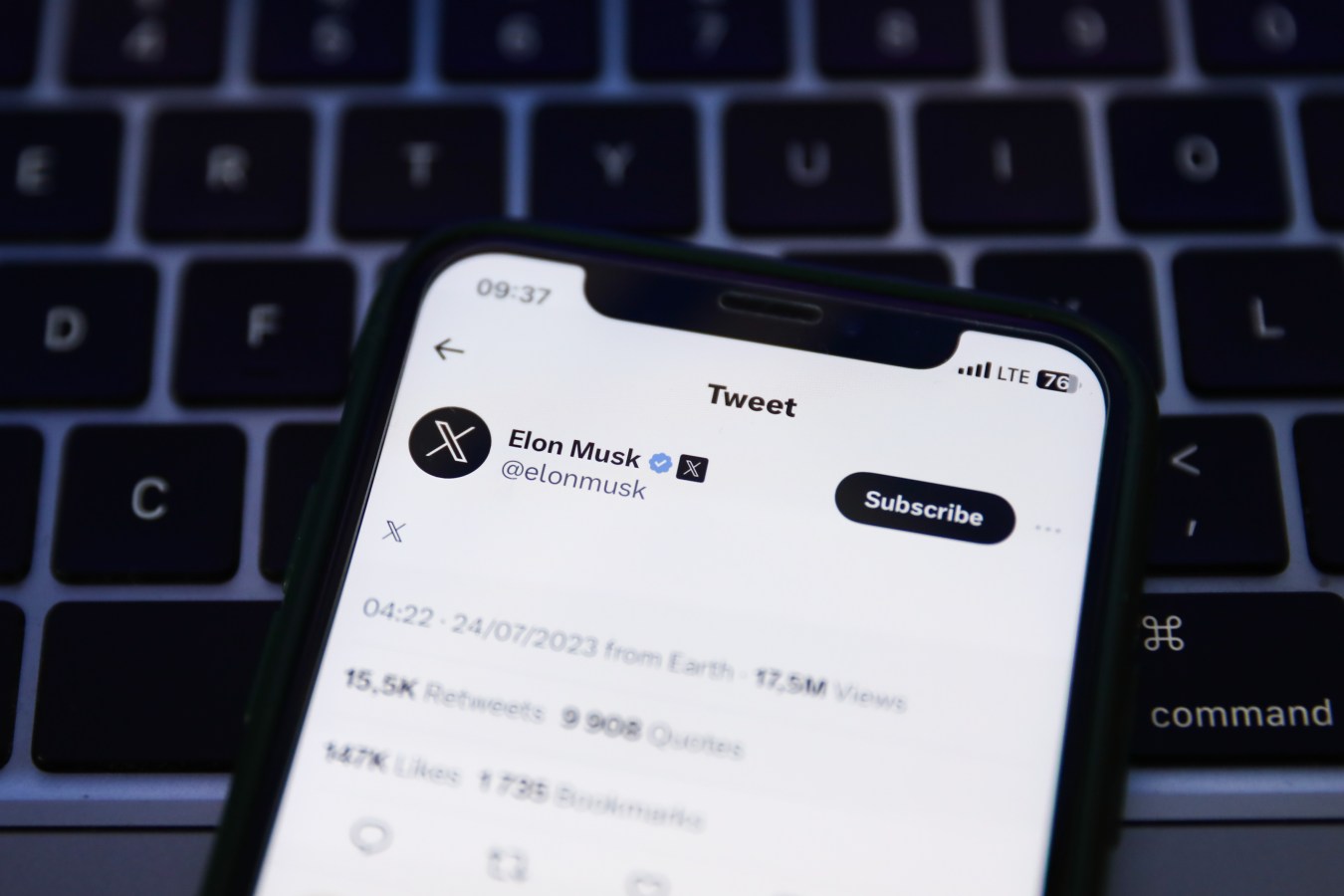
It is a leadership philosophy she shares with global CEO, Satya Nadella. In an interview in 2023, Nadella championed the transition from isolated models to systems that prioritise the human element:
“It’s probably most important to put the human-in-the-loop versus than ‘design the human out.’ So that you can ensure that the human agency- judgement – is what you use to train the model to be aligned with human feedback,” Nadella told Decoder.
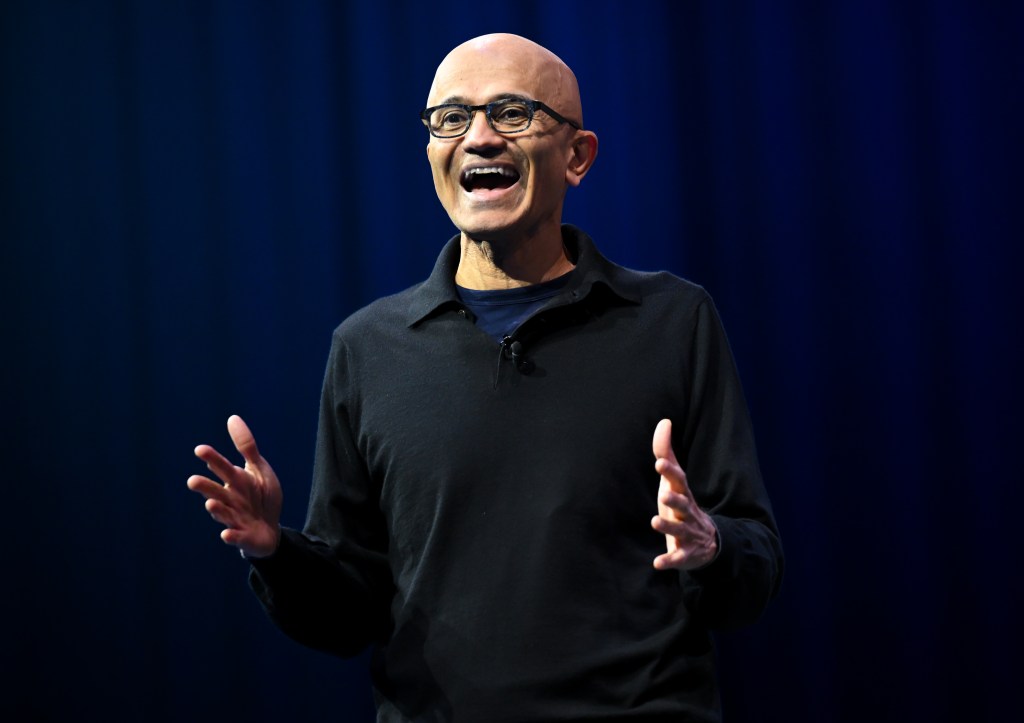
“I’m never going to generate something and not read it, and pass it on to our team,” Livesey says, echoing Nadella’s conviction that humans should remain the final authority. “I always want to put those personal messages into what I’m doing.”
AI workflows
Day-to-day, the executive says she uses a range of LLMs to synthesise detailed reports, translate acronyms, manage her calendar, and help her prepare for meetings.
“I have a stand-up every Friday and I use Copilot to summarise my week and to identify the key messages that I need to share with my team. It takes me about three minutes and it’s probably 95 to 97% accurate. I just need to augment it with a bit of personal flavour,” she says.
She is a proponent of this combination of automation and human touch.
“I love the lost luggage example. AI is great at finding lost luggage if you deploy it across all of the information at an airline, it’s phenomenal. But when it comes to decisions about where you want to send that luggage, and how to pay people for the time that they waited, that requires human intervention, it requires decisions around what’s applicable.”
De-risking and re-skilling
Livesey concedes that the immense changes brought about by AI will require restructuring in the workforce. The Microsoft re-skilling program has already reached 1.3 million Australians, according to the company, ranging from short courses online to the 16-week Datacentre Academy run through NSW and Victorian TAFEs.
The latter is a program supported by state governments, keen to provide pathways to meet a projected labour shortage of 370,000 digital experts. Not only are data centre electricians and facilitators needed, but also enterprise, IT and data architects, cyber security analysts, DevOps engineers, and business and systems analysts.
For the white-collar workforce, Livesey identifies “prompt engineering” as an essential new literacy. “It’s really about asking the right questions and in the right sequence,” she says.
The ROI of diverse experiences
Livesey’s trajectory to Microsoft’s top job was built on a series of deliberate, high-stakes career choices. Raised in a working-class family in Auckland, her path was altered when a science teacher facilitated a university scholarship.
Her move into technology was a pivot driven by witnessing systemic healthcare inefficiencies in Canberra. She then moved to Silicon Valley and learned to code. Later, she turned down a senior strategy role for a startup position that paid only a third of the salary.
“I knew I needed to learn more about technology if I was going to have a greater impact,” Livesey says.
“I had a list of things I needed to learn to be a strong leader. My journey was about checking them off, even if it meant taking a step back.”
Jane Livesey
That willingness to be “uncomfortably comfortable” now defines her outlook on the AI transition. Her personal barometer for leadership remains simple: “I just want to be able to look at myself in the mirror and know I’ve done the right thing.”
In this era of rapid change, Livesey says an executive’s role is to ensure innovation doesn’t outrun collective values. She uses a skiing analogy to illustrate the point.
“Society has a habit of going ‘off-piste’ at times, when it loses the guardrails. And I think it’s our responsibility to set those guardrails,” she says, also suggesting that ‘ranking’ AI agents to determine their trustworthiness – in the way we rate uber drivers – may one day be a reality.
When asked about whether AI agents could one day behave in a manner contrary to the best interests of humans, Livesey answers carefully.
“We’re not dealing with a new fear. I think what we’re dealing with is a different pace. We’re able to deploy this technology a lot faster. It’s bringing change a lot faster. And that’s where I think ensuring that organisations have not only the culture and the behaviours, but that they also have the policies and frameworks to underpin that.”
Want to see more Forbes articles on your feed? Tap here to make Forbes Australia a preferred source on Google.
Look back on the week that was with hand-picked articles from Australia and around the world. Sign up to the Forbes Australia newsletter here or become a member here.