From newsrooms to meeting rooms to boardrooms, the shift to agentic workflows is letting leaders focus on the story instead of the process. Perkins says she has been building towards this moment since before ‘Canva was Canva.’
During my time at Bloomberg’s California bureaus, producing video was a logistical and timely challenge. Whether covering a product launch in Cupertino or a SpaceX sit-down interview in Los Angeles, the workflow was dictated by “operational drag.” It involved the physical hand-off of drives, coordinating satellite windows to ‘feed’ video to New York, reviewing b-roll, transcribing audio, logging timecodes, and writing scripts.
The primary bottleneck in this environment was rarely the creative vision; it was the “busy-work” of the process, and a model of storytelling that required heavy upfront investment in specialised gear and production crews – a “high-overhead” approach to storytelling.
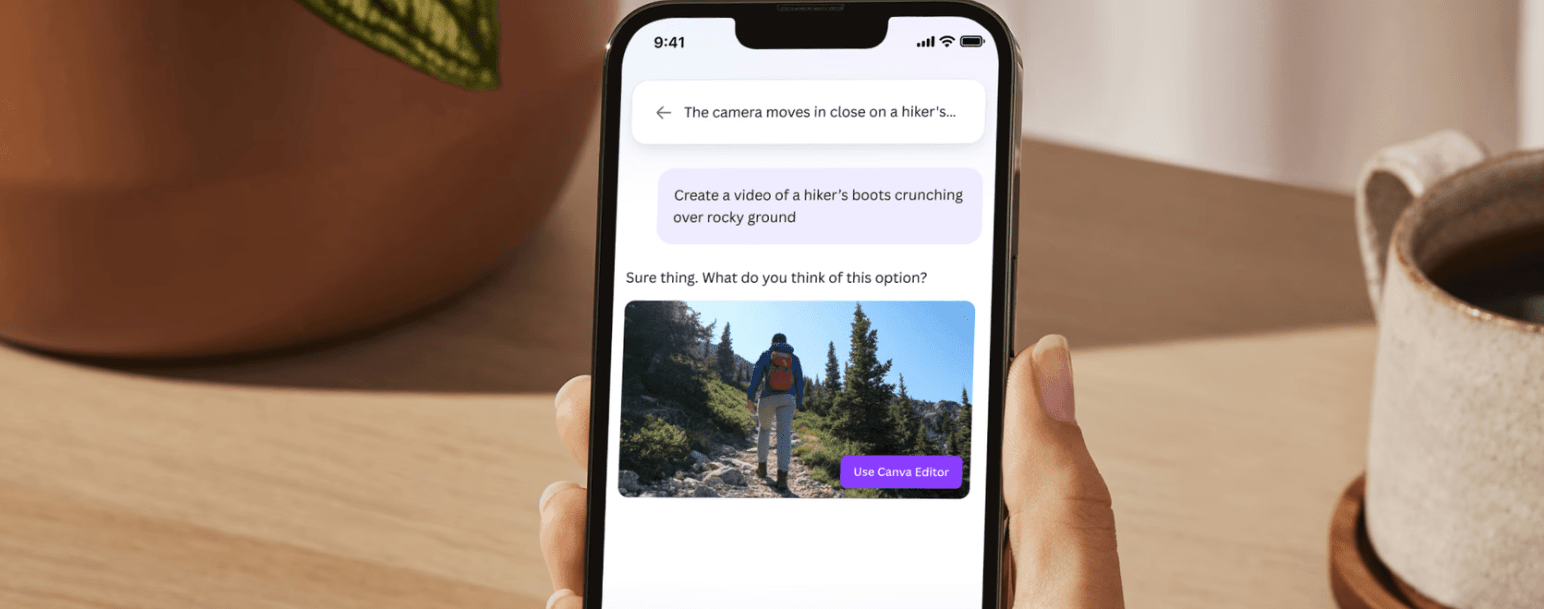
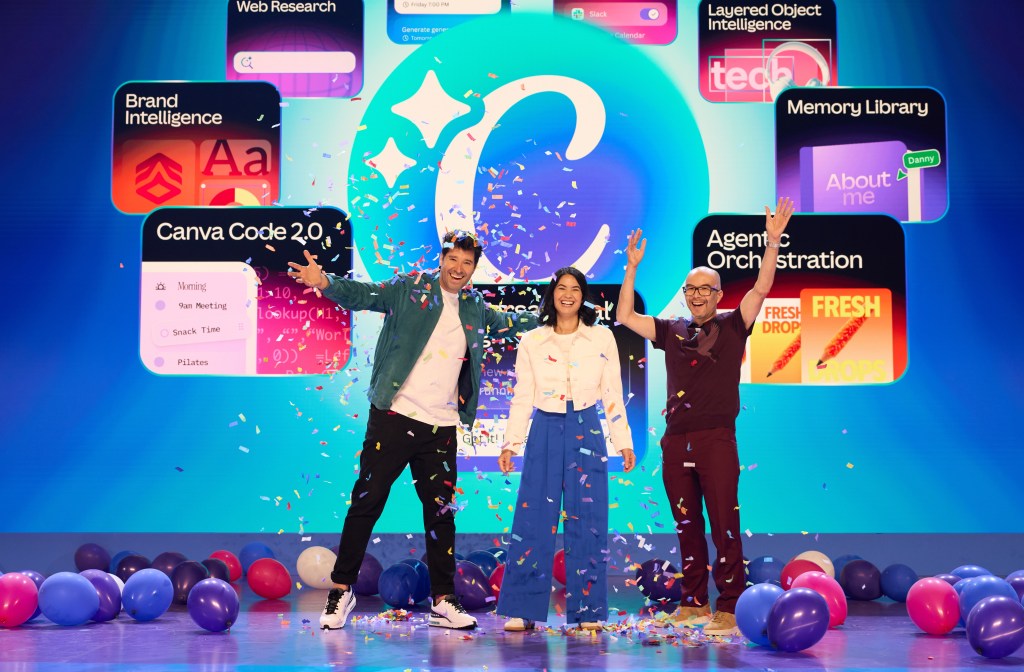
The insights shared by Canva founders Melanie Perkins, Cliff Obrecht, and Cameron Adams this week suggest that this manual era is ending. With the launch of Canva AI 2.0, the company is pivoting toward agentic workflow – AI that doesn’t just suggest edits but takes actions on a creator’s behalf. AI that doesn’t require a script with timecodes, but that can conversationally “talk” with a producer to consider and execute production choices.
This shift moves the Canva platform beyond simple design tools, into automation – disrupting workflows that historically required a fully-staffed department.
Ahead of the Canva 2.0 launch, I asked Perkins about the shift. She points to long-standing flaws in creative workflows, and a ‘vision of efficiency’ she has carried since Canva’s earliest days.
“The entire process of creation today is fragmenting across lots of different tools and workflows, and it’s becoming more and more disparate,” Perkins tells Forbes Australia. “And so what we really saw was a huge opportunity to bring that all into one platform and make it accessible to the world again. Exactly as we did for the first decade of Canva’s existence.”
Those early years of Canva were marked by a different company name, Perkins says. Even back then, however, Perkins’ vision was as robust as it is today.
“Before we built anything – before Canva was Canva – it was actually called Canvas Chef. And the idea was that you could describe an idea, and then it would just instantly appear.”
AI as a conversational co-worker
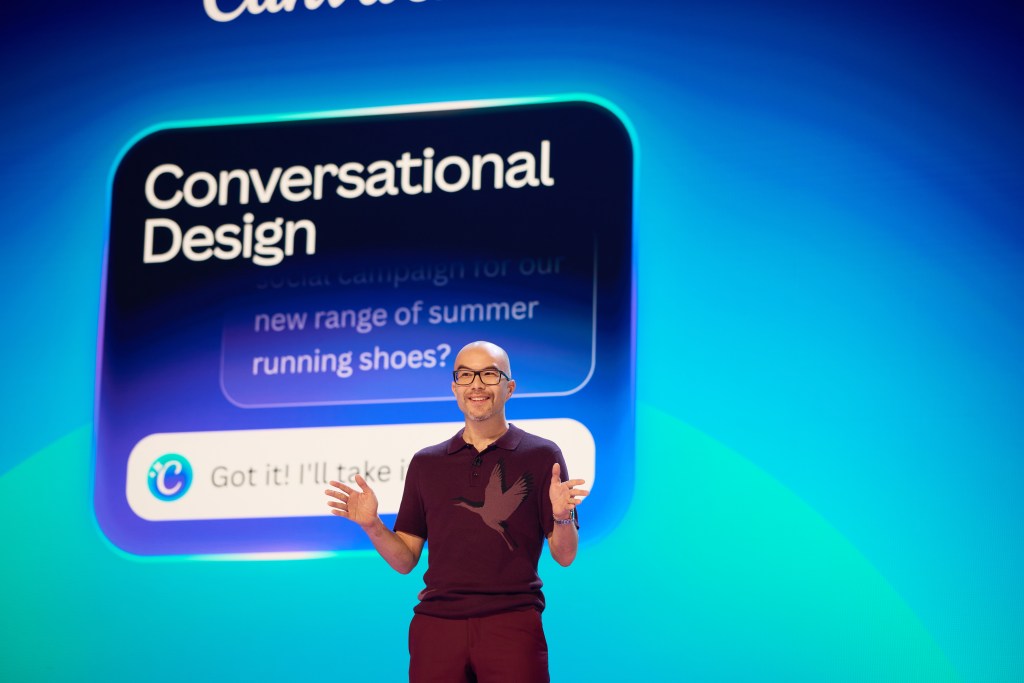
A decade on and that foresight is a technology-powered reality. At the heart of Canva 2.0 is what the company is calling ‘conversational design,’ the ability to engage in a back and forth chat with the platform to create what you envision.
“Unlike traditional AI tools that produce a single output and stop there, Canva AI 2.0 stays with you throughout the entire creative process. It maintains context as your ideas evolve, helping you brainstorm, refine, and iterate at every step,” Canva states.
For enterprises, this represents a fundamental shift in how creative work can be budgeted. What used to be a major capital investment – hiring crews, buying equipment, securing editing time – is becoming an on-demand, one-stop-shop service.
Canva’s introduction of Magic Media in 2022 was the first step. The latest, has been the news this week that Anthropic is moving into the design space, with Claude Design. Digging into that Anthropic news however, reveals that the Aussie design powerhouse is central to the foundational AI company’s expansion.
Claude Design builds on the relationship Anthropic established with Canva last year. It utilises Claude Opus 4.7, and is available to Claude Pro, Max, Team and Enterprise users. The new Claude Design feature can be used to create prototypes, wireframes, mockups, pitch decks, presentations, and marketing materials within Claude, that is outputted to Canva.
Autopilot and living memory
The announcements made this week build on the AI platform that Canva established in 2022. AI has since been used more than 27 billion times, according to COO Obrecht, and tripled over the last year.
In additional to ‘conversational design,’ Australia’s most successful private startup is moving into autopilot scheduling, whereby a user can set tasks and have them run in the background while offline.
“Have Canva AI scan your emails each morning and create briefing documents for your upcoming meetings based on your calendar,” the product announcements state. “The work gets done in the background, ready when you log in, compressing hours of effort into seconds.”
The founders also announced ‘living memory,’ a feature where Canva “learns from your work, evolves, applies your style automatically, and adapts to the team’s preferences.”
The ability for a platform to learn over time is valuable, as anyone tired of repeating the same parameters to an LLM on each interaction will tell you.
Orchestration and the value of human work
Within Canva, the multifaceted functionality that 2.0 facilitates is described as “a group of creators coming together to perform an ensemble.”
“One of our engineering leads had a great analogy, describing it as an orchestra, where everything works together seamlessly,” says Perkins. “And so while each of these are individually, extraordinarily powerful, together, that is where they really bring the power to be able to help our community achieve their goals.”
What those goals look like is also changing. As tools are transforming the process of work at an alarming rate, it begs the question of where a human’s time is best served.
When a producer is no longer bogged down by the process, their bandwidth is freed to focus on accuracy and a sharp narrative. The automation of the mechanical production “grunt work” allows creatives to focus on the message, the content, and the editorial integrity of the story.
Want to see more Forbes articles on your feed? Tap here to make Forbes Australia a preferred source on Google.
Look back on the week that was with hand-picked articles from Australia and around the world. Sign up to the Forbes Australia newsletter here or become a member here.