ChatGPT maker OpenAI is targeting a September public debut, the Wall Street Journal reported Wednesday, days after Sam Altman’s courtroom victory over Elon Musk—whose own rocket company unveiled IPO paperwork Wednesday.
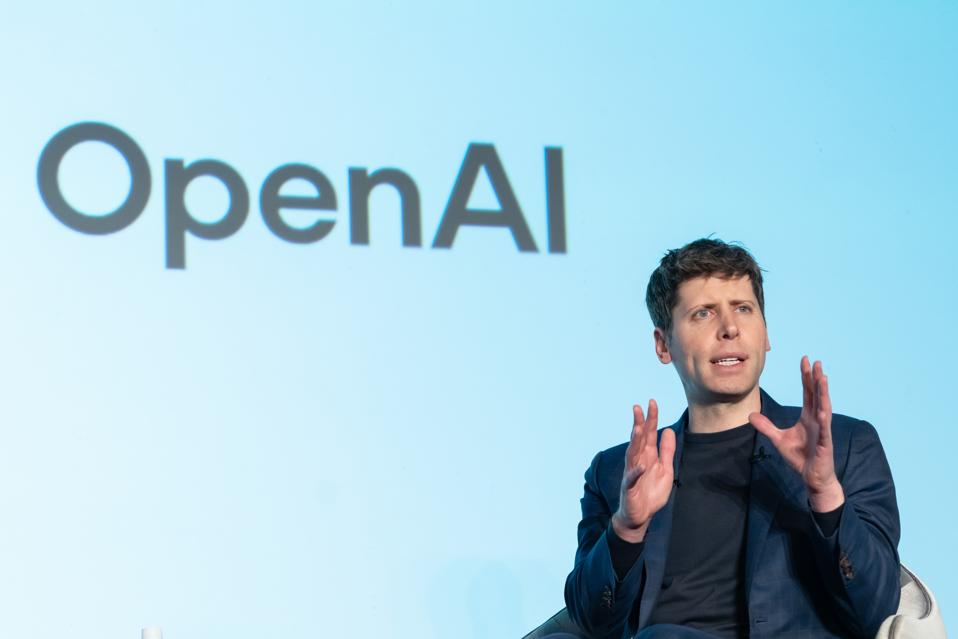
(Photo by Tomohiro Ohsumi/Getty Images)
Getty Images
Key Facts
OpenAI’s bankers have been preparing confidential initial paperwork that could land with the Securities and Exchange Commission within days, people familiar with the matter told the Journal, though plans remain fluid.
Goldman Sachs and Morgan Stanley are among the firms advising the company on the draft prospectus, with September floated as a potential debut window, according to the Journal.
The filing would come just days after a federal jury in Oakland, California, on Monday threw out Musk’s lawsuit against Altman, OpenAI cofounder Greg Brockman and the company itself, which Musk said he plans to appeal.
SpaceX, Musk’s rocket and satellite company, unveiled IPO paperwork Wednesday early evening ahead of a potential June offering.
Musk’s AI venture xAI—acquired by SpaceX in February—generated $818 million in revenue on a $2.5 billion net loss in the first three months of the year and made $3.2 billion on a $6.4 billion net loss in 2025, per SpaceX’s Wednesday filing.
Key Background
OpenAI and SpaceX racing to public markets within months of each other comes amid a years-long feud between Altman and Musk, who cofounded OpenAI together in 2015 before Musk departed the board in 2018 and later launched competitor xAI. Musk sued OpenAI in 2024, alleging Altman and Brockman betrayed the lab’s nonprofit mission and enriched themselves as the company restructured toward a for-profit model backed by Microsoft. Monday’s verdict cleared that overhang. Judge Yvonne Gonzalez Rogers agreed with the jury and tossed the case on the premise that Musk had waited too long to file the claims. SpaceX, meanwhile, submitted its own confidential initial paperwork to the SEC on April 1 and released its public IPO paperwork Wednesday, disclosing financials including nearly $13 billion in capital expenditures in 2025 for its AI segment alone, making up around 62% of SpaceX’s total spending which includes capital intensive rocket-making. In the first three months of the year, the company has spent $7.7 billion on AI capital expenditures—77% of its total spending.
Big Number
$1 trillion. That’s the approximate valuation that OpenAI is eyeing for its public debut, Reuters reported last October. SpaceX is targeting between $1.75 trillion and $2 trillion in its IPO valuation, which would shatter the previous record set by Saudi Aramco’s $29 billion offering in 2019. OpenAI’s last private valuation was $852 billion thanks to a $122 billion funding round in March.
Tangent
OpenAI’s IPO push comes as its lead in the AI race has been challenged by rival Anthropic, which has grown faster than OpenAI in recent months. OpenAI is in the middle of a major strategy pivot to try to catch up, dumping hyped products like video generator Sora and doubling down on improving ChatGPT especially for enterprise customers—a dynamic investors will be watching closely as the company enters the public markets. As of last week, Anthropic reportedly agreed to a funding round that would value the company at $900 billion, surpassing OpenAI’s $852 billion valuation. Anthropic, maker of the Claude chatbot, is also widely expected to pursue its own IPO as early as late 2026, potentially making 2026 the year three of the most-watched private tech companies—OpenAI, SpaceX and Anthropic—all test public markets within months of each other.
Want to see more Forbes articles on your feed? Tap here to make Forbes Australia a preferred source on Google.
Look back on the week that was with hand-picked articles from Australia and around the world. Sign up to the Forbes Australia newsletter here or become a member here.