As machine capability shifts from passive responses to autonomous operation, the concept of singularity – coined in the academic realm and adopted by science fiction – is one every professional needs to know.
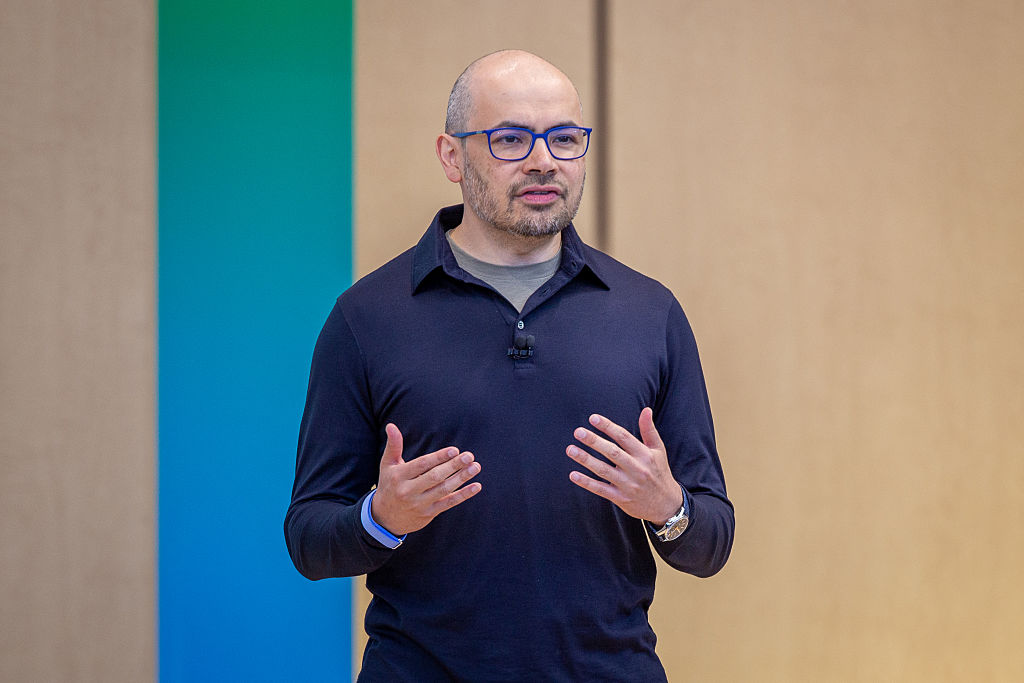
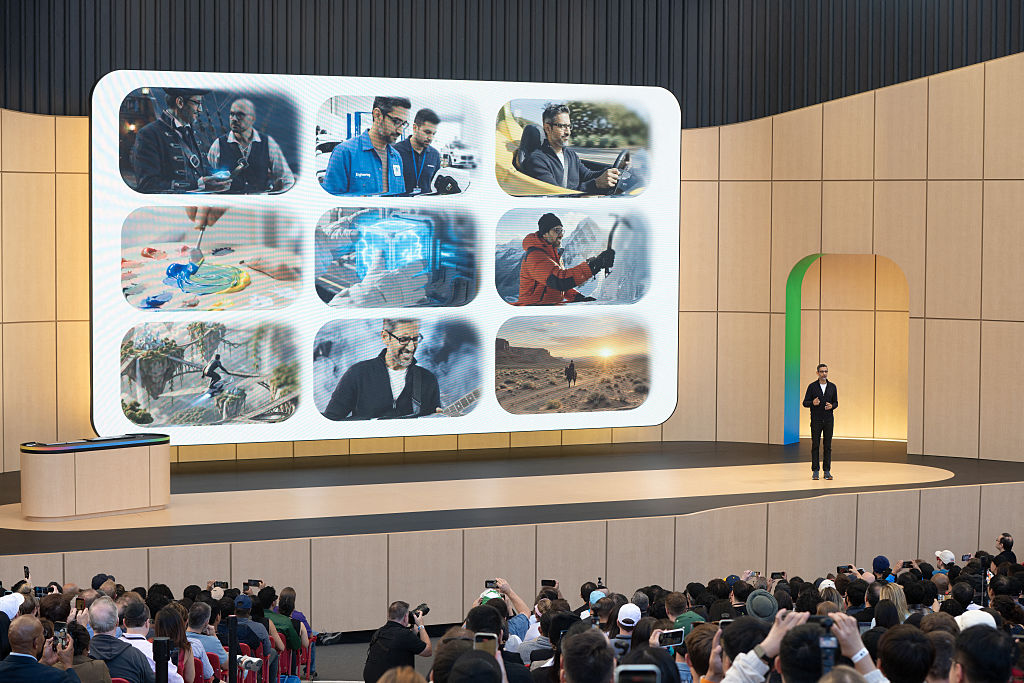
When Alphabet CEO Sundar Pichai was wrapping up his keynote at Google I/O last month, he did something he had never done before. Rather than delivering closing remarks – typically meant to energise the audience and wider workforce – Pichai instead segued to one of his top lieutenants.
He handed the mic to Demis Hassabis, a 12-year veteran of Google, leaving the British-based DeepMind founder to act as the closer.
“When we look back at this time, I think we will realise that we were standing in the foothills of the singularity,” Hassabis declared. “It will be a profound moment for humanity.”
It was a pivotal moment in the way Google communicates the capability of AI. Hassabis’ endorsement of the impending timeline of the “singularity” represents a deliberate shift in messaging. It signals that development is moving past isolated chatbots and entering an era of accelerating, self-compounding capability.
It is also the first time an established tech company has used the term on-stage. Thus far, Microsoft’s CEO Satya Nadella, the architect of the company’s investment into OpenAI, has avoided saying the word ‘singularity’ during his keynotes at Microsoft Build events, as have Meta’s Mark Zuckerberg and Amazon’s Andy Jassy during their annual showcases.
So now that Hassabis has brought the concept forward, it’s worth exploring what the “singularity” could mean for the broader economy, and where the word comes from.
From black holes to systems thinking
“Singularity” was originally borrowed from mathematics and astrophysics. It describes a point – such as the centre of a black hole – where gravitational forces become infinite, standard physics breaks down, and predictable rules no longer apply.
It was first mapped onto computing in the 1950s, by mathematician John von Neumann, who noted that the accelerating pace of technology gave the appearance of “approaching some essential singularity in the history of the race beyond which human affairs, as we know them, could not continue.”
The interests of humanity may change, Neumann noted, and “entirely different things may occupy the human mind in the future.”
Computer scientist and science fiction author Vernor Vinge connected the term to artificial intelligence in his 1993 essay, The Coming Technological Singularity, arguing that creating an entity with greater-than-human intelligence would mark a fundamental shift in human history.
Vinge’s thesis focused on a feedback loop known as “recursive self-improvement,” or an AI system capable of rewriting its own source code – bypassing the need for human programmers – to increase its own intelligence. This self-directed development could trigger a rapid intelligence explosion, Vinge posited, because digital systems operate without biological limitations like sleep or generational learning curves.
Vinge, like von Neumann, concluded that after this singularity has been reached, the forecast of technological progress becomes highly unpredictable.
The view from the foothills
Hassabis’ declaration at I/O 2026 that we are currently in the “foothills” of this change is exemplified by the transition from generative AI to the now popularising agentic systems.
AI is maturing beyond passive models that respond to individual prompts. Current frontier models operate as autonomous agents capable of independent planning, executing multi-step workflows, and reviewing output for error.
The next frontier is escalating more quickly than he initially projected. Human-level artificial general intelligence (AGI) could arrive as soon as 2029, according to DeepMind’s co-founder.
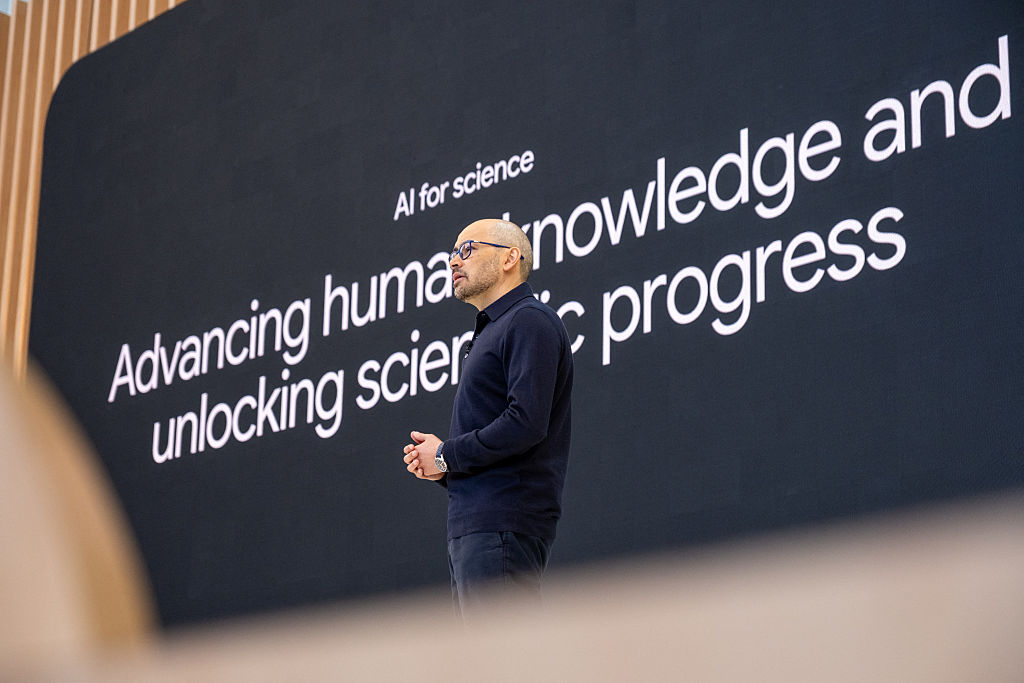
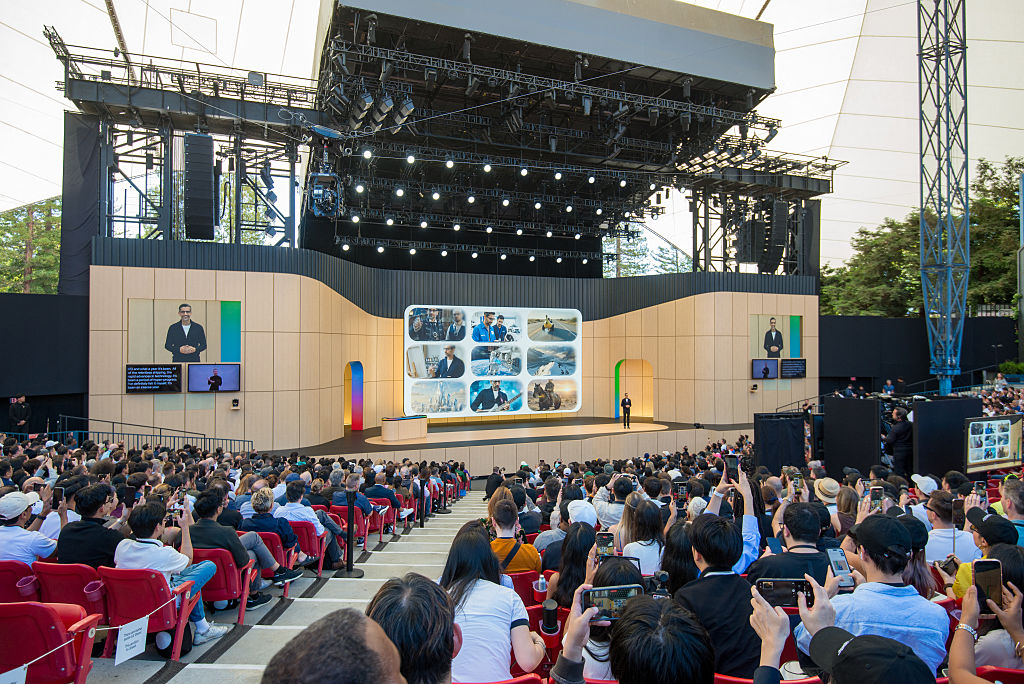
The net economic and societal impact of this transition will be roughly 10 times the scale of the Industrial Revolution, occurring at 10 times the speed, he noted on-stage.
Corporate downsizing is not the answer to the changing structure of the workforce, Hassabis says, calling that strategy “lacking in imagination.” Instead, the 49-year-old British executive advocates for advanced AI to be used as “tools,” and posits that its primary economic and societal value lies not in the displacement of humans, but, true to its roots, in accelerating scientific and technical breakthroughs.
The Silicon Valley ideological divide
Hassabis is one of several industry leaders addressing these timelines. While Vinge originally defined the singularity as an unpredictable point where human control is lost, modern technology executives have adapted the term to align with their respective corporate and operational objectives.
Sam Altman, the CEO of OpenAI, believes in “the gentle singularity,” suggesting it will be a structured, multi-year progression rather than a sudden disruption. Elon Musk stated earlier this year that the singularity was becoming actively realised, defining it through the merger of digital AGI with physical humanoid robotics. He forecasts a period of economic transition and labour displacement, leading eventually to a highly automated economy with lower costs for goods and services.
Anthropic’s CEO Dario Amodei generally avoids the term singularity. In Machines of Loving Grace, Amodei argues that technology cannot accelerate indefinitely because progress remains limited by physical factors, such as clinical trial durations, and that the near future will include a highly capable, software-based workforce.
Futurist Ray Kurzweil wrote a book called ‘The Singularity is Near’ in 2005. He believes that AGI will be upon us by 2045, when “our intelligence will no longer be constrained, it will expand a millionfold.” Prior to that, we will experience what Google’s Principal Researcher and AI Visionary calls ‘longevity escape velocity.’
“By roughly 2032, when you live through a year, you’ll get back an entire year from scientific progress, and beyond that point you’ll get back more than a year for every year you live, so you’ll be going back into time as far as your health is concerned,” Kurzweil told MIT in 2025.
Closer to home, Australian academic and UNSW.ai leader Toby Walsh concluded in 2016 that we may never witness a technological singularity, but that AI is likely to have a large impact on the nature of work and war, and that we may “still end up with machines that exhibit super-human levels of intelligence.”
For business leaders, the discussions at Google I/O 2026 and in the wider ecosystem indicate that those at the centre of this technology are planning for advanced AI capabilities in the next decade – rather than in the far-off distant future.
“I believe that we’re only a few years away from that [AGI], maybe like 2030 plus or minus a year,” Hassabis reiterated this week. “I think society needs to hear that because we don’t have long to prepare for what that means. These next few years are going to be very critical as to which way that will go and how we, collectively, want it to look.”
Want to see more Forbes articles on your feed? Tap here to make Forbes Australia a preferred source on Google.
Look back on the week that was with hand-picked articles from Australia and around the world. Sign up to the Forbes Australia newsletter here or become a member here.