
How a buck’s party, an Instagram scroll on the loo, and overpriced jerseys saw the football great come on board rag-trade tech startup Nardo.
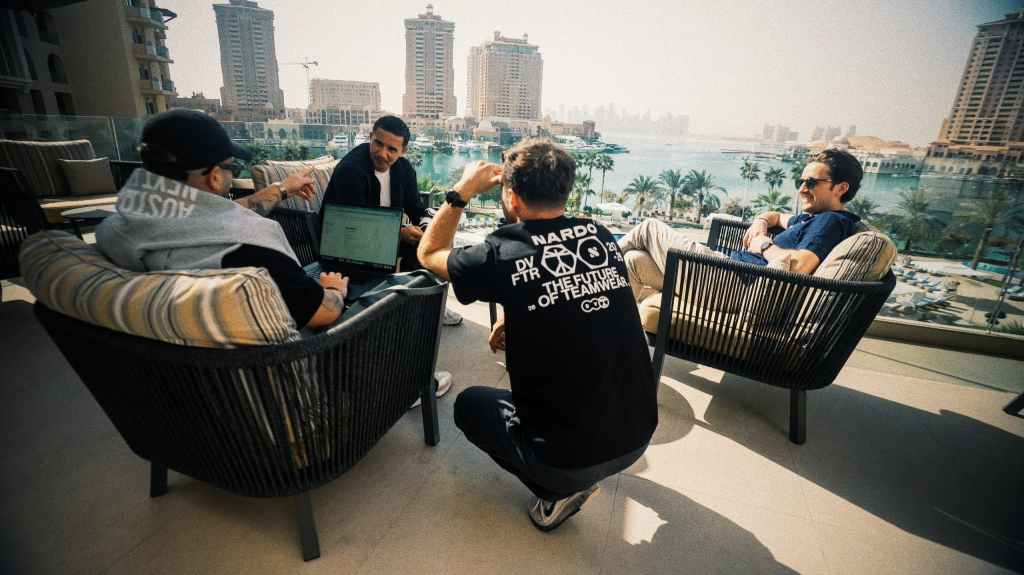
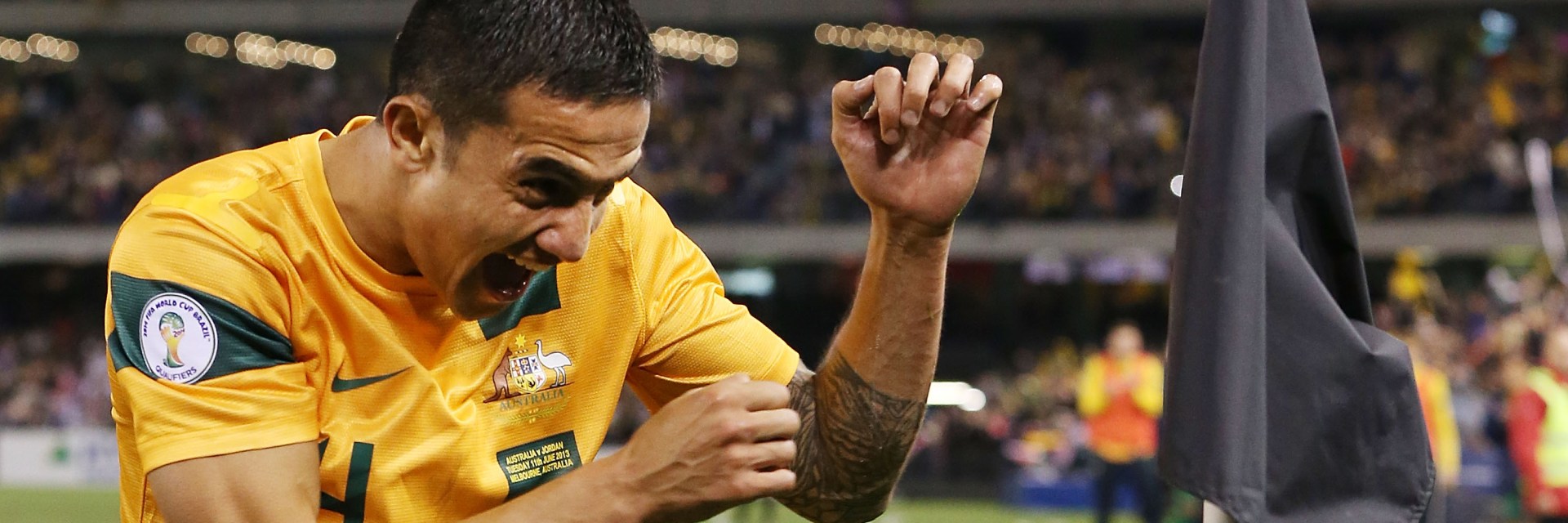
Tim Cahill has just become the first Australian to kick a goal at the football World when he gets a call from Giorgio Armani Armani’s people. They want to meet.
“I’ll be honest with you. I’m heavily into fashion. It was one of my weakness during my career, along with cars,” the Socceroos great tells Forbes Australia.
It’s 2006 and Cahill, this kid from the Marrickville Red Devils, eventually finds himself sitting with the legendary designer, Armani, at his fashion shows. “I saw the care and the detail going in to his shows, and we got to spend a lot of time together,” Cahill says. “I got to understand the different brands that he created.
“There’s so many different facets to what he does, and I saw that, like with anything in life, partnering with good people is the most important thing.”
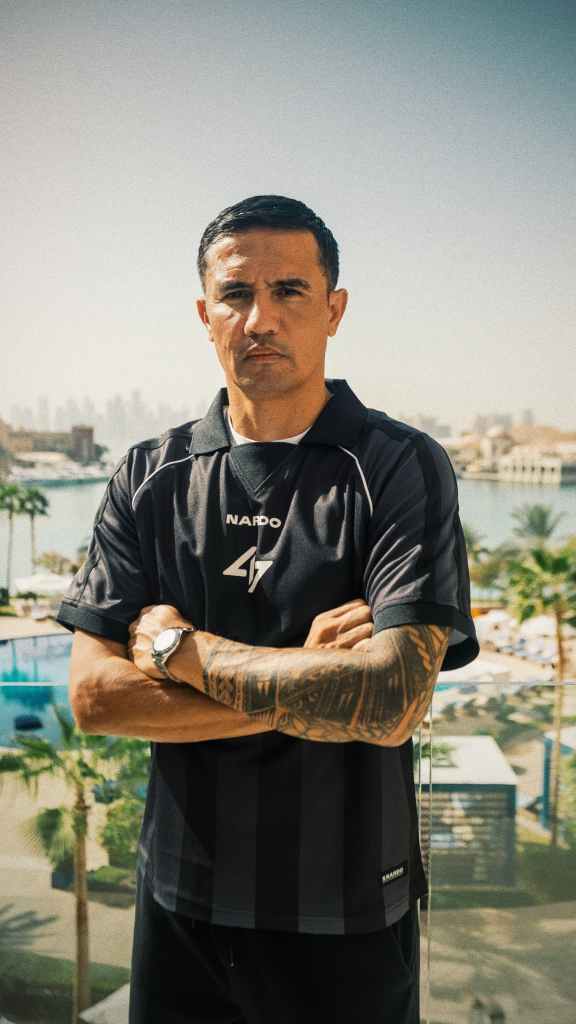
So when Beau Catley, exited co-founder of streetwear brand Geedup, told Cahill about his sportswear tech startup, Nardo, Cahill was all ears … and eyes and touch.
Nardo was building software that automates “teamwear” ordering process, allowing clubs to design a kit by putting in colours, logos, sponsors and having the whole order managed through to delivery – cutting costs by a claimed 20% to 30%.

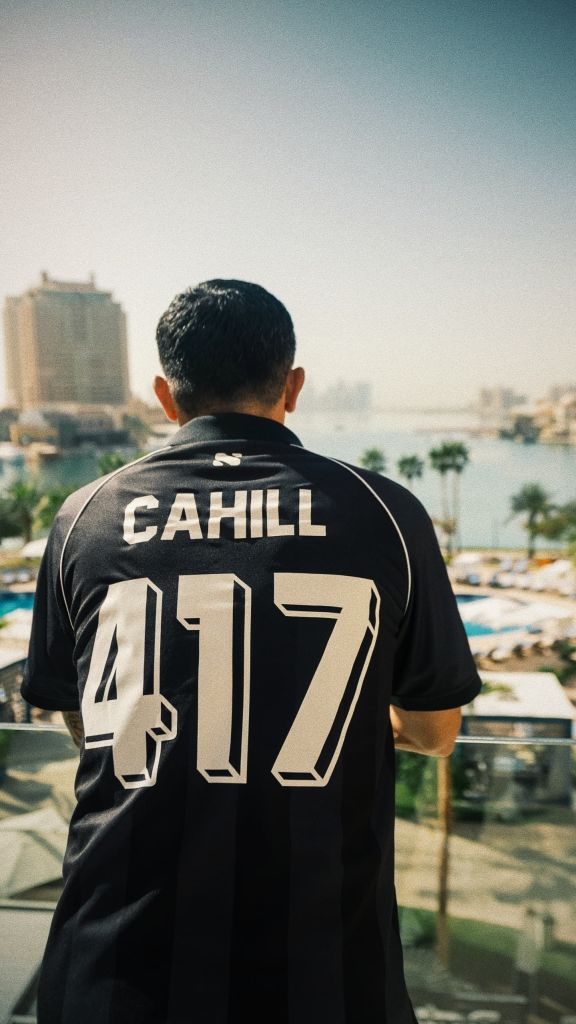
“I’ve never seen anything like it,” says Cahill, who scored more goals for Australia than anyone, with 50 from 108 internationals. “When you first click on it and you go through it, you say, ‘There must be something up with this because this is too good to be true’. Then you start to feel the clothing, the texture, the care.”
About two years after that first meeting, Cahill was announced as a major investor in Nardo’s $1.1 million pre-seed raise to accelerate the company’s launch across the US, UK and Middle East.
The problem
For Catley, the journey began at a buck’s party in Penrith in 2017, when a mate’s uncle asked him if could do sportswear for a club.
Yeah, no worries, Catley said, not realising that he’d just agreed to a boardroom pitch meeting at rugby league foundation club Western Suburbs Magpies.
“I rocked in with a with a T-shirt and a pair of ripped jeans on, and fully underprepared,” Catley says. “I just thought quickly on my feet and said to them, ‘You’re obviously looking for a new supplier. I want to understand why you’re unhappy with your current supply chain and once I understand that, then I’ll be more than happy to try and help out.’”
Catley heard about all their pain points, the cookie-cutter designs, slow delivery, lack of transparency and high prices. And even though he’d lived in the world of hoodies and trackies and cargo pants, he designed some custom jerseys, socks, shorts, tracksuits and assorted apparel for the junior rep teams, feeding into the Wests Tigers system.
They liked the designs and asked him to quote on 500 to 1,000 of each item.
“I didn’t even know how to price it up,” he says, ignorant of the sports apparel world.
He organised a manufacturer in China and quoted a price with a comfortable 50% margin, much slimmer than he’d normally put on streetwear, but the order was larger so it worked for him`.
“They came back and said, ‘Mate these are some of the best designs we’ve seen but we’re a little bit worried about the price.’ And I was kicking myself, thinking, I should have only put 20% on. And they said, ‘You’re like half the price of every other supplier that we’ve dealt with … Mate, if you can service the order for this price, with these designs at this quality you’ve got the contract for the next five years.’”
The experience got him thinking about why he was so much cheaper. “The answer was pretty obvious. I was a one-man team. I was doing the design. I was doing the sampling. I was doing the manufacturing. I didn’t have all the overheads that a typical B2B sportswear supplier would have.”
And if he branched out into sportswear and grew this business, he’d become just like them.
“I thought that surely there’s got to be a way to leverage technology to create efficiencies in the workflow and save a lot of headaches for the sports club, for me as a middleman supplier, and obviously the offshore supply chain.”
Over the next few years, stuck at the business in the old-fashioned way, trying to understand sportswear – mapping the end-to-end process from design and sampling through to production and delivery – then teamed up with co-founders Rhys Adams and Adam Famularo to scale the concept into a global technology business.
“We’re doing it slowly and with intent because we know that when we bring this into market at scale it’s going to change the entire industry.”
Nardo founder Beau Catley
“Rhys chipped away at it, built multiple iterations until we finally had the thing that we believe has solved a massive problem,” says Catley. “We’ve brought it down from what used to be around 130 touch points to about 25 to 30.”
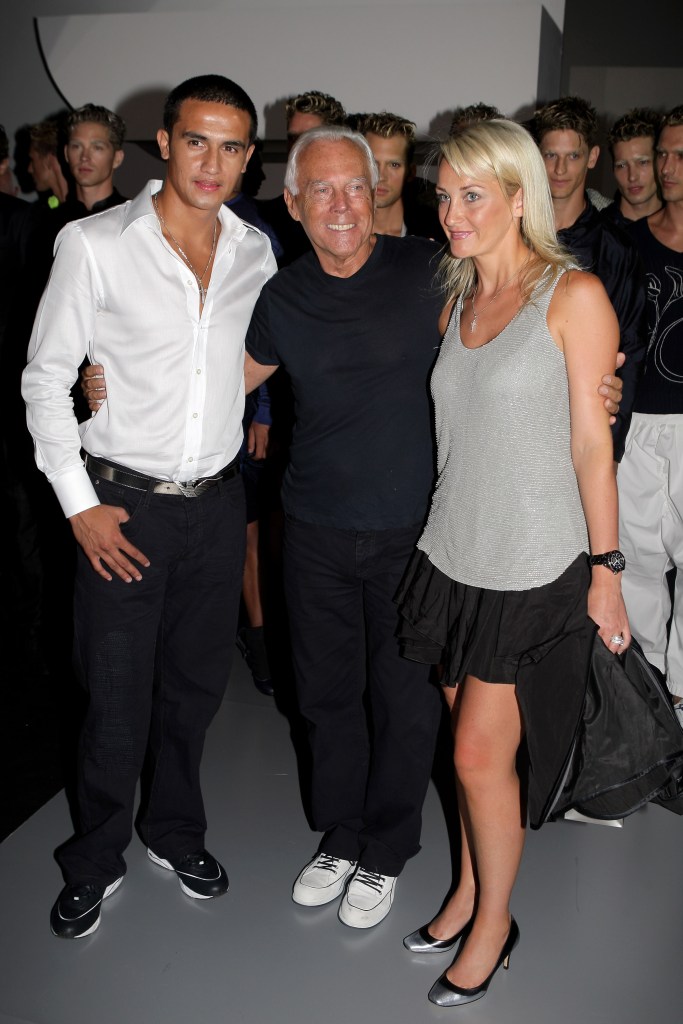
They started talking about sports people who they’d like to get involved. “We both said ‘Timmy Cahill’. After we finished that conversation, I went into the loo and on my Instagram I saw that a friend was up on the Gold Coast catching up with Tim’s brother.”
The serendipity was too much to ignore.
Cahill, now technical director at the Qatar Football Association and chief sports officer at the Aspire Academy in Doha, says he was blown away by the product.
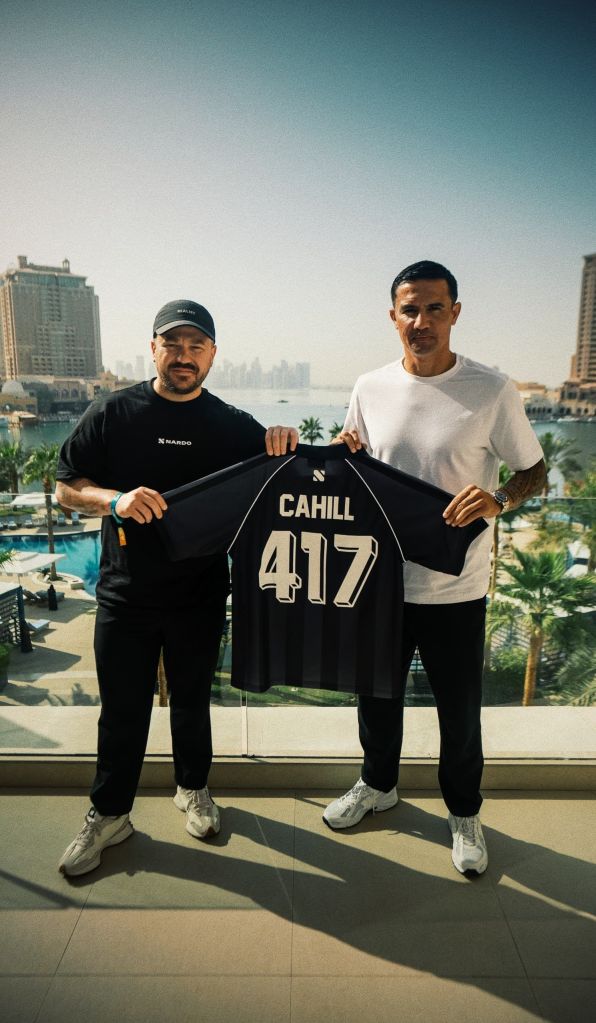
“Obviously I do my due diligence on many companies,” Cahill tells Forbes Australia from Miami where he is based for the FIFA World Cup. “I got to meet Beau, and you can hear the passion in Beau’s voice and how much designing is similar to professional football … Everything’s done through hard work. It’s not done through just seeing the goals and the outcomes. It’s the minutes, the hours, behind the scenes training.”
Cahill created fashion history footnote when his brand, the now discontinued CAHILL+, became the first Australian menswear brand to be showcased at New York Fashion Week, but despite his deep involvement with that brand, he says he lets Catley “work his magic”.
“But I’m very vocal on what I like and don’t like, and at the same time I’m very, very vocal on the whole process, because being partners is making sure that we stay true to our values. And the values are about being a solution for the grassroots.
“The way I started, with my parents getting a loan so I could leave Australia at 16 to try for a career in professional football, I realised that it was expensive to play football. And one of the things I’ve done through my whole career is try and give back.
“I look at Nardo, Beau and the team as a solution.”
And it’s the solution to a big problem. “We haven’t spent hundreds of thousands of dollars building this platform just to have a shiny new way for clubs to order their gear,” says Catley.
“The platform’s free to use and the whole idea is that we can come in and undercut the market by around 20% to 30% while maintaining a good gross profit. We’ve got clubs that spend 100 grand a year on gear. With us, that might only be 70 or 80 Grand. That extra 20 grand can be reinvested back into the sport.”
Catley maintains majority ownership.
“I just spent three weeks in the US connecting with some of the biggest sport tech companies in the world on how we’re positioning this as the operating layer for teamwear globally.
“We want to build vertically for Nardo in football first, but we’ll be white labelling this over for other suppliers to be able to use our platform to create efficiency. These B2B sportswear suppliers are outdated and archaic, but it’s the clubs who are losing.
“They’re paying overs for a very clunky and kind of fractured experience and it’s just because the middleman sportswear suppliers have got good little businesses and haven’t had to optimise.
“We’re looking at alignments with some of the biggest organisations across the US to enter the US in the basketball market and all sorts of things, but we’re doing it slowly and with intent because we know that when we bring this into market at scale it’s going to change the entire industry.”
Want to see more Forbes articles on your feed? Tap here to make Forbes Australia a preferred source on Google.
Look back on the week that was with hand-picked articles from Australia and around the world. Sign up to the Forbes Australia newsletter here or become a member here.