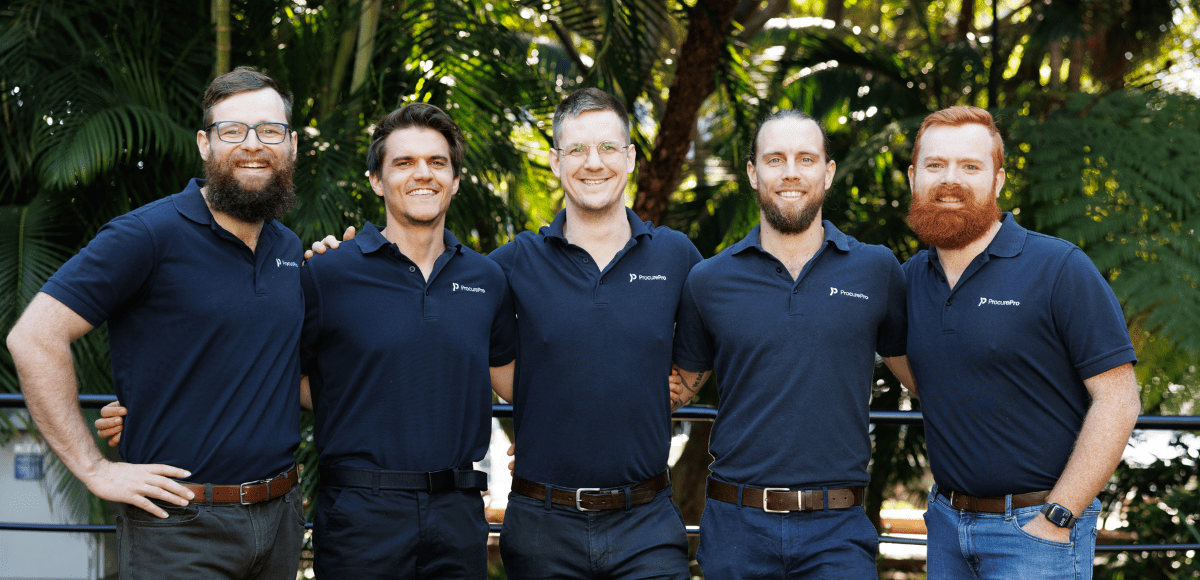

Forbes Australia picks out three Australian entrepreneurs who are making waves in the startup space right now.
This story features in Issue 23 of Forbes Australia. Tap here to secure your copy.
ProcurePro
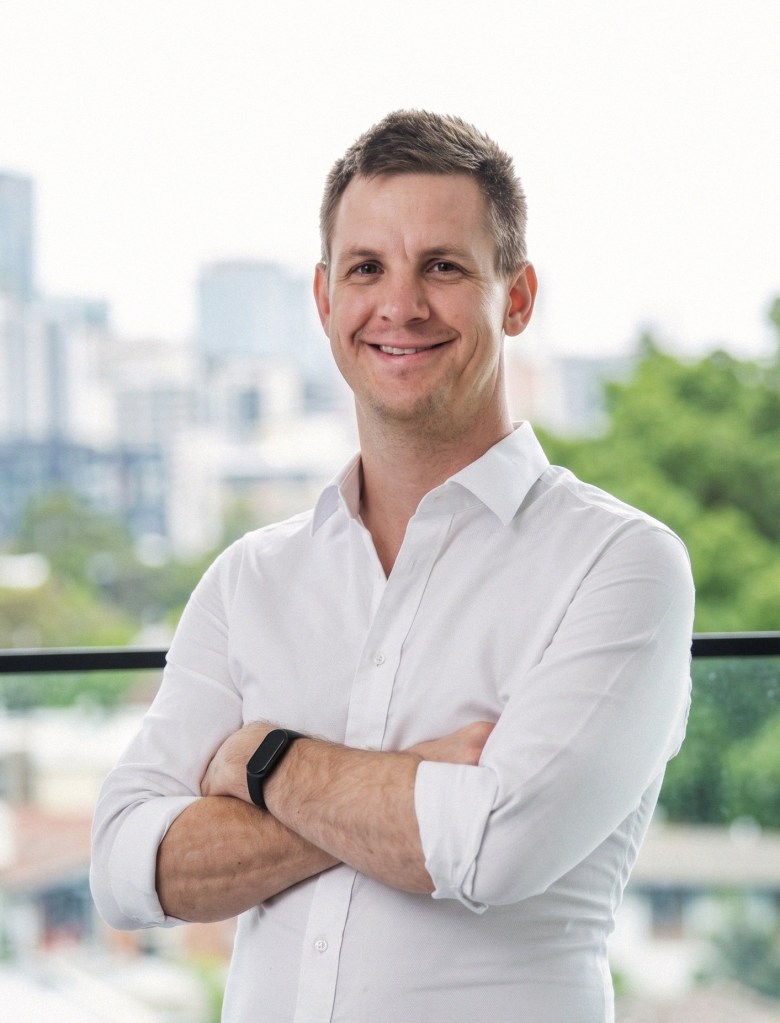
When COVID-19 brought the commercial real estate industry to a standstill, Alastair Blenkin and the team behind property software start-up Hyra iQ began looking beyond the sector for markets where critical workflows were still managed through disconnected systems. Construction quickly stood out.
“It became obvious that procurement was one of the most commercially important, but underserved by technology, workflows, in the industry,” says Blenkin. In 2021, Blenkin co-founded ProcurePro, an end-to-end procurement platform designed for commercial builders. The software centralises the subcontractor procurement lifecycle into a single AI-enabled system.
The Brisbane-based start-up has since expanded across Australia, the UK, the Middle East and North America, supporting more than $130 billion in project value across 6,000 projects globally. Earlier this year, ProcurePro raised $15 million in a funding round led by QIC Ventures alongside existing investors AirTree and Glitch Capital, valuing the company at more than $100 million. The company is now preparing to establish its first US presence.
QIC Ventures investment director Nick Capell says ProcurePro operates at a critical control point within construction. “Procurement sits upstream of construction spend yet remains highly manual and weakly governed,” he says. “With Queensland delivering a once-in-a-generation infrastructure programme ahead of the 2032 Olympics, innovations that improve construction productivity are critical.”
TMRW

After years of extreme stress, Mark Britt began questioning whether he truly understood his own health. The former Australian Payments Plus COO, iflix co-founder and Mi9 CEO says years of misdiagnoses and treatments that “kept addressing symptoms without seeing the full picture”.
“The system wasn’t built to look at my health as a whole,” he says. “Everything changed when I started working with holistic practitioners to understand the right biological markers in context. My energy returned, weight dropped, sleep stabilised, and life resumed – but better.”
The experience became the foundation for TMRW, a preventative health membership designed to give users a more continuous and personalised picture of their biology. Combining blood testing, epigenetic analysis and ongoing clinical care, the platform analyses more than 75 blood biomarkers and 1,700 epigenetic data points helping its clinicians identify risks and tailor health plans.
The start-up recently raised $7 million in a seed round led by Tidal Ventures and announced an exclusive Australian partnership with US-based company TruDiagnostics. “Preventative health has long been stuck in a pattern of one-off testing and generic recommendations that place the burden back on the individual,” says Tidal Ventures partner Georgie Turner. “TMRW breaks that model entirely. I’m confident TMRW is positioned to define what longitudinal preventive health looks like at scale.”
Enaxiom
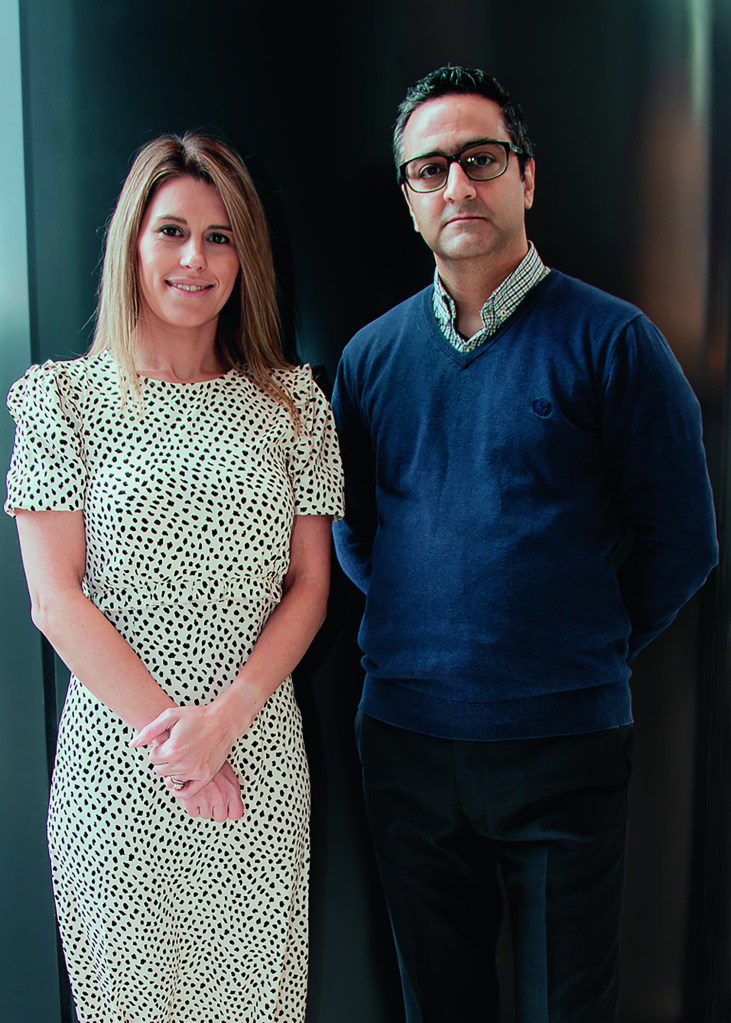
Long before AI infrastructure became one of tech’s biggest growth markets, Bijan Rahimi was developing cooling systems designed to reduce energy and water consumption. As demand for high-performance computing surged, Rahimi saw an opportunity to apply the technology to one of the sector’s fastest-growing infrastructure challenges. “We saw a major gap emerging around how industries, particularly AI infrastructure and data centres, would sustainably manage growing thermal loads and resource consumption,” he says.
“Many existing cooling systems do not fully solve the combined water and energy challenge in a meaningful way, and there was an opportunity to rethink how heat rejection could work.” In 2024, Rahimi teamed up with Tia Collings to launch Enaxiom, a deep-tech start-up developing cooling infrastructure for AI data centres. Its flagship system, HydroCool, is designed to help AI data centres reduce reliance on potable water in cooling processes by enabling the use of lower-grade water sources, while also improving energy efficiency and generating fresh water as a by-product.
The Sydney-based start-up has since raised $2.7 million across investment and non-dilutive funding support, while also being selected into programs including NVIDIA Inception and EnergyLab. “The next major step for Enaxiom is the development and deployment of our first commercial-scale module, which will form the foundation of scaling the technology in a phased approach,” says Rahimi.
Want to see more Forbes articles on your feed? Tap here to make Forbes Australia a preferred source on Google.
Look back on the week that was with hand-picked articles from Australia and around the world. Sign up to the Forbes Australia newsletter here or become a member here.