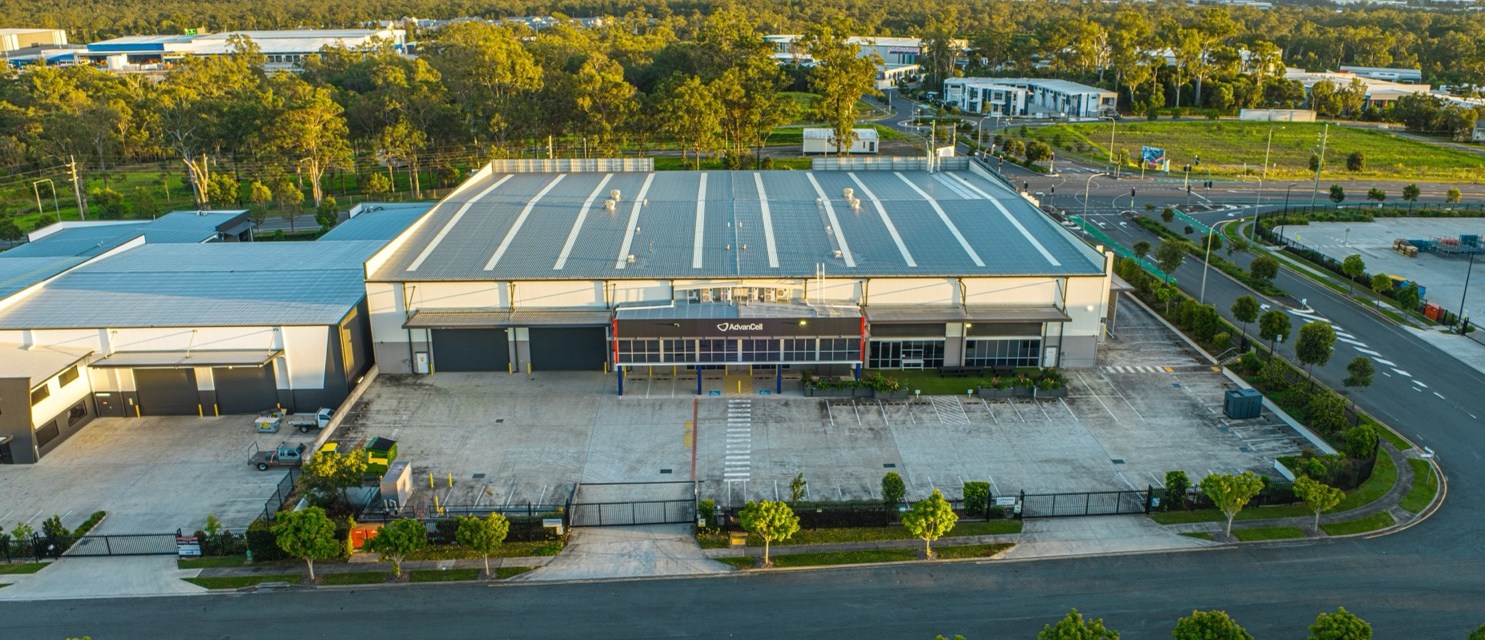

Brisbane-founded radiopharmaceutical company AdvanCell has raised an oversubscribed $450 million Series D round as it prepares to take its experimental prostate cancer treatment into Phase-3 clinical trials and expand manufacturing in the United States.
Key Takeaways
- AdvanCell’s US$315 million (about AUD$452 million) Series D round is believed to be the largest fundraise by a private Australian biotech.
- The money will fund Phase-3 development of its lead prostate cancer therapy, ADVC001, and expand manufacturing in the United States.
- The deal was led by Hong Kong and New York based Ally Bridge Group and New York-founded Alpha Wave.
- Other blue-chip investors piled in, including Bain Capital Life Sciences, Fidelity, T. Rowe Price and the Qatar Investment Authority, alongside existing backers including Eli Lilly, Sanofi Ventures and Brandon Capital.
- AdvanCell is betting on Lead-212 targeted alpha therapy, which it believes can outperform existing prostate cancer radiopharmaceuticals while solving industry-wide isotope supply constraints.
- The company declined to give a valuation, but a Series D of that size would normally be attached to a valuation approaching $1 billion.
Key background
AdvanCell has emerged as one of Australia’s most closely watched radiopharmaceutical companies – a form of precision medicine that delivers radioactive material directly to cancer cells.

AdvanCell says its competitive advantage is that it can produce radioactive isotopes, lead-212, at its Brisbane lab, rather than needing expensive reactors or cyclotrons.
The class of treatments work by attaching radioactive material to molecules that seek out cancer cells. Australia’s ASX-listed Telix has been a star performer in the field but still only has a prostate cancer diagnostic product in the market. It is still working on approvals for its proposed therapeutic.
The market leader in radiopharmaceutical treatment of prostate cancer, Novartis’s Pluvicto, has forecast sales of US$5 billion.
AdvanCell founder Andrew Adamovich told Forbes Australia last year that AdvanCell’s “alpha-emitting isotope”, lead-212 packaged up as ADVC001, delivered more “killing power” to the cancer cell than the lutetium used by Novartis and Telix.
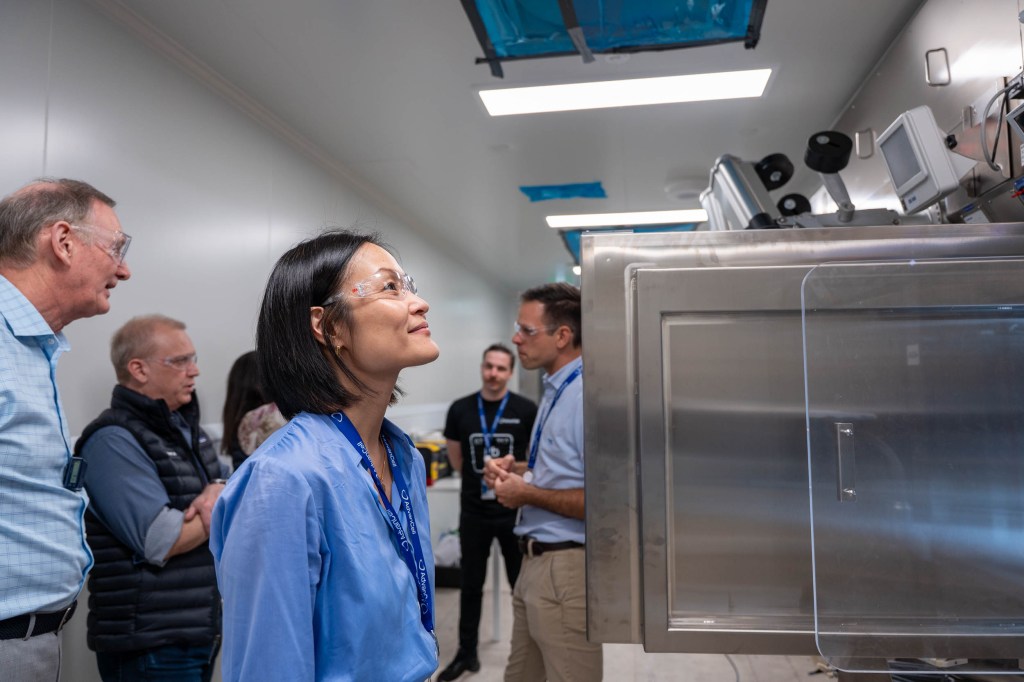
AdvanCell’s enormous capital raise comes before completion of its Phase-2 trials.
The company said the new capital would fund Phase-3 trials while expanding isotope supply and manufacturing capacity in the US ahead of potential commercialisation.
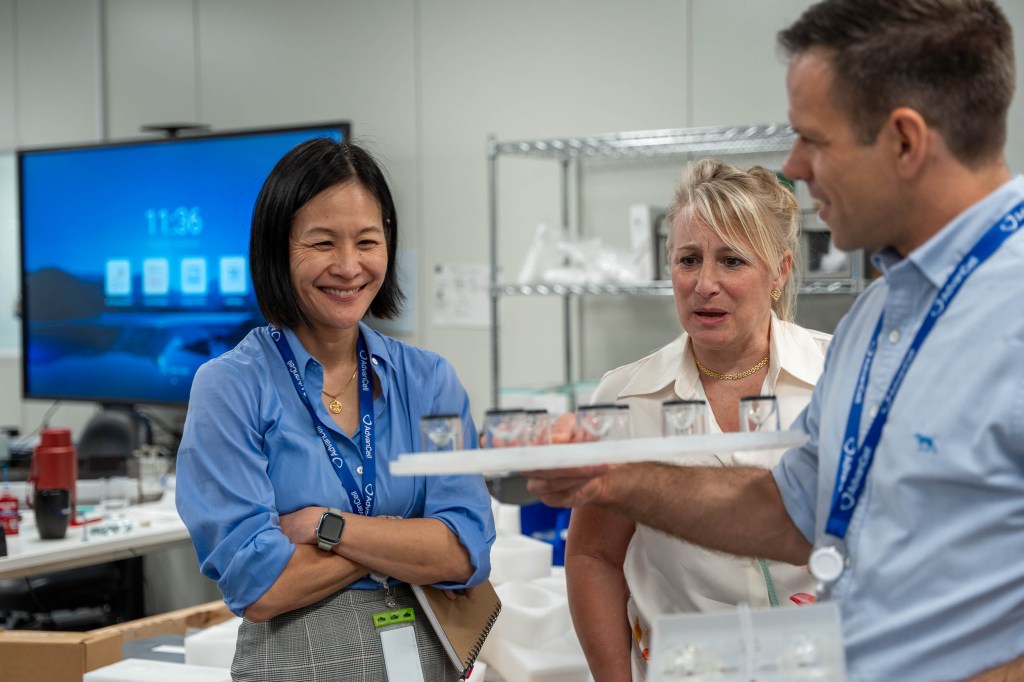
“This financing marks a transformational milestone for AdvanCell and reflects the conviction of an exceptional investor syndicate in the potential of ADVC001 and the innovation behind our vertically integrated Lead-212 platform,” chief executive Philina Lee said.
“Building on our recent leadership appointments and U.S. expansion, this financing puts us in a strong position to enter our next stage of growth and execution, advancing our lead therapy ADVC001 toward registrational development, expanding isotope supply and manufacturing infrastructure to support Phase 3 and future commercial demand, and progressing our Lead-212 pipeline into the clinic.
Tangent
Radiopharmaceuticals have become one of the hottest areas in global oncology investment. Over the past several years, major pharmaceutical companies have spent tens of billions of dollars acquiring radiopharmaceutical businesses and technologies, betting that targeted radiation therapies will become a new standard of care across multiple cancers.
Australia has emerged as an unlikely leader in the field, driven by decades of nuclear medicine research and companies including Telix, AdvanCell and a growing number of venture-backed startups developing next-generation targeted therapies.
Acquirer | Target | Deal Value (USD) | Year | Notes |
Eli Lilly | POINT Biopharma | $1.4 billion | 2023 | Expanded into radioligand therapies with late-stage prostate cancer assets |
Bristol Myers Squibb | RayzeBio | $4.1 billion | 2024 | Added actinium-based radiopharmaceutical platform |
AstraZeneca | Fusion Pharmaceuticals | Up to $2.4 billion | 2024 | Next-generation radioconjugates including Phase 2 prostate candidate |
Novartis | Mariana Oncology | Up to $1.75 billion | 2024 | Expanded radioligand pipeline with novel preclinical assets |
Curium | Lantheus | ~$7 billion (proposed) | 2026 | Has a blockbuster prostate diagnostic and extensive pipeline of radiopharma treatments. |
Big number
1.47 million. That’s approximately how many men worldwide are diagnosed with prostate cancer each year, making it the second most commonly diagnosed cancer in men globally. The disease causes almost 400,000 deaths annually, underscoring the commercial opportunity – and medical need – driving investment into next-generation prostate cancer therapies.
Want to see more Forbes articles on your feed? Tap here to make Forbes Australia a preferred source on Google.
Look back on the week that was with hand-picked articles from Australia and around the world. Sign up to the Forbes Australia newsletter here or become a member here.