Opinion: Brisbane 2032 is six years away, but Tesla Chair Robyn Denholm and Australian basketball royalty Lauren Jackson argue the smartest investments in women’s sport will be made long before the Olympic flame is lit.
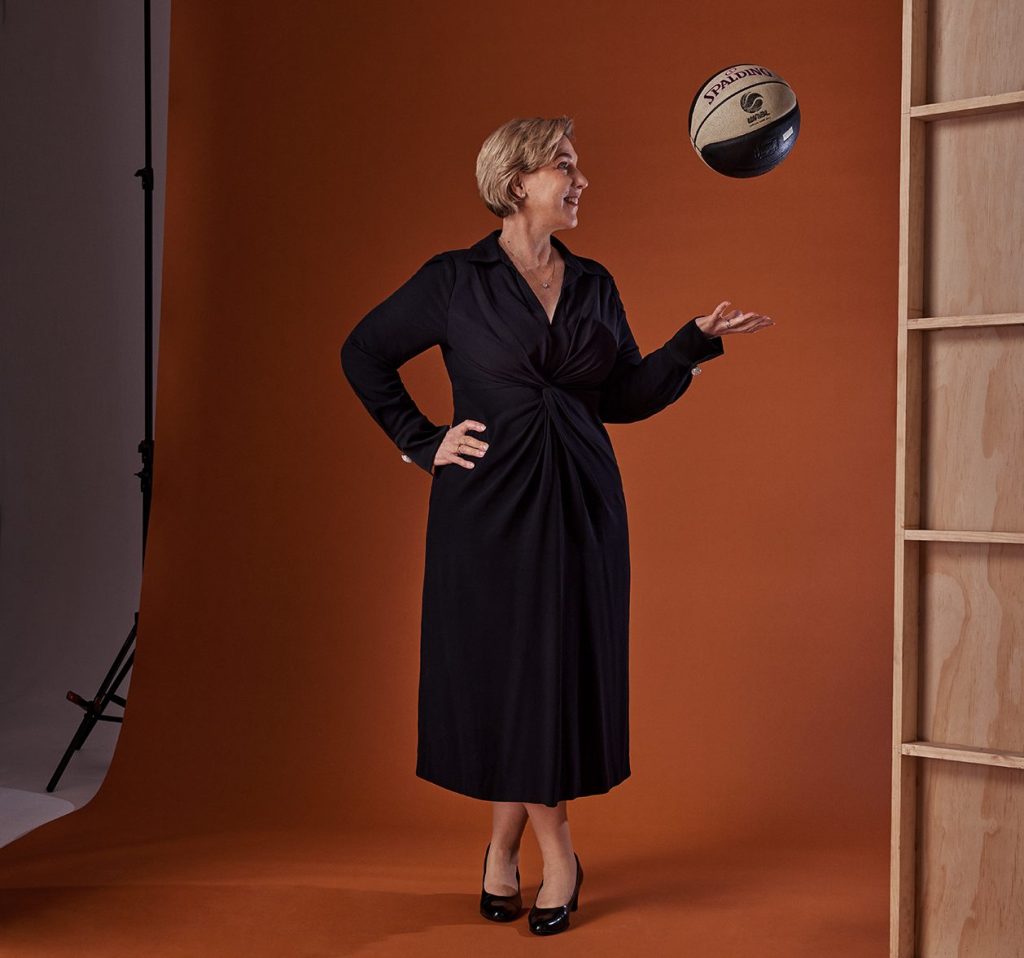
Words by Robyn Denholm and Lauren Jackson
In six years, Australia will host the Olympic Games. By then, a new generation of Australian basketballers will be entering the prime of their careers.
The Opals have won six Olympic medals across the past eight Games and remain one of the most successful teams in Australian sporting history. Imagine what they could achieve with an entire nation behind them on home soil.
But the biggest opportunity may sit beyond the podium. Brisbane 2032 has the potential to be a defining moment for women’s basketball in Australia – not just for athletes and fans, but for the businesses and brands that choose to be part of its growth.
As investors and business leaders, we’re trained to recognise opportunities long before everyone else sees their full value. Brisbane 2032 is one of those rare moments where a structural shift in women’s sport and a once-in-a-generation national event are converging. We believe women’s basketball has reached that inflection point.
Basketball is one of Australia’s fastest-growing participation sports and continues to attract record numbers of young players, particularly girls and young women.
Investment opportunity in women’s sport
Around the world, women’s sport is entering a new era. A recent Deloitte report forecasts global women’s sports revenues will exceed US$3 billion this year, with basketball among the leading drivers of that growth.
For years, the conversation centred on potential. Could women’s sport attract audiences? How about sponsors? Could it become commercially sustainable? The market has answered those questions. Women’s sport is thriving, driven by expanding audiences, growing participation and increasing commercial investment.
For years, we’ve said Australia punches above its weight as a sporting nation. For business leaders, this is no longer simply a story about sport. It is a story about recognising an emerging growth market, with increasingly strong fundamentals.
In our circles, we often joke that the WNBL is really the Women’s National Business League. Behind the joke is a serious point. Few sporting products in Australia offer the same combination of growth, accessibility, community connection and untapped commercial potential.
In business, the most valuable opportunities are rarely obvious when they first emerge. Investors identify them when the underlying fundamentals are strong, but before the rest of the market fully appreciates their value.
Women’s basketball feels increasingly like one of those opportunities.
The first mover advantage
Basketball runs deep in Australian life. It is accessible, family friendly and thrives in regional communities and major cities alike. In fact, the WNBL plays more games in the regions than the cities, where thousands of fans turn out to see our teams play.
The connection between athletes and fans is genuine. For businesses, that creates something incredibly valuable – the opportunity to become part of a community rather than simply advertise to one.
Brands like Sephora, Bunnings, Google and Optus have recognised the opportunity and chosen to invest early in the WNBL. They understand that the value of a sporting product is not measured only by where it is today, but where it will be tomorrow.
The same dynamic has played out across women’s sport globally. Furthermore, the organisations that benefited most from its rise were not the ones that waited until every metric was perfect. They were the ones that recognised where the market was heading and helped build it.
The Matildas example
A great local example of this in action is appliance brand Ninja’s backing of the Matildas. Long before the Matildas became one of the country’s most recognisable sporting teams, Ninja invested in the sport and backed its growth.
As the profile of women’s football exploded, so too did Ninja’s visibility with Australian audiences. That wasn’t luck. It was a commercial decision based on recognising where the market was heading before it became obvious. Women’s basketball presents a similar opportunity today.
That matters because every successful sporting product requires investment before it delivers its full potential. As investors know, growth rarely happens in a straight line. You have to invest to achieve the J-curve growth that follows. The same principle applies whether you’re backing a technology company or an emerging sporting property.
The businesses entering women’s basketball today are not making charitable contributions. They are aligning themselves with a growing category, an expanding fan base and a sport with enormous momentum. As Brisbane 2032 approaches, the opportunity becomes even more compelling.
And unlike many long-term investments, businesses won’t need to wait until Brisbane 2032 to see a return. Women’s basketball has a series of global milestones ahead. The FIBA Women’s Basketball World Cup later this year, the 2026 Commonwealth Games and the 2028 Olympic Games in Los Angeles will all shine a spotlight on the sport and its athletes.
The Olympic touch
Olympic Games on home soil create moments that can transform sports. But they also reward the organisations that have invested well before the Opening Ceremony. They create new heroes, inspire participation and attract new audiences. They generate national attention that can accelerate growth for years beyond the closing ceremony.
The excitement generated by Sydney 2000 helped inspire a generation of athletes. Brisbane 2032 has the potential to do the same for women’s basketball. Australia’s women’s basketball team enters Brisbane 2032 as a genuine medal contender. But the bigger opportunity is not what happens during two weeks of competition, but what we build over the next six years. The next six years will determine what women’s basketball looks like for the next twenty.
As Brisbane 2032 approaches, Australian businesses face a simple choice: watch that growth from the sidelines or help shape it. The evidence suggests it already is doing just that. By the time the Olympic flame is lit in Brisbane, the smartest investments in women’s sport will already have been made.
Lauren Jackson is a five-time Olympian, four-time Olympic medallist and one of Australia’s greatest basketballers. She helped the Opals win the 2006 FIBA Women’s World Championship and has won multiple WNBL MVP and Grand Final MVP honours. In 2026, the WNBL appointed her Chief Strategy and Basketball Partnerships Officer .
Robyn Denholm is Chair of Tesla, Chair of Wollemi Capital Group, a Blackbird Ventures board director and Chair and majority owner of the WNBL. In 2024, a Wollemi-led consortium acquired the WNBL, following Wollemi’s earlier acquisition of Hoops Capital, owner of the Sydney Flames and Sydney Kings.
Want to see more Forbes articles on your feed? Tap here to make Forbes Australia a preferred source on Google.
Look back on the week that was with hand-picked articles from Australia and around the world. Sign up to the Forbes Australia newsletter here or become a member here.