On her 85th birthday, the trailblazing advocate is bypassing tax-effective frameworks to put her private wealth behind a new breed of cultural architects.
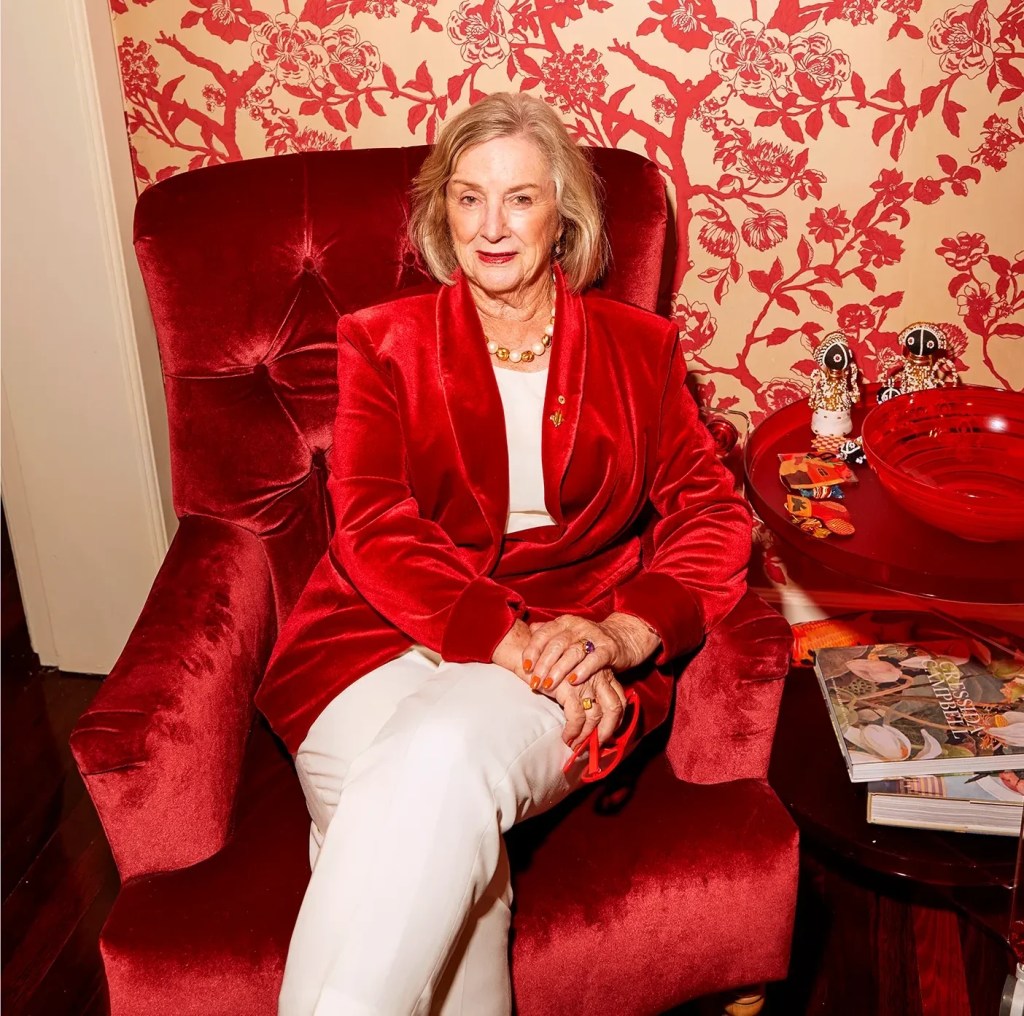
Wendy McCarthy is moving. She is leaving the 1920s Spanish Mission-style apartment in Potts Point she has called home for the past decade – a transition less about slowing down and more about an active re-evaluation. At 85, with her faculties sharply intact, she is walking through her rooms, sorting through a lifetime of accumulated artefacts and giving out copies of her memoir, Don’t Be Too Polite, Girls, to anyone passing through her doors.
During this process, she paused at a prized wedding present – a 12-setting, white Rosenthal dinner set with a gold rim. It became a catalyst for a realisation about her changing lifestyle.
“I looked at it and thought, I’m not doing those massive dinners anymore,” she notes. “So I gave half to my son because six is his number for cooking. You just clean it out.”
Simplifying her surroundings is an exercise in editing a legacy she describes with characteristic pragmatism.
“People talk about Swedish death cleaning, and that’s exactly what it feels like. It’s a very deliberate thing, looking at everything you’ve accumulated and deciding what stays and what goes.”
Yet as she thins out physical possessions, she is doing the exact opposite with her real-world impact. Leaving behind a storied corporate career that saw her sit on dozens of major boards, she has quietly engineered an off-the-radar unique and curated version of venture philanthropy.
Moving beyond the DGR model
Traditional wealth allocation relies heavily on Deductible Gift Recipient (DGR) status; many funders refuse to part with capital unless rewarded with a tax deduction. Driven by a passion for female autonomy, McCarthy bypasses this constraint, investing directly in commercial organisations that do not hold DGR status.
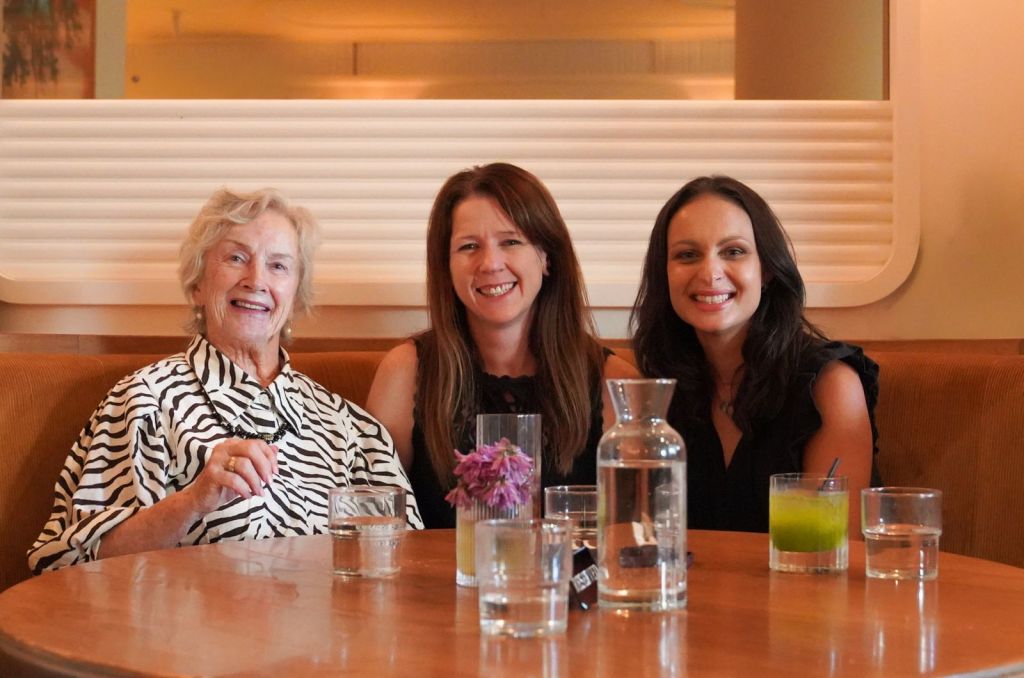
For McCarthy, providing unexpected commercial validation to young female entrepreneurs yields a profound return.
“When someone out of the blue decides to invest in your commercial capacity like that – not as a favour, but because they believe in your capability – you grow about six inches,” she explains. “And the lights turn on again.”
McCarthy is currently backing Women’s Agenda – the independent media publication run by Angela Priestley and Tarla Lambert, funding an editorial series focusing on women responding to climate, care and community challenges. These are causes McCarthy backs wholeheartedly, directing capital where it can effect change rather than where it is tax-effective.
“They don’t have DGRs,” McCarthy says. “But that is a measure of my commitment that I’ll give it to them without DGR. They are not a non-profit. But they do need investment.”
Another beneficiary of this funding approach is Holly Rankin, co-founder of the public affairs and cultural strategy agency, Sentiment. To the broader Australian public, Rankin is better known as Jack River, the multi-ARIA-nominated alt-pop powerhouse behind albums like Sugar Mountain. By mentoring Rankin for five years and funding her agency, McCarthy is backing a new breed of cultural architects who know how to influence policy in a digital age.
McCarthy’s capital flows into broader civic ecosystems, such as The Parenthood, which champions early childhood education and family rights, and The Vida Fund, an initiative established to back independent female political candidates running on gender-equity platforms.
She also contributes financially to frontline social resources like sexual assault and rape crisis services, as well as funding cultural icons like the Sydney Opera House and the Sydney Symphony Orchestra.
From the farm to the university gates
This instinct to dictate her own terms was forged early. Growing up on a farm in Orange, NSW, the path forward for a young girl in the 1950s was tightly scripted. Backed by her father’s belief in her potential, she was sent to the University of New England in Armidale to study agriculture, but upon arriving on campus and learning there were fees to be paid, her only option was to pivot to a teaching degree which came with a scholarship.
Soon after graduating, Wendy Ryan, as she was born, married Gordon McCarthy, and the couple moved to the U.S. Wendy worked as a secondary school teacher in Pittsburgh while her husband advanced his corporate banking career.
Upon returning to Australia a couple of years later, they settled in Sydney, making a home in the vibrant, well-connected north shore enclave of McMahons Point. Surrounded by a community dense with journalists, writers, and media figures in the late 60s and early 70s, McCarthy found a natural environment for her expanding public voice.
Newly pregnant with her first child, Sophie, she successfully campaigned to overturn hospital rules banning husbands from delivery rooms. The success of that initiative, paired with the communication and audience management skills honed during her teaching background, transformed her into a sought-after public speaker. She possessed a rare ability to articulate complex systemic barriers with clarity on national television and radio, providing a natural bridge out of the classroom.
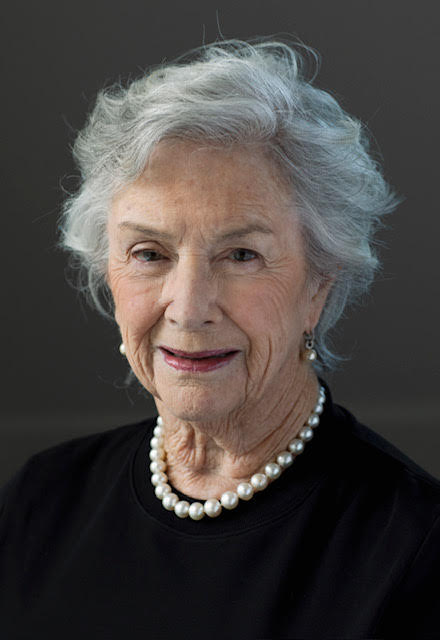
This visible media profile launched a multi-decade career defined by its breadth, all while she raised her three children: Sophie, Hamish, and Sam.
Beyond her appointment as Deputy Chair of the ABC, McCarthy went on to serve as the CEO of the Family Planning Association, CEO of the National Trust, and President of Chief Executive Women. She also spent a decade around the turn of the century shaping higher education as the Chancellor of the University of Canberra.
Moving fluidly across public policy, corporate governance, and community advocacy required a calculated risk-management formula. Whether staring down corporate executives or taking the government to court as chair of the Heritage Commission to protect historic environments across Australia, McCarthy relied on a consistent framework: calculate the absolute worst-case scenario and decipher whether to do it anyway.
“The first thing I do when I’m weighing up a decision is to ask myself, what is the worst that can happen?” she says.
Once you name the worst possible outcome and realise you can survive it, McCarthy notes, fear dissolves. It is a tactical formula for neutralising risk that she now passes down to young women finding their own footing.
Financial literacy and a strong stride
For this seasoned executive, fiscal independence is deeply tied to personal identity, prompting clear advice for the next generation:
“I look at these young women today and I just want to tell them: financial literacy and personal branding is essential for success,” she says.
“You cannot leave your identity at the door. I always tell them, ‘Keep your name, girl.’ Why give up your hard-earned equity? You need your own money, your own separate bank account, and your own identity to move through the world with a strong stride and confidence in your soul.”
That sense of unshakeable identity is anchored in a lifetime spent on the frontline of structural change. For McCarthy, supporting future trailblazers is a natural extension of her own ambition and accomplishments.
Leaning away from her computer screen, she pauses our conversation to reach for a tangible reminder of a framework she helped build. She returns to the Teams camera holding a worn, brown-edged copy of Gloria Steinem’s The Decade of Women.
Inside the front cover is a handwritten inscription: To Wendy, with love from Gloria, alongside the signature of Ms. magazine publisher Pat Carbine.
In the 70s and 80s, leaders like Steinem – in the US – and McCarthy – in Australia – fought to advance and liberate women and build the modern blueprint for equality. Because of this, Steinem’s book is much more than a nostalgic keepsake. To the 85-year-old – named a Companion of the Order of Australia last year for her service to the community – it is proof of an active and unexpected life spent in the rooms where history was written.
McCarthy smiles as she places the Steinem book in her lap. I ask her if it has made the cut to advance with her into her next residence.
“Oh, I’m definitely taking it. Yeah, it’s a good luck charm forever,” she says as our two-hour interview winds down.
“I’ve had a lovely life and it’s so nice to talk about it,” she says reflectively. “I could never really have imagined my life. Never.”
Founder and Creative Director Camilla Franks will join Camilla CEO Rebecca Masergh in conversation at the Forbes Women Soiree on August 11 in Sydney.
Forbes Women is a global network of female business owners, entrepreneurs and changemakers. Sign up to Forbes Women here.