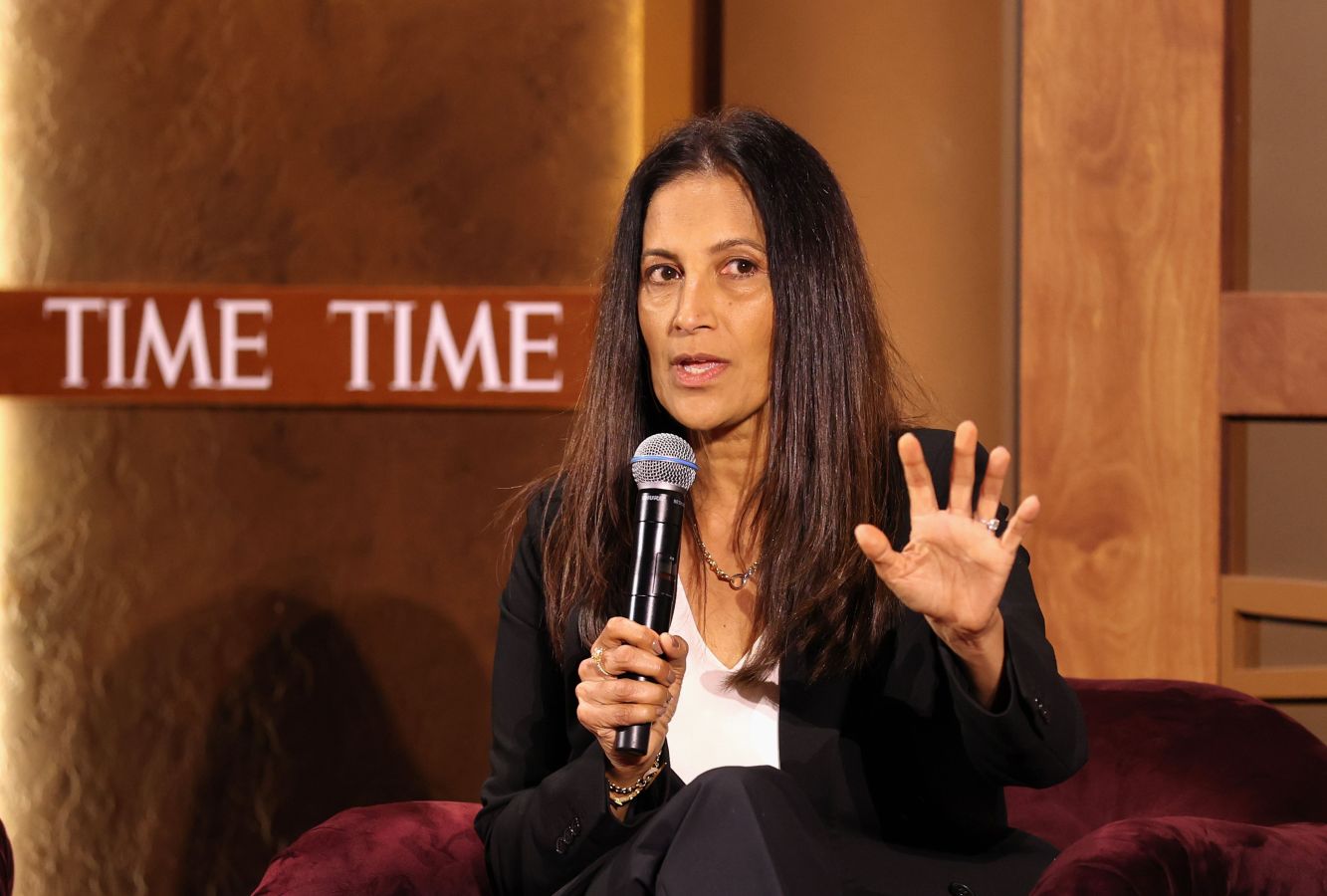
Opinion: AI could perform nearly one-third of Australian jobs, even as other sectors struggle to find workers. Futurist and work strategist Dom Price asks why Australia is not planning for both at once.

Here’s a stat I find genuinely reassuring and then immediately infuriating.
New EY-Parthenon modelling suggests artificial intelligence could add as much as $116 billion to the Australian economy and support the creation of up to 44,000 jobs by the middle of the next decade.
That sounds like good news, and it is. But it also risks obscuring the much harder question: who gets those new jobs, and what happens to the people whose work disappears first?
Deloitte economists analysed 140 years of English census data, from 1871 to 2011, and found that technology consistently created more jobs than it destroyed.
Every wave of automation that wiped out one type of work ultimately produced more work elsewhere: agriculture shrank, manufacturing contracted, and in their place grew enormous new sectors in services, care, creativity, and technology.
The reassuring part is that we’ve been here before, and the economy adapted.
The infuriating part? “The economy adapted” is doing a lot of heavy lifting in that sentence. Because the people who lost the jobs in agriculture were not, overall, the people who got the jobs in manufacturing. The gains were real, but the distribution was brutal.
And unless we’re deliberately smarter about this than our predecessors, we’re about to run the same play and wonder why the same thing happens.
Let’s talk about jobs and AI
The AI disruption conversation in Australia has stalled in the wrong place. We’re debating whether jobs will disappear (some will), and whether that warrants a Universal Basic Income (a question for another column).
What we’re not doing is asking the more urgent, more solvable question: when we can see the displacement coming, why aren’t we building the bridge in advance? Because this isn’t speculative. The International Labour Organisation estimates that 32 per cent of Australian jobs could be substantially performed by AI.
Jobs and Skills Australia has flagged administrative and clerical roles as the most exposed. Data entry clerks, customer service agents, routine processing roles across financial services, utilities, and government are far from hypothetical casualties. They’re identifiable, mappable, and in many cases, countable. We have the data.
Meanwhile, the EY modelling forecasts that agriculture and mining could each lose almost 3,000 jobs as automation reduces demand for labour.
And on the other side of the ledger? Australia needs 400,000 additional aged care workers by 2050. Right now, the annual shortfall is around 35,000. More than 60 per cent of aged care providers report difficulty filling key roles, while 88,000 Australians are waiting for approved in-home care with a median wait of nearly nine months.
We have a visible surplus of people being displaced from one type of work, and a screaming shortage of people in another. And we’re treating it like a natural disaster instead of a planning failure.
So who should pay for retraining?
Let’s be honest about the incentive structure here. When an organisation deploys AI to automate away a function, it captures the productivity gain immediately. The cost of displacement – retraining, welfare support, productivity loss during transition – lands on the worker, the government, and the community.
That doesn’t strike me as a particularly sustainable social contract. IKEA offers a useful counterpoint. When its AI chatbot Billie began handling 47 per cent of customer service enquiries, the company didn’t pocket the savings and hand out redundancy packages. It retrained 8,500 call centre staff as interior design consultants, roles that required taste, judgment, and genuine human expertise. The result was €1.3 billion (AU$2.12 billion) in new revenue from a business line that barely existed before.
Not every organisation will make that bet unprompted. Which means the funding question needs a structural answer, not a voluntary one.
A reasonable model may be that organisations that deploy AI at scale and reduce headcount should contribute to an industry-specific reskilling fund, proportional to the displacement they create. Think of it as an automation levy.
Pair that with government co-investment in high-need sectors (aged care, disability services, mental health, early childhood education, services associated with the 2032 Olympics), and you have a mechanism that connects the people being displaced from one type of work to the industries desperate for more of it.
The tricky part
The harder problem is matching. Even with funding, reskilling only works if we’re retraining people for roles they can access, in sectors that will actually hire them.
This is where we need to get serious about data. We already know the occupations most exposed to AI displacement are administrative clerks, data processors, routine customer service. We know which regions and demographics are most concentrated in those roles. (Women face nearly triple the AI displacement risk of men in Australia.)
And we know which sectors are structurally under-staffed: aged care, disability services, trades, regional healthcare. The task at hand is to connect those two datasets, build the curriculum, fund the transition, and create pathways that don’t require a displaced call centre worker in Western Sydney to figure it all out on her own.
Victoria’s $14 million package is a start, including $8.2 million for career-conversion support. The state also says its broader Digital Jobs program has helped more than 6,200 Victorians build digital skills since 2021.
But let’s be proportionate. Atlassian alone cited AI-driven workforce changes when it cut 1,600 jobs globally, including 500 in Australia. The ambition and investment in retraining will need to match the scale of the shift.
Designing the transition
History tells us technology creates more jobs than it destroys. That has been true for 140 years and I believe it will be true again. But history also tells us that the transition is where people get left behind. Not because the new jobs don’t exist, but because the bridge between the old work and the new work was never built.
The jobs are there. Aged care needs 400,000 people. Clean energy needs engineers. Healthcare needs coordinators. Digital infrastructure needs technicians. The Olympics need an overhaul, and so on.
The question isn’t whether the economy will adapt. It always does. The question is whether we’re going to deliberately design the transition or just wait for it to happen and then wonder why some people never made it across.
Dom Price is a work futurist, NED, and advisor on organisational design, teams, and the future of work.
Want to see more Forbes articles on your feed? Tap here to make Forbes Australia a preferred source on Google.
Look back on the week that was with hand-picked articles from Australia and around the world. Sign up to the Forbes Australia newsletter here or become a member here.