The war in Iran has caused conspicuous belt tightening among corporates, hitting Qantas’ bottom line. Yet premium travel is flourishing – a key metric as the airline prepares for Project Sunrise, its ultra-long-range flights to London and beyond.
Key Takeaways
- Handing down Qantas’ FY26 earning report, CEO Vanessa Hudson flagged big corporate travel has weakened since the war in Iran kicked off.
- The airline’s domestic revenue still grew 5 per cent to $8 billion, but Qantas said its fourth-quarter performance was impacted by reduced corporate demand.
- It is one of many factors that has seen Qantas’ margins slip, including rising fuel costs, with its profit before tax falling 14 per cent to $2.06 billion despite revenue rising.
- Premium travel on Qantas’ international flights heating up, however, with its 15 per cent year-on-year growth twice the rate of non-premium travel.
- That is a significant sign for Qantas, with long-awaited direct flights from Sydney to London and New York launching next year and relying heavily on premium travel.
- Net debt has ballooned by $1.13 billion, largely to finance new aircraft as part of a wide fleet renewal program.
- It comes as Qantas revives its Double Status Credits promotion, quietly reversing a change from last year that had blocked bonus credits from counting towards Lifetime status.
Key Background
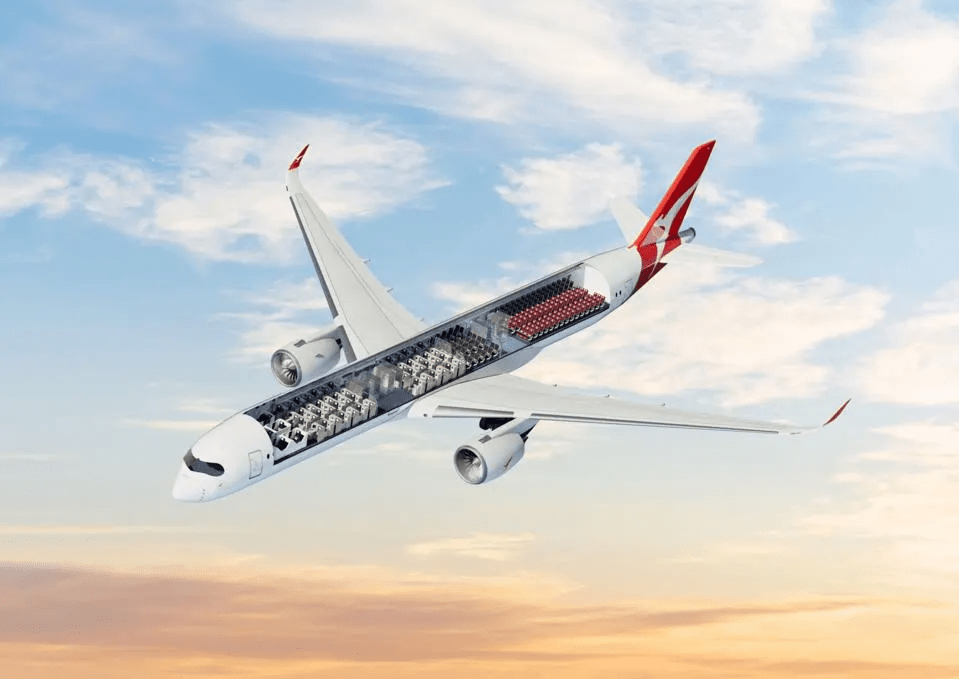
Project Sunrise is a long-awaited and much-delayed flagship program that will see Qantas operate direct flights from Sydney to London and New York. The airline ordered 12 Airbus A350 aircraft modified with extra fuel capacity to make Project Sunrise a reality, and is awaiting the delivery of the first A350 next April ahead of services beginning later in 2027.
It is very much a bet on big spenders. The 238-seat aircraft are weighted more heavily toward premium travel: 41 per cent of seats are Premium Economy or above. That is materially higher than the premium mix of Qantas’ Boeing 787-9, which is 29.7 per cent premium.
That premium international travel has been one of Qantas’ strongest metrics over the past year and has seemingly held up amid geopolitical uncertainty will no doubt come as a relief in the airline’s Mascot offices.
Corporate travel, a particularly lucrative cohort, has not been untouched. Qantas said big business and government began spending less on travel in the three months ending June 30, resulting in reduced profit. Those conditions have continued since July began, the airline said.
Related
Crucial Quote
“We welcomed 17 new aircraft during the year and will take delivery of up to 31 this financial year, including our first Project Sunrise A350,” Hudson said on Thursday. “Demand for long-haul routes and premium cabins continues to grow, as does our confidence in Project Sunrise.”
Big Number
$4 billion. That was Qantas’ net capital expenditure for the year, which is more than double what it was spending in the pre-COVID years. The airline is spending big to replace its fleet, which aged heavily under previous chief executive Alan Joyce.
Tangent
The Reserve Bank of Australia will in October begin enforcing restrictions around the fees charge for credit card use, which are in turn impacting the generosity of Frequent Flyer loyalty point offers the banks have historically provided.
Qantas Loyalty has agreed to “revised commercial terms” with its biggest banking and financial service partners, it said on Thursday.
Want to see more Forbes articles on your feed? Tap here to make Forbes Australia a preferred source on Google.
Look back on the week that was with hand-picked articles from Australia and around the world. Sign up to the Forbes Australia newsletter here or become a member here.