Sydney is about to host the world’s richest turf race but Australians aren’t betting like they used to, club members are aging and opposition to the sport itself has been vocal.
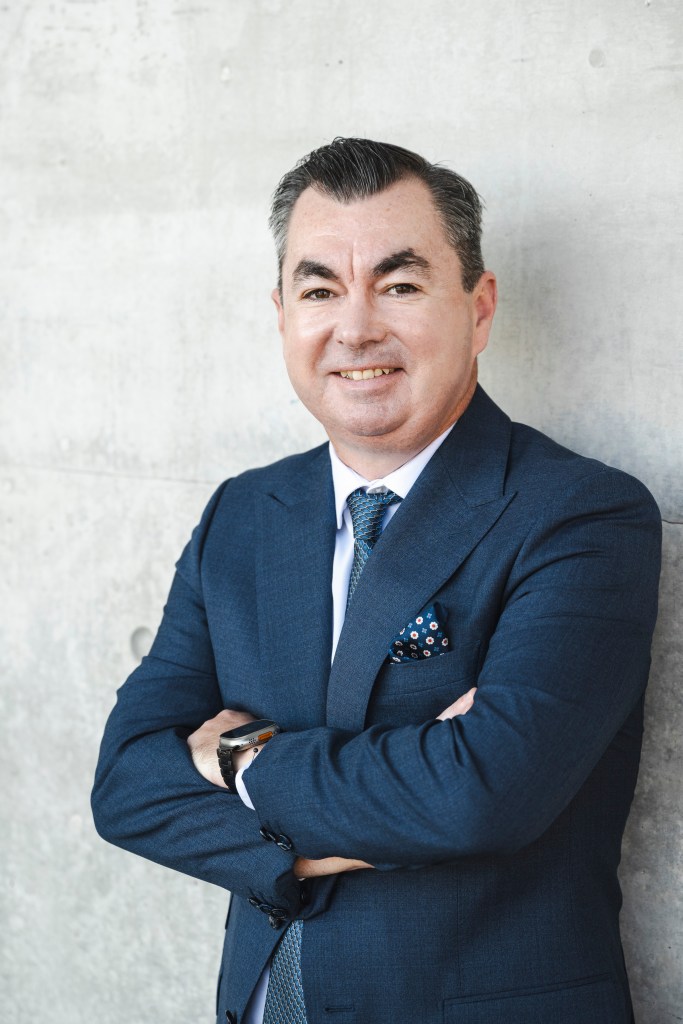
We talked to the Australian Turf Club’s CEO Steve McMahon, Racing NSW’s newly appointed CEO, Graeme Hinton, and legendary trainer David Hayes about what the future looks like.
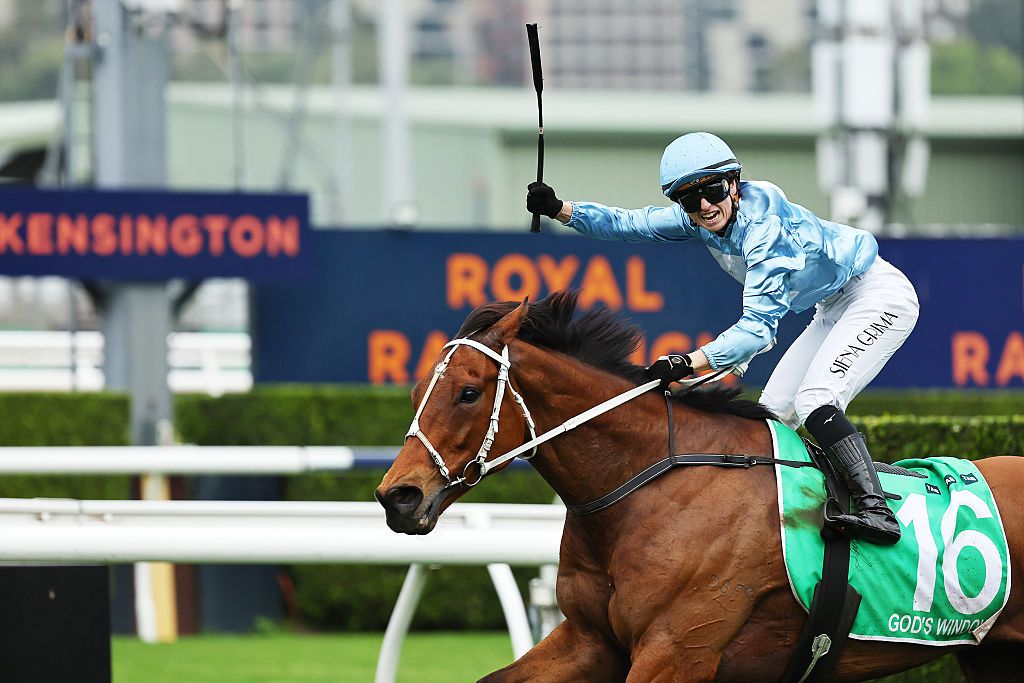
Siena Grima’s voice choked and she was close to tears speaking to a reporter as she cooled her mount down after the running of the $1.5 million Epsom mile at Sydney’s Royal Randwick racecourse on Saturday.
The track may have now properly earned the title sacred turf.
The 24-year-old apprentice piloted five-year old gelding “God’s Window” to a smashing win.
Trainer Chris Waller fought back tears as well.
The Epsom was her first group 1 race, she became the second female to win it, the first apprentice to win it in 45 years and she did it on a horse that paid $26 – what’s known colloquially as a “roughie”.
This dream moment came just a few weeks before the track will host the richest turf race on the planet – the TAB Everest – a $20 million spectacle that attracts the world’s best sprinters – notably the reigning champion, Hong-Kong based Ka Ying Rising.

You’d think all was well in the world of Australian racing and, well it might be, if the sport can keep producing events like that and moments like Grima’s win.
For the uninitiated, The Everest is a “slot” race which means a spot in one of 12 places in the starting gate can be purchased for $700,000 and the holder has the right to race a horse, lease, contract or sell that “slot”.
It’s one of the aspects of the event that Australian Turf Club CEO Steve McMahon says has helped it grow and gave the race the traction it needed in the early days to get established.
The key was to sell three-year slots, not make them a one-off, he says, which, in a way, guaranteed some momentum.
Strong media engagement and support from Government also helped as well as the fact that the move was brash, bold and exciting – “iconically Sydney”, McMahon says.
So how do you go next level from what is already the world’s richest race on turf?
“I think having Ka Ying Rising and the Hong Kong market involved has been a massive jump,” McMahon says.
“If we can get further international exposure there’s even more opportunity for growth. We don’t have them this year, but we often have Japanese horses come out, which opens up a whole new market from a wagering and sponsorship perspective.”
Last year the race set a record for World Pool wagering which allows co-mingling of international betting operators with $16.44 million placed on the race.
It was broadcast to 200 countries with a potential audience reach of 560 million. General admission has sold out for this year’s.
“it’s important for racing that, that the Melbourne Cup and those traditional races are strong, but it’s also important that we have new innovations and new products to engage new audiences,” McMahon says
“The fact that it has become such a Sydney-Melbourne rivalry is testament to the fact that it’s worked.”
Ka Ying Rising’s trainer David Hayes, who’s currently working his second stint with the Hong Kong Jockey Club, also says more international opportunities would give the local industry a boost.
He’d like to see Hong Kong being treated as a quarantine hub which would enable horses to be flown in and out directly.
“It’d be very exciting,” he says. “And the great thing is the stake money. It’s so good, quite incredible actually. Hong Kong stake money, it’s the best in the world, and Australia’s big races match it.”
Remaining relevant
But there are challenges. Wagering income is declining overall, regulators are examining betting rules and advertising, membership of racing clubs is stagnating and there’s a small but vocal opposition to the sport itself from animal welfare groups.
But movement is afoot. The ATC recently made Steve McMahon’s appointment as CEO permanent and after Peter V’Landy’s move to become NRL CEO after more than 20 years at the helm of Racing NSW, Graeme Hinton was appointed chief of the organisation about a week ago.
I asked Hinton what the biggest challenge would be for racing in the future.
“It’s remaining relevant,” he says.
“Racing is competing for people’s discretionary spend. Our challenge is to stay at the front of people’s minds, and it’s important we’re in the media. We’re interesting, we’re exciting. It’s a good product.
“[But] we also [have to] protect our social license, which is at the very, very forefront of everything we do.”
Betting on the future
Regarding that social licence I had spoken with David Hayes, a few days earlier and I asked him a similar question.
He said: “I think that people that have nothing to do with horses have a loud voice and don’t understand them and don’t understand racing. I think they have too much say, and most of what they say is out of context and wrong.”
Hinton’s take though is that that situation is improving.
“[Post COVID] I feel we’ve got [less] pressure or media coverage or concern in the marketplace around equine welfare… and that’s because we’ve taken it off the table by solving the problems,” he says.
“We’ve prohibited a horse be sent to an abattoir or knackery. It’s a rule of racing that a horse must find a suitable new home when it retires. We spend an enormous amount of money to make sure that there’s demand in the equestrian industry. It’s through a lot of work to professionalise the industry, upgrade training tracks, upgrade racetracks. That compounds to building that social license from a welfare point of view.”
We’re seeing brands engage with us now that haven’t engaged for a long time or never engaged before.
Graeme Hinton
CEO, Racing NSW
The bigger challenge according to Hinton is wagering, something he says is “at its highest level of media coverage and highest level of public pressure”.
“We’re unfortunately subject to some legislative change in the federal government, which brought out a lot of issues and had us at the forefront of the media and it portrayed gambling like tobacco, that everybody who has a bet has a problem and is harmed,” he says.
“We fight very hard to defend that because we think people can have a bet within their means and do so comfortably, and we know that 99% of people do. A small portion of people, unfortunately, have a gambling problem and they’re unable to control their spend, and, often, if they have a gambling problem betting on horses, they’ve got a problem betting on… other forms of gambling [too]. It’s not racing itself that is the problem.
“We’ve just got to do some work as an industry to educate those who might not be able to [control their spend] and have some systems in place that can help catch them so that what they do spend is sustainable. If we can do that, we can remove this stigma of gambling being harmful.”
Breeding a new generation
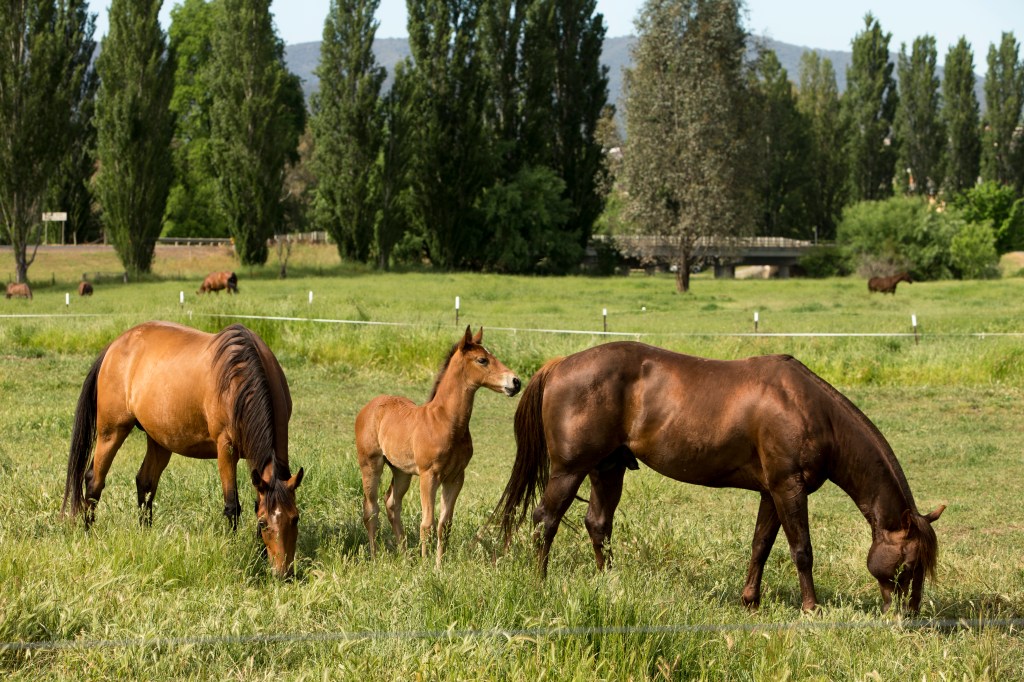
Hinton has also identified broad industry changes which need to be addressed as well, if it’s going to be sustainable.
Efficiency in the foal crop is something he wants to focus on in the next 12 months.
He says somewhere around 3,000 foals are born every year that don’t make it to the track and the amount of capital invested there that gets zero return as a result is significant. He estimates that, and other inefficiencies burns through as much as $100 million a year industry wide.
He admits it’ll never be 100 percent right but there is room for improvement which will release capital for other parts of the industry.
“[Racehorses aren’t] robots, they’re not clones,” he says.
“But if you can squeeze that a little bit and release some of that pressure valve, that takes a lot of pressure off the rest of the breeding industry.”
The other issue is participation costs have skyrocketed.
“If the broader market’s up 50% over 10 years, we’re probably up 80%. Our costs have gone through the roof in a number of areas, and one of my other key pillars over the next 12 months, is to find some efficiencies in that. We don’t have an enormous growth of wagering revenue over the next few years, so I can’t drive up prize money.”
What he says he can do is find some efficiencies and deploy those through subsidies or economies of scale to intervene in the market and drive down things like vet costs, transport costs and insurance costs.
Why you’re seeing the small to mid-sized breeders drop out is because the buyers aren’t there to support those horses because it’s so costly to race that horse.
Graeme Hinton
CEO, Racing NSW
He doesn’t want to see more horses bred but he does want to see more owners and more breeders in the mix.
The more of those you get in there, the stronger the market is and the more you can sustain what is a costly exercise… and that’s a whole process where you use syndication and micro syndication as a bit of a gateway into the product.
“One of the things we haven’t yet done is connected a syndicated group of owners or the micro syndicated owners into the breeding world.
“No one ever says to you, “Hey, would you like to be involved in the breeding journey? Would you like to stay involved in this horse and see how it plays out all the way through?”
“I think that’s an activity the industry has turned a blind eye to. We’ve focused too much on our existing customers… we haven’t looked at how do we generate that next generation of breeders.”
Want to see more Forbes articles on your feed? Tap here to make Forbes Australia a preferred source on Google.
Look back on the week that was with hand-picked articles from Australia and around the world. Sign up to the Forbes Australia newsletter here or become a member here.