
A Melbourne biotech believes it has found a way to desensitise children to peanut allergies without triggering the dangerous reactions that derailed an earlier treatment. Its latest trial results have brought that ambition a step closer.
Melbourne-founded biotech Aravax has announced the success of its Phase 2 clinical trial of an immunotherapy for children with peanut allergy, the most lethal of all the food allergies.
The milestone gives the biotech that spun the idea out of Monash University in 2015 a shot at a peanut allergy treatment market estimated at US$1.9 billion.
But first Aravax has to find “north of US$100 million” (A$146 million) to run a Phase 3 trial, CEO Dr Pascal Hickey tells Forbes Australia ahead of announcing the major breakthrough at the annual scientific meeting of the American College of Allergy, Asthma and Immunology, in Phoenix, Arizona on Thursday.
Allergy treatment is a field littered with expensive failures.
Aravax’s Series B raise brought in US$42 million to get its drug, PVX108, to this point. And the company is gearing up to take it through to market, if it has to, says Hickey. But he is keenly awaiting investor reaction to the study results.
“For a product to be successful in this therapeutic area, it’s not all about efficacy. You need to have an appropriate balance between safety and efficacy.”
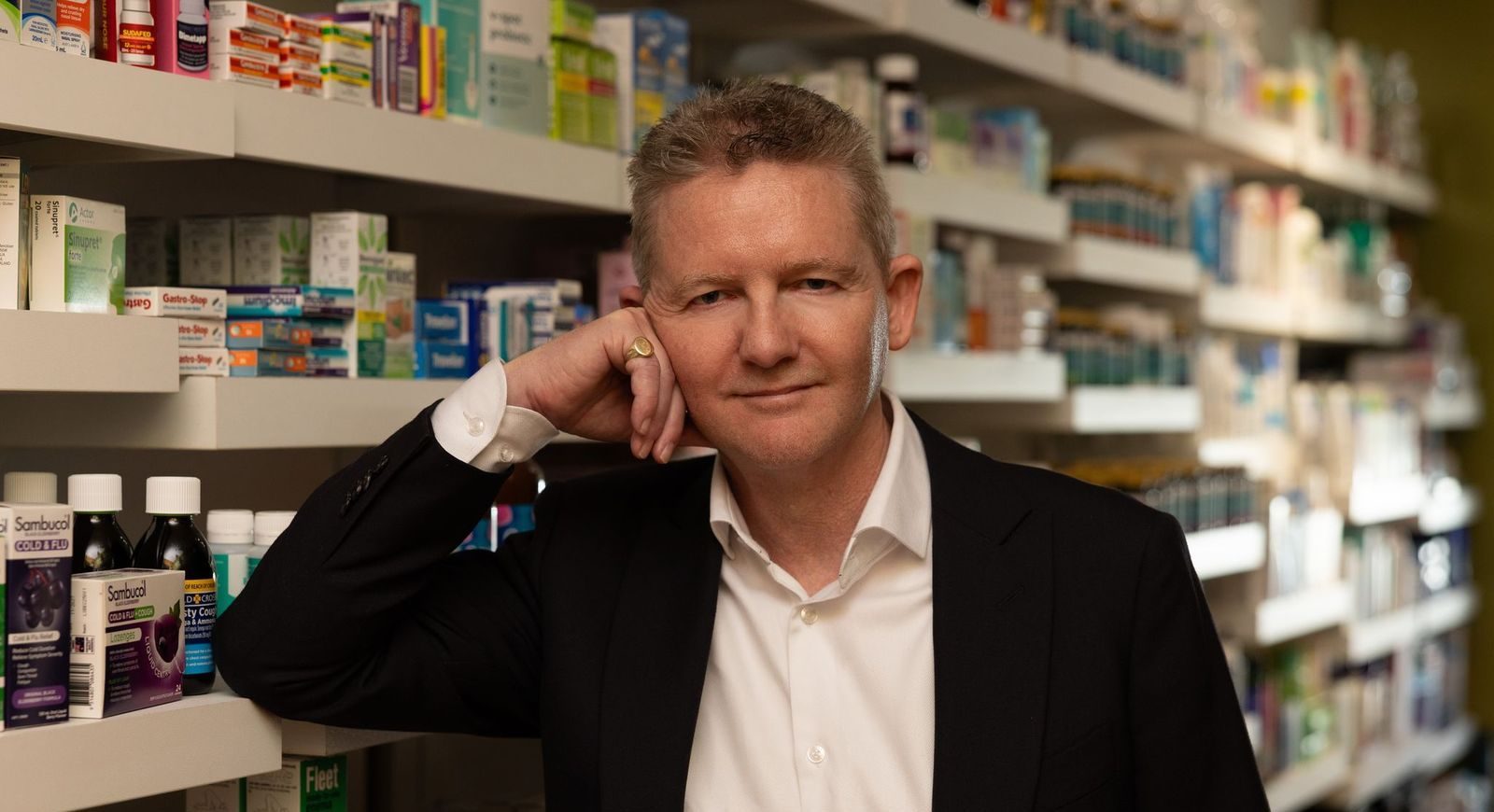
Dr Pascal Hickey
“Of course, we’ve been talking to potential strategic partners along the way, and they’re all very much looking forward to having a look at the data,” Hickey says. “So watch this space. But what’s most important is that we continue to drive the company forward and prepare for success, whether we partner or not.
“We’re doing everything we can to be able to run the Phase 3 alone if that’s the best option for the patients and for investors and for the product itself.”
How it works
Aravax’s technology involves taking the protein causing the allergic reaction and designing a peptide that mimics a small part of that protein to retrain the immune system to recognise it as safe. But the peptide does not contain the part of the peanut protein that causes the allergic reaction, rendering the drug safe to use.
It is delivered by a tiny needle just 0.6mm beneath the surface of the skin.
The trial
When Hickey last spoke to Forbes Australia in 2023, Aravax had only raised US$20 million in its Series B, but then Novartis Venture Fund came on board and other smaller investors followed, giving it the US$42 million it needed to expand its Phase 2 trial.
Aravax enrolled 24 children aged 12 to 17 as a safety pilot in the US. That cleared the way to enrol a younger cohort, aged four to 11, because younger children are at most risk from peanut allergy.
In all, 71 children were enrolled at 14 hospitals in the US and Australia.
Hickey describes how each child was “challenged” with tiny amounts of peanut protein at the start of the trial. “There’ll be three or four study nurses in the room. There’ll be a ‘crash cart’ [a resuscitation trolley] in the corner.
“There’s a chocolate matrix that has well-defined quantities of peanut protein in it, and we give them very, very small doses to begin with, and then we observe them looking for signs of the onset of an anaphylactic reaction.”
“The prospect of a therapy that could retrain the immune system to tolerate peanut allergens could be life changing for many people.”
Professor Kirsten Perrett
If there’s no reaction after 20 minutes, the child gets another dose, and another, until they show signs of a reaction, establishing that child’s tolerance level. “It’s almost a full day in the clinic,” says Hickey. “It’s quite a burdensome procedure.”
If any child could tolerate more than 100 milligrams of peanut protein – equivalent to one third of a peanut – they were excluded.
They were randomised into three groups: placebo, low dose and high dose of PVX108, and received a monthly dose for 12 months before being retested.
The children in the high-dose group tolerated 2.4 times more protein after treatment compared with the placebo group, which improved an average of 1.2-fold on the initial test.
“We then did something that no one else has ever done,” says Hickey. “We kept all of those kids on trial for another six months with no further dosing with drug, and we repeated the food challenge again at the 18-month time point.”
They wanted to test the hypothesis that their drug would have a lasting benefit.

“So that was quite a courageous add-on to the study,” says Hickey.
It worked. They found there was a lasting response in some children.
“As a secondary endpoint in our trial, we also used a predefined definition of a clinical responder – one that we anticipate may be acceptable to the FDA for our Phase 3 trials. And that is anybody that can tolerate 300 milligrams of peanut is regarded as a responder to therapy.”
Aravax wasn’t expecting to see a statistically significant improvement on that endpoint, says Hickey. “That’s a blunt instrument, and you generally need much larger trial sizes to see statistical significance. But we were very pleased that we did see, at the high dose, a statistically significant increase in the number of kids that could tolerate 300 milligrams of peanut at the 12-month time point.”

That is only one peanut’s worth.
“But in the context of an accidental exposure in the real world, it’s actually quite a lot,” says Hickey. The median amount consumed by children coming to hospital emergency departments with anaphylaxis was just 150 milligrams, he says.
Forty-five per cent of children in the high-dose group reached that 300-milligram tolerance, more than tripling their tolerance during the course of the study.
This compares unfavourably to a rival drug, Palforzia, which got 67 per cent of children to tolerate twice as much – 600 milligrams.
Stephen Bradbury moment?
Palforzia, which was essentially a pharmaceutical-grade peanut flour taken with food daily, hit the market with the expectation it would be a blockbuster. But too many adverse reactions led to it flopping in the market. Parents wouldn’t give it to their children. Doctors wouldn’t prescribe it. It was discontinued in July. Nestlé reportedly lost US$2.1 billion on it, and peanut-allergic children were again left with no treatments.
PVX108, on the other hand, was well tolerated in the Phase 2 trial, with no treatment-related allergic adverse events, including anaphylaxis, and no treatment-related serious adverse events reported at either dose level.
“For a product to be successful in this therapeutic area, it’s not all about efficacy,” says Hickey. “You need to have an appropriate balance between safety and efficacy. And with the peptide immunotherapy approach, it’s really designed to overcome all of the problems that were associated with Palforzia.”

Four days after Palforzia was discontinued, the US FDA awarded PVX108 a fast track designation because of the huge unmet need.
Hickey says the fast track will speed up the process. “It enables us to get more rapid responses to questions, a few more meetings. It means they will put more effort into responding to requests for help and interactions moving forwards.”
Brandon Capital founding investor Dr Chris Smith, who is chair of Aravax, said the PVX108 journey had been a rollercoaster. “But moments like this remind you why you do it. Knowing that something you’ve backed could one day profoundly change the lives of children with peanut allergy and their families is incredibly rewarding. There’s still a way to go, but for the first time, [with these data], we can really see the light at the end of the tunnel.”
Principal investigator in Australia for the trial, Professor Kirsten Perrett, said allergies affected 8.2 million Australians.
“Peanuts are one of the most common causes of anaphylaxis in children with food allergies. The fear of a severe life-threatening anaphylactic reaction is something these children and their families live with every day.
“The prospect of a therapy that could retrain the immune system to tolerate peanut allergens could be life changing for many people.”
Want to see more Forbes articles on your feed? Tap here to make Forbes Australia a preferred source on Google.
Look back on the week that was with hand-picked articles from Australia and around the world. Sign up to the Forbes Australia newsletter here or become a member here.