
He helped turn Australian research into two FDA-approved medicines, built a multibillion-dollar biotech and is now betting on funnel-web spider venom to protect hearts.
Mark Smythe has never been interested in science for science’s sake. The chemist from Townsville wanted to make things that worked, preferably things that could make people healthier.
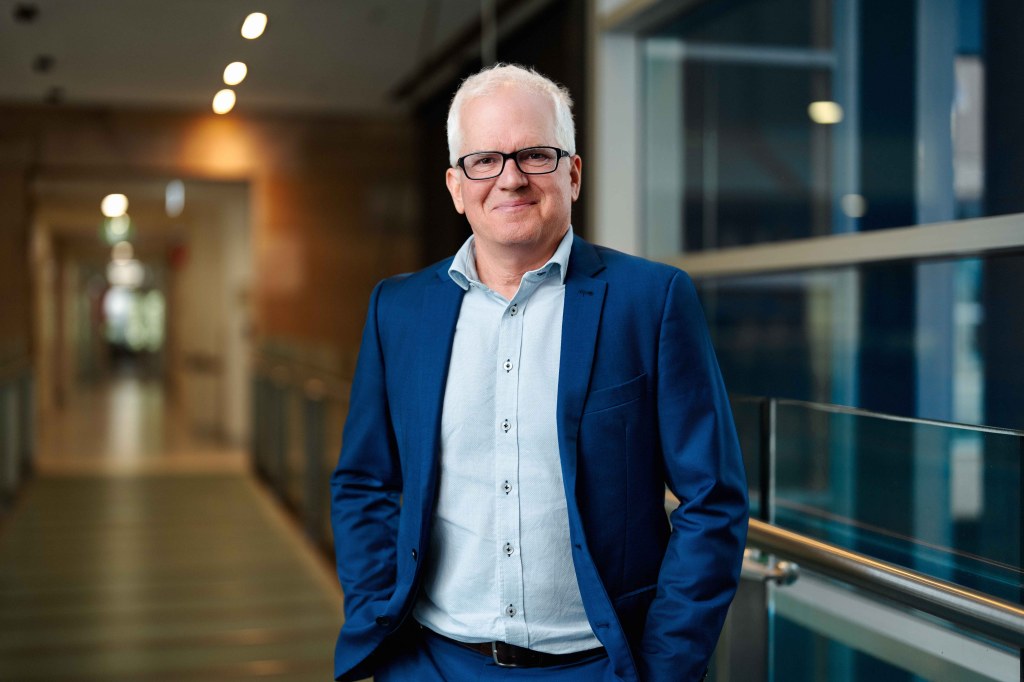
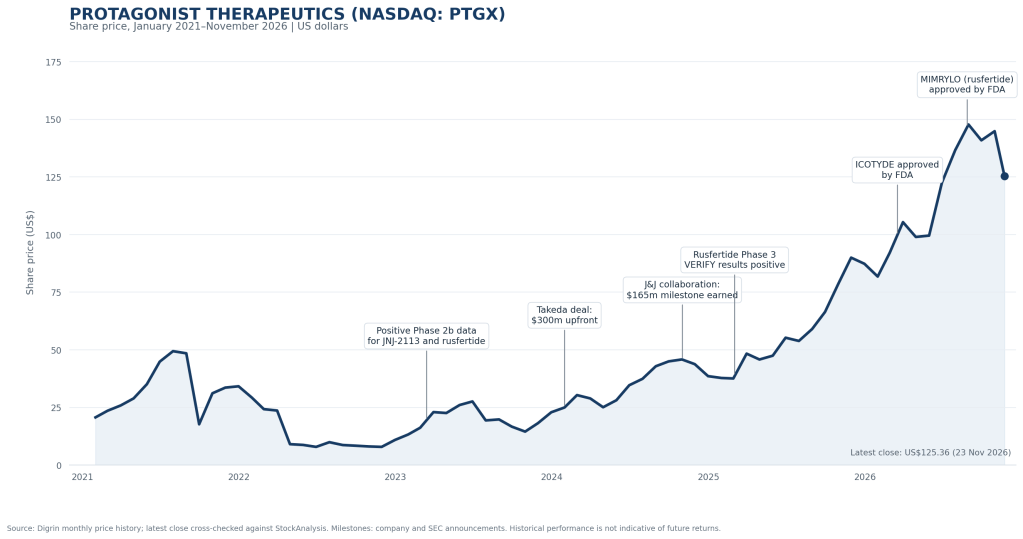
Twenty-five years of slogging it out in startup land saw that dream come to fruition this year with two drugs approved by the US FDA, which drove the company he founded to achieve a 15-fold increase in share price since 2022 to become Australia’s most valuable university spinout ever, with a current market cap of more than $12 billion.
Now, the 61-year-old has two other startups chasing heart attack, stroke and a painkiller to substitute for opioids. On Tuesday night, he was honoured for his efforts with Australia’s most prestigious science award, the Prime Minister’s Prize for Innovation.
The common thread through his work is a belief that nature has already done much of the hard slog of drug discovery; scientists just need to work out how to harness it.
Designer drug world first
Smythe was working at the Nabarlek uranium mine in Arnhem Land, Northern Territory, as a junior chemist when he turned down an offer of a traditional PhD at James Cook University. He wasn’t interested in academic research. He wanted to work on things that were going to make a difference.

So in the late ’80s he wrote a letter to Professor Mark von Itzstein in Melbourne seeking to do a PhD under him. Von Itzstein was in a team attempting to do what no one had ever done before, design a drug to combat influenza. Von Itzstein was impressed that this kid from North Queensland was prepared to up stumps and come to Victoria. “That was pretty unusual in those days,” von Itzstein tells Forbes Australia. “Then, having talked with Mark, it was clear that he had a clear direction in his mind about what he wanted to achieve. He was more focused than others his age. He was already a very good communicator.”
“He was one of the hardest working people I’ve ever known. And the other word that I would use is ‘tenacity’ … Like a dog with a bone.”
Professor Mark von Itzstein
Smythe won a scholarship through Biota Holdings Ltd, one of Australia’s first modern biotechs, which was supporting von Itzstein’s work.
“I always had a drive that I wanted to use my chemistry skills to make products,” says Smythe. “I was never really an academic person. Basic research is very important, but it just wasn’t for me.”
Smythe worked on designing the structure of the carbohydrate that would achieve what had appeared to be an impossible dream, inhibiting the lethal flu virus. His name was on the seminal 1993 Nature paper that outlined the world’s first antiviral drug candidate “rationally designed” on a computer, then synthesised and shown to work in mice and ferrets.
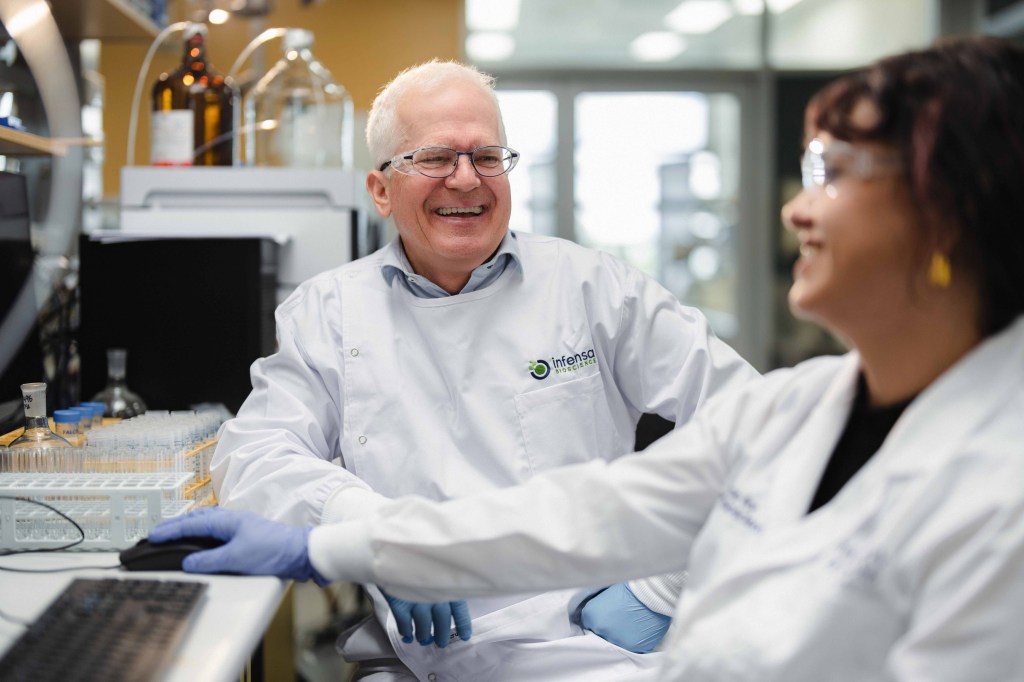
Von Itzstein pays tribute to his student: “He was one of the hardest working people I’ve ever known. And the other word that I would use is ‘tenacity’ … Like a dog with a bone … it was inevitable that he was going to be a superstar.”
Biota took its flu drug, Relenza, to market with multinational GSK in 1999. The puffer’s commercial success was limited by later competition from Roche’s Tamiflu, which had used some of the open-sourced Australian science to develop its anti-flu tablet.
Smythe was long gone by that time – at Washington University in St Louis for a postdoc, looking at molecular modelling of “constrained peptides”, short chains of amino acids chemically locked into a rigid 3D shape.
The aha moment
Smythe came back to the University of Queensland to join the Institute for Molecular Bioscience.
“We ended up merging into this group of chemists and biologists and a genetics group. So it was a really fertile environment to marry chemistry and biology,” says Smythe.
Most natural peptides are floppy, like wet noodles, and are easily broken down in the body, which is a problem when trying to turn them into medicines. But Smythe started looking at animal venoms – peptides that nature had designed so they could not be easily broken down by the creature into which they’d been thrust.
“I saw the biology and I saw what they had done and I said, you know, I’m going to give it a go.”
Professor Mark Smythe
“And the aha moment for me was really simple,” says Smythe. “Nature generates these molecules and they’re exquisitely good at controlling biology … They’re found in marine animals like cone snails, they’re found in spiders, they’re found in plants and they’re found everywhere. Yet we don’t use them in our drug repertoire.
“As a medicinal chemist whose job is to manipulate chemistry to modulate biology for the betterment of society, I thought, ‘Why aren’t we using these?’”
He’d found his life’s work.
Smythe developed a computer-based drug-design tool that could both predict the structure of therapeutic peptides and work out how to make them in the lab.
In 2001 he spun the know-how out into a startup, Protagonist Therapeutics.
“We wrote our own molecular design environment called Vectrix, which is still used by the company today. And then we developed methods and secret sauce on how to synthesize them and fold them. You’ve got to fold them into these knots. And the third component was we worked out how to use biology to make tens of millions of them using what’s called phage display.”
Raising capital was hard. Smythe had to go to the US, where he found Ron Laufer at Lilly Ventures, who led a $12 million Series A raise in 2006.
“We were one of the very early – if not the first – companies to bring US venture capital into Australia,” says Smythe. “I don’t mark trees with this sort of stuff, but we were very early in that process.”

That raise was joined by Melbourne-based Starfish Ventures and Queensland BioCapital Funds (QBF). Starfish’s Michael Panaccio tells Forbes Australia that it was Smythe personally who he was investing in. “He had cut his teeth at Biota so he had worked in a commercial environment to develop novel IP with some success … He was softly spoken and used science to convince you that he was on the right track…
“Every time there was a technical road block, Mark would quietly work up some options to test. No ego just a scientific methodology to keep advancing the science.” Starfish has continued to hold its Protagonist stock.
Panaccio declines to say how profitable the investment has been.
The grind
There were not enough investors like that in Australia back then, though. Protagonist set up a holding company in the US with no staff in it for years to act as an investment vehicle until the company started working towards its 2016 Nasdaq listing.
Smythe led the company as CEO until 2008, then chief scientific officer, then “head of research alliances”.
Protagonist’s first two drugs only got US FDA approval this year. The first, Icotrokinra, marketed by Johnson & Johnson as ICOTYDE, is a daily pill that works on severe psoriasis and saves patients from injected biologics. It was the first oral peptide of its kind.
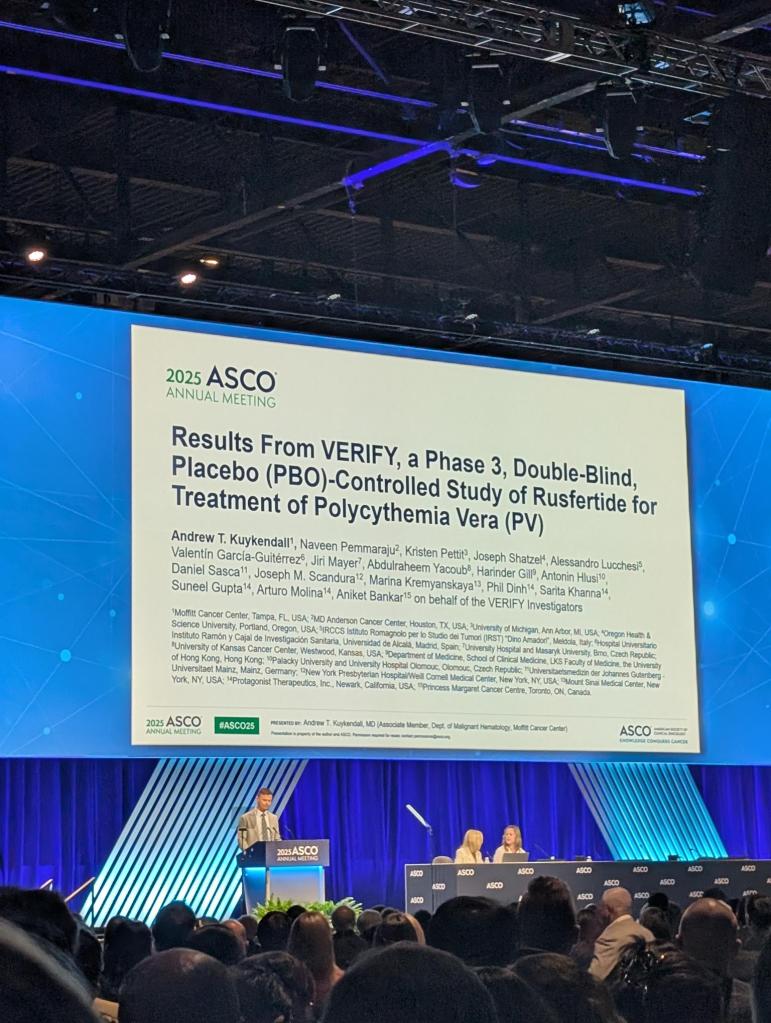
Months later, Rusfertide, marketed by Takeda as MIMRYLO, was approved for treating polycythaemia vera, a rare disorder that thickens the blood. Sufferers have to regularly have their blood drained. Rusfertide mimics the natural hormone hepcidin, restricting iron availability and reducing the need for repeated blood withdrawals.
“We control the red blood cell production to a really safe level,” says Smythe, “and that impacts all of their symptoms. So, they have less fatigue and less brain fog.”
Smythe won’t say which animal peptide it was based on. “It’s confidential information,” he says, offering that it wasn’t a venom and was similar to something they found in the horseshoe crab.
Protagonist Therapeutics has a pipeline chasing obesity, asthma and eczema targets, with its advantage being its specialisation in oral peptides. It is working on an oral GLP-1 agonist to do the same job as Ozempic, but with a pill, plus another appetite-suppressing hormone, amylin.
During the whole time he was building Protagonist, Smythe continued to devote one day a week to teaching and lab work at the University of Queensland where Protagonist was financially supporting a group of scientists to the tune of $25 million. “That’s where my ideas came from and my next source of inspiration,” he says.
Professor Glenn King and his team were looking at the K’gari funnel-web spider [Fraser Island funnel-web]. Its venom was the basis for a drug candidate which could reduce acid damage to the heart and brain during heart attacks and strokes. They asked Smythe for advice.
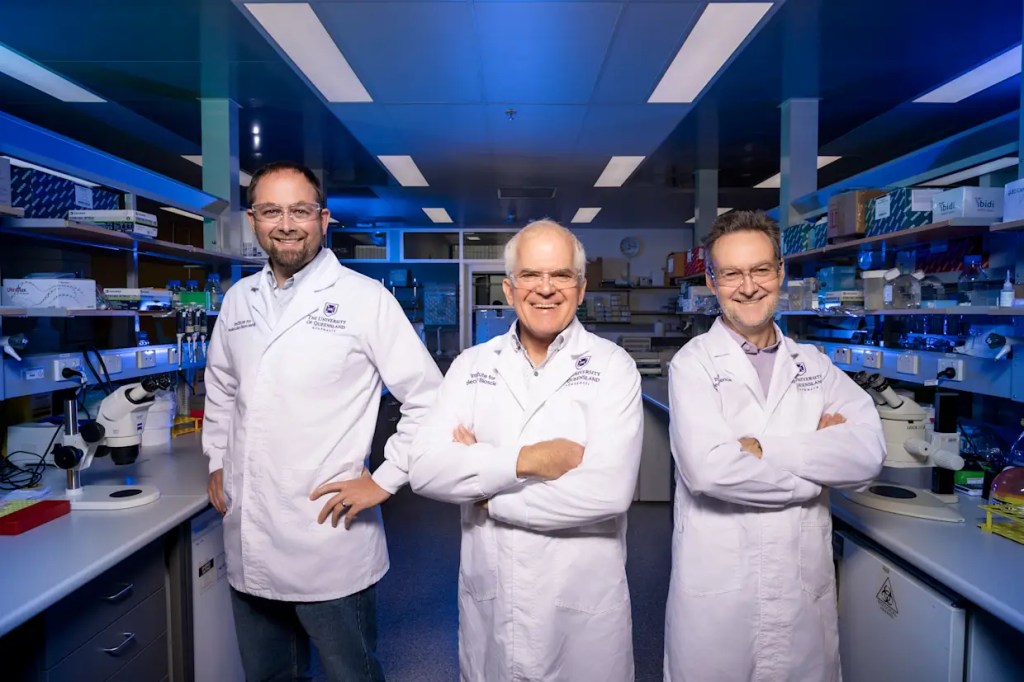
“I saw this work and I said, ‘What is the world’s biggest killer? Cardiovascular disease. Every 45 seconds someone has a heart attack and 2,000 people in the US will die in a heart attack every 24 hours.’
“We have no drug that protects the heart during a heart attack or the brain during a stroke. This is the biggest medical need that we have. I saw the biology and I saw what they had done and I said, you know, I’m going to give it a go.”
He founded Infensa in 2021 with King and others to pursue this funnel-web avenue. He quit Protagonist in April 2022 when it had two products in Phase 3 trials.
Two months later Infensa announced a $23 million raise. And it got almost $18 million in a federal government research grant in 2024.
The driver
The first use of Infensa’s drug candidate is in hearts that are being kept alive for heart transplants. “There’s 50,000 people on a heart transplant waiting list [worldwide],” says Smythe. “There’s 14,000 hearts procured each year, of which only 7,000 are viable. We want to make more of those hearts viable so we can do more heart transplants.”
“Phase 1 is complete, and we have human research ethics committee approval to do the Phase 1B, which is a heart transplant study. We’re hoping to dose our first human heart in the heart transplant context in late January, February.
“As soon as we show that it works in humans, which will be around maybe mid-year [2027], we will start instigating human myocardial infarction or heart attack studies. We’re also going to go into coronary artery bypass grafting. So there’s about 1.2 million cardiac surgeries per year, and when a surgeon does cardiac surgery, they stop the heart … When that stops, both your heart and your kidneys are being damaged … and that’s a billion-dollar market.”
In the best-case scenario, he sees this future drug in ambulances, perhaps also alongside every defibrillator in the community so that people suffering heart attacks or stroke can be dosed immediately.
His other project is Vast Biosciences, which he co-founded in 2015. Same as Biota in the ’90s, it is pursuing carbohydrates as medicine, built on a small molecule discovery platform. It has chosen to point its guns at treating pain and filling the vast hole left by the societal recoiling from opioids in the wake of the misuse epidemic.
Asked if he still has equity in Protagonist, Smythe says he does [though not above the 5 per cent which requires disclosure]. “I don’t do what I do for …” he pauses. “Like, the Prime Minister’s Prize is amazing, don’t get me wrong, but I don’t do it for the Prime Minister’s Prize, and nor do I do it for the cash.
“I do it because it makes a difference to patients and it makes a difference to society … They are long, hard days. So you’ve really got to be driven.”
Want to see more Forbes articles on your feed? Tap here to make Forbes Australia a preferred source on Google.
Look back on the week that was with hand-picked articles from Australia and around the world. Sign up to the Forbes Australia newsletter here or become a member here.