
The engineer who helped build Nanosonics has taken inventions from kitchen-bench prototypes to global markets. His advice to founders: find out if anyone will buy it before you build it.
In a scene reminiscent of an Elizabeth Holmes drama, the investors were prowling the labs of medtech startup Nanosonics, which was heading to an IPO. But its key product only worked sometimes and the core technology sat in a Tupperware container with a sawn-off Coke bottle performing an important role, held in by roof-and-gutter sealant from Bunnings.
But it was housed in a beautiful casing.
“It was a real bodge job,” Michael Potas tells Forbes Australia. “We’re all sitting there horrified: ‘Geez. Don’t look inside. Don’t look inside.’”
But the investors did look. And as it turned out, they weren’t bothered.
“They could see the market potential for the technology,” says Potas. “They could see people wanted to buy it. They could see we could build one. Sure, it was a bit rough, but it didn’t matter at this point, because that’s what they’re putting money in for – so we can develop something that is actually going to do what it needs to do.”
“We were young, we were quite arrogant, and we thought we knew what people needed and what they wanted, and we were wrong, basically.”
Michael Potas
That was two decades ago. Potas went on to become the company’s head of research design and development. And unlike Holmes and her infamous blood test machine, which looked great but never worked, they got the ultrasound probe disinfection system working every time – and looking good – and Nanosonics is now a respected ASX company doing $200 million a year in revenue.
After a decade there, Potas went on to build a design business supporting inventors wanting to turn their ideas into viable products. His new book, Invent. Build. Sell., published this week, draws on those experiences to give a blueprint for those attempting to go beyond the eureka moment.
A tale of two startups
Potas, an electrical engineer, had gone to the US with Australian startup Lake Technology in the late 1990s, where he got to see the dot-com boom and bust up close. It sparked a taste for startups.
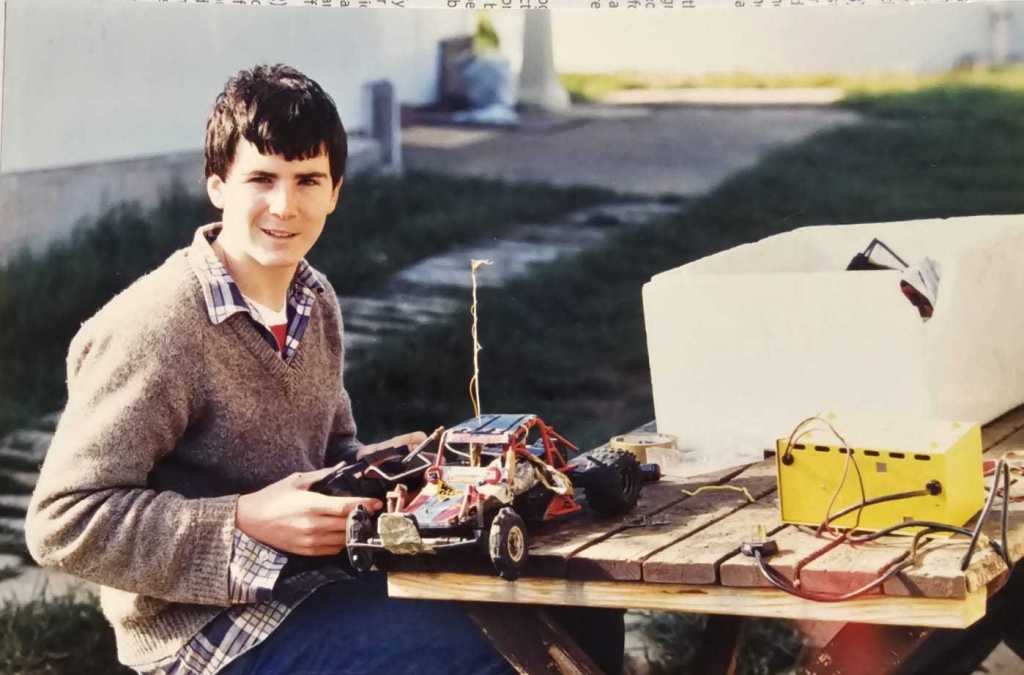
His first attempt was a software business with a friend. They had “a vision of world domination” with a timesheet-software package. “We were young, we were quite arrogant, and we thought we knew what people needed and what they wanted, and we were wrong, basically.”
They spent nearly three years building the product before putting it in front of customers. The problem was that they’d built the wrong thing. The timing didn’t help either. Coming after the dot-com crash, customers and investors had little appetite for another software startup.
“People wouldn’t even return a phone call.”
He learned the lesson. His next idea was for a mountain bike suspension system. Big bouncy suspension was great for the bumps but would have the bike pogoing on the flat as the rider pumped the pedals.
Potas thought he had a way to fix it with a hydraulic system that could be bolted into a suspension fork. He started with a rough proof of concept on the kitchen bench.
“I used a syringe from the chemist and some silicone tubing from the local automotive shop and some springs and things from Dick Smith Electronics.”
The $50 prototype worked well enough to convince him the idea might have legs. So, rather than spend years refining it, he started contacting the big players in the industry. “I didn’t tell them specifically how my invention worked or what it was. I just sold the benefits,” he says. “I’ve got this suspension technology, it’d be great to bolt into mountain bikes, stop the things bouncing around. And I’m looking for an R&D partner to fund it.”
A US company responded. He filed a provisional patent, flew over to meet them and did a deal. “The company put up about $300,000 in today’s money” to develop the technology, and he spent the next 18 months building in the mornings and testing in the afternoons.

“It meant I got to go mountain biking every day. It was the best job ever.”
The venture eventually ran into trouble when the company he was working with went out of business. His route to market disappeared, while competitors had moved ahead with their own technologies.
Still, the contrast with the three years’ slog in the timesheet software business left an impression. “With any startup, you can’t guarantee success. But what you can do is, if you put a really great process in place, you maximise your chance of success.”
Potas went to Nanosonics in 2006. By the time he left in 2015, he had his name on half its patents and its products were being sold in major markets around the world.
For Potas, the prototype-investor episode at Nanosonics was an important lesson in the logic of doing just enough to prove that your product can work before wasting time and money perfecting it. “What you actually need to achieve for a startup can be quite different to what could be great engineering,” he says. “They’re two separate things that you need to keep in mind.”
Putting it to work
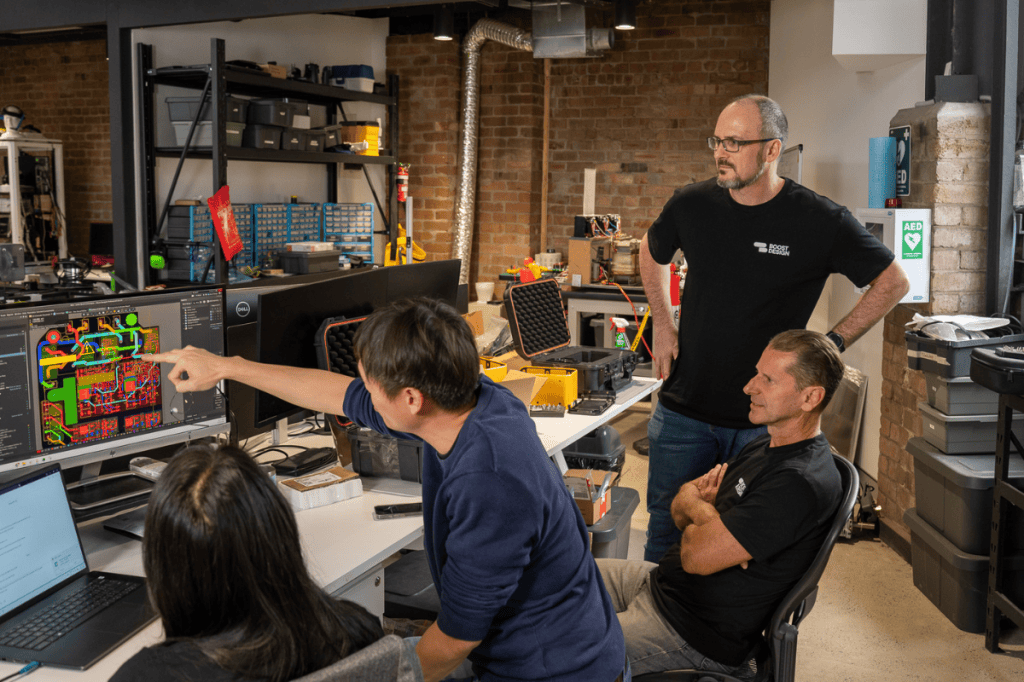
Potas set up Boost Design in 2016, wanting to help inventors get beyond the idea stage. Among the 5,000 people who he says have brought ideas to him since then, there have been a lot of characters.
One inventor arrived with a prototype for an industrial microwave system. Potas won’t say what it was designed to do, but the inventor had decided he needed more energy and wanted to strap multiple microwaves together. “He had his prototype which he showed us in the boot of his car. It looked like a bomb.”
“Some pretty interesting things end up being successful in the market that people wouldn’t predict. Even really experienced people get it wrong.”
Michael Potas
When he eventually turned it on, it caught fire and its radio emissions knocked out Wi-Fi reception across the suburb.
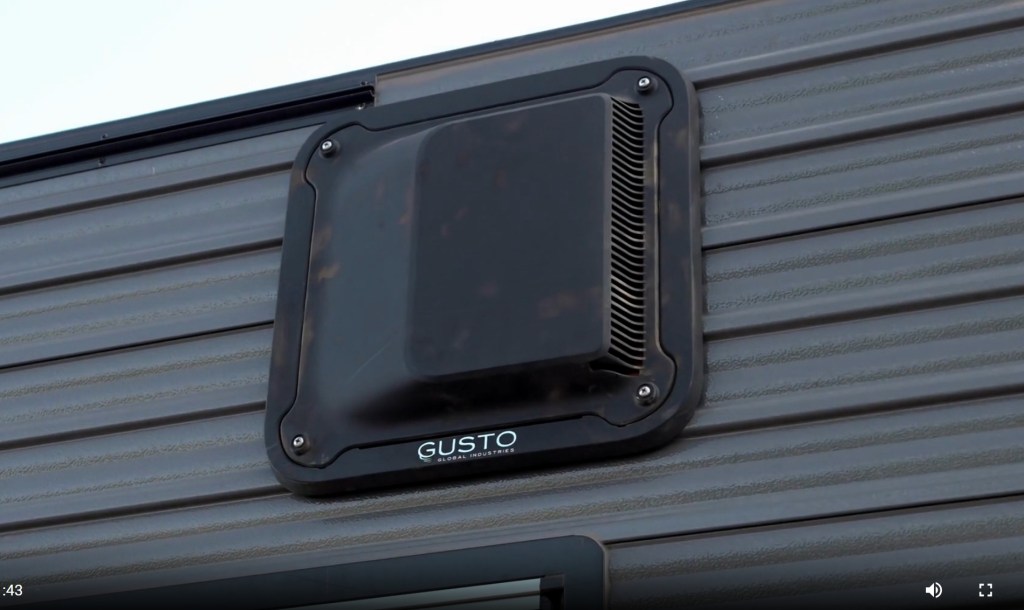
One of Boost’s success stories was a builder who had an idea for a product that would keep the inside of caravans clean when travelling on dusty roads. The problem was that air rushing over a caravan at high speeds creates a vacuum in the van, which sucks dust in through the vents. The builder’s idea was to pressurise the cabin to stop that.
The first step was to establish that the technology could work. The Boost team made rough mock-ups, then developed concept images that looked like finished products. Rather than immediately committing to an expensive prototype, they sent the founder out to see whether anyone wanted to buy it.
“He went and talked to a whole range of different customers,” says Potas. “He went to caravan parks, talked to people there, looked at the retailers and distributors and talked to some caravan manufacturers.”
The manufacturers were interested, but wanted to see a prototype. So Boost built one, and the manufacturers took it away and tested it for a couple of weeks.
They made a commitment of about $1 million, helping fund the rest of the project before the product had even gone into production. The Gusto Dust Reduction System was born and has gone on to be a successful business.
“So by following the steps in the Boost Method, what he’s done is he’s sold the product before he’s made it,” says Potas.
The Boost Method is based on the ideas of Eric Ries’ book, The Lean Startup, with its concept of the minimum viable product. But Ries was talking about software, where iteration is cheap. Potas is working in the world of physical products, where an early mistake can be hard and expensive to rectify. So a minimum viable product is too expensive as a starting point.
He has developed the concept of the “minimum valuable milestone”, where the inventor needs to reach various checkpoints before spending the time and money moving on to the next.
The five principles behind Invent. Build. Sell.
1. Pressure-test the idea
Before spending serious money, research the problem, the potential customers and the market. Establish whether the idea is worth pursuing.
2. Prove there’s a market
Validate that customers actually want the product and are prepared to pay for it. A clever invention is not necessarily a viable business.
3. Test the technology
Establish that the product can be engineered, manufactured and made to work reliably. Use minimum valuable milestones to decide whether to persist, pivot or stop.
4. Protect what you’ve invented
Understand intellectual property, patents and other protections early enough to safeguard the commercial value of the idea.
5. Build the business around the product
Navigate design, prototyping, manufacturing, regulation and investment to turn a working invention into something that can be produced, sold and profitably scaled.
Boost Design has grown to a team of 25 and worked on about 200 projects over the past decade. But there’s a process for filtering the 5,000 ideas that have been brought to them.
“Some people have an idea and want someone else to pay for it to get developed. Like, ‘You can have 5 per cent equity, but you have to pay for all the development and manufacturing,’ and that’s not how it works, unfortunately.”
Potas says the business is happy to tell people early that their ideas won’t work: that they defy the laws of physics; that there are 50 of them in the market already; that it’s going to cost way too much. But he won’t try to predict what’s going to sell. “No one is the expert on what’s gonna be successful and what’s not. Like, YouTube from my perspective – who would want to watch other people’s stupid videos? It turns out billions and billions of people.
“In terms of sales, every startup’s like an experiment. What you want to do is test it as early as possible. So if you’re not sure if people are going to want to buy it, then you need to prioritize, ‘Let’s do the minimum work possible to be able to go out and have a really good go at figuring out whether this product can be successful in the market.’ That’s what we’re always recommending, rather than us saying ‘that’s a silly idea’, because some pretty interesting things end up being successful in the market that people wouldn’t predict. Even really experienced people get it wrong.”
Want to see more Forbes articles on your feed? Tap here to make Forbes Australia a preferred source on Google.
Look back on the week that was with hand-picked articles from Australia and around the world. Sign up to the Forbes Australia newsletter here or become a member here.