
Following an unpolished, swearing predecessor, the team behind Sovereign Australia AI is securing investment to deploy Australis – a platform built to insulate domestic information from foreign jurisdiction.
The first proof of concept at building an Australian large language model came out sounding more like an argument in a North Queensland pub than a trusted wellspring of knowledge, droppin’ the letter “g” from verbs and embracin’ the F-bomb like punctuation.
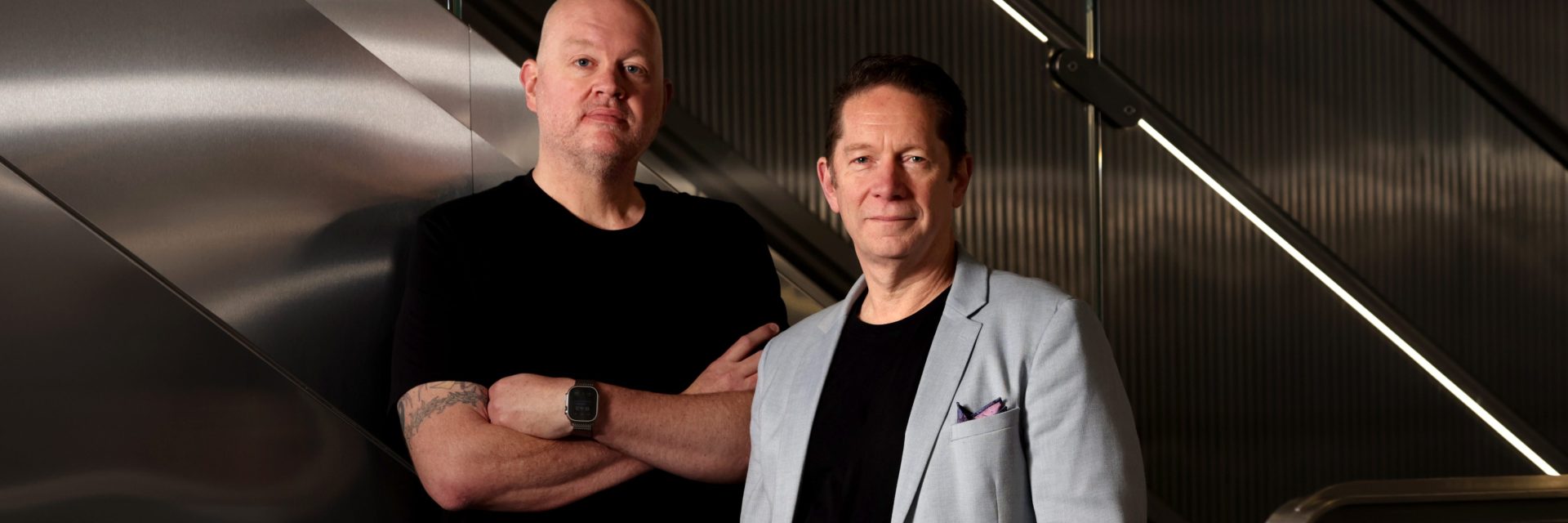
“Troy hates me telling this story,” Sovereign Australia AI co-founder Simon Kriss tells Forbes Australia over a video call with his co-founder Troy Neilson, “but he may have leant too hard on the Reddit data and inadvertently built Bogan AI.”
They were pissing themselves with the answers coming out of the machine like a bloke in singlet and thongs, three schooners deep.
Nevertheless, it was proof of what could be done, easily.
Now the pair are setting out to do something hard – train a large-language model from scratch with a bias towards Australian data, in Australia, using only Australian-owned infrastructure.
“The US is trying to build God in a box. That’s not what Australia needs.”
Sovereign Australia AI co-founder Troy Neilson
They’ve started raising the $80 million they reckon they need to build it. Their start-up is chaired by former MinterEllison chief executive Annette Kimmitt. It has ordered hundreds of AI chips from Nvidia.
A competitor is Ed Craven, the Melbourne-based billionaire co-founder of online gambling site Stake.com and streaming service Kick. Craven’s wholly owned Maincode revealed in August 2025 that it was aiming to build Australia’s first “sovereign large language model, trained on Australian data”. It will be called Matilda.
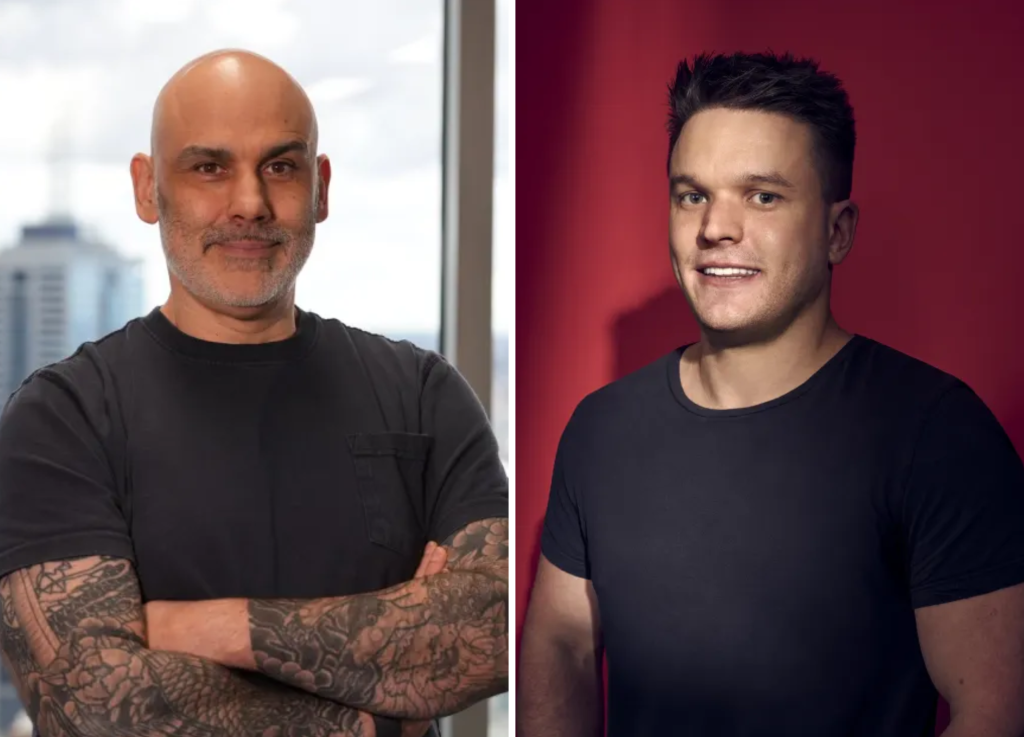
A month later, CEO Kriss and chief technology officer Neilson announced they were attempting the same thing. Theirs will be called Australis. It will be trained on data from all over the world, but with an Australian “bias” and all within Australian-owned data centres.
There’s the cultural element, they explain. It will understand “togs”, “trunks” and “thongs”, and when a patient tells a doctor they’re “not too bad” it will know that might mean they’re bloody awful.
“But there’s a technical layer that’s really important, that stems from the US Cloud Act,” says Neilson. “Understanding that anybody in the US Government can put a request into any US entity and basically take data from any server that they control anywhere around the world. From a sovereignty perspective, that’s really dangerous.
“Think about your banks or your health information. If any part of that tech stack is controlled by a US company, it doesn’t matter where those servers are, they could be smack bang in the middle of Alice Springs. If that company is American and a US government organisation says, ‘We want that data,’ they have to give it to them.”
Neilson says Sovereign Australia AI’s entire stack will be Australian. “We can’t engage with an organisation that isn’t Australian, so all of our partners are Australian through and through. The hardware is going to be located here. It’s got to be managed by Australians … We don’t just talk sovereign in the sense that, like, it’s gunna talk Australian, it’s gunna be Australian. So organisations have the comfort that they need that their data will be as secure as it can be, and covered by Australian laws and regulations to give them a throat to choke if something does go awry.”
The roo that didn’t hop
Kriss and Neilson met through Kangaroos LLM, a non-profit launched to much fanfare in 2024 setting out to create a sovereign AI for Australia.
“They had asked Troy and I to be part of an advisory panel,” says Kriss. “Everybody made a hoopla about it and then nothing. The people behind it buggered off overseas because there was more money to be made in the US and the UAE.”
But Kriss and Neilson stayed in touch, wondering why nobody was doing anything about the problem.
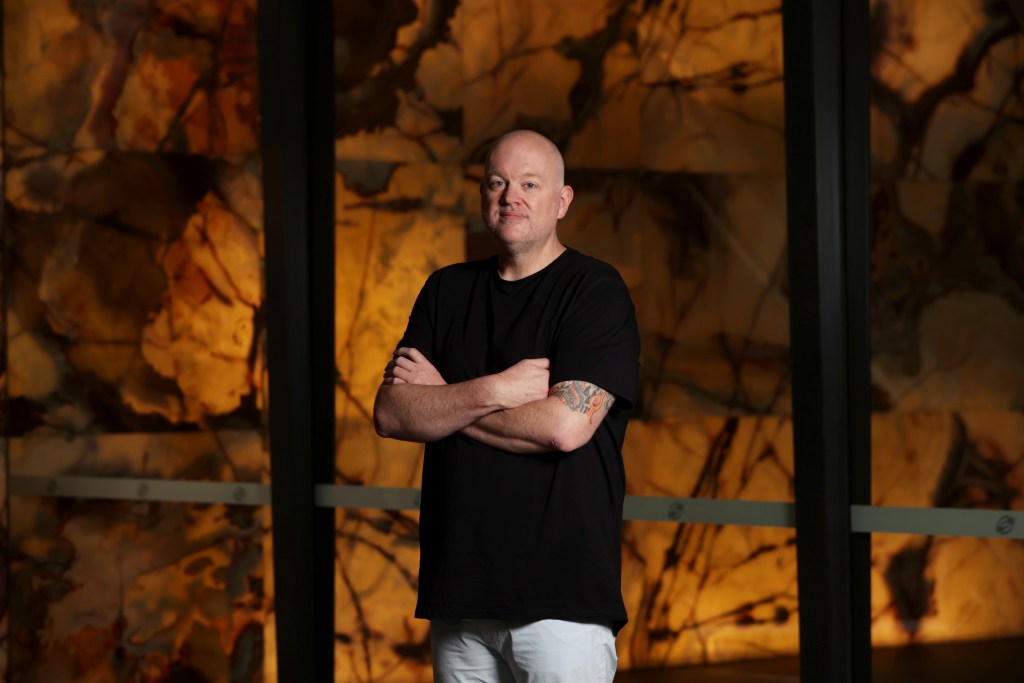
So Kriss flew from Melbourne to meet Neilson, from the Gold Coast, in Brisbane last year.
“For a whole day, we just mapped out things on a whiteboard of what it might look like, how it might work, what it would take. At the end of the day, I kind of looked at Troy and said, ‘Are we doing this?’ And he’s like, ‘Yeah, we’re gunna do it.’ So we just stepped into the breach because Australia needs this product.”
Building a fully functional large language model seems a gargantuan task, but Kriss and Neilson insist it is not. They’re not going head-to-head with ChatGPT. “It would be stupid. They’re five years and a whole pile of money ahead of us. But if you look at how China is building AI. They’re building very practical, very pragmatic, very use-case driven, particularly around robotics, so that industry benefits from what it’s doing.
The China model
“The US is trying to build God in a box. That’s not what Australia needs. We don’t need to have a tool that has reasoning models and image generation and language and all of these things. We’ve already got great image generation models here. Leonardo.AI is a great tool.
“My analogy is that OpenAI built their stuff on Toyota Corollas. We’re at the point where we’re building on Audi GTs and what Nvidia have just released is a Ferrari.”
“What Australia needs is its own truly sovereign, transparent, ethical language model where we understand how it was built, how the data was sourced, all of those types of things in a framework that fits within the Australian rule of law.”
OpenAI has raised a reported US$66 billion to get where it is today with a valuation of US$500 billion.
“People look at the numbers and just associate all of that with building a model. Most of the dollars go into OpenAI giving away their model as a way of capturing the market. It’s foolhardy. We know we can build it for far less. So we’re raising AUD$80 million, and about half of that will be going to our compute resources, and those resources will allow us to build models on par with OpenAI. And one of the challenges we always get in the investor conversation – ‘How do you do that? OpenAI have spent billions of dollars … blah blah blah.’
“We’ve spoken with Nvidia, we’ve confirmed on a myriad of different parameters that we’re on the money. We’ll be able to build a series of models over the next couple of years based on the hardware that we’re looking at.
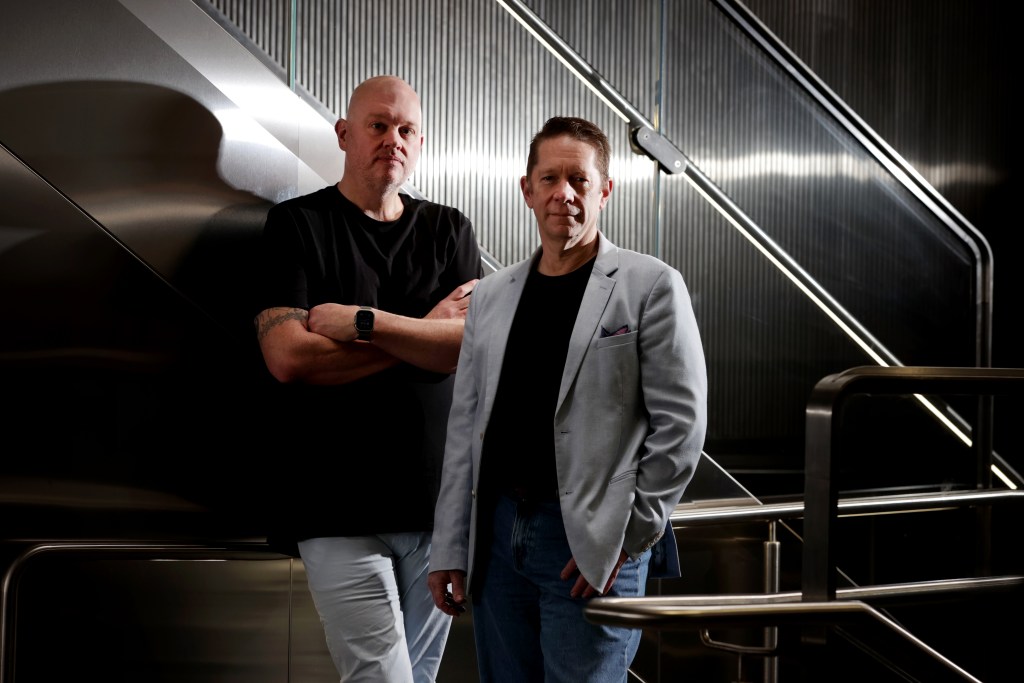
“What further supports that hypothesis is that Nvidia just announced a new series of hardware … which provides further uplift in compute capacity. The generational uplifts are also empowering us to do more.”
Neilson says the Chinese AI startup DeepSeek is a good example. “Everyone’s fearful of what they do, and I understand that from a from a data sovereignty perspective. But in terms of a research perspective, it’s a great story. The guy that runs DeepSeek, he was trained here in Australia, [Dr Zizheng Pan, a senior software engineer at DeepSeek, was trained at the University of Adelaide and did a PhD at Monash University] couldn’t find the traction he needed, so went home to China.
“Whether you believe the numbers is a different thing, but he was able to train DeepSeek for what he claims to be about six million bucks US. Even if you put a 10x on that, you’re still looking at US$60 million, which isn’t an unreasonable figure.
“He’s got some really novel techniques for training. So we’re very confident that we’ll be able to get a myriad of models out the door.”
Neilson says that the major large language models are now in a quandary over how to monetise what they’ve built. “There’s comments around them looking to claim some IP ownership of the outputs of their models, which I find pretty rich considering they’ve stolen most of the data they’ve used to train those models on … They’re heavily committed capital-wise, but we’re far more agile, and I think that’s where our benefit lies. We’ll train purposefully and get to market quickly and look to create value as opposed to just buy the markets.”
Sovereign Australia AI has budgeted $10 million to pay content creators for training on their work, but recognises that the bill will be much higher in the end. Kriss says he’s been talking to Copyright Australia, the Australian Recording Industry Association and others to figure out how to do it.
He talks about a potential profit-share model where copyright owners could be reimbursed more down the track as the model gets more valuable. “We’re trying to break new ground because this doesn’t happen anywhere else, globally,” says Kriss.
Aussie, Aussie, Aussie! AI! AI! AI!
When they were starting out, Neilson researched OpenAI’s data set and found that about 1.2% was Australian.
“We’d like to see that at, say, 5%,” says Kriss, “And bias the model towards that data so that when a kid in school says, tell me about joining the Navy, they hear about the Royal Australian Navy, not about the US Navy. When someone asks about the double jeopardy law, they hear about the Australian interpretation of it, rather than the US.”
Sovereign Australia AI is currently six people. “Once we finish our raise, we’ll grow out to around 84,” says Neilson. “Heavy on the tech, but there’ll be a large commercial presence as well to realise that value. We’re doing everything so lean, we need to be able to market quickly and efficiently.”

They have ordered 256 of Nvidia’s newly released Blackwell B200 GPUs, saying they make their training 30 times faster than those that went before.
They could have their first small model in market within six months of raising their $80 million capital target, they say.
A large model on a par with ChatGPT would take just a year, says Kriss.
Asked when the venture might be profitable if all went to plan, Kriss asks: “Have you got $80 million?”
On his numbers, the company is profitable by the end of year two.
“My analogy is that OpenAI built their stuff on Toyota Corollas. We’re at the point where we’re building on Audi GTs and what Nvidia have just released is a Ferrari.”
That should be smart enough to build something that sounds like a Holden – without making the driver sound like they’ve got a few ’roos loose in the top paddock.
Look back on the week that was with hand-picked articles from Australia and around the world. Sign up to the Forbes Australia newsletter here or become a member here.