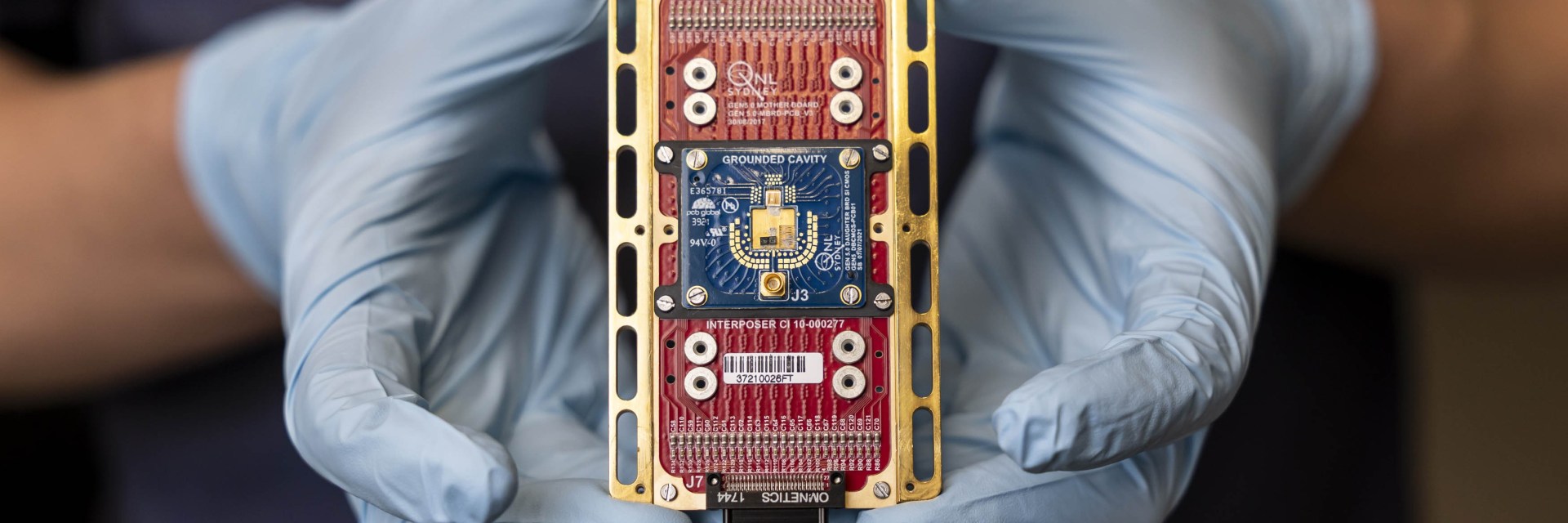

Quantum startup Diraq has secured a $20 million strategic equity investment from the National Reconstruction Fund as the University of New South Wales spinout pushes to outpace global rivals in the race to build a practical quantum computer.
Key Takeaways
- The $20 millionNRFC investment is designed to anchor quantum manufacturing in Australia, not just fund research.
- The investment marks an acceleration in the Australian sovereign investor’s roll out of its $15 billion fund, following recent NRFC investments in Alpha HPA for critical mineral processing [$75 million], $30.7 million in Applied Electric Vehicles, $75 million in Gilmour Space Technologies and $20 million in Omniscient Neurotechnology for brain mapping.
- Diraq’s approach relies on standard silicon chips, aiming to scale quantum computing through existing semiconductor supply chains.
- The company is targeting delivery of a practical, utility-scale quantum computer capable of quantum advantage by 2029.
- Diraq says its machines will be compact enough for data centres and far less energy-intensive than rival systems.
- The start-up is competing in a crowded field that includes PsiQuantum and Silicon Quantum Computing, but has attracted major global and Australian investors.
Background
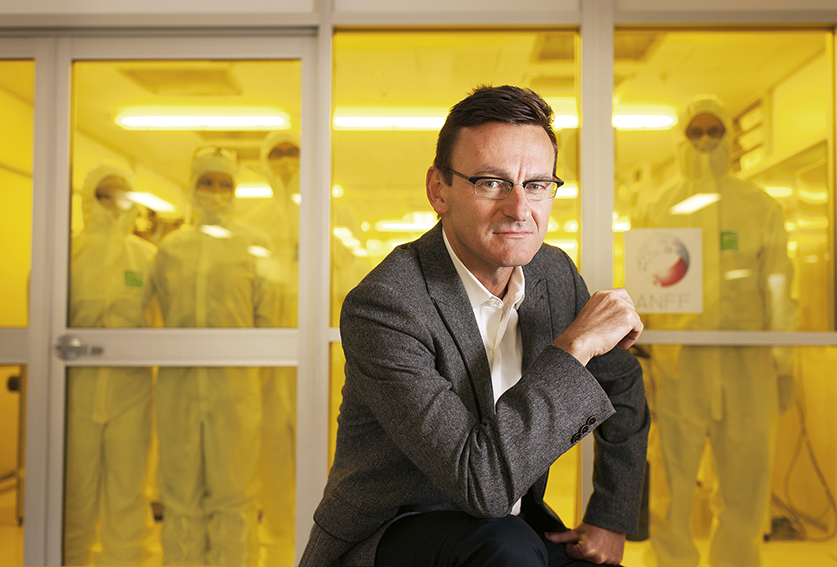
Physicist Andrew Dzurak founded Diraq after breaking away from the lab of his more highly publicised University of New South Wales colleague, Professor Michelle Simmons in 2022.
Diraq is developing quantum computers based on silicon spin qubits, using the same type of chips found in conventional electronics. The company argues this approach gives it a structural advantage over rivals relying on photonics or exotic materials, allowing far greater qubit density on a single chip.
In 2024, Diraq reported a key technical milestone, demonstrating 99.9% control accuracy for a single qubit and the ability to operate silicon qubits at higher temperatures than most competing systems. The company says that level of precision is a prerequisite for error-corrected, large-scale quantum computing and underpins its claim that it can deliver a practical machine rather than a laboratory curiosity.
Diraq’s technology has attracted significant backing from global deep-tech investors and strategic partners, including semiconductor manufacturers GlobalFoundries and IMEC, as well as technology companies such as Dell and Nvidia.
While the Australian taxpayer has pumped $1 billion into Diraq’s rival, PsiQuantum, Diraq is positioning itself as the most direct path to a compact, energy-efficient quantum computer that can be deployed inside existing data centres.
The company recently launched operations in Melbourne, in addition to its two hubs in Sydney, and has U.S. operations in Palo Alto, Boston and Chicago.
Main Sequence Ventures Investment Manager Alejandra Romero said, “At Main Sequence, we look for ‘unfair advantages’. Diraq has the ultimate edge: they are the only players capable of putting millions of qubits on a single chip using the world’s existing multi-trillion-dollar silicon supply chain. While other quantum approaches require exotic materials or massive footprints, Diraq scales.”
Diraq Founder & CEO Andrew Dzurak said it was a pivotal moment where years of breakthrough research was transitioning into a commercial reality. “Australia has always been a quantum powerhouse in the lab and, with the NRFC’s backing, we are ensuring it becomes a quantum powerhouse in the market … By backing Diraq, the NRFC is not just investing in a company; it is helping to building a sovereign, advanced manufacturing capacity that will allow Australia to lead the next era of computing.”
He said it was timely, given the data centre boom. “Diraq’s quantum computers are natively designed to integrate seamlessly with existing data centres, offering a unique, homegrown advantage. By leveraging Australian quantum expertise, local businesses—from energy providers optimising the power grid to defence and pharmaceutical innovators—can gain a decisive competitive advantage in the global market, ensuring Australia captures the full economic value of its inventions.”
Tangent
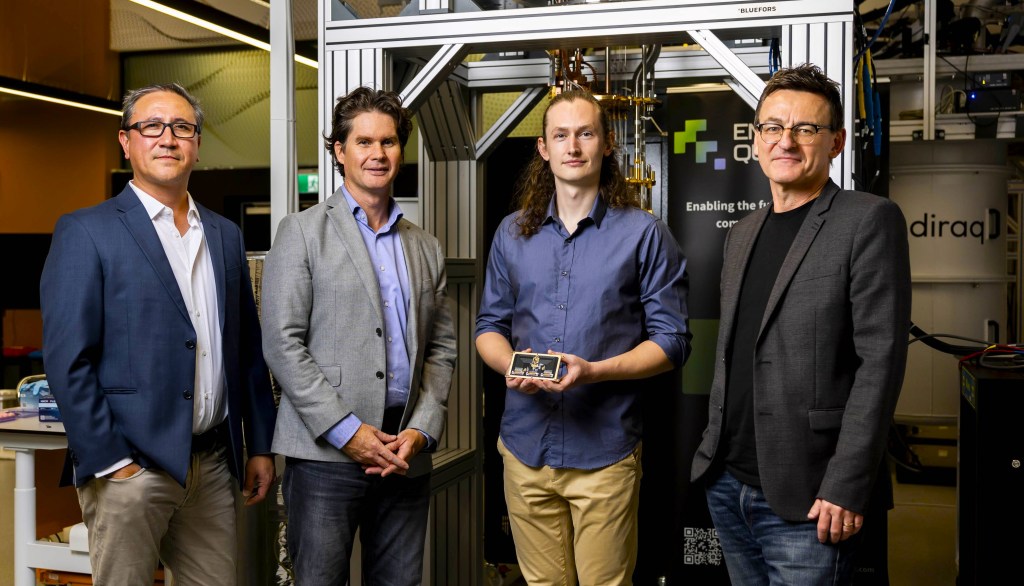
Diraq has teamed up with Emergence Quantum, a start-up spun out of Microsoft’s shuttered Australian lab, to tackle one of the trickiest plumbing problems in quantum computing. The collaboration, showcased in a 2025 Nature paper, combines Diraq’s silicon qubits with Emergence’s “cryo-CMOS” control circuits, which operate at millikelvin temperatures without degrading qubit performance. The partnership brings together two rebel breakaways – Dzurak’s team having split from UNSW’s high-profile Silicon Quantum Computing, and Reilly’s team choosing independence over a move to Microsoft HQ in Seattle.
Big Number
$15.5 billion – estimated global investment in quantum computing in 2025, as governments and private investors race to build the first commercially viable machines.