
Pegasus had wings; Ka Ying Rising doesn’t need them. As the Everest champion returns to Sydney, jockey Zac Purton and trainer David Hayes talked to Stewart Hawkins about how this extraordinary sprinter makes it all look so easy.
This story features in Issue 25 – out now. Tap here to secure your copy.
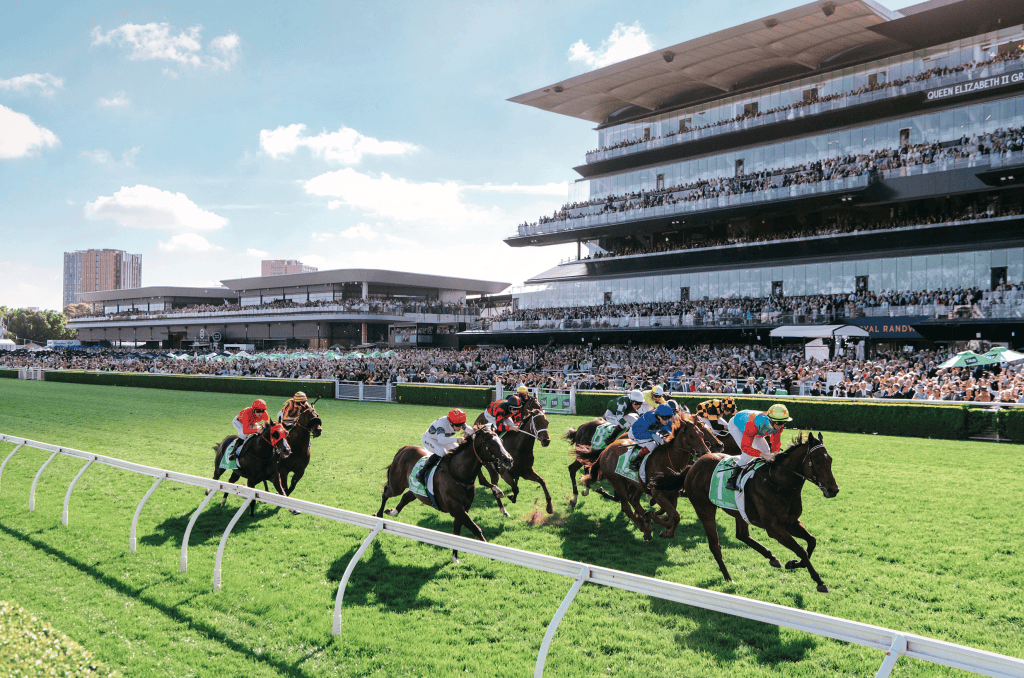
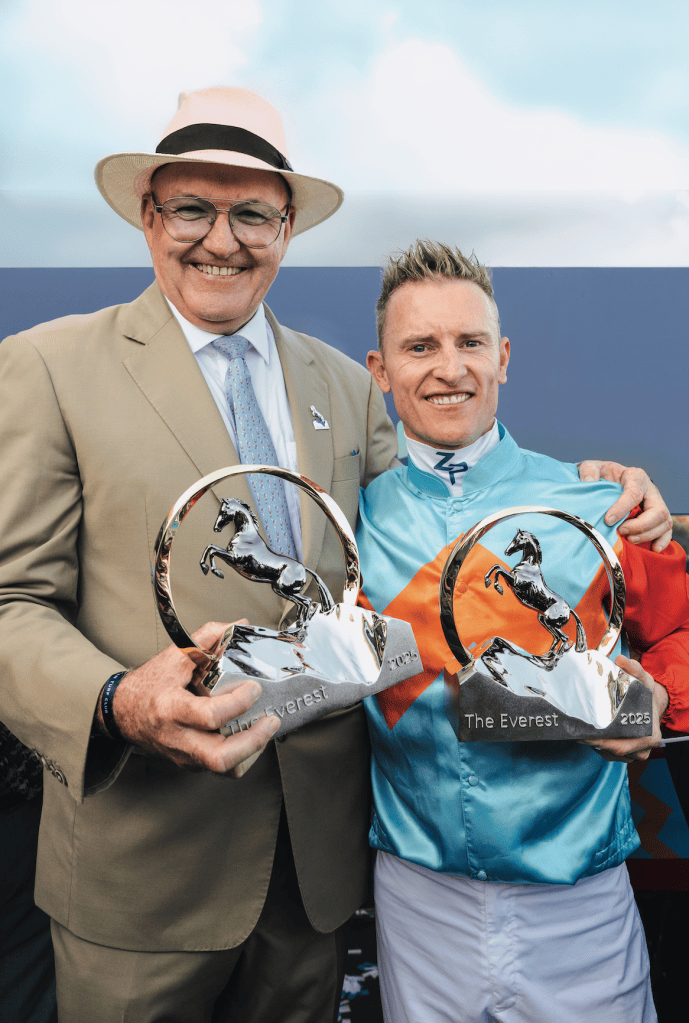
Zac Purton’s tone shifted as soon as I asked him about Ka Ying Rising. The New Zealand-born gelding has won around $30 million in prize money, 21 races on the hop, and is currently the best sprinter on the planet.
My conversation with the star Australian jockey, whose career winnings are around half a billion dollars according to The Straight, was rushed and crammed into a crazy-busy Friday for him at the Hong Kong Jockey Club.
But at the first question about the horse that legendary trainer David Hayes is saying may not only be the best sprinter yet – he may be the best racehorse ever – his voice became gentle, affectionate. Respectful.
“He’s a very kind horse,” was the first thing he said.
“He just gets into a lovely rhythm where he seems to glide across the ground. Although he’s running at a very high speed, he does it so comfortably and effortlessly. That’s what makes him so different.”
Racing in Hong Kong is tough.
It’s elite.
The laser focus is on racing, not the breeding or peripheral operations. Go to the city’s tracks. The iconic Happy Valley, surrounded by towers and neon on the island – and apart from the trackside beer tents patronised mainly by expats – is a stripped-down, function-over-form environment. Or Sha Tin in the New Territories. It’s worlds away from the Australian “picnic races”.
And the money wagered is staggering. HK$143.31 billion ($26 billion) for the 2025/26 season for the HKJC.
So, for one of the world’s best pilots, who’s built his career in Hong Kong, to get all poetic over a pony, it’s a solid indication we’re dealing with something special.
Well. Two special things.
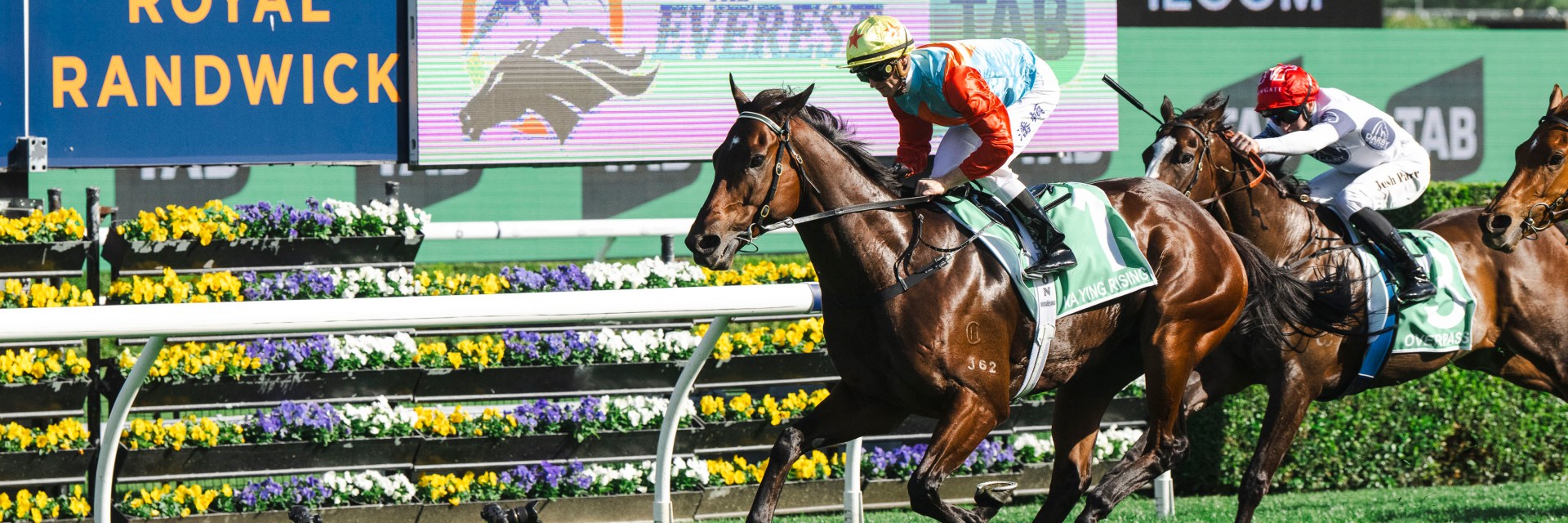
Firstly, Ka Ying Rising (aka “Mr Express” – see more on his somewhat humble origins below) is coming back to Sydney, and secondly, he’ll be running in the 10th anniversary of the Everest, which has become the richest turf race on earth with $20 million in prize money and which he won last year.
Just before press time, he was awarded the top spot in the Longines World’s Best Racehorse Rankings with a score of 135 [for horses which raced between January 1 and September 6, 2026] it was the highest ranking for a sprinter yet. If he maintains this as his annual ranking he will only have been beaten by Frankel (140 and 136), Flightline (140) and Sea The Stars (136) since the rankings began in 2008. He’s even surpassing the legendary Australian sprinter Black Caviar. And just for good measure in early September, he smashed Sha Tin’s 1200m track record for the fifth time.
With forward odds in the Everest pre-nominations market sitting at around $1.35 (at time of going to press), this superstar sprinter is the horse to beat.
In terms of preparation, trainer David Hayes says he’s essentially “cutting and pasting” last year’s, as well he might. He has stated the horse is the best he’s ever trained and now says he thinks he’s the best horse he’s ever seen. His performance on the day last year was definitive, blasting out of third position with 400m to go to take the win by more than a length.
Ironically, Hayes was involved in the very first Everest, coming second with a horse called Vega Magic, which he describes as a “frustrating” experience.
“If you ask [jockey] Craig Williams, probably, he didn’t get the best of luck. Got caught wide, got dragged back to last and got beat in the neck. At the time I thought it was a fun race to be involved in, but 10 years later [and] it’s evolved into one of the two top races in Australia.
“Sydney doesn’t normally get a lot of front-page racing, but the Everest has [done that], and when you turn up with the best horse in the world, it’s a privilege to bring him and to be involved.”
In Hayes opinion, Ka Ying Rising is in even better form than he was last year so I had to ask, without wanting to jinx it, what could possibly go wrong?
“Probably weather conditions,” he replies. “He’s never been tested on an Australian heavy track. I still think he could do it, but it might change things.”
Crunching the data, the Hayes/Purton combination reads pretty much like a racing dream team. Hayes has won the Melbourne Cup, the Japan Cup, Hong Kong Derby, Golden Slipper, Blue Diamond Stakes – the final one six times – the list goes on. Beyond his impressive winnings, Purton’s website says he is the only jockey to have won all of Hong Kong’s Group 1 races and holds the record for the most winners in a single Hong Kong racing season. He’s also won the Longines International Jockey Challenge three times and has won the World Super Jockey Series in Japan. Then add that horse to the mix.
How does Hayes feel at this point in his career to have a horse as good as this one?
“In my first year I had a world champion called Better Loosen Up. He’s the only Australian horse to win the Japan Cup, and it came at a young age, and I loved it, and it was fantastic, but I truly didn’t appreciate how hard it is to get another one. Now… I cherish every moment of it. It’s just fantastic.
“I’ll tell you something. He snuck up on us a bit too. When you watch his undefeated streak, his first three or four runs, they were good wins. But his easiest wins have been in the hardest races.”
Purton warns though of not overcomplicating the analysis when it comes to Ka Ying Rising and cautions that we may not yet have seen just how good he may get.
“He just does a lot of things right. He doesn’t try and do too much, and then he’s got this ability to find another gear and go again,” he says.
“Most horses can’t even go as fast as he’s going to start with, but the ones that are trying to go as fast as he’s going, they hit a brick wall. They get tired and they fatigue. He seems to find another breath of air and just goes again.
“He was already winning Group One races, but yet he continues to keep developing. Every three months, he just seemed to get bigger and stronger.
I can’t remember a horse, especially at his age, that’s continued to physically develop at this stage of his life and his career.
“Now, is he a fully mature horse? Or [chuckles] maybe he’s not. Maybe he’s going to grow again. I don’t know.”
Q&A: The Business of Creating a Brash Upstart
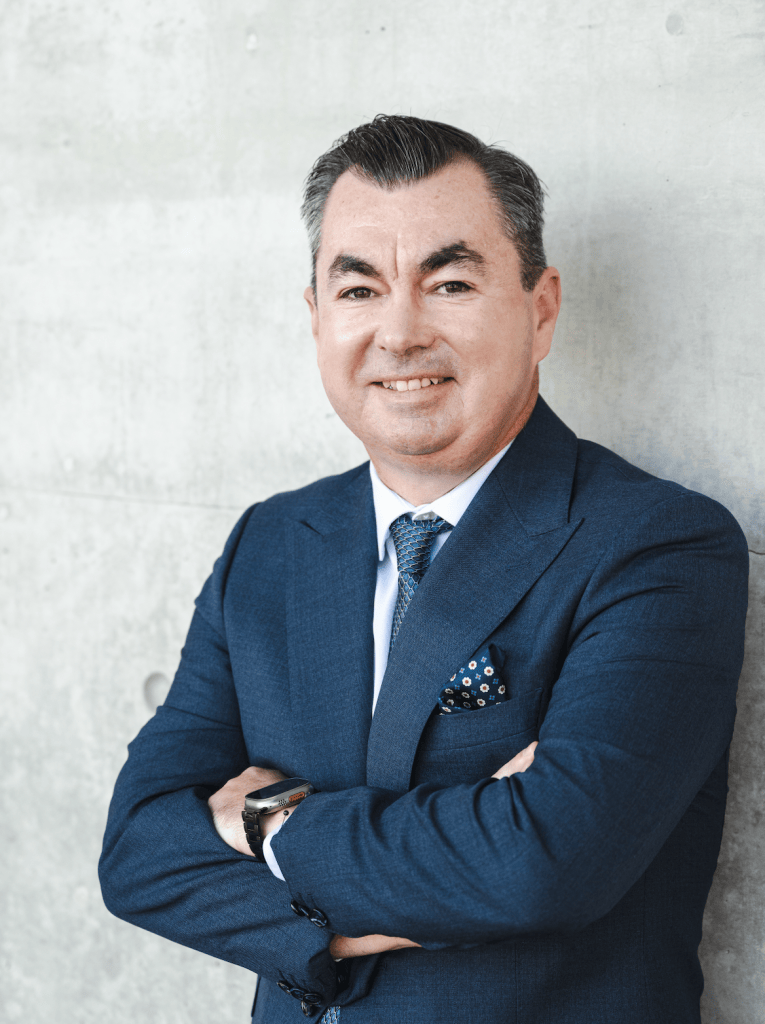
Australian Turf Club CEO, Steve McMahon explains the evolution of The Everest.
How do you go from an idea, to the world’s richest race on turf in 10 years?
All credit goes to Racing NSW and Peter V’Landys for the creation of it. Our job has been to build on that.
It’s the uniqueness of it being a slot [race]. You purchase a slot and where [they] got it right over the original concept of this – called The Pegasus in America – was [in the US it was] only a one-year deal. Racing NSW had the foresight to make it a three-year [deal]. That kind of locked people in and gave it a chance to build momentum.
[Also] it’s engaged young people and females, whereas traditional racing has struggled to do that until now.
How does it do that? What’s the magic?
I think it’s iconically Sydney. It’s brash, it’s bold, it’s exciting, and it’s fun. It was something different. It started off with $10 million, now it’s $20 million – it was also seen as a disruptor. I think the people of Sydney, especially the young people, like a disruptor. The average age of general admission ticket purchasers is 26. Compare that to our average membership age of 58.
In the early days how much of a punt was it? Could it have gone horribly wrong?
It was definitely a big, big risk. I remember at the time some of the trainers were like, “Well, what’s this all about?” But I think once they realised the opportunity and the prize money, and I think it just got everyone excited because it was just so big and so different.
If there was one single thing that you did right, what would it be?
I don’t think there’s one single reason, but it’s the engagement we had with our media partners. We had strong engagement with government, too. We were so worried about getting a decent crowd [in the beginning], and I think they wanted 30,000 people, that I was literally walking the streets, letterboxing the neighbours of Randwick to let them know about this race.
How are you planning to grow this event?
We’re building a structure right near the finishing post that will fit 1,000 people, and they’ll be watching the races from the inside of the track.
Then next year, if that’s viable, which I’m confident it will be, I want to create a similar experience at the start, the 1,200-meter mark, where you’d have a luxury marquee with beautiful views looking back at the city skyline and our grandstand. It’s the experience economy where our growth will lie in the future.
How big can this go? What’s the runway?
I think having Ka Ying Rising and the Hong Kong market involved in this race has been a massive jump. If we can get further international exposure, I think there’s even more opportunity for growth.
What about our quarantine issues?
We’re quite lucky the way our team has made Canterbury Quarantine Centre run very smoothly [that] has helped the sell when you go to bring horses [from] overseas. The burden of travel is a lot smoother than it used to be. Sydney has an advantage over Melbourne in that some of the requirements for the horses are smoother and less red tape.
Without the international component, is the domestic market strong enough to maintain Everest?
I liken it to the marquee event at the Olympics – the 100-meter sprint. In Australia, that’s The Everest. It’s a sprint, and that’s what we’re good at, and that’s partly why it was created [to] take advantage of our breeding. Yes, there’s the prestige and the history of the Melbourne Cup, but the reality is that the market and the business that we are strong at is sprint racing. Also, our horses are racing against each other all year round. I love the Melbourne Cup, but a lot of the horses, people haven’t heard of them because there aren’t enough races of that category, or they come from overseas.
Is it essentially a punter’s race?
100%. Even now you’ve got so many options. Even [with] Ka Ying Rising the favourite… Australia likes an underdog, so you get good value for money if you think something else can knock it off its perch.
There has been talk about other jurisdictions overseas floating their own big money slot races. Do you see that as a validation or competition?
I see it as validation of what we’re doing. They’re clearly thinking about it, and good on them.
I mean, imagine having a worldwide series of Everest-type races, like a Grand Prix-type series?
What is The Everest worth to you as a percentage of your year’s operations?
I’d say it’d be getting close to 10%. We do about 110 race meetings a year. The Everest doubles the crowd of our next big event.
Want to see more Forbes articles on your feed? Tap here to make Forbes Australia a preferred source on Google.
Look back on the week that was with hand-picked articles from Australia and around the world. Sign up to the Forbes Australia newsletter here or become a member here.