
Born in a Sydney hospital, ResMed turned a clunky sleep aid into a global sleep-tech empire. Now it’s facing the next big test — the age of Ozempic and digital health.
This story appears in Issue 19 of Forbes Australia, out now. Tap here to secure your copy.
It all began when fourth-year medical student Colin Sullivan was woken by the silence one morning in 1968. His mother’s usual loud snoring had suddenly stopped. He went to investigate and found her still warm, but dead.
It was only later that Sullivan would see how this moment shaped his future and indeed would launch an Australian company that has saved untold millions of lives and reshaped healthcare worldwide.
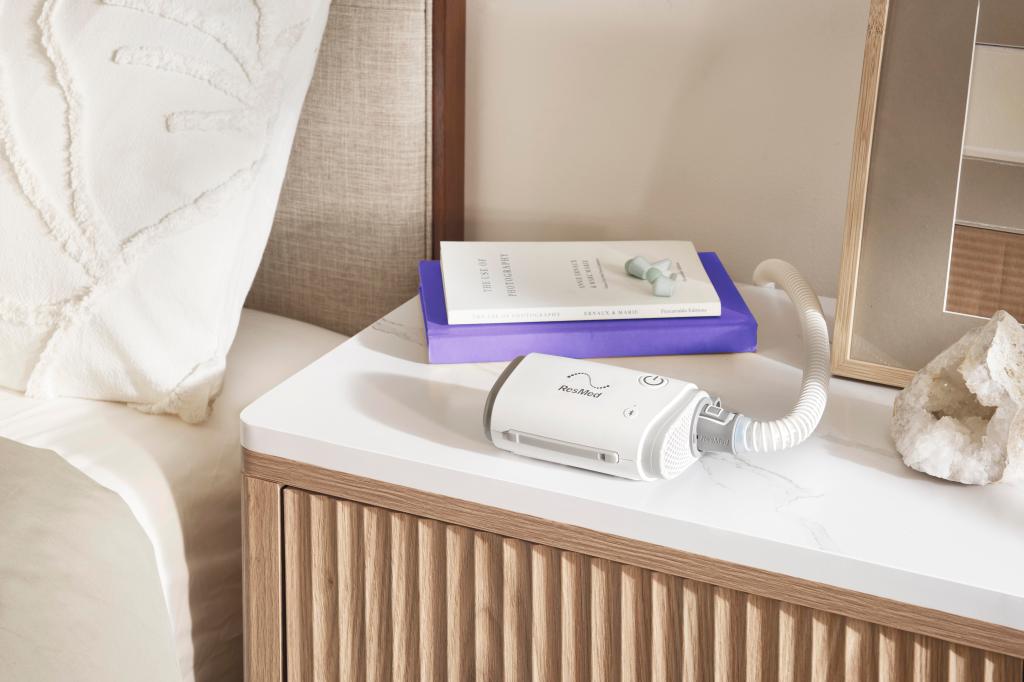
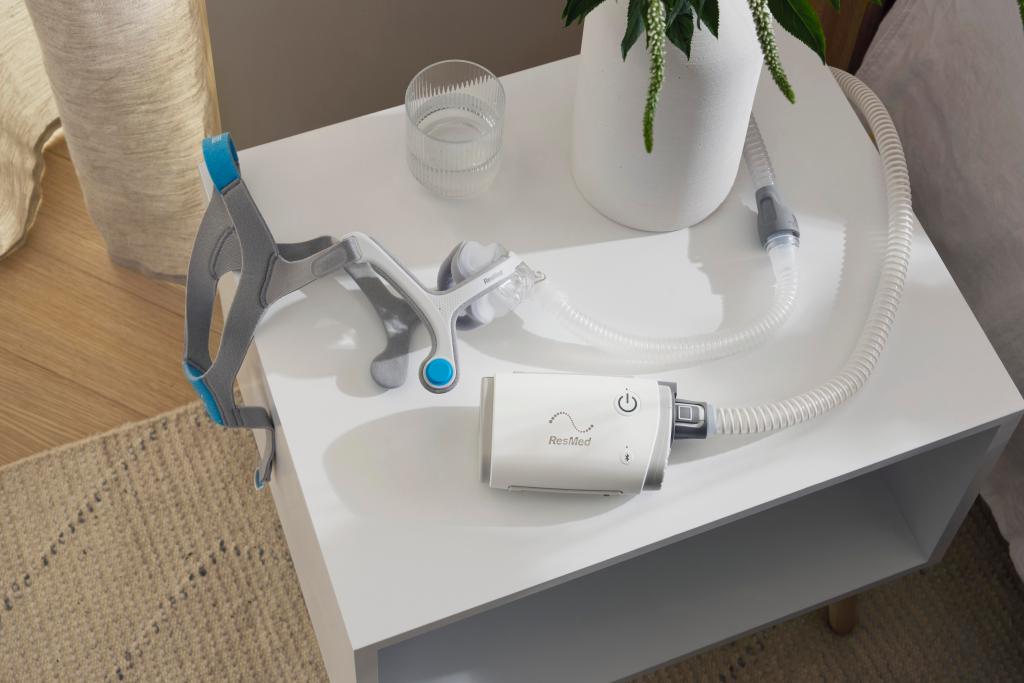
He came up with the name “continuous positive airway pressure”, or CPAP, to describe his device that was once laughed out of conferences. As if anybody would ever sleep with a pool filter glued to their face!
Today, that contraption has evolved into a sleek machine driving ResMed’s $60 billion valuation – three times that of Cochlear – as the global leader in sleep technology, with 10,600 employees, 30 million connected devices and a database of 23 billion nights of sleep.
Leading the show is Mick Farrell, the son of the man to whom Sullivan sold the IP. Farrell has overseen a ninefold growth since becoming CEO in 2013. This is the story of how to take Australian innovation to the world.
You saved my life
As a young doctor, Colin Sullivan found himself drawn into the nascent research on what was then called “cot death” – sudden infant death syndrome. Sleep apnea – pauses in breathing during sleep – was being tossed around as a possible cause of these infant deaths. “But almost no one knew about adult sleep apnea,” Sullivan, now 80, recalls.
Armed with new oximeter technology to measure blood oxygen levels, Sullivan started looking in the wards of Sydney’s Prince Alfred Hospital for adults with the problem. And he found plenty.
They were suffering dangerous drops in oxygen levels as their airways blocked during the night. “It was as if they were travelling to the top of Mount Everest and back multiple times in the night,” Sullivan says.
In light of his mother’s death, Sullivan saw an opportunity to maybe save thousands. It was thought then that maybe 1% of the population might suffer this condition. He organised a meeting in Sydney of almost all the researchers in the world who were interested in it – about 30.
Most thought the obstruction of the airway was caused by throat muscles relaxing, but a New York team hypothesised it was muscle spasms. Sitting there listening, Sullivan had an experiment in mind to answer the question: what if he applied pressurised air to the airway to keep it open?
“We would go to conferences and Peter would be the last one in the bar at night, drinking with all the night owls.”
Former Cochlear CEO Chris Roberts
If the cause of sleep apnea was a spasm, it wouldn’t work. If it was relaxed muscles, maybe it would. He kept the idea to himself.
He found his first patient when a scaffolder was brought in by workmates worried that he was falling asleep at heights. Sullivan did several sleep studies on him. “Whenever he fell asleep, his airway would obstruct, and he’d be struggling against the obstruction for 20 or 30 or 40 seconds. Suffocating, he’d briefly wake up, recover for four or five breaths, typically with loud snoring. Then he’d go off and obstruct again.” He was at risk of dying in bed and at work.
The standard of care at the time was a tracheostomy – a hole in the windpipe – but Sullivan offered him an alternative. He made a contraption with a blower, some pool hose and a nasal mask. The man, permanently sleepy, dropped off before they’d even glued it to his face with silicone sealant.
“He was obstructing even while we were setting it up,” says Sullivan. “But once I started turning up the pressure, the apnea stopped, and he started snoring heavily. I increased the pressure a little, and the snoring stopped.”
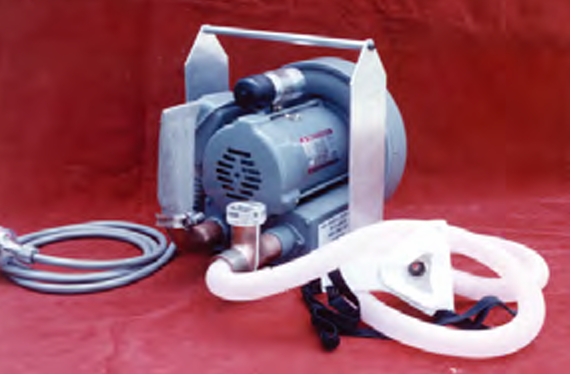
Sullivan ran through a few cycles of lowering and raising the pressure, and each time the man’s sleep responded accordingly, before leaving him to sleep at a pressure equivalent to just 10cm below water level.
Sullivan and a PhD student stayed with him all night, and the scaffolder woke the next morning a new man. Not only could he stay awake, even his sight also improved. “His vision had been all rather grey, and he had a return of colour vision.”
It was the first in a long list of conditions discovered to improve when apnea was treated. Sullivan found four more patients and treated them with equal success.
Presenting his findings at a conference in Los Angeles, audience members laughed at him for thinking people would sleep with such a preposterous, noisy device on their face.
But Sullivan pushed on. Too many people had already told him he’d given them their lives back.
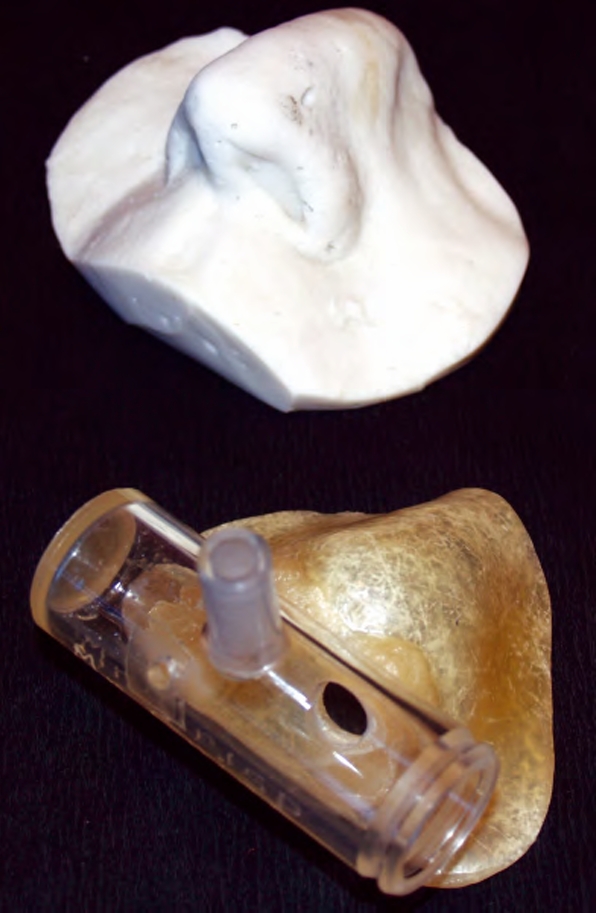
As awareness of the problem grew, his lab turned into a little factory, producing some 1,000 devices over the next decade for people to take home. And as usage grew, so too did research on its benefits. Blood pressure, heart arrhythmias, mood, memory and alertness all seemed to improve.
Sullivan had taken out patents privately. But two companies set up overseas and started producing devices based on his idea. He found that irritating. He wanted to develop this in Australia.
That’s when he met Peter Farrell.
I’d do anything to keep it
Peter Farrell, a professor of chemical and bioengineering at the University of New South Wales, was a kidney dialysis expert with a side gig for the US medical devices company Baxter. Farrell had just set up a lab for Baxter, hoping to use Australia’s 150% research tax write-off to develop local inventions.
Sullivan introduced Farrell to the first person in the world to have a CPAP machine at home. Farrell asked the patient, Eddie, why he would glue himself into a device that sounded like a freight train, then painfully tear it off each morning.
“This machine saved my job, saved my marriage and saved my life,” Eddie told him. “I’d do anything to keep it.” The noise was fine. He put the device in the garage and drilled a hole in the wall for the tube into his bedroom. Vaseline helped it come off without too much necrosis.
Farrell might have been an academic, but he knew a market when he saw one. He bought the patents for Baxter Medical and set to work on it, but in 1989, Baxter closed its Australian lab.
Farrell raised $1 million and paid Baxter $558,000 for the IP. A month later, his new company, ResCare, sold its first device.
Burning the candle
Chris Roberts was a chemical engineering student at UNSW doing what he thought was the most boring subject imaginable – measurement instrumentation. But a guest lecturer came in one day and somehow made it fascinating. “I knew I could learn something from this guy,” recalls Roberts, who would go on to become CEO of Cochlear. “And that guy was Peter Farrell.”
Roberts managed to get himself into Farrell’s lab for his PhD on plasma exchange in dialysis. Every Wednesday, they’d have laboratory meetings. “You’d say what you did in the last week and what you were going to do in the next week. You tend to get pretty enthusiastic. Well, next week comes around very quickly, and you’ve only done half of those things, so you’d get beaten up by Peter.
“You learn very quickly to set the target pretty low, and then you get beaten up again, ‘What do you mean you’re only gonna do that next week?’ It was really accountable and really, really driven. It was not for the faint of heart, but I loved it.”
“The only negative was that the old man is the boss.”
ResMed CEO Mick Farrell
Roberts went to the US after his PhD and MBA, and came back to join Farrell at ResMed in 1989, as both a board member and employee looking after sales and marketing.
“The company was born global,” says Roberts. “The first year, fiscal ’90, they sold about a million dollars, and 25% was export.” But the company failed to get traction in the US.
“When this little Aussie company went to the US, there were already six other publicly listed companies manufacturing CPAP machines,” recalls Roberts. “But this is where Peter’s skill came in. ‘We’ll just out-innovate these people.’ And he did, because those companies were too large and too slow, and I don’t think any of them saw the potential for this like Peter did.”
Farrell’s other great skill was connecting with the world’s best, says Roberts. “We would go to conferences and Peter would be the last one in the bar at night, drinking with all the night owls. And then he’d be the first one in the lobby in the morning, for all the early birds going for a jog. He could burn the candle at both ends, day in, day out. He developed incredibly good relationships with a broad group of people.”
Roberts left ResMed in 2004 when he was headhunted to Cochlear. He sees too many med-tech companies pin their fortunes to one key opinion leader. “They’ll hitch their wagon to one surgeon, one physician, but you can have a very successful career in medicine and be wrong-headed all your life, a bit like law. In business, you can’t. If you’re wrong-headed in business, you go out of business.”
Love is in the air
Mick Farrell was born in Seattle while his father, Peter, was studying there in the 1970s, but the family returned to Sydney, where Mick picked up the Australian accent he maintains despite having lived most of his life in the US.
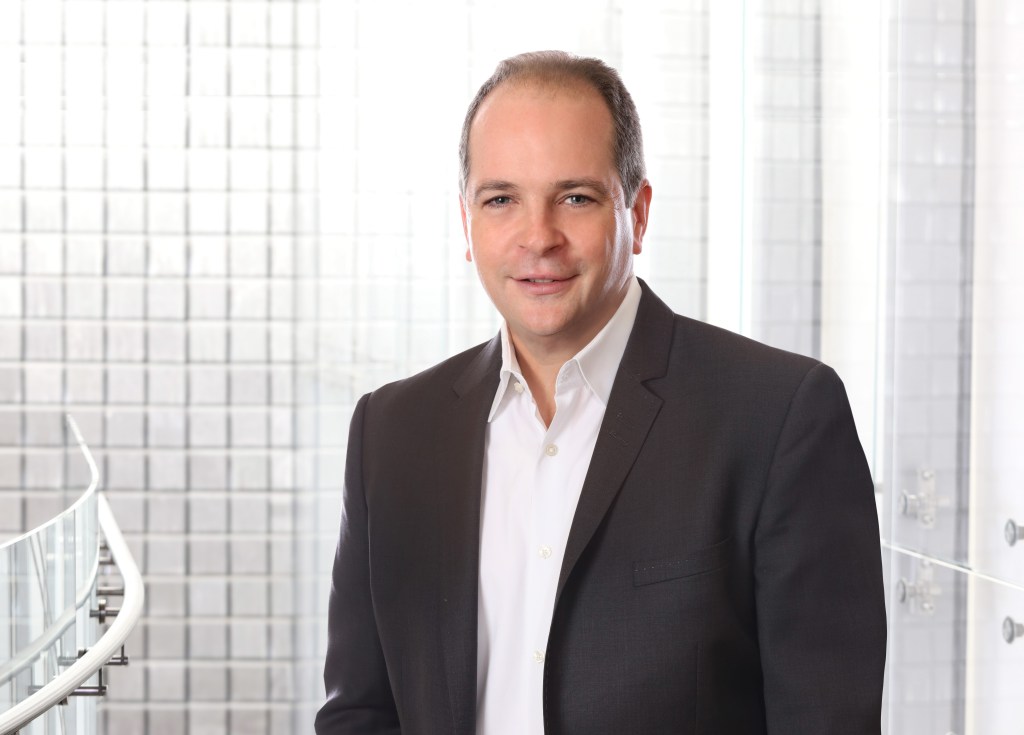
Farrell junior wanted to be an aeronautical engineer but got a scholarship in chemical engineering at UNSW. He went to work for BHP, Dow Chemical and Sanofi Genzyme, doing an engineering master’s and an MBA at the Massachusetts Institute of Technology.
In 2000, he was in Boston working for management consultants Arthur D Little when he had job opportunities with two companies – med-tech giant Boston Scientific and biotech giant Genzyme. He rang his dad for advice.
Peter Farrell told his son that biotech products had a 15- to 17-year cycle, so if he went to Genzyme, he might have three shots on goal in his entire career. “If you go into medtech, you’ll have 20 shots on goal.”
“Okay, so you think I should go for Boston Scientific?” Mick asked.
“No, I’m saying you should come out here to San Diego and join me.”
Farrell senior had moved his headquarters from Sydney to San Diego in 1995 – keeping manufacturing and research in Australia – and had changed the company name to ResMed ahead of listing on the NASDAQ. He’d taken it to the New York Stock Exchange in 1999, but it was still a relative minnow in 2000 when he was trying to convince his son to join him.
“No offence, dad, but …”
After weathering a stream of invective from his father, Mick agreed to do the interview just to keep the old man happy, but still take the job at Boston Scientific.
On the flight over, however, the business consultant in him came out, and he did a pros-and-cons analysis. The “pros” list was long, topped by the technology and the enormous untapped market. The cons list was short.
“The only negative was that the old man is the boss,” he recalls. Sitting on the plane with his soon-to-be wife, Lisette, he changed his mind; he thought he’d do it for a year or two before heading back to Boston with a lot more experience.
But the beaches, the weather and the culture got a grip on him. As did the business opportunity, as sleep apnea’s role in numerous chronic diseases became clearer and its prevalence grew ever larger [believed to be 4% of adults in 2000].
Joining ResMed, he got involved in setting up a small clinical trial with 20 military veterans who had both sleep apnea and heart failure. He’d never forget returning to one of those “crotchety old vet’s” home a week later with the nurse, Susie Justice. “And he just gives Susie a huge hug, and then he gives me a huge hug, and he says, ‘This has saved my life.’”
Farrell never got hugs at BHP or Dow Chemical. “That’s the thing that has really kept me here at ResMed for 25 years,” he says. “We didn’t know what we know now about all the implications sleep apnea has for cardiovascular disease, solid cell cancer, diabetes, chronic obstructive pulmonary disease … all the overlaps with other chronic diseases.”
Every time he thought it might be time to move on, some new condition was shown to be helped by CPAP, and he saw the opportunity grow ever larger. He moved into the global business, then ran American sales.
Headhunters
Farrell senior had orchestrated a seamless transition. He’d hired Kieran Gallahue from Nanogen in 2003, and the then 44-year-old stepped up to CEO in 2008. But in 2011, Gallahue was headhunted away, prompting Peter Farrell, 72, to step back in and begin the CEO hunt anew.
Headhunters Spencer Stewart were called in. Mick Farrell put his hand up. As did chief operating officer Rob Douglas, along with some external candidates. “They ran us through psychological tests and analyses and scenarios and all sorts of interviews over a period of about a year,” recalls Farrell.
During the period of the search, the board had set up an “Office of the CEO” concept whereby Douglas and Mick Farrell were already working together to help Peter Farrell.
So, when the board eventually chose Mick Farrell as the new CEO, [with his father abstaining from the selection], it elevated Douglas to company president. The two former rivals for the top job ended up working cooperatively for the next decade.
“We impacted 155 million lives last year,” says Farrell. “Our goal is to impact 500 million lives in 2030.”
ResMed CEO Mick Farrell
Douglas found Farrell junior to have a gentler style than his father. “You always knew what Peter was thinking, good or bad,” says Douglas. “You needed to be pretty resilient.”
Douglas found Mick had all the passion and the care that his father had, but was more collaborative. “Mick’s also very family-focused and makes sure he’s prioritising family stuff.”
Mick Farrell was in Australia in August to meet with investors after delivering a stellar full-year result. Earnings were up almost 40% and the share price was sitting around $45, giving the company a market capitalisation of around $62 billion – some nine times what it was when he took the helm in 2013.
Investors need to be kept onside. For example, the share price plunged during August and September of 2023 as the Ozempic bubble expanded. Companies that relied on a fat and sick America suddenly looked less appealing.
ResMed bottomed out some ten months before Ozempic’s maker, Novo Nordisk, peaked, and their fortunes have gone in opposite directions ever since. And, curiously, the data has shown that people who start using the miracle fat-loss GLP-1 inhibitors are more likely to sign up for a CPAP machine than if they weren’t going to the doctor to get their health act together.
GLP-1s are a tailwind for ResMed, says Farrell, as is the Make America Healthy Again movement. The people who are against vaccines and pharmaceuticals are going to opt for a CPAP machine, he says. “You couldn’t get more natural than continuous positive airway pressure. It’s low cost and higher efficacy.”
He comes back to the talking points: that the company sells in 140 countries; its revenues are US$5 billion with a market cap of US$40 billion. “But more important than all those numbers, which are really huge, is this number: 155 million lives in the last 12 months that we helped sleep better, breathe better and get healthcare technology at home … We have an app called myAir that 9-million-something patients look at every day – how they slept and how they’re breathing.
“In 36 years, our impact’s gone from seven people in a garage in North Ryde to 10,600 Resmedians [staff] with 30 million 100% cloud-connectable medical devices sold and 23 billion nights of medical data in the cloud.

“And we don’t just save lives. A recent publication showed a dose-response relationship between how many hours per night you use our device and a reduction in total annual healthcare costs. For every one hour of sleep on one of our CPAP devices, there’s approximately a 7% reduction in total annual costs.”
With up to a billion people worldwide now thought to be affected by sleep apnea, Resmed sees plenty of room for growth. It sets five-year goals about people as much as money. “We impacted 155 million lives last year,” says Farrell. “Our goal is to impact 500 million lives in 2030.”
Sleeping in the cloud
One of Mick Farrell’s notable achievements for ResMed has been taking the company into the new world of apps and clouds.
ResMed had been toying with “connected health” since the early 2000s, putting pagers on their devices and showing in studies that it lifted compliance and improved health. But no one wanted to change the payment systems, says Farrell. “There was so much inertia in the healthcare system; nothing happened.
“In 2014, we said, we’re going to take the leap of faith and we’re going to put a 3G (then 4G and now 5G) communications chip inside every device at our own cost. We’re going to take that data to the cloud at our own cost, and then we’re going to liberate that data, and we’re going to empower patients for free with their own data every day. And then we’re going to charge appropriate rates to the homecare providers and the doctors to access the data.
“And it has worked incredibly well. It was a failure in learning at the start, which was technology ahead of the business model, but then there was a pivot to say, ‘Let’s not just put the technology out there and see what happens. Let’s have a very specific business model, what we’re going to do and how we’re going to get a return for this.
“The interesting thing was that the return came in different ways. So when the doctor is using our cloud-connected AirView, and if the patient uses our myAir app, the adherence rate goes up from 50-60% to 87%. So almost nine out of 10 patients use the device all night, every night, which brings about improvements in blood pressure; reductions in HbA1c for diabetes; a 37% reduction in all-cause mortality; reductions in hospitalisations, and most importantly, improvements in their life, their friendships, their marriages, their jobs.”
Globalising the supply chain
Sick of continually outgrowing its factories, ResMed bought a large block of land at Bella Vista in Sydney’s north west in the early 2000s and set up a “campus”.
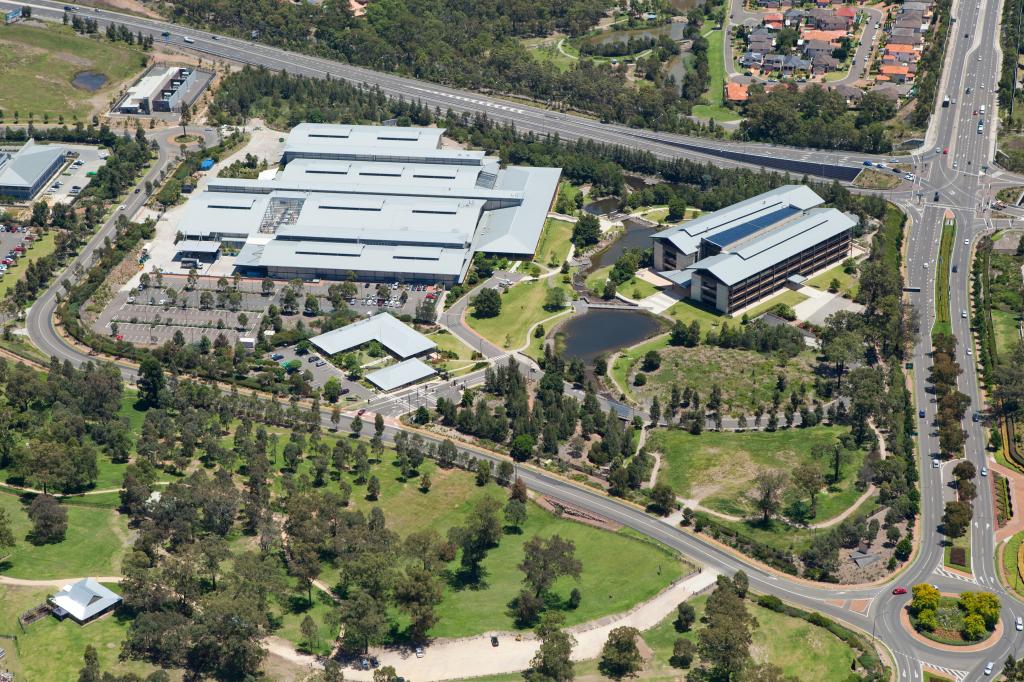
“We had some pretty big thinkers in our finance team in particular,” recalls former company president Rob Douglas. “That was not the way Australian companies built their manufacturing operations in those days.”
Most of the product was built at Bella Vista, but the motors came from the US. “Our supplier wasn’t far from the San Andreas fault. They had a minor earthquake, and it alarmed us because we had a single source. At the same time, Australian Customs did a software upgrade that was a disaster, and for weeks, nothing was exported out of Australia. We realised that with the scale of growth that we were looking at, we needed to change from being an Australian exporter to a global supply chain.
“We weren’t super keen on having everything come from a single plant in China, so we ended up in Singapore in 2008. We got our suppliers to locate nearby, and quite a few of them moved to China. And we became big enough to have them structure their businesses around our needs.”
In 2015, ResMed bought Chinese sleep tech company Curative Medical, which continues to operate as a separate entity, but giving the company manufacturing and sales capacity in China.
Top of the pops in Aussie medtech
Electronic pacemaker, 1927:
Dr Mark Lidwill and physicist Edgar Booth create the first heart pacemaker and save a baby’s life.
Sunscreen, 1928:
The world’s first “sunburn preventative cream” was created by Adelaide chemist Milton Blake. He founded Hamilton Laboratories which was still operating until 2010 when it was bought by Canadian listed pharmaceutical company Valeant.
Penicillin, 1940s:
Scientist Howard Florey develops Alexander Fleming’s discovery of penicillin as a usable antibiotic.
Cochlear implant, 1978:
Professor Graeme Clark develops a device that bypasses damaged inner ears to directly stimulate the auditory nerve. It is commercialised by ASX-listed Cochlear Ltd.
Spray-on skin, 1993:
Professor Fiona Wood sprays skin cells onto burn wounds promoting faster healing. She cofounds AVITA Medical and takes it to market.
Cervical cancer vaccine, 2006:
Professor Ian Frazer develops the world’s first anti-cancer vaccine – targetting cervical cancer. It is taken to market by US pharmaceutical giant Merck & Co.
First flu drug, 1999:
Before Tamiflu, Relenza is created by Professor Peter Coleman and Joseph Varghese at the CSIRO in collaboration with Graeme Laver from ANU. It is developed by Australian biotech, Biota – the first Australian biotech to get a drug to market.