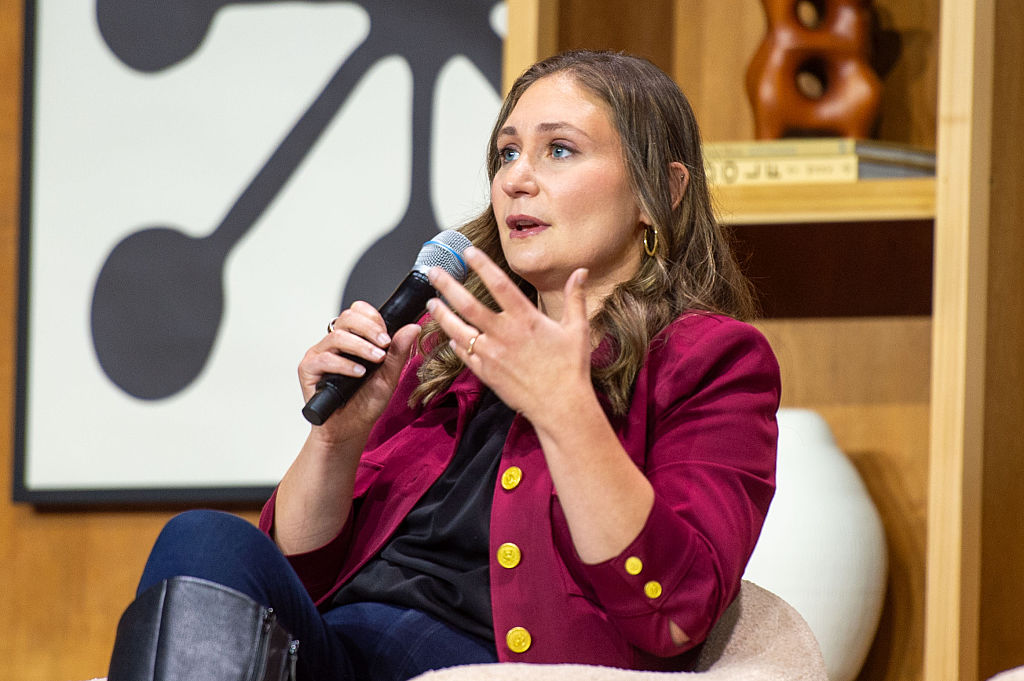
Fresh off the barrier, new MRC chief Tanya Fullarton sits down with Forbes Australia at the Group 1 Guineas to give her form guide on the Caulfield Cup and the 2026 Victorian Spring Racing Carnival.
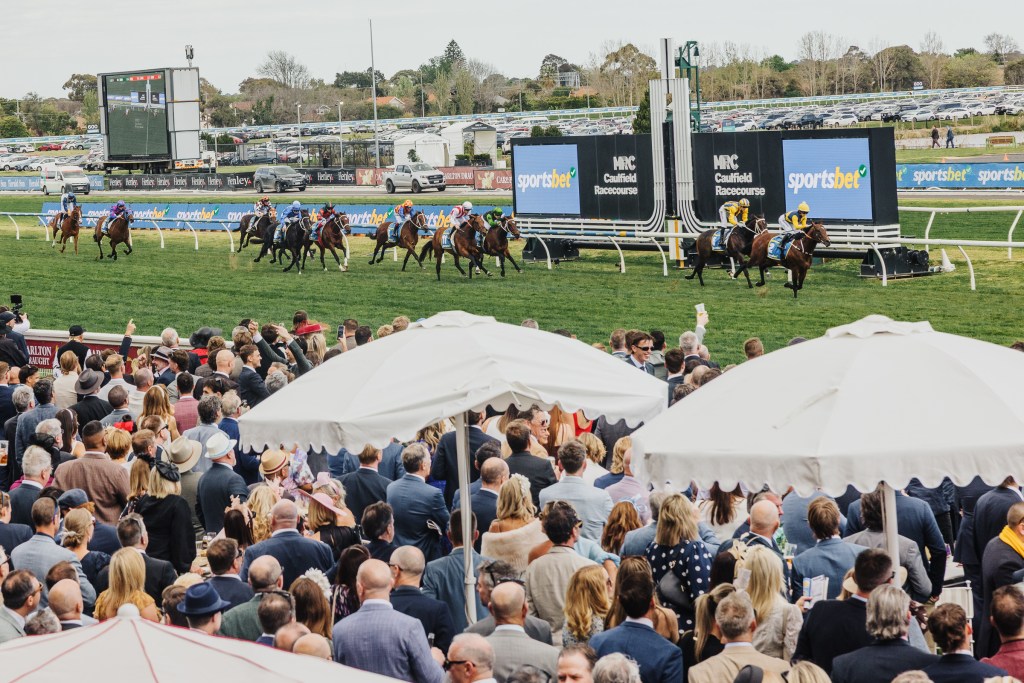
High above the track in the Glasshouse at Caulfield Racecourse, Tanya Fullarton watches a field of three-year-old colts thunder across the finish line. The Caulfield Guineas takes a minute and a half to run and results in a $3 million prize purse, but for the winner, the true payout is far more lucrative.
“It is not just $3 million prize money,” Fullarton tells Forbes Australia gleefully. “If you’ve got a colt, it can technically be $20 or $30-million.”
Standing nearby as the Guineas concludes is prominent bloodstock agent Seamus Mills. He outlines the stark reality of the industry: the stallion market pays big bucks for the winner of this race. He estimates the value of Warwoven, the winning thoroughbred, will rocket to $30 million now that the race has run. The horses that place second or third might command only $500,000 for future stud duties.
It is a financial reality that underscores the power of the Guineas, the race that kicks off Victoria’s Spring Racing Carnival, and takes place a week before the coveted 2400-metre Caulfield Cup. That flagship race is celebrating its 150th anniversary this year, and drawing an international contingent of stayers from racing powerhouses across Ireland, France, Japan, Germany, and the United Kingdom.
“We have made this year’s Sportsbet Caulfield Cup the richest in the race’s history at $6 million,” Fullarton says, noting the purse is up 20 per cent on last year. “The strong increase in international nominations adds another dimension to what is shaping as an outstanding 150th running of one of Australia’s great races.”
Managing high-stakes racing is Fullarton’s central mandate as the chief executive of the Melbourne Racing Club (MRC). But her long-term objective is equally ambitious: securing the physical future of the 150-year-old institution itself.
While tradition is everything in racing, Fullarton’s appointment, alongside Victoria Racing Club CEO Kylie Rogers, marks a changing of the guard. The two most powerful executive positions governing Victoria’s Spring Racing Carnival are now held by women.
Much as it was when I was growing up, the Caulfield Carnival remains a pivotal moment in Melbourne’s social calendar. As the Australian rules football finals and wintery gloom conclude, people come out of hibernation and turn their attention to spring fashion and the track. While Flemington’s flashier Spring Racing Carnival follows, Caulfield holds a dear place in the Melburnian spring starting line-up.
Bringing trackside energy to a new audience
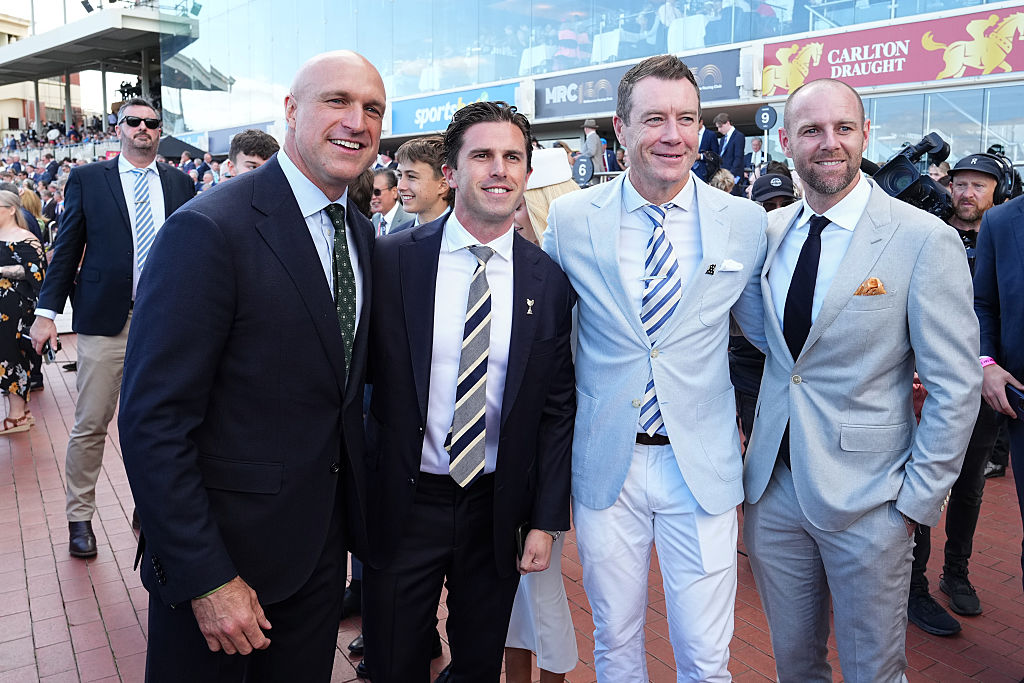
Andy Makiv, the Managing Director of Godolphin Australia – the global thoroughbred breeding and racing powerhouse founded by Sheikh Mohammed bin Rashid Al Maktoum – was also in attendance in Caulfield’s glasshouse, alongside his son, James.
“Caulfield has a family feel,” Makiv notes. “I have a personal connection to it. My first raceday that I remember was coming to the Caulfield Cup… 50 years ago. I was really young, and my father brought me here, so I’ve always had a connection to Caulfield.”
That connection resonates deeply with the club’s members. Adrianne Sarkozy, former CEO of the Sport Australia Hall of Fame, also attended the Guineas and emphasised the track’s inviting atmosphere.
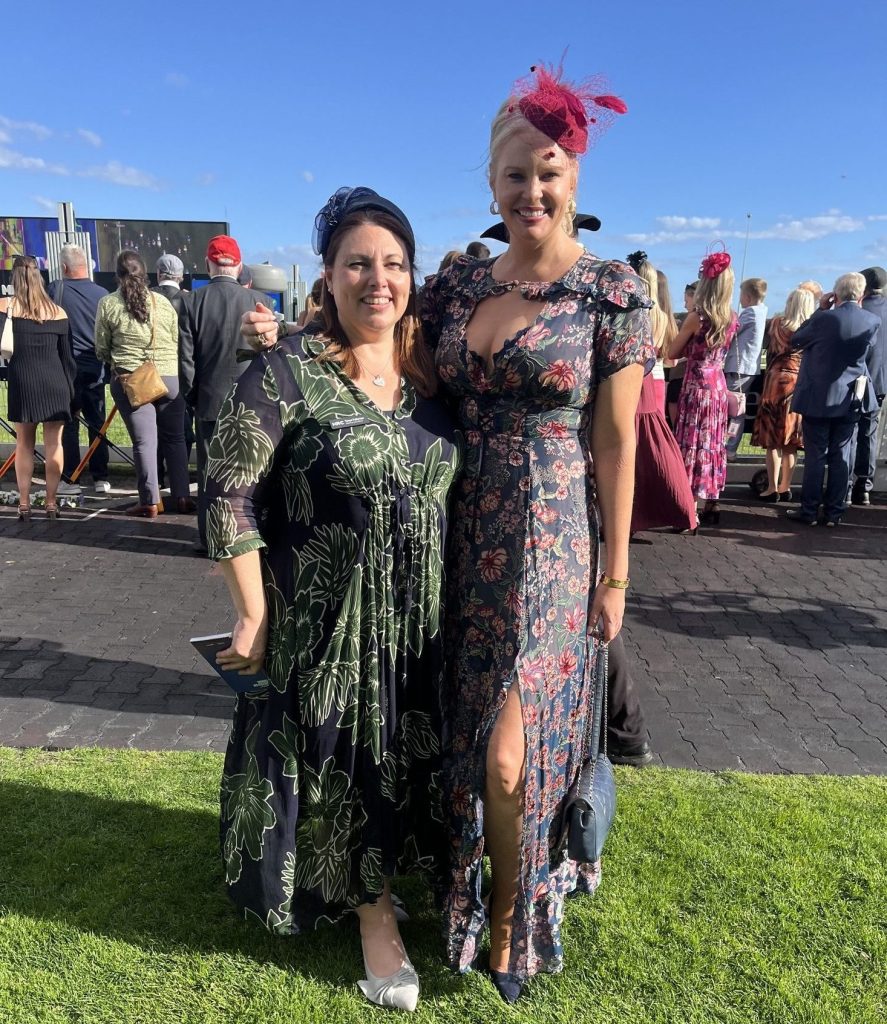
“I love the locality. It’s only 20 minutes from Middle Park, and it’s got a beautiful vibe,” says Sarkozy, wearing plum red inside the Members enclosure. That vibe includes spectacular views of the track.
“Everything is against the rails,” Sarkozy notes, comparing the experience to Flemington race days. “Here, every single marquee sees the horses. The corporate areas are on the track. That’s a big point of difference. It’s fun for the members. And in the grandstand there’s a beautiful view of the finish line.”
From the Glasshouse to the mounting yard and finish line
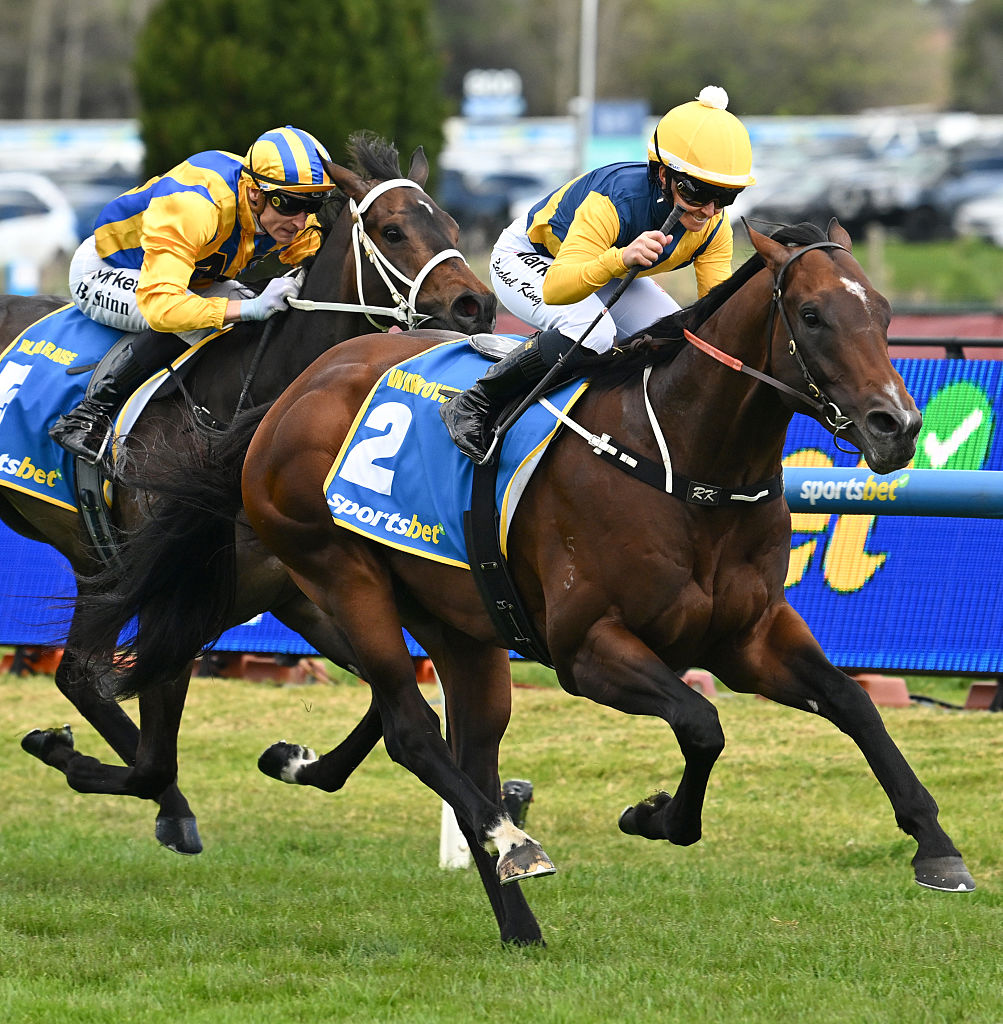
Having seen the main race run from an elevated perspective, Fullarton and I leave the Committee Room and take an elevator down into the bowels of Caulfield Racecourse. Walking through a maze of concrete tunnels, we climb a set of stairs and emerge into a picture-perfect Melbourne spring day. It is here in the mounting yard that we catch a glimpse of jockey Rachel King, who just rode Warwoven to Guineas’ victory.
Caulfield is witnessing a shift not just in the boardroom, but in the saddle. By crossing the finish line first on Warwoven, King became the first female jockey to win the Guineas since its inception in 1881.
It is a historic milestone, but hardly King’s first; her impressive resume already boasts Group 1 victories in the Sydney Cup, the Coolmore Stud Stakes at Flemington, and the Golden Rose. Barely having time to celebrate her Guineas victory, she hurries indoors to weigh in and prepare for her next in the Toorak Handicap.

To capitalise on the momentum of female leaders and athletes in the sport, Fullarton is heavily focused on female engagement, starting with the practical realities of on-course facilities. “When you have nice toilets and amenities, it makes a difference,” she notes, also emphasising the need for ample seating and safety to transform the race day experience for women.
Capitalising on a new generation of racing fans
Simultaneously, Fullarton pushes back against the industry-wide anxiety that younger demographics are abandoning the sport. She says what she is seeing is a post-COVID resurgence.
Viewing the 18-to-22-year-old demographic as a generation that spent their formative years locked down, she notes they are now driving a massive demand for physical, highly social experiences. This influx is shifting the trackside atmosphere, attracting young attendees in suits and racing attire who view the races as a premium social event.
Caulfield’s intimate layout appeals directly to this energetic crowd. The racing infrastructure itself has recently expanded with the addition of a second inner track, yet the venue manages to keep its fans right on top of the action.
This close-up trackside access has allowed Caulfield to successfully capture the premium corporate hospitality energy traditionally associated with Flemington. Over recent years, the MRC has actively elevated the social side of the sport, introducing exclusive trackside precincts like The Avenue. This year, the marquee hospitality destination is the high-energy and sceney Beverley enclosure, following in the footsteps of Bar Bambi in previous years.
Navigating a real estate tightrope
Fullarton, however, seems most at home next to the punters and the diehard racing contingent. She is no imported corporate executive and takes pride in her deeply rooted industry credibility. The CEO’s grandfather was a jockey and trainer who won the 1927 King’s Cup. Fullarton grew up with horses in her backyard in Bulla and spent her childhood riding them bareback at Altona Beach. To her, racing is the ultimate social leveller – a rare cultural intersection where punters of all types and high-society elites converge to experience the exact same three-minute adrenaline rush.

That lifelong intuition now drives a corporate blueprint designed to safeguard Melbourne metropolitan racing. As the racing capital of Australia, Victoria’s thoroughbred sector alone generates more than $4.1 billion in value-added economic impact and sustains close to 25,000 full-time equivalent jobs, comfortably outpacing New South Wales ($3.6 billion) and Queensland ($2.5 billion).
Caulfield operates at the heart of this powerhouse Victorian industry and sits on roughly 133 acres of lucrative Crown land in Melbourne’s inner east. Fullarton is acutely aware that shifting social expectations and future government housing pressures could eventually threaten Caulfield’s tenure, which has just 60 years left on its federal lease.
The commercial realities of managing this high-value real estate have been contentious over the last 10 years. To generate revenue, the club has utilised surrounding land for the high-rise Caulfield Village precinct and leased out parcels to private entities. But the most explosive issue erupted in 2024, when a controversial proposal to sell off Sandown Racecourse for residential development – aimed at clearing the club’s debts – triggered a board spill and fierce member pushback.
Fullarton confirms that under her leadership, Sandown will not be sold and that the board are committed to retaining it. Privately owned by the MRC – alongside Mornington Racecourse and a portfolio of hotel and club venues operated by the Pegasus Leisure Group – Sandown serves as an important metropolitan venue that balances the complex ecosystem of the state’s racing calendar.
Evolving the experience and protecting the sport
Caulfield Racecourse takes up prime real estate within Melbourne’s south-eastern suburbs, sitting between wealthy enclaves like Toorak, Prahran, and Armadale, and stretching down toward the bayside precincts of Albert Park, Middle Park, Elwood, and Brighton. It was developed in the post-gold rush boom when the city was given the moniker ‘Marvellous’ and was in desperate need of a hub for society. Thoroughbred racing was just the ticket.
Fullarton understands that to sustain its relevance today, the track must again offer experiences that extend beyond the horses. By integrating dedicated fashion precincts and live concerts into the Caulfield Cup Carnival programme, the MRC ensures there is something for everyone, drawing in attendees who might never place a bet but are eager for a premium entertainment experience.
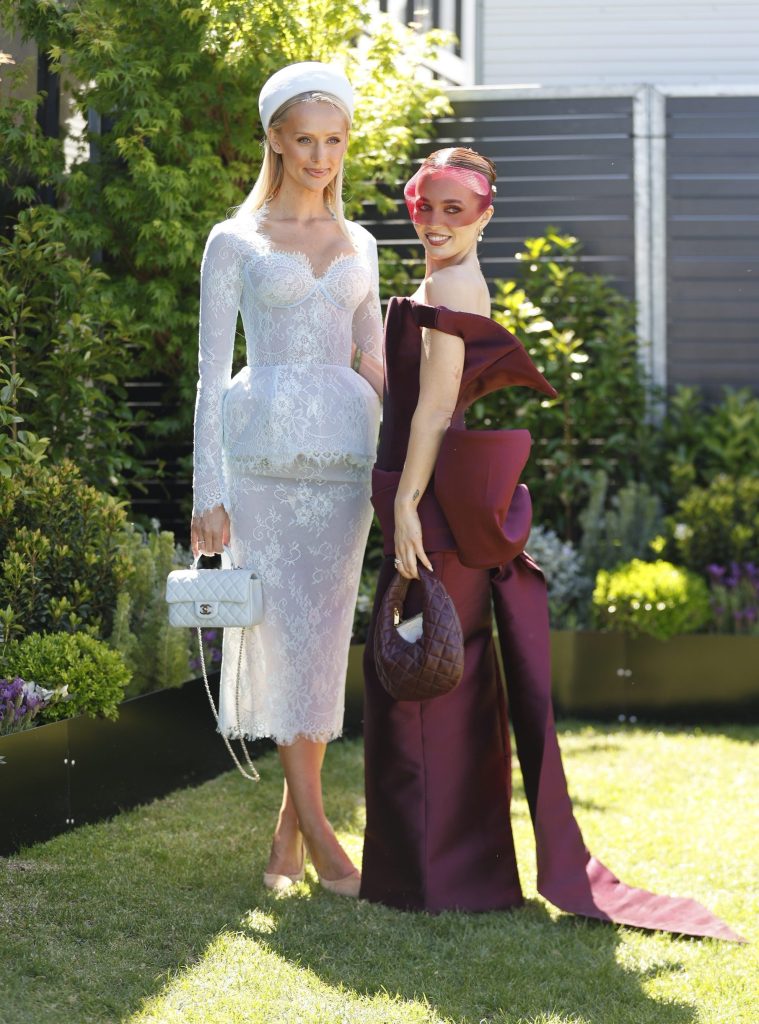

“You can go to a nightclub and you get food, drink, and a DJ,” she says. “Here, you get that, plus you get the ability to dress up like this,” Fullarton says, highlighting the unique spectacle of race day that surrounds us. “Where else would we dress up like this? Where else am I wearing a hat?”
The numbers support the club’s trajectory: the MRC recently passed 16,0000 members, up from 13,000 members in the 2023 season.
Yet, this expansion navigates a changing social landscape. A 2022 Lonergan Research study of 1,000 Australians found that around 56 per cent of respondents felt that racing animals for gambling and entertainment was problematic. At the same time, public health advocates point to the broader societal costs of wagering.
When asked about these headwinds, Fullarton points to a new era of racing underpinned by a commitment to equine welfare. Funding for the off-track life of horses is now structurally built into the sport, she says, rather than relying on the government grants or post-win donations of yesteryear. A mandatory 2 per cent deduction is automatically taken out of the total prize money pools across Victoria and transferred directly into a dedicated equine welfare fund.
“We also have an MRC Foundation where we raise half a million dollars a year, and we support equine welfare charities that we’ve done the due diligence on,” says Fullarton. “We go and visit them. We know Racing Hearts and Living Legends are doing the right things.”
The longer-form stay test
The Caulfield Guineas and Cup have also worked to set themselves apart from Sydney’s $20 million 1200-metre slot race Everest, which is run the same week.
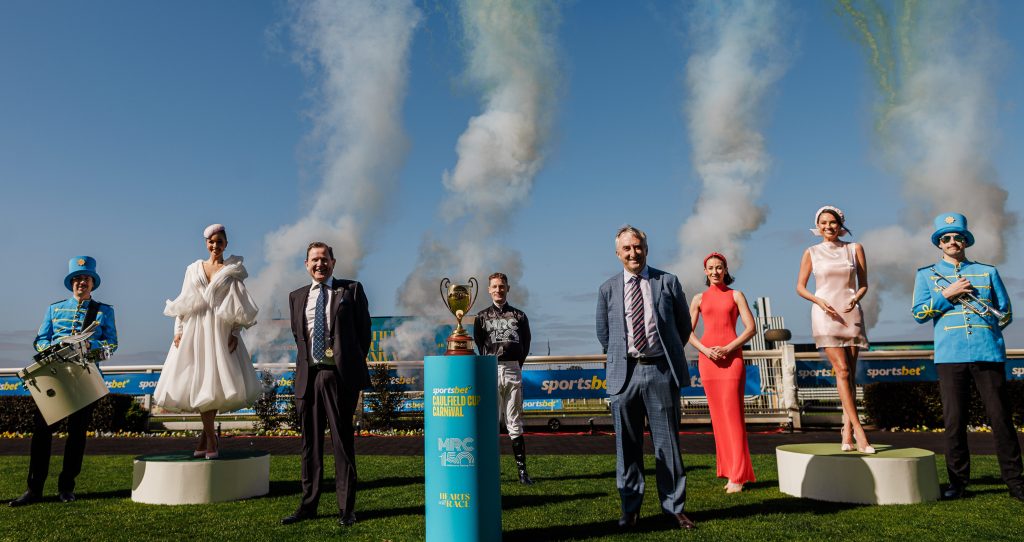
Caulfield’s pinnacle events demand a different set of racing qualities, the CEO says. The 1600-metre Caulfield Guineas and 2400-metre Caulfield Cup rely heavily on stamina, tactical judgment, and endurance over longer distances, preceding the historic $10 million 3200-metre Melbourne Cup at Flemington. For Fullarton, these longer-form staying tests maintain Caulfield’s distinct identity and point of differentiation within Australian racing.
Whether it is a veteran punter reliving 50 years of memories, a young woman attending her first syndicate, or a 20-something experiencing the track post-lockdown, the ultimate goal remains the same: get them on course to experience it firsthand.
By modernising the amenities, safeguarding the real estate, and prioritising both equine welfare and an inclusive environment, she is betting that the 150-year-old spectacle of the Caulfield Cup will capture the next generation just as deeply as it captured her.
Forbes Women is a global network of female business owners, entrepreneurs and changemakers. Sign up to Forbes Women here
Look back on the week that was with hand-picked articles from Australia and around the world. Sign up to the Forbes Australia newsletter here or become a member here.