Is one of Forbes most famous portraits deceiving us or just telling us what we want to hear? Examining the extraordinary afterlife of an iconic image.
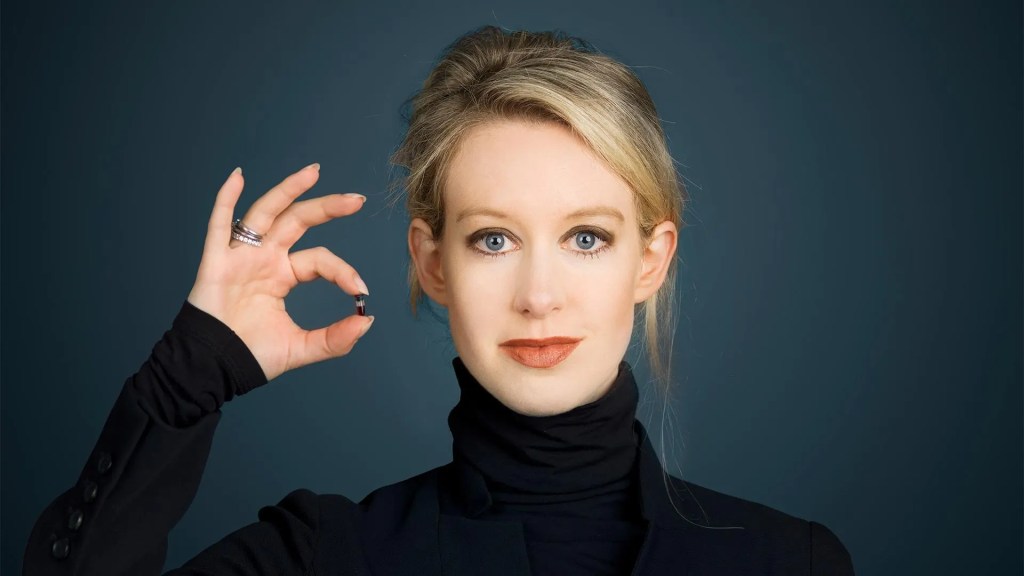
What is it about an illusionist that makes us want to look more closely? And why, among the thousands of photographs in the Forbes archive, is Elizabeth Holmes the most frequently licensed figure of the past 15 years, surpassing even Sam Bankman-Fried, another spectacularly ruined entrepreneur?
The answer may lie in our fascination with deception, our appetite for fallen idols and the unusual power of a photograph to acquire an entirely new meaning over time.
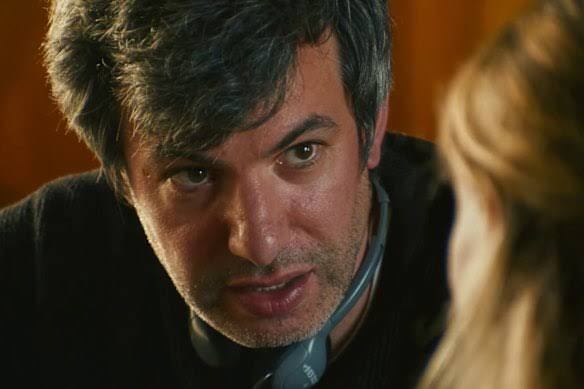
Nathan Fielder and Lance Oppenheim’s documentary, You Can See Everything, has four central characters: Elizabeth Holmes, her partner Billy Evans, Fielder himself, and Amanda Seyfried, who portrayed Holmes in The Dropout, a 2022 Hulu miniseries dramatizing her rise and fall. But there is a fifth major, if silent, presence: the now-iconic portrait of Holmes holding a tiny vial of blood, photographed by Ethan Pines for the cover of the Forbes 400 in 2014. The cover itself makes only the briefest of cameos in the film. But the image itself, freed from its text, floats through the narrative like vapor.
The portrait encapsulates the film’s central questions: How much can we really know about someone from what we see? Are we witnessing the truth, or a carefully constructed performance? And how much of what we believe we see is simply what we’ve brought to the image ourselves?
At the time the portrait was taken, Holmes was 30 years old and the youngest woman on the Forbes 400. She had founded Theranos eleven years prior, as a 19-year-old Stanford dropout and by the mid-2010s the company seemed on the verge of revolutionizing blood testing. Holmes was a visionary, the rare woman commanding extraordinary attention in Silicon Valley. The photograph captured her at the height of that mythology.
And then, everything changed. Theranos was revealed as an elaborate fraud, Holmes’s wealth evaporated, her power dissipated and eventually she was sentenced to a 10-year federal prison sentence. In two years, her wealth went from an estimated $4.5 billion to $0.
But the photograph didn’t change. What changed was everything we knew about the woman looking back at us. Those eyes! Like the Mona Lisa’s elusive smile, Holmes’s gaze seems to hold a secret. Is it confidence or calculation? Conviction or deceit? The photograph doesn’t reveal deception. We project deception onto the photograph.
Pines remembers knowing surprisingly little about his subject, but he recalls wanting Holmes to do something in the portrait, something that might represent her technology. “People ask me if it was my idea to have her hold the blood vial,” he says. “But it was her staff that brought me the nanotainers that held fake blood.”
Of the 220 frames shot against a smoke gray background, 52 show Holmes holding the vial. Pines is emphatic about one thing: “Any suggestion in the film that Holmes resisted the idea or that the gesture was somehow imposed on her is simply untrue.”
That detail matters. The tiny capsule would go on to become a defining element of one of the most recognizable portraits in the Forbes collection. Yet there’s more to the image than the nanotainer alone. Holmes speaks volumes with her visual signature. The black turtleneck was an unmistakable homage to Steve Jobs, another Silicon Valley genius whose curated uniform became shorthand for entrepreneurial wizard.

Ethan Pines for Forbes
At Forbes, we’ve seen countless male entrepreneurs arrive for portraits wearing a version of Jobs’ trademark look. The imitation is so familiar that it has become a character itself. Don the black shirt, project the confidence, borrow a little from the legend. It’s a visual shortcut.
Holmes’ interpretation packed more punch because she was a young woman dominating a world populated by powerful men many times her age. A wolf in men’s clothing.
Photography has the extraordinary ability to capture a moment, preserve it and return it to us, even as time and circumstance change its meaning. But what makes the Holmes portrait so compelling is that it offers no answers. The longer we look, the less certain we become about what those eyes reveal. Which brings us back to Fielder’s film and its deceptively simple title: You Can See Everything. But seeing everything isn’t the same as knowing everything.
Forbes commissioned a portrait of success. History turned it into a portrait of deception.
And the photograph, as it has always done, simply looks back at us.
Robyn Selman has been Forbes’ Photo Director for 14 years.
Want to see more Forbes articles on your feed? Tap here to make Forbes Australia a preferred source on Google.
Look back on the week that was with hand-picked articles from Australia and around the world. Sign up to the Forbes Australia newsletter here or become a member here.