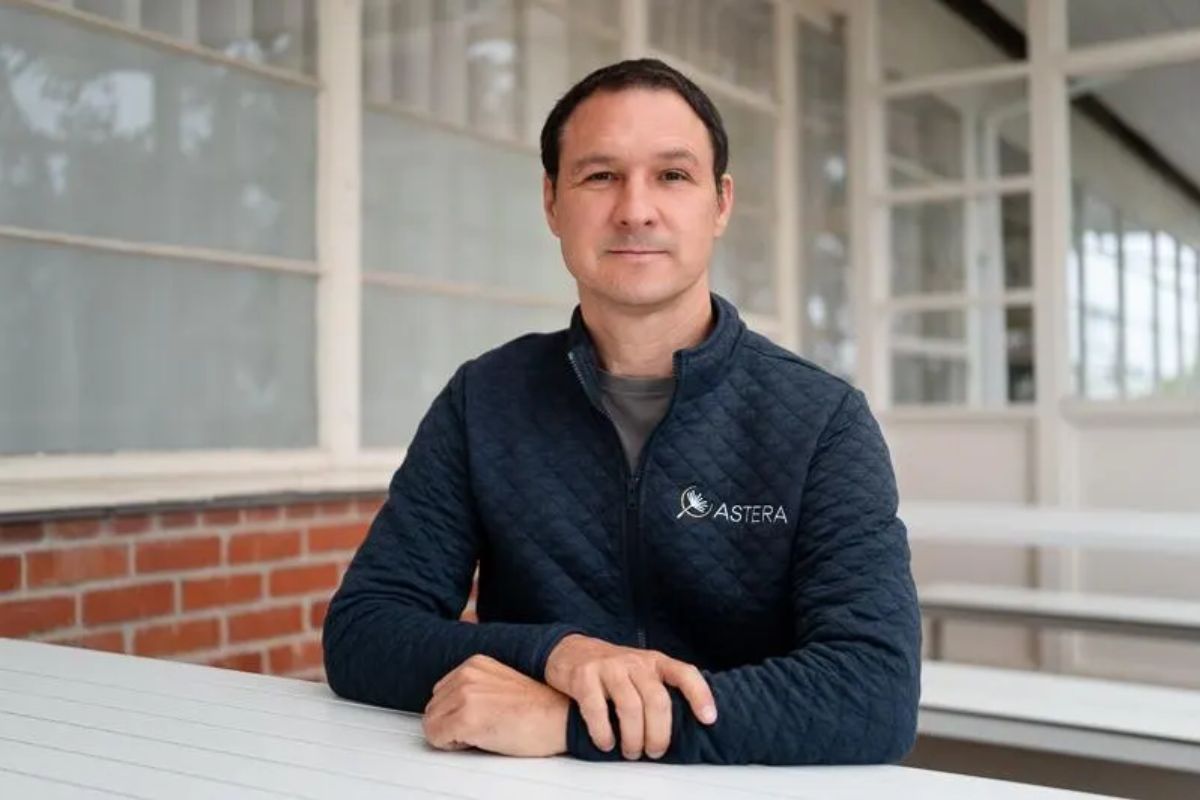
OnlyFans has been a money-printing machine for its secretive billionaire owner Leonid Radvinsky. Investors were puzzled by an obscure debt fund’s pitch to buy him out, until they learned of his terminal cancer diagnosis.
The pitch was arguably taboo. But while investors blushed at OnlyFans’ NSFW content, they were undeniably turned on by its balance sheet.
A deal pulled together by an obscure San Francisco-based debt fund put a $5.5 billion price tag on the British website, which became a global sensation during the pandemic. It’s a rock-bottom number for a money machine that raked in $1.4 billion in revenue and $720 million in operating profit in 2024 for secretive billionaire owner Leonid Radvinsky.
But then investors learned that Radvinsky, 43, had been diagnosed with terminal cancer. His declining health was the reason for the sale and its accelerated pace, according to several sources close to the deal.
OnlyFans announced Radvinsky’s death on Monday (without specifying when or where he died). His heir apparent is his wife, Yekaterina Chudnovsky, who a source close to the couple describes as Radvinsky’s de facto business partner.
The deal still hangs in the balance with the terms being revised just weeks before Radvinsky’s death, the sources said. The hopeful buyer is Architect Capital, a San Francisco-based fund that got its start in 2020 offering credit to fast-growing Latin American startups like Colombian food delivery app Rappi. Now it seems focused on working with companies in crisis.
That’s not the case right now for OnlyFans. Under Radvinsky’s ownership, the company exploded from a niche website into a juggernaut used by 377 million users and 4.6 million creators, including both sex workers and celebrities like actor Amanda Bynes, singer Lily Allen and UFC fighter Paige VanZant. In 2024, it generated $7.2 billion with only 46 full-time employees. The company takes a 20% cut of every transaction, according to a British corporate filing.
“It’s a risk and reputation problem. It’s not a financial problem.”
Shawn Silver, CEO of Payment Nerds
But investors who reviewed the deal told Forbes they saw warning signs around slowing growth and risks for the site’s relationships with its biggest creators, regulators and the card companies that underpin the business — and which could pull out at any time.
Architect’s pitch is that new ownership would bring big changes, according to multiple investors who heard it. The firm said it would push OnlyFans to compete with mainstream rivals like Patreon by hosting content from more creators who keep their clothes on. It hopes to acquire a banking license to break OnlyFans’ expensive reliance on credit card companies, which wield an uncomfortable amount of power over the business, helping its adult content creators get paid more reliably and at a lower cost, the sources said. Architect hopes to turn OnlyFans into a more PG place “where you can connect with your favorite boxer or athlete,” says one investor who received the proposal.
OnlyFans’ success earned Radvinsky, a Ukrainian-American entrepreneur who got his start building porn referral websites, a $4.7 billion fortune. But its size, scale and notoriety has made it hard to sell. The company positions itself as a platform for content creators but is best known for hosting images and videos that involve nudity and sexually explicit material. That makes it off-limits to many venture capitalists and buyout funds due to so-called “vice” clauses with their own backers, restricting them from investing in controversial categories like tobacco, gambling, weapons and pornography.
“It’s a risk and reputation problem. It’s not a financial problem,” says Shawn Silver of Payment Nerds, who founded and sold two payment processing startups operating in the adult space. “There could be a religious person on that board that doesn’t want it. There could just be an ethics committee that doesn’t want it. No matter how much money it makes.”
But many were drawn to the deal regardless because of the company’s staggering financials. Radvinsky had held talks over a merger with a blank check company back in 2022. The Financial Times reported that the Los Angeles investment bank Forest Road Company tried to mount a takeover bid last year. But other suitors that had circled the company walked away, according to several investors who had been pitched on the deal. “People just don’t necessarily know what to do with it,” says one potential investor who requested anonymity to speak freely.
Architect Capital emerged as a new and unlikely bidder earlier this year. The firm’s founder, James Sagan, claimed in a 2025 interview with the New York Post to have become the largest outside investor in Juul. The vaping pioneer was on the brink of insolvency after the FDA ordered its products removed from shelves in 2022 and it settled a $1.7 billion lawsuit with school districts the following year over claims that it marketed its products to children.
Sagan’s $500 million fund was nowhere near big enough to finance a 60% stake in OnlyFans. So instead his team spent months canvassing venture capitalists, buyout funds and family offices to back his takeover.
The Wall Street Journal reported earlier this year that the deal valued OnlyFans at $5.5 billion or just over seven times earnings, a jaw-droppingly cheap price for a high-margin subscription business. It would involve Sagan raising $2 billion in equity, and $2 billion of debt to finance the transaction, which was meant to close by the end of March.
Then the deal got even better. Architect Capital wrote to potential investors several weeks ago with an update that the deadline had been delayed by several months, and now it wouldn’t need to raise the debt after all. OnlyFans itself would help finance the deal with a seller’s note. That meant that Radvinsky essentially was writing an open-ended loan to Sagan to help speed up the sale, in return for earning 7.5% per year until it was repaid.
That type of arrangement is not unusual when a corner store or plumbing company comes up for sale. But is rare for a three comma deal, where Radvinsky was being represented by Wall Street investment bank Moelis. Typically, business owners looking to sell want a clean exit.
“This is a really sweet, sweet deal,” says an investor who was pitched on it.
OnlyFans and Architect did not respond to multiple requests for comment.
Sagan’s pitch to bring institutional money into a less than reputable business is unusual, but it’s not the strangest deal to have happened in the adult entertainment industry. Pornhub’s parent MindGeek was snapped up for an undisclosed sum by little-known buyout firm Ethical Capital Partners in 2023 after the company faced a wave of lawsuits over hosting non-consensual content on its sites.
OnlyFans has also faced regulatory scrutiny. A 2024 Reuters investigation found child sex abuse material to have been featured on at least 26 OnlyFans accounts. In March 2025, the company was hit with a $1.4 million fine in the United Kingdom over failure to disclose information on its age-verification procedures.
While it’s printed money for years, OnlyFans’ growth slowed in 2025, and risks around its reliance on credit card providers are an existential threat.
Radvinsky bought the startup from its British founder Tim Stokely in 2018, and pushed the platform further into adult content, which was originally not allowed. The business boomed in the pandemic. But that growth relied on its customers being able to pay for content with a credit card.
Visa and Mastercard largely avoided meddling into this corner of the internet until a December 2020 New York Times investigation into child exploitation on PornHub forced them to take a deeper look at the adult entertainment industry, says Kyle Hall, CEO of PayKings, which processed payments for OnlyFans in its early days.
Facing “unfair” treatment from banks and the threat of being blocked from taking credit card payments forced OnlyFans’ hand, said Stokely, who was still running the company as CEO, at the time. In August 2021, Radvinsky announced he would ban creators from posting sexually explicit content only to face intense backlash. He reversed course just six days later. “We have secured assurances necessary to support our diverse creator community,” OnlyFans tweeted at the time.
Such security was short-lived. In early 2022, Visa sent notices to banks working with OnlyFans, and they cut off its merchant accounts, causing it to lose its payment processing infrastructure overnight and with no warning, according to Hall. “They were extremely desperate,” he says. OnlyFans responded by beefing up its content moderation efforts to reassure the banking system, a move which appeased Visa enough to keep supporting the site.
Sagan’s pitch to potential backers is that he can solve its regulatory headaches, sources close to the deal said. One of the biggest costs for the business is working with payment companies that charge correspondingly high fees (as high as 10% or more) to balance the risk of earning the ire of Visa and Mastercard. These fees represent a big chunk of OnlyFans’ cost of sales (which filings show was $549 million in 2024) according to people familiar with the deal.
OnlyFans creators face many of the same problems as the site itself, with banks shutting down accounts over links to sex work. Sagan’s pitch to investors also included a plan to acquire a banking license in order to offer creators more stable access to payouts and the ability to keep more of their income.
Those moves would juice OnlyFans’ bottom line. But the realities of its business remain, which could make it difficult for prospective investors to secure an exit. Investors who reviewed the deal were skeptical of Architect’s claim that the company could be taken public in as little as three years.
Even if the threat from Visa and Mastercard shutting down its revenue stream can be managed, there are other dangers. Several investors walked away from the deal after gauging that OnlyFans’s first mover advantage could be chipped away by rivals taking a smaller cut from content creators. Sites like billionaire Lucy Guo’s Passes, Fanfix and Patreon have already carved out a space for influencers and creators to monetize their audiences without the stigma of an OnlyFans link in their social media bios.
Then there’s the menace of AI. Prospective investors told Forbes they were concerned that a growing category of AI-generated adult content, and chatbots, could lower demand for human creators.
Sagan has earned an extension, but the countdown clock is running again before his exclusive right to the deal expires, but he seems to have gained some traction with family offices, who don’t face the same constraints on “vice” investments as institutional funds.
It could be an unprecedented coup. But while investors might have been sold on buying porn from a dying man, reworking the terms while dealing with estate laws and a new widow could cause them to think twice.
Will Yakowicz contributed reporting.
This article was originally published on forbes.com and all figures are in USD.
Want to see more Forbes articles on your feed? Tap here to make Forbes Australia a preferred source on Google.
Look back on the week that was with hand-picked articles from Australia and around the world. Sign up to the Forbes Australia newsletter here or become a member here.