With a $1.1 billion fortune, Virtual Gaming Worlds founder Laurence Escalante enjoys a life of private jets, superyachts and exotic cars. But with his recent arrest on assault and drug charges, the party could be over.
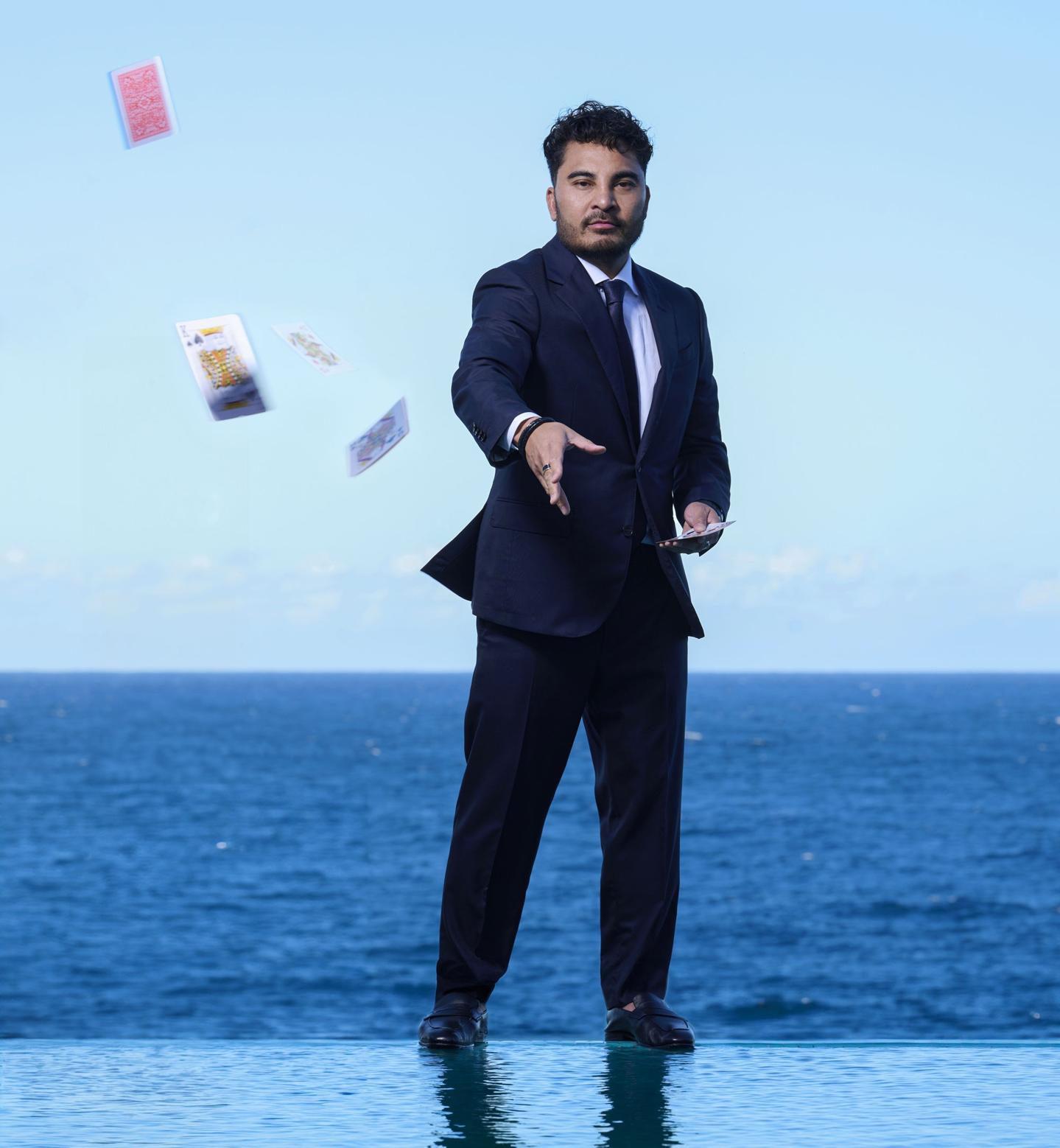
What The Cards Hold: “You have to enjoy life,” said Laurence Escalante, the billionaire founder of Virtual Gaming Worlds casino company. “You never know when it could disappear.”
Nic Walker
On the night of January 26, Perth, Australia-based sweepstakes casino billionaire Laurence Escalante allegedly entered the home of his ex-girlfriend, assaulted her, and stole jewelry, according to the Western Australia Police.
Four days later, police executed a search warrant at the 44-year-old Escalante’s home and allegedly discovered a stash of drugs, including cocaine and MDMA, in large enough quantities for him to be charged with possession with intent to sell or distribute. The flamboyant Escalante was arrested and charged with a total of eight crimes, including assault, aggravated home burglary and family violence.
That same day, his Perth-based company, Virtual Gaming Worlds, which generated $4.3 billion in revenue in 2024 from its sweepstakes casino websites Chumba Casino, LuckyLand Slots and Global Poker, announced that Escalante took a leave of absence from his position as CEO and executive chairman.
The company’s success has, until recently, funded Escalante’s lavish lifestyle. He flies around the world in his Bombardier jet, has a collection of luxury cars (including Ferraris, Rolls-Royces and McLarens) and his own car dealership Lance East Exotics. He also frequently broadcasts his adventures through highly produced videos on Instagram, including a recent birthday celebration in which he was dressed as a captain on a yacht in Perth.
Escalante posted $100,000 bond, was released from custody, and is due to appear in court on February 26. He told The Sydney Morning Herald that the allegations are false and that he will fight the charges.
“My arrest on these matters has come as a shock to myself and my family,” Escalante told paper. “From the little I know of the allegations at this stage, I can only say that they are untrue and will be defended. I ask that both mine and my family’s privacy be respected and thank them for their support.”
Escalante’s legal problems are compounded by VGW’s legal woes in the United States, the company’s largest market. VGW’s casino-style games—digital slot machines, poker, roulette and others—are not licensed by any state gaming authority in the U.S., unlike gambling companies such as DraftKings, MGM or FanDuel. (VGW is licensed in Malta, where many offshore gambling websites are licensed.) While iGaming, mobile-based versions of casino games are only legal in seven states, VGW has launched its games across 36 states.
Its biggest brand, Chumba Casino, for instance, generated 67% of the company’s total revenue in 2024, but is banned in six states, including New York, New Jersey, and Delaware. (VGW’s sweepstakes-style games do not operate in a total of 14 states, which includes six where they are banned and eight in which the company offers free-play games only.) And more jurisdictions are working on bills to ban the industry, including Maine, Massachusetts, Indiana and Florida.
Out Now

VGW’s games, and other sweepstakes operators such as Australia-based Stake and Florida-based MyPrize, operate under what is considered a loophole in most state gambling laws. Gambling, legally speaking, is any game of chance that requires risking money to win a prize. But the sweepstakes model separates games of chance from consideration by allowing users to play for free using “Gold Coins,” a virtual currency that has no actual value. Users can win “Sweeps Coins” while playing games, hit bonuses or for free if they login every day. Sweeps Coins can be redeemed for cash and players can also buy Gold Coins when they run out.
But many states are not buying that legal argument. In 2022, VGW settled a class action lawsuit in Kentucky, paying nearly $12 million without admitting any wrongdoing. In April 2025, Delaware’s gaming authorities investigated VGW, finding that it was offering what it considered “illegal online gambling” services to residents and sent a cease and desist to the company.
Then last summer, VGW pulled out of New York after Attorney General Letitia James sent cease and desist letters to 26 sweepstakes operators, demanding that they stop offering what she described as “illegal” and “dangerous” gambling platforms to New York residents. This month, Louisiana’s legislators introduced a bill that, if passed, would designate sweepstakes casinos as racketeering enterprises with punishment up to $1 million in fines and up to 50 years of prison time.
Despite these setbacks, the sweepstakes market has grown to about $12.5 billion in annual revenue, according to a report by the California-based gaming consultants Eilers & Krejcik. This means the sweepstakes market is 42% bigger than the U.S. iGaming market—which includes MGM, Caesars and other gambling companies and had $8.41 billion in revenue in 2024, according to the American Gaming Association. (iGaming operators generated more than $9 billion from January of last year through November 2025.)
“They’re operating in states where the legal regulated industry is not able to operate,” says Tres York, an attorney with the American Gaming Association. “The operators themselves believe that they’re operating legally. At a minimum, they are unlicensed and unregulated. That is beyond dispute.”
A spokesperson for VGW reiterated its long-held position that it is operating legally. “Our full confidence in our compliance with all laws and regulations where we operate remains unchanged,” the spokesperson tells Forbes. “We also acknowledge increased interest in our innovative industry that millions of Americans enjoy, and are committed to respectful engagement with relevant stakeholders on establishing modern, appropriate regulatory and taxation structures that benefit players and states alike.”
Laurence Escalante was not always an online casino boss. His first job was at Hungry Jacks, the Australian franchise of Burger King. After graduating from Sydney’s Macquarie University, he became a financial planner. In 2004, he launched a Christian video game company called White Knight Games, which released Timothy and Titus: Saints, Martyrs, Heroes the following year. Escalante has said that he saw an opportunity in religious video games after being inspired by Mel Gibson’s 2004 film The Passion of the Christ.
Eventually, Timothy and Titus’ publisher ran into financial trouble, and his company failed. But his next big idea would go from sacred to sinful.
In 2010, he started VGW from a co-working space in Perth. In an early presentation, Escalante said that VGW does something very simple: “combine social gaming with gambling.” Escalante saw an opportunity to break into the U.S. market quickly and cheaply by using the sweepstakes model. (Similar to how FanDuel and DraftKings first found success by offering daily fantasy sports products, which they defined as “games of skill” rather than gambling.)
It was not until the global lockdowns during the Covid-19 pandemic that VGW’s sites Chumba Casino, LuckyLand Slots and others hit paydirt. Thanks in large part by advertising on Facebook and other social media websites, VGW grew its userbase to from 10,000 a month to more than one million. “A key turning point was dramatically ramping up our social media presence,” Escalante told The Australian at the time. Within a year, VGW’s revenues hit $1.5 billion, then jumped 60% the next year to reach $2.4 billion.
VGW has been making so much money that it recently had a three-year sponsorship deal with Ferrari’s F1 team. In 2024, the last full year financials the company reported, revenues topped $4.3 billion, a 27% increase from the year before, and the company raked in $345 million in profits.
VGW now has more than 1,500 employees and has started to diversify its revenue streams. In 2024, it bought a 13% stake in U.K.-based 99 Dynamics, a lottery courier that has operations in the U.S. with its Jackpot.com brand. Last summer Escalante shored up more control over VGW: In a $449 million deal, Escalante, through his family office Lance East Office, which already owned 70% of VGW, bought an additional 20% of the company’s shares from minority investors, valuing VGW at $2.2 billion.
But many gaming entrepreneurs believe that the days of sweepstakes casinos are numbered. The founder of a successful gambling software company, who asked to remain anonymous, says VGW is “printing money” but when asked if he would invest in it, he said no. “It’s a cash cow…but it can stop any day,” the gambling entrepreneur says. “You never know when the U.S. might clamp down.”
Other gambling billionaires, including Derek Stevens, who owns the high-end casino Circa in Downtown Las Vegas, has more choice words for sweepstakes operators: “hijackers and pirates,” he says.
While Escalante still owns VGW, and it continues to generate billions in revenue, his future and the future of his company remains uncertain. Back in March 2025, he told The Australian that he focuses on having a fun because he knows time is finite. “You have to enjoy life,” he said. “You never know when it could disappear.”
This story was originally published on forbes.com and all figures are in USD.
Look back on the week that was with hand-picked articles from Australia and around the world. Sign up to the Forbes Australia newsletter here or become a member here.