The New England Patriots’ Robert Kraft is looking to collect his record-setting seventh Lombardi Trophy. The Seattle Seahawks will likely achieve a very different milestone—win or lose.
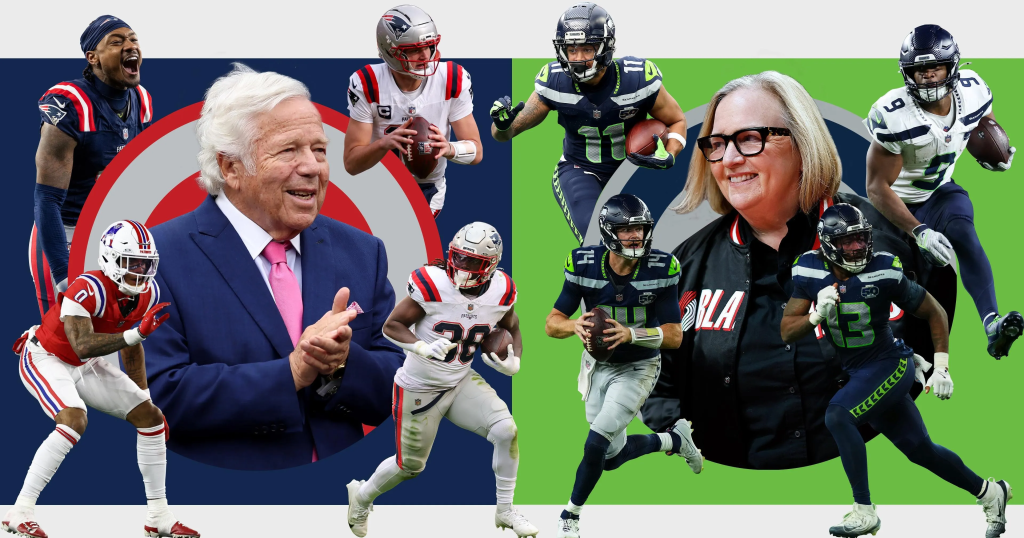
Robert Kraft knows a thing or two about winning, considering on Sunday his New England Patriots will play in the Super Bowl for the 11th time since he bought the franchise in 1994. No other NFL owner comes close to that total—second place is shared by the Pittsburgh Steelers’ Rooney family and the San Francisco 49ers’ DeBartolo-York family, with eight appearances in football’s biggest game.
And if Kraft’s squad can outlast the Seattle Seahawks in Super Bowl LX, the Patriots will become the first NFL franchise to collect a seventh Lombardi Trophy, breaking a tie they have shared with the Steelers since 2019.
Regardless of the outcome on the field, though, Kraft has already won. Rising from a humble upbringing in suburban Boston, the 84-year-old is now worth an estimated $13.8 billion, landing at No. 78 on the 2025 Forbes 400, the definitive ranking of the richest Americans. He owes much of that wealth to the astonishing growth of the Patriots, the NFL’s fourth-most-valuable franchise, worth an estimated $9 billion (including debt)—a massive jump from the $172 million Kraft paid three decades ago.
If history is any indication, they’re not done running up the score.
Since 1998, when Forbes started valuing NFL franchises, teams have appreciated more than 2,300% on average, from $288 million to $7.1 billion, thanks in large part to skyrocketing media rights fees that netted each club an estimated $392 million last season.
The Seahawks, most recently valued by Forbes at $6.7 billion, 14th in the NFL, are expected to keep that momentum going this year. Although the team said last week that it is not for sale, many league insiders believe the franchise will be put on the market at some point after the Super Bowl and fetch a record price for a control sale—likely exceeding $7 billion and possibly, if the process produces a bidding war, much more.
Gridiron Gold
How Super Bowl LX’s billionaire team owners match up.
New England Patriots | Teams | Seattle Seahawks |
Robert Kraft | Owners | Paul G. Allen Trust |
$13.8 billion | Net Worth | $20.3 billion* |
Manufacturing, Sports | Source of Wealth | Microsoft, Investments |
$9 billion | 2025 Team Value | $6.7 billion |
$172 million | Purchase Price | $194 million |
6 | Super Bowl Wins | 1 |
7 | Years Since Last Championship | 12 |
“That’s been the history of the NFL,” says Marc Ganis, president of the consulting firm Sportscorp, who is often called the NFL’s “33rd owner” because of his close ties to football’s decision makers. “Parties pay more because they see the business, the management and the structure of the league being so strong that it will be worth more in the future than it is today.”
Microsoft cofounder Paul Allen purchased the Seahawks in 1997 for $194 million, and since his death in 2018, the team has been controlled by his estate, with his sister, Jody, serving as the chairwoman of both the Seahawks and the NBA’s Portland Trail Blazers. But Allen’s will called for his sports assets to eventually be sold and the proceeds donated to charity, which for years fueled speculation as to when the teams would be made available.
The Trail Blazers are expected to have a new owner soon, after announcing a deal with Carolina Hurricanes owner Tom Dundon in September for a reported $4.25 billion. Now, with the Seahawks on the verge of their second Super Bowl title, it appears their time has come. And while Jody Allen won’t see a dime of what is shaping up to be a record-setting transaction, the sale could raise price tags around the league and boost the fortunes of her fellow NFL owners—including Kraft.
New England Patriots
For Kraft, the Patriots have always been personal.
Much to the chagrin of his father, who hoped his son would avoid playing sports altogether and become a rabbi, Kraft grew up a fierce fan of Boston’s teams. In 1971, more than a decade after he played halfback and safety at Columbia University, he brought home Patriots season tickets for his four sons. His late wife, Myra, thought it was a reckless use of money.
“It was the only time I ever heard her yell at him,” Kraft’s eldest son, Jonathan, who is now the president of the Patriots, told Forbes for a 2005 profile.
By then, Kraft could afford it. His father-in-law owned Rand-Whitney, which turned paper into packaging for food, cosmetics and toys, and in 1968, Kraft had bought half the business in a leveraged buyout, picking up the rest just a few years later. The company would eventually integrate other lines of business, such as transportation and manufacturing of the paper his packaging business utilized. Today, the Kraft Group generates more than $6 billion in revenue, according to Forbes estimates, ranking No. 95 on the 2025 Forbes list of America’s top private companies.
As his business grew, Kraft chased his passion, buying his first sports franchise in 1975: a professional tennis team called the Boston Lobsters that folded three years later. After attempts to acquire the Boston Red Sox and Celtics proved fruitless, he embarked on a risky path toward ownership of the Patriots.
It started with the land around the franchise’s stadium in Foxboro, Massachusetts. Kraft purchased a ten-year option, which cost $1 million a year, to give him the first chance at buying the real estate for $18 million. Three years later, he bought the actual stadium alongside a partner for $25 million.
So in 1993, when then-Patriots owner James Busch Orthwein decided he wanted to move the Patriots to St. Louis or sell the team, Kraft held the power—anyone who wanted to buy the franchise, including suitors like current Philadelphia Eagles owner Jeffrey Lurie and novelist Tom Clancy, had to negotiate with him first. Instead, Kraft flew to St. Louis and negotiated his own purchase of the Patriots in 1994, paying what was then an NFL record at $172 million.
“These deals in a final analysis have to be principal to principal,” says Sportscorp’s Ganis, who was a member of the Clancy group that was pursuing the franchise at the time. “Bob knew that. He knew how to close deals.”
Over the next few decades, Kraft not only moved the Patriots into a new stadium but also oversaw one of the most successful runs in professional sports history. Behind legendary quarterback Tom Brady and head coach Bill Belichick, New England posted 19 consecutive winning seasons from 2001 to 2019, collected 17 AFC East division titles and claimed victory in six Super Bowls while appearing in two others.
Yet Kraft’s tenure hasn’t been without controversy. The Patriots were fined and lost draft picks on two separate occasions, once following the 2007 season when they were found to have illegally recorded the New York Jets’ defensive signals and another in the Deflategate scandal when the franchise was accused of using underinflated footballs in the 2014 AFC Championship Game to attain a competitive advantage. Kraft also faced misdemeanor solicitation of prostitution charges in 2019 after visiting a massage parlor in Jupiter, Florida; the charges were dropped after the evidence was ruled inadmissible.
Still, Kraft’s influence on the NFL has been monumental, in areas including labor relations, international expansion and media rights. Notably, he helped bring CBS back into the fold after Fox poached the league’s media rights in the early 1990s. Kraft has also long served on, and currently chairs, the NFL’s broadcast committee.
But those contributions aside, Kraft will have to wait at least another year to be enshrined in the Pro Football Hall of Fame, falling short in a vote by the 50-person panel for the Class of 2026.
Seattle Seahawks
If it weren’t for Paull Allen, the Seahawks might have departed Seattle decades ago. The franchise was previously owned by real estate developer Ken Behring, who was dissatisfied with its stadium, the Kingdome, and hatched a plan to relocate the Seahawks to Los Angeles, even transferring team operations to Anaheim in 1996. The move, however, was thwarted by the Kingdome lease, which was set to run until 2005, and threats of daily six-figure fines from the NFL.
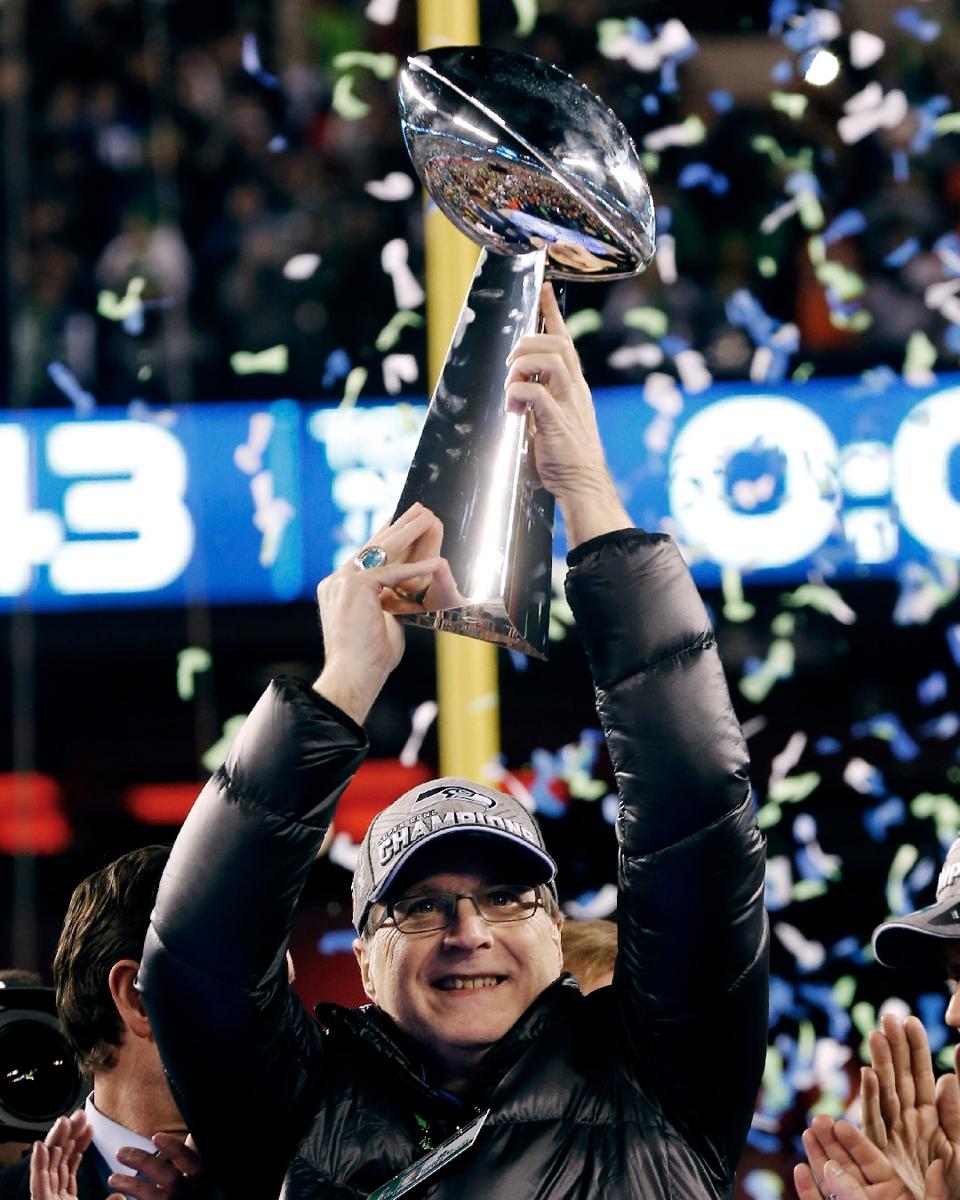
Luckily for the league, Allen was ready to step in when it effectively forced a sale. The Seattle native had amassed a fortune cofounding Microsoft with Bill Gates, even though he left the company in 1975 after being diagnosed with Hodgkin’s disease, and he had already pushed into sports ownership, buying the NBA’s Trail Blazers in 1988 for $70 million. So a year after the failed move to Los Angeles, Allen took the Seahawks off Behring’s hands, cutting a check that valued the franchise at a then-record $194 million.
The sale completely altered the trajectory of the franchise. Allen helped deliver the Seahawks a new building that opened in 2002, contributing $130 million of the $430 million it took to build what is now called Lumen Field. Seattle, which had reached the NFL postseason only four times from its inception in 1976 to the ownership change in 1997, also became a perennial playoff team. Under Allen, the Seahawks reached the Super Bowl twice, winning their first and only title in February 2014 behind head coach Pete Carroll, quarterback Russell Wilson and the ferocious “Legion of Boom” defense.
At the league level, though, Ganis recalls Allen being one of the less-involved principal owners. “He didn’t come to many of the owners’ meetings,” Ganis says, “but he came when he was asked to come, and when he did, his voice was outsized.” Both the league’s 2011 labor dispute and the NFL’s return to Los Angeles were issues that Allen played an influential role in resolving, Ganis notes.
Allen, who had an estimated net worth of $20.3 billion, died in 2018 from complications of non-Hodgkins lymphoma, and with his sister, Jody, overseeing his estate as its executor, the Seahawks have remained quite successful. The team won an NFC West division title in 2020 and tied for the NFL’s best record this season behind a resurgent quarterback, Sam Darnold, and head coaching phenom Mike Macdonald.
“Jody’s a fantastic owner, steadfast in what she believes,” Macdonald said this week. “I love having Jody as our owner.”
She won’t remain in control much longer, however. The NFL’s ownership rules prohibit estates, foundations or trusts from holding equity stakes in franchises, and the timing for a sale is even more opportune: A provision from the construction of Lumen Field would have compelled the Seahawks to share 10% of sale proceeds with the state of Washington, but that requirement has now expired.
Generally, Ganis says, these processes take six months to a year to play out, and the expectation is that the Seahawks won’t officially be on the block until the Blazers deal closes, which is expected to happen this spring. (Allen’s 25% stake in MLS’s Seattle Sounders is also on the market.)
However long it takes, one thing is clear—win or lose on Sunday, the Seahawks are headed toward an NFL record.
“I think people should be disappointed if it doesn’t sell for at least $8 billion,” Ganis says. “And knowing that all the money’s going to charity, it’d be awfully nice if the number started with a 10.”
Look back on the week that was with hand-picked articles from Australia and around the world. Sign up to the Forbes Australia newsletter here or become a member here.
This story was originally published on forbes.com and all figures are in USD.