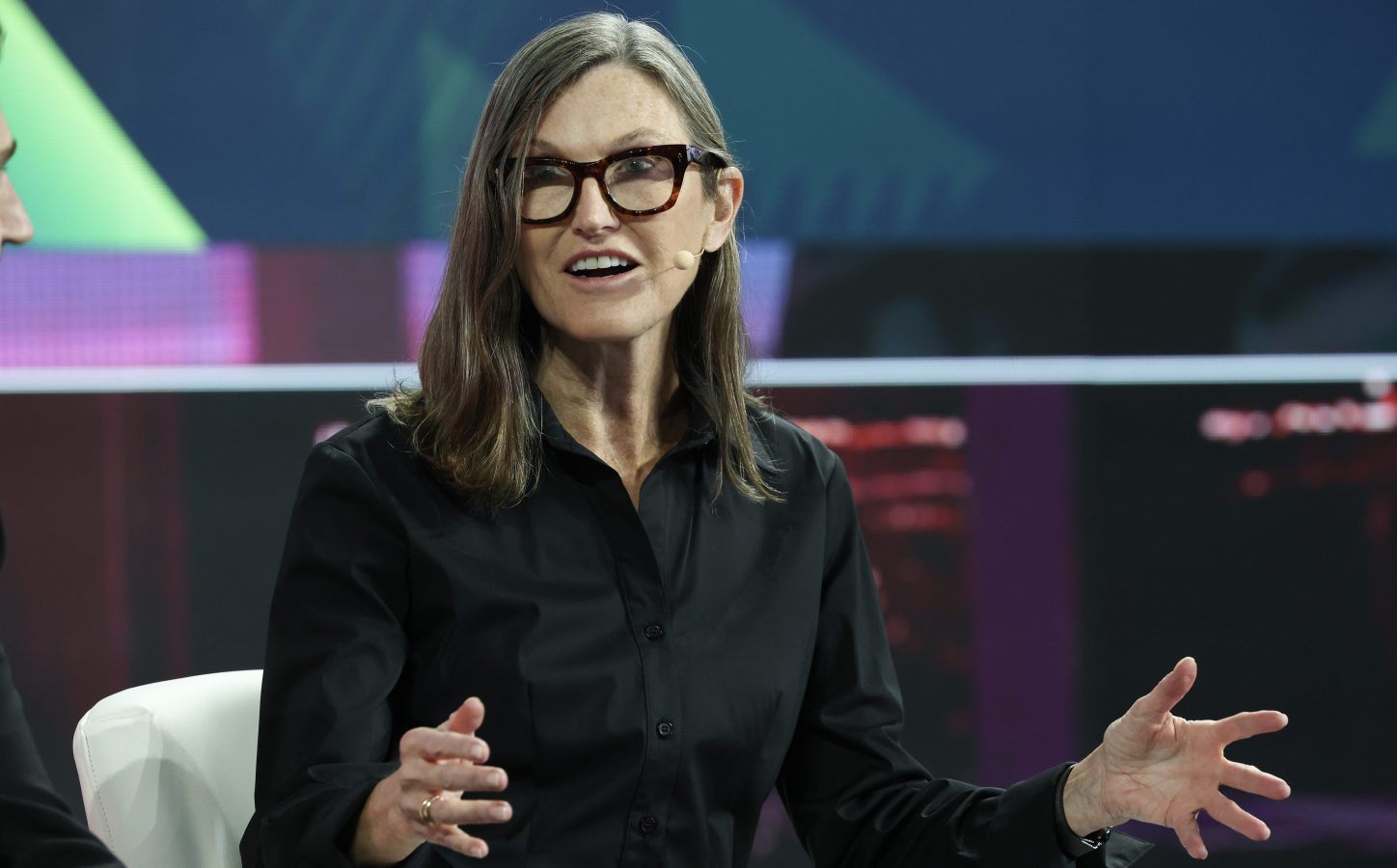
Opinion: Australia has no shortage of climate innovation. What it lacks are enough businesses willing to buy it, argues Asha Kayla, forcing many businesses to look overseas.
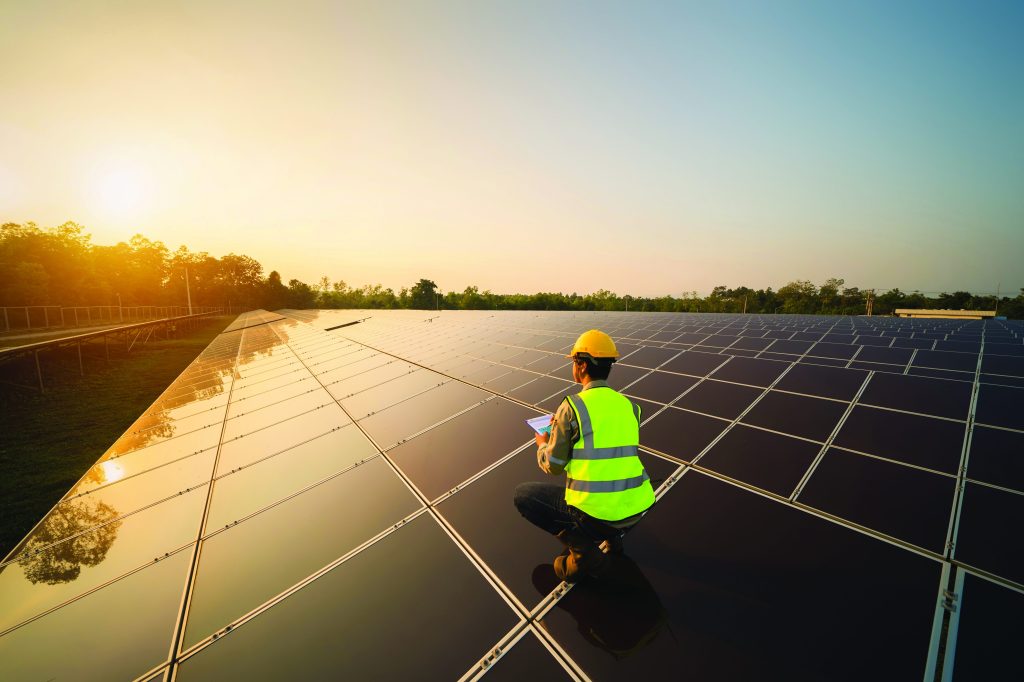
The green economy has evolved into a modern-day commercial reality and, crucially, one that is reshaping global markets and spurring innovation.
Research company BloombergNEF estimates that Australia’s net-zero transition opportunity is worth over US$1.9 trillion by 2050.
For Australia, it may be the most significant economic opportunity of the next decade, but only if we are brave enough to seize it.
Australia’s unique position
Renewable energy is fast becoming the new oil of the 21st century and Australia has more of it than almost anyone. The raw ingredients are here. We have the capital, the talent and natural assets.
Few countries are as structurally advantaged for this transition as Australia. We are a top-three global producer of the critical minerals, lithium, cobalt, manganese that are required for the clean energy transition.
We have vast renewable energy resources, strong engineering and research capability and one of the largest pools of long-term capital in the world, through our superannuation system.
The capital is flowing into the green economy and has been since 2022. The Australian government has committed more than $81 billion in public funding, with the Clean Energy Finance Corporation (CEFC) writing multi-million-dollar cheques for commercial-stage businesses and crowding in private capital.
Solar costs have fallen 90 per cent in fifteen years, making renewable electricity the cheapest source of energy in history.
A risk-averse climate
Despite these advantages, Australia is systematically under-investing in the commercialisation of its own innovations. Business R&D investment has declined over the past decade, leaving Australia persistently behind OECD peers in innovation expenditure as a share of GDP.
The Strategic Examination of Research and Development report, released in March 2026 and chaired by Robyn Denholm, noted that Australia is strong at generating ideas but weaker at turning them into industries and growth. After nearly 500 submissions and 600-plus stakeholder consultations, the panel identified a risk-averse culture as one of the defining challenges holding Australia back.
I spoke with Mick Liubinskas, founder of tech community Climate Salad, who was direct about the consequence: “in the absence of early customers, innovation doesn’t stall. It relocates.”
Australia’s best climate founders are finding their first anchor customers overseas and once they go, the economic value tends to follow. The supply of innovation exists, but supply doesn’t create markets, demand does.
Climate tech founders aren’t waiting around
The most successful climate founders in Australia are not waiting for an innovation ecosystem to support them. They are forging new paths, solving the hard-to-tackle problems that incumbents won’t touch and attracting international capital. What is different now is that rather than leading with sustainability, they are leading with economic value first.
Energy Locals, for example, is solving one of Australia’s most overlooked energy problems – bringing solar, batteries and heat pumps to the 2.4 million households locked out of the solar rooftop revolution because they rent or live in apartments. Backed by the CEFC and acquired by Palisade Impact in late 2024, the model is now expanding the number of customers and buildings it can support
PlasmaLeap Technologies meanwhile uses cutting edge innovation to create zero-emissions fertiliser from just air, water and electricity. Their Series A was backed by the Gates Foundation, Investible and Yara Growth Ventures.
In addition to building companies, these founders are building markets that don’t fully exist yet. What each of them found, at the critical moment, was someone willing to purchase future value. Frere Byrne, co-founder of PlasmaLeap, told me: “The Gates Foundation approached us early, which was a strong signal on both the relevance of the problem and the potential of the technology”. He was also direct about what’s holding the sector back. “The biggest gap is scaling support for industrial technologies. We need more mechanisms that bridge first-of-a-kind deployment, we need to move faster from lab to commercial infrastructure.”
Individual workarounds are not a system. To capture the full value of the transition, Australia needs a deliberate and repeatable way to scale green innovation.
Building the bridge
The good news is that the bridge for closing the gap between innovation and scale is evolving through impact accelerators. They help turn innovation into commercial reality, reducing the gap between breakthrough ideas and real-world adoption.
Commonwealth Bank’s x15ventures operates independently from the bank on its own technology stack. It gives startups room to move at pace while meeting institutional risk and governance standards, with access to CommBank’s 15 million customers when they’re ready to scale.
At Woolworths Group, I helped bring Woolworths360 to life, an internal impact engine designed to turn sustainability ambition into commercial execution. We partnered with emerging companies and frequently acted as the first customer, piloting, testing and embedding new solutions into supply chains and operations to accelerate adoption at scale.
TRACE, the commercialisation arm of UNSW, builds the bridge from the research side. It brings together concessional public capital and private investment to move Australian research into commercial products.
Despite their differences, all three models solve the same problem: they connect innovation with actual customers. In each case, someone was willing to absorb early risk via a range of funding models and create a bridge to adoption. Just as importantly, the corporate sector acted as a customer, not merely an investor. Funding innovation is not the same as buying it. That distinction often determines whether a pilot stalls or a business scales.
The future doesn’t scale until someone buys it
But back to Mick Liubinskas, who believes a tipping point is coming “when five Australian climate tech companies reach billion-dollar scale, something will shift the perception of what is possible”.
Right now, too many Australian businesses are watching rather than buying.
We are missing out on value. Technologies that could be integrated into operations and supply chains are stalling in pilots. Promising companies are running out of runway not because the technology has failed, but because no one will be the first commercial customer.
Australia has no shortage of ideas, talent or capital. The winners in the green economy will not be those that invented the most, they will be the ones that backed the future earliest and scaled it fastest.
Australia has everything it needs to be among them. A greener future is a future worth buying.
Asha Kayla writes and speaks on the future of business, exploring how organisations can unlock growth while creating positive outcomes for people and the planet. She helped shape and scale Woolworths360, an Australian sustainability and innovation platform.
Want to see more Forbes articles on your feed? Tap here to make Forbes Australia a preferred source on Google.
Look back on the week that was with hand-picked articles from Australia and around the world. Sign up to the Forbes Australia newsletter here or become a member here.